
Pollution in Africa: A Continent’s Fight for a Cleaner Tomorrow
Tackling Air, Water, and Soil Challenges Amid Rapid Growth in 2025

Introduction: Africa’s Pollution Crisis
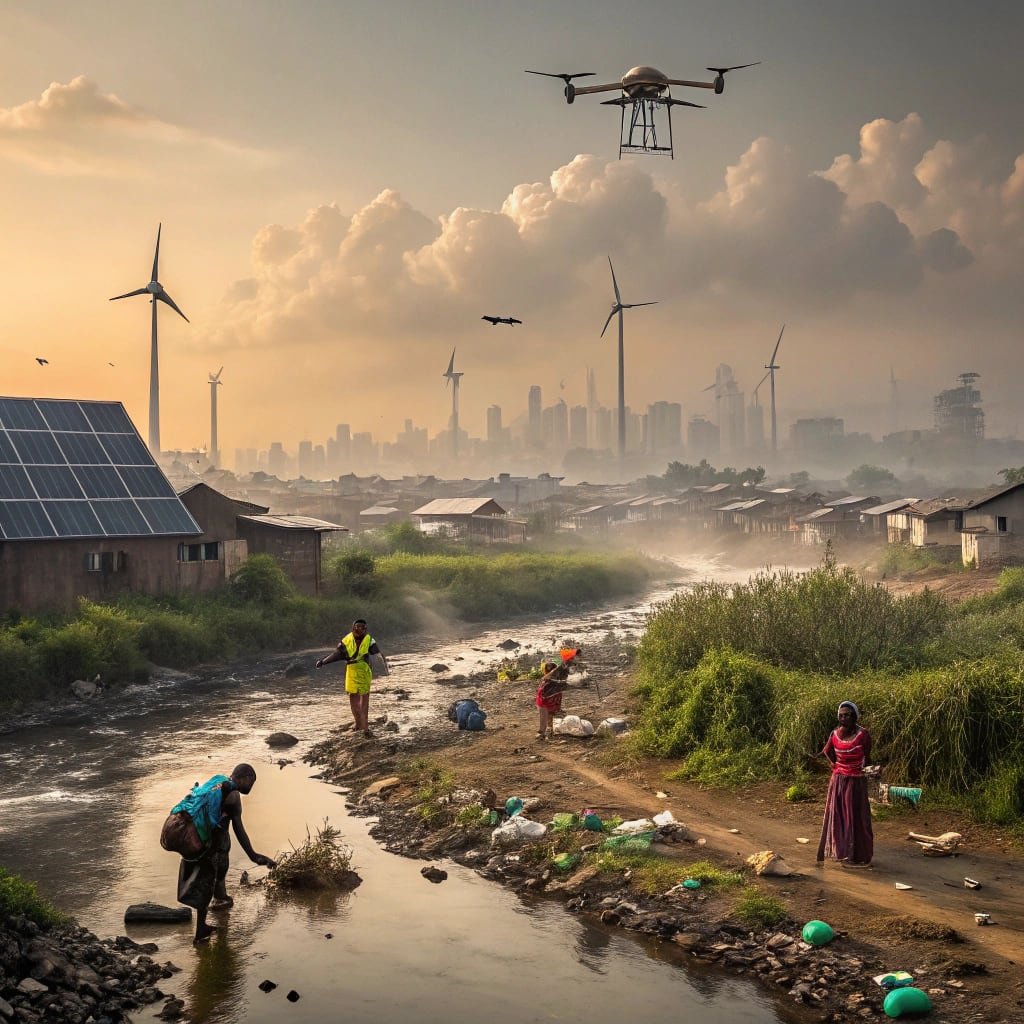
In 2025, Africa, with its 1.55 billion people, faces a mounting pollution crisis that threatens health, ecosystems, and development across its 54 nations. Contributing 15% of global greenhouse gas emissions and incurring $100 billion in annual health costs, per a 2024 UNEP report, Africa grapples with air, water, soil, and waste pollution. As the fastest-growing continent, with a 2.5% annual population increase, Africa’s challenges are intensified by urbanization and industrialization. This post explores Africa’s pollution landscape, its impacts, and innovative solutions, highlighting a resilient push for sustainability.
Air Pollution: A Growing Health Threat
Air pollution claims 1.1 million lives annually in Africa, with 70% of urban dwellers exposed to PM2.5 levels averaging 35 µg/m³, far above the WHO’s 5 µg/m³ limit, per a 2024 WHO report. Biomass burning for cooking, used by 900 million people, and vehicle emissions in cities like Lagos and Nairobi contribute 40% of pollutants. Respiratory diseases, costing $50 billion yearly, burden healthcare systems. Solutions include Africa’s 50 GW of renewable energy, with Kenya’s geothermal plants powering 30% of its grid. Electric vehicle adoption (1 million region-wide) grows, but coal and biomass reliance in Sub-Saharan Africa slows progress.
Water Pollution: Rivers and Coasts in Peril
Water pollution affects 400 million Africans, with 30% lacking clean water access, per a 2024 UN report. Industrial runoff and untreated sewage pollute rivers like the Nile and Congo, with 60% of water bodies contaminated. Plastic waste, with 1 million tons entering the Atlantic from West Africa annually, impacts 80% of marine species. Microplastics in 70% of fish stocks threaten food security. Initiatives like South Africa’s $5 billion river cleanup and Nigeria’s coastal waste programs reduce pollution by 10%, but weak enforcement and 20% of rural areas without sanitation infrastructure hinder progress.
Soil Pollution: Undermining Food Security
Soil pollution degrades 25% of Africa’s arable land, with pesticides and mining waste reducing crop yields by 15%, costing $20 billion annually, per a 2024 FAO report. In Nigeria and Ghana, heavy metals contaminate 10% of farmland, while 500 million tons of municipal waste exacerbate degradation. Solutions include Ethiopia’s $2 billion soil restoration programs using organic farming and Kenya’s 80% recycling initiatives in urban areas. However, low recycling rates (20%) in most countries and artisanal mining, affecting 40 million people, demand broader investment in sustainable practices.
Urban Challenges: Waste and Noise Pollution
Africa’s rapid urbanization, with 600 million city dwellers, intensifies pollution. Waste mismanagement, with 70% of urban areas lacking proper systems, creates open dumpsites affecting 200 million people. Noise pollution in cities like Addis Ababa, exceeding 65 decibels, increases stress-related illnesses by 10%, per a 2024 WHO study. Solutions include Rwanda’s ban on single-use plastics, cutting waste by 15%, and urban green spaces in South Africa, reducing noise by 8%. Yet, 30% of cities lack waste infrastructure, and funding gaps limit scalability.
Challenges: Resources and Climate Risks
Africa’s pollution crisis is compounded by resource constraints, with 60% of nations lacking adequate waste management funding. Climate change threatens 50 million coastal residents with flooding, spreading pollutants. Digital divides, with 40% lacking internet for smart monitoring, and 500,000 cyberattacks in 2024 cost $5 billion. Africa’s $50 billion green tech investments, like solar microgrids in East Africa, drive progress, but coordination across diverse economies and $10 billion in annual funding shortfalls hinder uniform action.
Conclusion: Africa’s Sustainable Vision
In 2025, Africa’s 1.55 billion people face a $100 billion pollution crisis, yet innovation and resilience shine. From renewable energy to waste bans, $60 billion in sustainability investments signal hope. Despite resource and climate challenges, policies like the African Union’s Agenda 2063 foster cleaner growth. This fight is not just environmental—it’s a commitment to health, equity, and a sustainable future for a vibrant continent poised to lead by example.
About the Creator
Arjun. S. Gaikwad
Truth Writing unveils reality beyond illusion, power, and propaganda words that awaken conscience and challenge comfort. Fearless, honest, and thought-provoking, it explores politics, humanity, and spirit to inspire awareness and change.
Keep reading
More stories from Arjun. S. Gaikwad and writers in Earth and other communities.
Pollution in America: Confronting a Continental Crisis with Innovation
Introduction: America’s Pollution Challenge In 2025, the Americas, home to 1.03 billion people, face a pressing pollution crisis that impacts health, ecosystems, and economies across North, Central, and South America. Contributing 15% of global greenhouse gas emissions and incurring $300 billion in annual health costs, per a 2024 EPA report, the region grapples with air, water, soil, and noise pollution. From Los Angeles’ smog to the Caribbean’s plastic-laden shores, innovative solutions offer hope. This post explores the Americas’ pollution landscape, its causes, consequences, and bold efforts to forge a sustainable future.
By Arjun. S. Gaikwad6 months ago in Earth
Australia Wildfires Burn Nearly 900,000 Acres
Australia is no stranger to wildfires, but the latest blaze tearing through the country’s southeast has once again pushed communities, ecosystems, and emergency services to the brink. Nearly 900,000 acres of land have burned as intense heatwaves and dry conditions fueled fast-moving fires across parts of Victoria and New South Wales. For many Australians, this disaster feels like a painful reminder that wildfire seasons are becoming longer, more intense, and far less predictable.
By Aqib Hussain6 days ago in Earth
Biochar-Based Carbon Removal Market Outlook for 2026
Biochar carbon removal is transitioning from a niche climate intervention into a structured, investable market. By 2026, the sector is expected to exhibit accelerated growth driven by tightening climate commitments, maturation of crediting methodologies, and increasing buyer sophistication. Market dynamics are shifting from pilot-scale experimentation toward scalable deployment, with pricing, supply constraints, and verification rigor emerging as defining variables.
By Wayne Shen5 days ago in Earth


Comments
There are no comments for this story
Be the first to respond and start the conversation.