
Pollution in 2025: A Global Crisis Demanding Urgent Action
From Air to Oceans, Confronting the Challenges and Solutions of a Polluted Planet

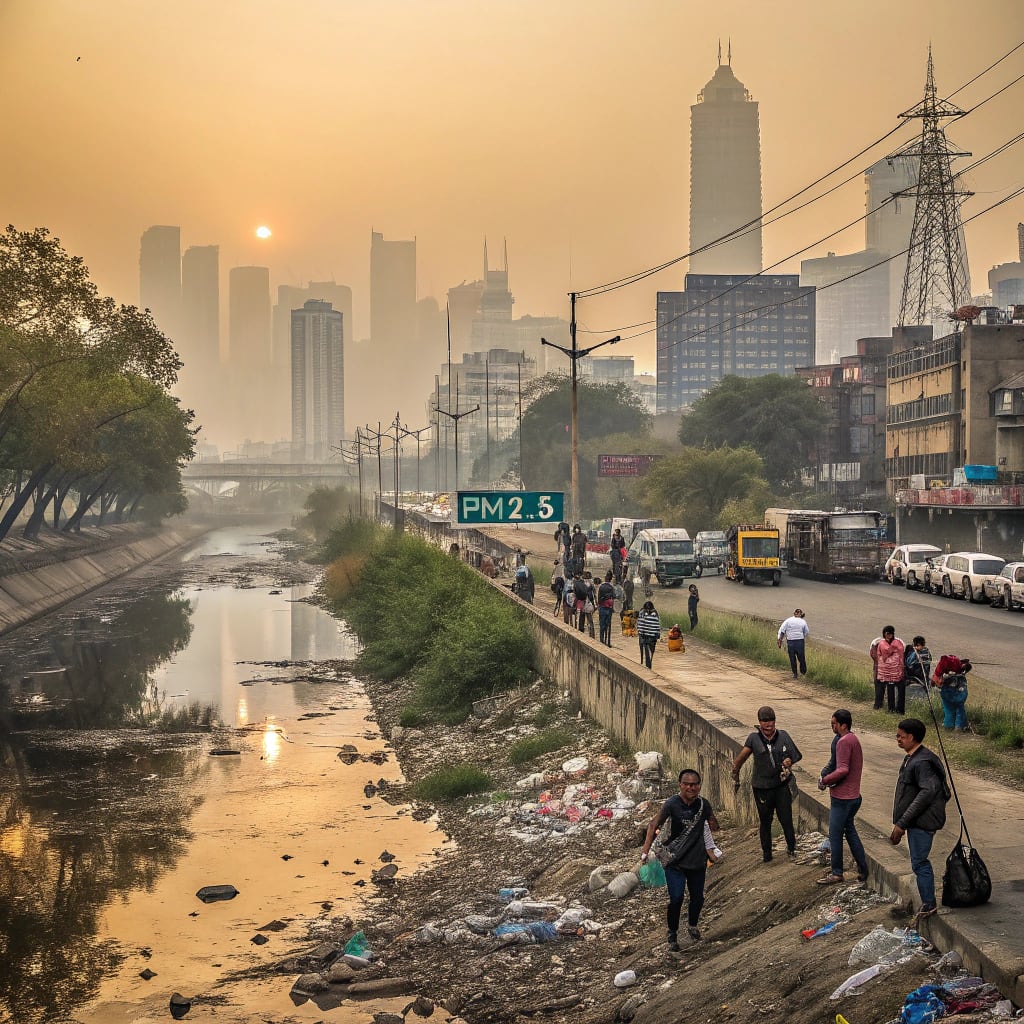
Introduction: The Escalating Pollution Crisis
In 2025, pollution remains one of humanity’s greatest challenges, threatening health, ecosystems, and economies across the globe’s 8.2 billion population. With 9 million premature deaths annually attributed to pollution, costing $4.6 trillion in global GDP (6% of total), per a 2024 Lancet study, the crisis spans air, water, soil, and noise pollution. From smog-choked cities to plastic-laden oceans, the impact is profound, yet innovative solutions offer hope. This post explores the state of global pollution, its causes, consequences, and transformative efforts to forge a cleaner, sustainable future.
Air Pollution: A Silent Killer
Air pollution, responsible for 7 million deaths yearly, is driven by industrial emissions, vehicle exhausts, and burning fossil fuels. In 2025, 90% of the world’s population breathes air exceeding WHO safety limits, with PM2.5 levels in cities like Delhi and Beijing averaging 100 µg/m³, five times the safe threshold. Coal plants in China and India contribute 40% of global sulfur dioxide emissions, per a 2024 IPCC report. Health impacts include 20% higher respiratory disease rates in urban areas. Solutions like electric vehicles (600 million globally) and renewable energy (1,500 GW of solar/wind capacity) are reducing emissions, but scaling remains critical.
Water Pollution: Oceans and Rivers at Risk
Water pollution threatens 1.8 billion people who lack access to clean water, per a 2024 UN report. Industrial runoff, agricultural pesticides, and 14 million tons of plastic entering oceans annually choke marine life, with 80% of marine species affected. Microplastics are found in 90% of global fish stocks, impacting food chains. In rivers like the Ganges and Yangtze, chemical pollutants exceed safe levels by 50%. Solutions include advanced filtration systems and initiatives like the EU’s Water Framework Directive, which restored 60% of rivers to good ecological status by 2024, though enforcement lags in developing nations.
Soil and Land Pollution: A Growing Threat
Soil pollution, driven by industrial waste, pesticides, and 2 billion tons of annual municipal waste, degrades 24% of global arable land, per a 2024 FAO study. Heavy metals like lead contaminate 15% of farmland in China, reducing crop yields by 10%. Plastic waste, with 300 million tons produced yearly, exacerbates land degradation. Remediation efforts, like Japan’s 90% recycling rate and India’s $10 billion soil restoration programs, show promise. Biochar and organic farming are improving soil health, but global adoption remains slow, costing $200 billion in agricultural losses annually.
Noise and Light Pollution: Hidden Impacts
Noise pollution, affecting 1.6 billion urban dwellers, increases stress-related illnesses by 12%, per a 2024 WHO report. Cities like New York and Tokyo report noise levels above 70 decibels, exceeding safe limits. Light pollution disrupts 80% of urban ecosystems, affecting migratory birds and human sleep cycles. Solutions include urban green spaces, with Europe planting 1 billion trees by 2025, and noise barriers in 50% of major cities. LED regulations in the EU cut light pollution by 20%, but enforcement in Asia and Africa lags.
Challenges and Solutions: A Path Forward
Pollution’s complexity demands global action. Developing nations, contributing 60% of emissions, face resource constraints, while 20% of global populations lack waste management systems. Climate change amplifies pollution, with rising sea levels spreading coastal contaminants. Innovations like AI-driven pollution monitoring and $1 trillion in global green tech investments offer solutions. Policies like China’s $50 billion green finance and the EU’s Green Deal aim to cut emissions by 55% by 2030. Public awareness, with 70% of global citizens supporting anti-pollution measures, per a 2024 Pew survey, drives momentum.
Conclusion: A Cleaner Tomorrow
In 2025, pollution’s $4.6 trillion toll underscores the urgency for action. From air and water to soil and noise, the crisis demands innovation and collaboration. With $1.5 trillion in global clean tech investments and policies targeting net-zero by 2050, hope emerges. The fight against pollution is not just environmental—it’s a commitment to health, equity, and sustainability, forging a future where humanity thrives on a cleaner planet.
About the Creator
Arjun. S. Gaikwad
Curious mind exploring technology, society, and global change. I write on education, innovation, justice, and the future of humanity— blending science, philosophy, and real-world insights to spark awareness, critical thinking, and hope.
Keep reading
More stories from Arjun. S. Gaikwad and writers in Earth and other communities.
Banking in South Korea: A Digital Dynamo Shaping Global Finance
Introduction: South Korea’s Financial Frontier In 2025, South Korea’s banking sector is a global leader, valued at $1.8 trillion and serving a population of 51.6 million with unparalleled digital innovation. With 85% of its 82% urban population using digital banking, Korea pioneers AI, blockchain, and digital won initiatives, blending technological prowess with financial inclusion. Giants like Shinhan Bank and fintech stars like KakaoBank drive a dynamic ecosystem, while green finance supports the nation’s 2050 net-zero goal. This post explores South Korea’s banking advancements, cultural impact, and challenges, showcasing its role as a financial trailblazer.
By Arjun. S. Gaikwad8 months ago in Earth
The Fiery Circle: Understanding the Pacific Ring of Fire
The **Pacific Ring of Fire** is not a literal ring of flames, but it is undoubtedly the most geologically volatile region on Earth. Stretching approximately 40,000 kilometers (25,000 miles) in a massive horseshoe shape, it traces the coasts of the Pacific Ocean—from the southern tip of South America, up along the coast of North America, across the Bering Strait, down through Japan, and into Southeast Asia and New Zealand.
By Irshad Abbasi about 5 hours ago in Earth
The Piggy Project
I’ve had so many names in this life I lose track of which ones were ever really mine and which ones I wore because someone needed me to. Some were handed to me before I had words to refuse them, before I knew what they meant, before I knew I could say no. Most weren’t meant to hurt. That doesn’t mean they didn’t leave marks. Marks that told me who I belong to, who I am by way of who claims me, recognizes me in the good and bad, who walks beside me.
By Fatal Serendipity2 days ago in Confessions



Comments
There are no comments for this story
Be the first to respond and start the conversation.