

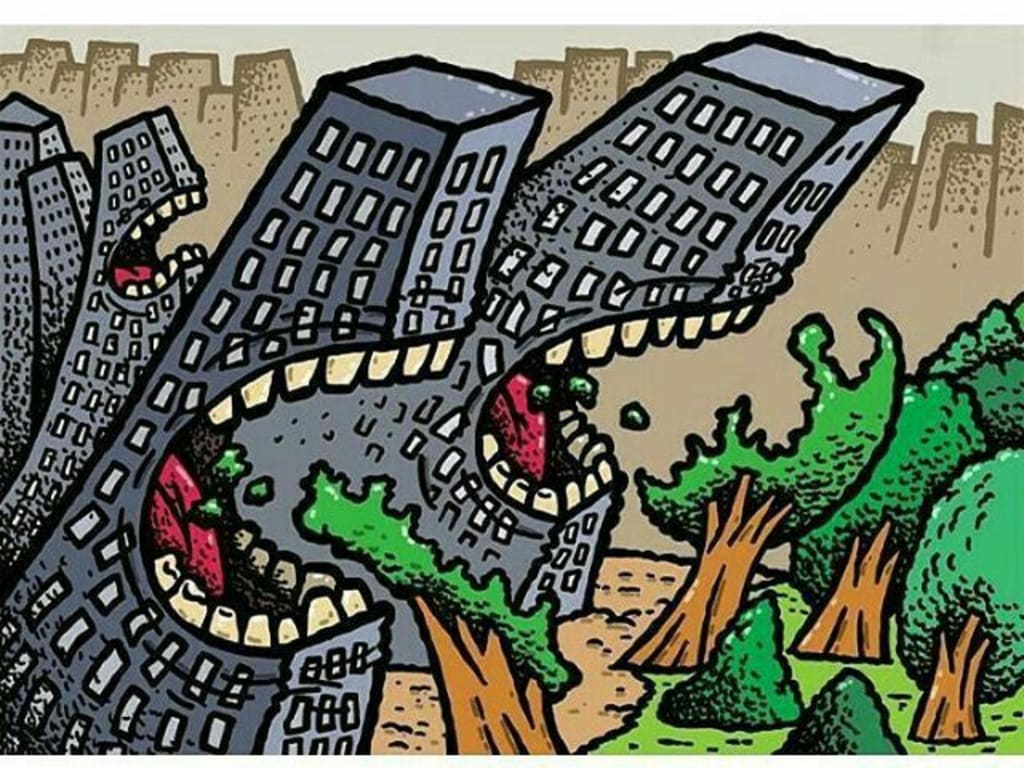
Urbanization, which is the rapid expansion of urban areas, has resulted in profound changes in our environment. While it offers opportunities for economic advancement and improved living standards, it also poses significant challenges, particularly in terms of pollution and resource management.
With the concentration of industries, transportation networks, and residential areas, urban centers, which are also known as cities, generate significant emissions of pollutants like particulate matter (PM), nitrogen oxides (NOx), sulfur dioxide (SO2), and volatile organic compounds (VOCs). These emissions, predominantly from industrial sources and vehicles, degrade air quality and pose severe health risks. The World Health Organization (WHO) highlights that urban populations are particularly vulnerable to polluted air, with one in ten people worldwide breathing air that fails to meet WHO air quality guidelines. In 2019, outdoor air pollution was responsible for an estimated 4.2 million premature deaths globally, with urban dwellers disproportionately affected (Global Burden of Disease Study, 2021).
Water quality is also influenced by urbanization through the increased runoff of pollutants such as sediment, nutrients, heavy metals, and chemicals from urban surfaces. Stormwater runoff, often contaminated with oil, heavy metals from vehicles, and chemicals from urban industries and households, can degrade water bodies and pose risks to aquatic ecosystems and human health. The United Nations Environment Programme (UNEP) reports that urban areas generate approximately 75% of global wastewater, much of which is discharged untreated into rivers, lakes, and oceans (UNEP, 2020).
In addition to air and water pollution, urbanization contributes significantly to the generation of solid waste. This includes household waste, construction and demolition debris, and industrial waste. Improper disposal and inadequate waste management infrastructure lead to waste accumulation in urban areas, causing visual blight, health hazards, and environmental degradation. The World Bank forecasts a 70% increase in global waste generation by 2050, driven by urbanization and population growth (World Bank, 2018). Many cities are grappling with landfill sites nearing capacity, while open dumping and burning of waste further contribute to air and soil pollution (UNEP, 2021).
Despite these challenges, there are opportunities for sustainable development. Cities around the world are adopting measures such as green infrastructure, renewable energy adoption, and sustainable transport systems to mitigate their environmental footprint. These initiatives not only reduce pollution but also improve overall quality of life.
Effective management of urbanization's environmental impacts requires integrated approaches to sustainable urban development. This includes urban planning that prioritizes compact, mixed-use development to reduce risks and promote efficient land use. Strategies to improve energy efficiency in buildings and promote renewable energy adoption can significantly reduce urban carbon footprints.
Moreover, enhancing waste management systems is crucial. Implementing public infrastructure for recycling, composting, and waste-to-energy conversion can minimize landfilling and reduce environmental pollution. Public education and community engagement play vital roles in encouraging responsible consumption and waste reduction practices among all residents.
Water management is another critical aspect. Cities need robust systems for treating wastewater to protect water quality and preserve aquatic ecosystems. Green infrastructure solutions, such as rain gardens and permeable pavements, can help reduce runoff and filter pollutants before they reach water bodies.
To summerize, addressing environmental challenges associated with urbanization requires collaboration among governments, businesses, and communities. Effective policies, technological innovations, and community engagement are key to achieving sustainable urbanization and ensuring a balanced relationship between urban growth and environmental conservation. Over time cities can and should mitigate their environmental impact and create healthier, more resilient communities for current and future generations.
____
Hey, if you enjoyed this you should check out my story on Social medias impact on politics and relationships. I also have a poem you might like so maybe take a look at those and leave a tip :) Or don't who am I to tell you what to do.
About the Creator
Alyce Willow
Hello, I am a young journalist and poet. I have dedicated the last few years to honing my writing skills and have found joy in using words to express my thoughts and emotions. Thank you for taking the time to read about my hyperfixations.
Keep reading
More stories from Alyce Willow and writers in Earth and other communities.
Squirrel talk
Eastern gray squirrels seem to be everywhere these days—dashing through backyards, chilling on every street corner, and climbing trees in every park. But how did they become such common inhabitants of our urban landscapes? To understand their journey to prominence, we need to rewind to the 1840s when Americans started reshaping their environments to welcome these once-perceived nuisances.
By Alyce Willow2 years ago in Earth
Kidnapping Victims Forced to Send Disturbing Videos to Relative, Say Spanish Police
Spanish police are investigating a disturbing kidnapping case after two men allegedly sent videos to a relative showing one of them bloodied and being threatened with a knife. According to authorities, the footage was intended to pressure the family, raising concerns about organized criminal tactics and the growing use of digital intimidation.
By Aarif Lashari8 days ago in Earth



Comments
There are no comments for this story
Be the first to respond and start the conversation.