
Polar Vortex Collapse Explained: Why Scientists Are Closely Watching This Dangerous Winter Phenomenon
What Is the Polar Vortex and Why Is Everyone Talking About It?

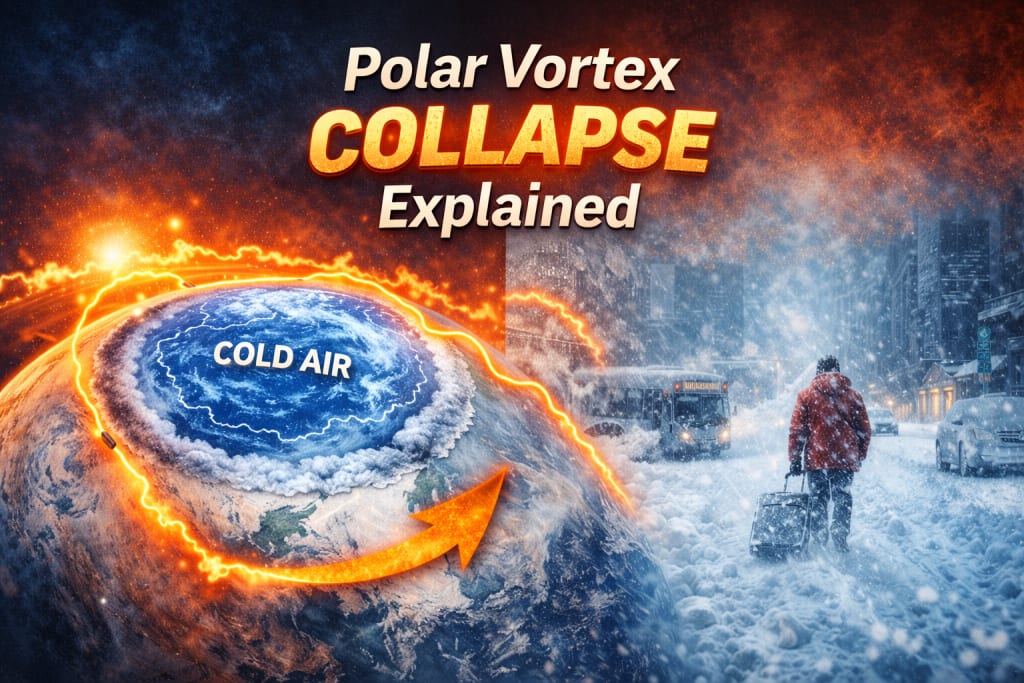
Introduction:
What Is the Polar Vortex and Why Is Everyone Talking About It?
In recent years, the term “polar vortex” has become common in winter weather headlines. When extreme cold sweeps across North America or Europe, the polar vortex is often blamed. But many people still ask an important question: What exactly is the polar vortex, and why are scientists so concerned about its collapse?
The polar vortex is not a storm or a sudden disaster. It is a large-scale atmospheric system that plays a key role in regulating winter temperatures in the Northern Hemisphere. When it behaves normally, cold air stays locked near the Arctic. But when it weakens or collapses, freezing air can spill southward, triggering severe and long-lasting cold waves.
As climate patterns change, experts are paying closer attention to how often and how violently the polar vortex is being disrupted. Understanding this phenomenon is crucial for predicting future weather extremes.
What Is the Polar Vortex?
The polar vortex is a massive ring of low-pressure, cold air that circles the Arctic region high in the atmosphere. It exists every year, especially during winter, and is held in place by strong winds known as the polar jet stream.
Under stable conditions:
- The vortex remains centered over the North Pole
- Cold air stays trapped in the Arctic
- Mid-latitude regions experience normal winter weather
The polar vortex is not new or unusual. What is unusual is how often it is becoming unstable.
What Does a Polar Vortex Collapse Mean?
A polar vortex collapse does not mean the vortex disappears completely. Instead, it refers to a major weakening or splitting of the system. When this happens, the cold air that was once contained near the Arctic escapes into lower latitudes.
This breakdown can push frigid Arctic air deep into regions such as:
- The United States
- Canada
- Europe
- Parts of Asia
These events often lead to record-breaking cold temperatures, extreme wind chills, and heavy snowfall.
How Does the Polar Vortex Collapse Occur?
The polar vortex is constantly changing and reacting to forces in the atmosphere. Several factors can contribute to its collapse.
Jet Stream Weakening
The jet stream acts like a barrier that keeps cold air confined. When it weakens or becomes wavy, it allows Arctic air to escape southward. This waviness is one of the primary triggers of polar vortex disruptions.
Sudden Stratospheric Warming
In some cases, temperatures high in the atmosphere rise rapidly, disrupting the vortex from above. This event, known as sudden stratospheric warming, can slow or even reverse the winds that hold the vortex together.
Atmospheric and Solar Influences
Changes in atmospheric pressure patterns and solar activity can also influence vortex stability. When these forces align, the polar vortex becomes more vulnerable to collapse.
What Happens After the Polar Vortex Collapses?
When the polar vortex breaks down, the effects can be severe and widespread.
Extreme Cold Waves
Cold air from the Arctic moves south and lingers longer than a typical cold front. Temperatures can plunge far below normal for days or even weeks.
A well-known example occurred in 2014, when parts of the United States experienced temperatures as low as -30°F (-34°C), disrupting daily life and infrastructure.
Heavy Snow and Ice
The interaction between cold Arctic air and moist systems can produce intense snowstorms and ice events. These conditions can paralyze transportation networks and cause widespread power outages.
Economic and Social Disruptions
Polar vortex events can:
- Damage crops and agriculture
- Increase heating costs
- Disrupt travel and supply chains
- Endanger vulnerable populations
The longer these cold spells last, the greater the impact on communities and economies.
Why Are Scientists Concerned About Increasing Polar Vortex Disruptions?
Climate scientists are closely monitoring the polar vortex because its instability appears to be increasing.
Arctic Amplification
The Arctic is warming twice as fast as the global average, a process known as Arctic amplification. As the Arctic warms, the temperature difference between polar and mid-latitude regions decreases.
This temperature difference is what powers the jet stream. When it weakens, the polar vortex becomes easier to disrupt.
Climate Change Connection
While research is ongoing, many studies suggest that climate change may be contributing to more frequent and intense polar vortex collapses. A warmer Arctic does not mean fewer cold events—instead, it may lead to more extreme and unpredictable winter weather.
Scientists are working to better understand how these changes will affect future climate patterns.
How Polar Vortex Collapses Affect Global Weather Patterns
The effects of a polar vortex collapse are not limited to cold temperatures.
Disrupted Weather Systems
When the vortex shifts, it can alter:
- Storm tracks
- Precipitation patterns
- Temperature distributions worldwide
Some regions may experience heavy snowfall, while others may see unusual warmth or dryness.
Interaction With Other Climate Systems
The polar vortex can interact with global patterns such as El Niño and La Niña, making weather forecasting more complex. These interactions increase uncertainty and raise the risk of extreme weather events.
How to Prepare for a Polar Vortex Event
Because polar vortex collapses can develop quickly, preparation is essential.
Stay Informed
Follow trusted weather agencies and pay attention to long-range forecasts during winter months.
- Protect Your Home
- Insulate pipes and walls
- Ensure heating systems are working properly
- Seal drafts to prevent heat loss
Build an Emergency Kit
Include:
- Non-perishable food
- Water
- Flashlights and batteries
- Warm blankets
Prepare Your Vehicle
Keep winter supplies in your car, including warm clothing, a first-aid kit, and emergency tools.
Conclusion:
Why the Polar Vortex Matters More Than Ever
The polar vortex is more than a seasonal weather term—it is a key indicator of a changing climate system. While it has always existed, its increasing instability is raising serious concerns among scientists.
A polar vortex collapse can bring dangerous cold, disrupt economies, and strain infrastructure across vast regions. As climate change continues to reshape atmospheric behavior, understanding this phenomenon becomes essential for preparedness and resilience.
Staying informed and proactive is the best defense against the unpredictable winters of the future. The polar vortex may begin in the Arctic, but its impacts are felt far beyond the North Pole.
About the Creator
Adil Ali Khan
I’m a passionate writer who loves exploring trending news topics, sharing insights, and keeping readers updated on what’s happening around the world.
Keep reading
More stories from Adil Ali Khan and writers in Earth and other communities.
Is Coffee Good or Bad for Your Brain? Science Explains
Introduction Coffee is one of the most popular drinks in the world. Millions of people start their day with a cup of coffee. Some say coffee makes them smarter, faster, and more focused. Others believe coffee damages the brain and causes anxiety and poor sleep. So what is the truth?
By Adil Ali Khanabout 2 hours ago in Longevity
The Watering Wisdom: AI Creates a Custom Schedule Based on Your Home's Environment
The quest for the perfect watering routine is the holy grail of houseplant care. It’s a dynamic equation with variables that change with the seasons, your home’s climate, and even the plant's growth cycle. But what if you could stop guessing? Modern plant care, powered by artificial intelligence, is moving beyond static advice to create dynamic, personalized watering wisdom that responds to your environment.
By Emma Wallaceabout 4 hours ago in Earth


Comments
There are no comments for this story
Be the first to respond and start the conversation.