
Parsley: The Unsung Hero of the Herb Garden
Embracing Parsley: Elevating Flavor and Wellness with a Versatile Herb

Introduction
When it comes to culinary herbs, parsley often plays a supporting role, overshadowed by its more robust counterparts. However, this humble herb deserves its time in the spotlight. With its vibrant green leaves and refreshing taste, parsley brings a burst of freshness to dishes and boasts a myriad of health benefits. In this blog post, we delve into the world of parsley, uncovering its rich history, versatile culinary uses, and the reasons why it deserves a prominent place in your herb garden.
A Journey Through History
Parsley (Petroselinum crispum) has a fascinating history that dates back over 2,000 years. Originating in the Mediterranean region, it was highly regarded in ancient civilizations such as Greece, Rome, and Egypt. The ancient Greeks associated parsley with victory and used it to crown the winners of athletic competitions. Romans used parsley as a garnish to freshen breath, and it was also believed to have mystical properties, protecting against evil spirits.
Culinary Delights
Parsley's delicate and fresh flavor makes it a versatile herb in the kitchen. It is commonly used as a garnish to add a pop of color and freshness to a variety of dishes. However, parsley's culinary potential extends far beyond garnishing. Both the curly and flat-leaf varieties of parsley can be used in cooking, each offering its own unique taste.
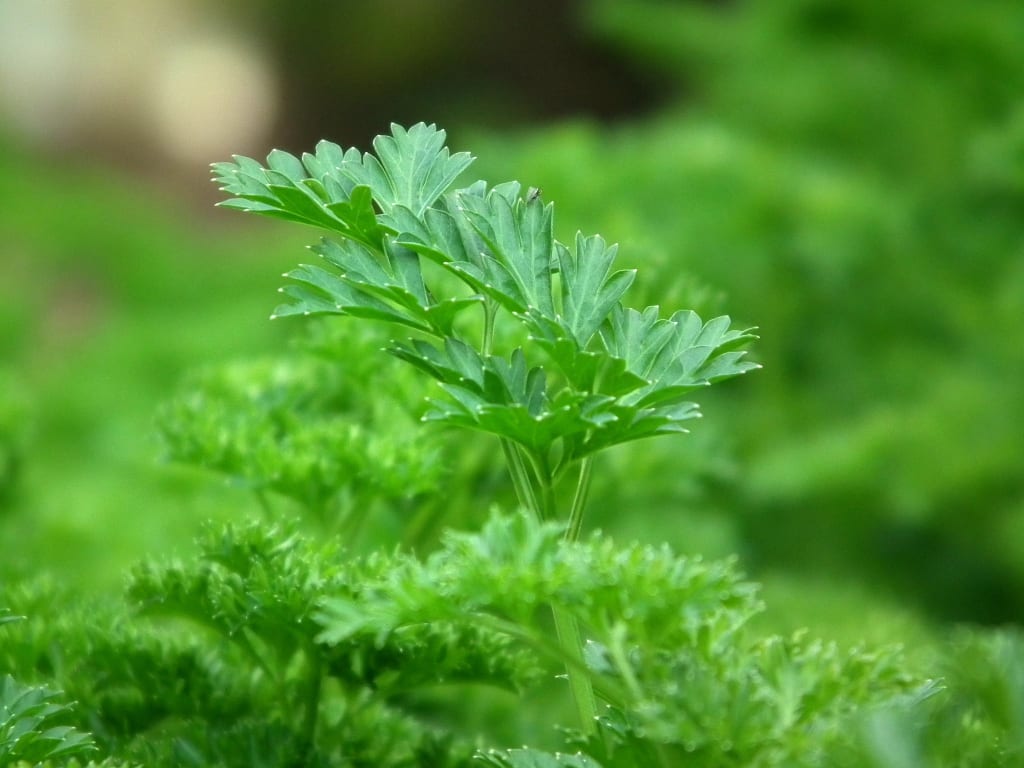
Curly parsley, with its ruffled leaves, is milder in flavor and works well as a garnish or in salads. It adds a crisp and refreshing element to dishes. Flat-leaf parsley, also known as Italian parsley, has a more robust and slightly peppery flavor. It is often used as an ingredient in marinades, dressings, soups, stews, and sauces. Its robust flavor holds up well when cooked, making it a perfect addition to sautés and roasted dishes.
Health Benefits
Beyond its culinary appeal, parsley offers an array of health benefits. It is a nutrient powerhouse, packed with vitamins A, C, and K, as well as essential minerals like iron and potassium. Parsley is also rich in antioxidants, which help protect the body against oxidative stress and promote overall well-being. Additionally, parsley contains flavonoids and volatile oils that have anti-inflammatory and immune-boosting properties.
Parsley is known for its diuretic properties, aiding in kidney function and reducing water retention. It is also believed to support digestive health, helping to alleviate bloating and indigestion. Some studies suggest that parsley may have anticancer properties and contribute to heart health by reducing cholesterol levels. Including parsley in your diet can be a simple and delicious way to enhance your overall health.
Growing and Harvesting
One of the joys of parsley is its ease of cultivation, making it an excellent addition to any herb garden. It can be grown from seeds or young plants and thrives in well-draining soil with ample sunlight. Parsley is a biennial plant, meaning it completes its life cycle over two years. In the first year, it develops a rosette of leaves, and in the second year, it produces flowers and seeds.
To harvest parsley, simply snip off the outer leaves as needed, leaving the inner leaves to continue growing. This allows the plant to sustain itself and produce fresh growth throughout the growing season. Parsley can be used fresh or dried for future use. To dry parsley, hang the cut stems upside down in a cool, well-ventilated area until they are completely dry. Once dried, store the leaves in an airtight container to preserve their flavor.
Beyond the Culinary World
Parsley's uses extend beyond the culinary realm. It has been traditionally used in herbal medicine for its diuretic and digestive properties. Parsley tea, made by steeping fresh or dried parsley leaves in hot water, is believed to aid digestion, alleviate bloating, and support kidney health. However, it is important to consult with a healthcare professional before using parsley for medicinal purposes.
In Conclusion
Parsley, often overlooked as a mere garnish, is a versatile herb with a rich history and an array of health benefits. From adding freshness and flavor to culinary creations to providing a nutritional boost, parsley has much to offer. So, embrace parsley as the unsung hero of your herb garden and explore the endless possibilities it brings to your kitchen. Let parsley's vibrant green leaves and refreshing taste elevate your dishes and nourish your body, turning this humble herb into a culinary and healthful delight.
About the Creator
High-Speed Train Crash in Southern Spain Leaves at Least 21 Dead
A devastating high-speed train crash in southern Spain has left at least 21 people dead and dozens injured, shocking the nation and triggering a major emergency response. The incident, which occurred on a busy rail route connecting key southern cities, has reignited concerns over railway safety, infrastructure maintenance, and emergency preparedness in one of Europe’s most advanced rail networks.
By Aarif Lashariabout 8 hours ago in Earth
Icy Chaos in Central and Eastern Europe
Winter has unleashed its fury across central and eastern Europe, leaving travelers frustrated and transport networks struggling to keep up. Over the past few days, freezing rain and ice have wreaked havoc on airports, train stations, and highways — forcing flight diversions, delaying trains, and making roads treacherously slippery. From Vienna to Budapest, Prague to Bratislava, this icy grip has brought travel to a near standstill. Let’s take a closer look at what’s happening, how it’s affecting people on the move, and what it tells us about winter travel in Europe. A Sudden Winter Blow A sudden wave of freezing rain swept across the region, coating runways, rail tracks, and roads with a dangerous layer of ice. Major airports in Austria, Hungary, Slovakia, and the Czech Republic were particularly affected. At Vienna International Airport, operations were temporarily suspended when runways became too slick for flights to land safely. Travelers already in the air had to divert to alternative airports in Munich, Frankfurt, and Venice. Meanwhile, Budapest’s Ferenc Liszt International Airport paused all arrivals and departures, and Prague’s Václav Havel Airport continued operating but at limited capacity. Trains Crawling Through Ice Rail networks weren’t spared. Across Austria, Hungary, and the Czech Republic, ice on tracks and power lines caused delays and cancellations. Austria’s national rail operator, ÖBB, urged passengers to postpone non-essential journeys. In the Czech Republic, travelers at Prague’s main station faced long waits as trains struggled to maintain schedules. Hungary’s tram and suburban rail services were temporarily suspended due to ice buildup on power lines. This combination of black ice, frozen switches, and heavy snowfall has tested the limits of winter infrastructure in Europe. Roads Turn Into Skating Rinks The icy weather didn’t just affect public transport — roads became treacherous, too. Authorities in Slovakia and the Czech Republic warned residents to avoid non-essential travel as highways turned into slippery skating rinks. Accidents and minor collisions were reported, and emergency services were busy responding to dozens of injuries from slips and falls. Even schools weren’t immune: parts of Romania shifted to online learning, keeping children safe during the extreme temperatures, which dropped to around -13°C in some areas. Why This Weather Is So Disruptive Meteorologists point to several factors that made this storm particularly severe: Freezing rain on top of existing snow creates an icy layer that’s extremely hard to clear. Rapidly refreezing surfaces make conditions unpredictable. Temperatures hovering around freezing prevent efficient melting during the day. This “perfect storm” scenario underscores just how vulnerable transport systems are to extreme weather. Even well-prepared airports and rail networks can struggle when weather transitions from snow to freezing rain. Voices From the Ground Passengers took to social media to express their frustration: Crowded airports as travelers scrambled to rebook flights. Train stations packed with delayed commuters, unsure when the next train would depart. Warming centers opened to provide shelter and hot drinks for stranded travelers. For many, a simple trip turned into a test of patience and resilience. Tips for Traveling in Freezing Conditions If you must travel during winter storms, experts recommend: Check flight and train schedules regularly, as delays can change quickly. Allow extra time for travel to avoid missing connections. Consider travel insurance that covers weather-related disruptions. If driving, carry winter essentials: blankets, food, water, and check road conditions before departure. Most importantly, prioritize safety over schedules — icy conditions can change rapidly, making travel risky. A Reminder From Winter This recent chaos in central and eastern Europe serves as a stark reminder of how interconnected transport systems are, and how vulnerable they can be to extreme weather. Flights grounded, trains stalled, and highways turned icy show that winter can bring travel to a halt — sometimes with very little warning. As Europe continues to face volatile winter conditions, travelers and authorities alike are reminded: preparation and flexibility are key. Sometimes, the weather truly has the final say. ❄️🛫🚆
By Muhammad Hassan5 days ago in Earth
Center Stage with Paul Stewart
*** I'm keen to republish the interviews I did for my series with Vocal creators. It's been a few years and I thought it might be nice to revisit these wonderful conversations. I'll be releasing them one at a time for a few weeks/months.
By Heather Hubler4 days ago in Interview



Comments
There are no comments for this story
Be the first to respond and start the conversation.