
Notes On A Summer Garden:
Reconnecting with Mother Nature during Times of Stress.


I’m standing outside this morning watering the garden. I am such an optimistic gardener in the spring. I am so motivated by the new growth of the bushes and trees and the sturdy stems of the seeds I started in my little three-season porch back in January. This is the year I think to myself, This is the year my garden thrives. I am so confident, and so committed.
And then August comes.
Why did I think this was a good idea?
It’s six thirty in the morning, a time of day I have become less familiar with since I left my first career in education. The sun is just starting to peek out from behind the mulberry trees, and it casts a lovely pink hue over the barren ground and sunburned leaves. It’s only eighty-five degrees out, but it feels much warmer due to the skyrocketing heat index and high humidity. The humidity is what gets me. When people talk about summer heat I always thought I could handle any of it, being from Texas and all, until I spent a summer in a midwest town with eighty percent humidity. Even though the temperatures were lower, I felt like I was slowly melting every time I set food outside.
This little pocket of morning, with just myself and my goofy dog out in the backyard, is the nicest weather we’ll see all day; so this is when I come to water the garden. I am not naturally a morning person by any means, but I feel better about myself, and about the day ahead when I get this task finished before breakfast.
I started this garden for a few reasons. Firstly, for the bees. I read an article years ago outlining the current devastation that the bees are going through, and what an upheaval their extinction would cause on our ecosystem. So I added the bees to my list of things to worry about when I can’t sleep in the middle of the night and planted a few native flowers from my local nursery.
I was surprised by the difference it made. It seemed as if overnight our little yard had reentered the ecosystem. There were bees, butterflies, moths, and birds, even a few dragonflies all congregating around our little patch of flowers. I expected to feel better, knowing that I was doing something, even something so small, to try to help. What I didn’t expect was how much better I would feel mentally, and in my body, simply from tending to the earth for a few minutes each day.
Thus, the obsession began. An obsession I was struggling to refresh as I lugged the garden hose through the yard once more. I look around at the sunflowers standing eight feet tall, their stems sturdy enough to house the birds when they land, and nibble at their seeds. I see that there are new baby green tomatoes on the vine, even though I was sure the afternoon temperatures were too hot for them to keep flowering. And then I notice my pride and joy, my red Crape Myrtle has its first bloom.
If you’re familiar with the Crape Myrtle tree you may be wondering what the big deal is. Crape Myrtle trees are incredibly common in Texas, especially in my city, due to their drought and heat tolerance and ample blooms. They blend into the landscape, biding their time until the first wave of summer hits, and then they explode. Massive blooms in all shades of pink, purple, red, and white are suddenly everywhere as if the entire city has been decorated in crepe paper for a celebration.
Things may be tough in Texas right now, but for three months in the summer, we have massive pink trees everywhere, and that is something I can’t take for granted.
I planted my own Crepe Myrtle the first fall after we moved into our house. It survived the unprecedented freeze of twenty twenty-one, the severe droughts in both twenty twenty-two and three, and the tornado that hit earlier this year in the spring of twenty twenty-four.
It was only a foot or so tall when I planted it, (side note, it was one of the biggest sticker shocks of my life when I learned how much trees cost!) and has since grown to about four and a half feet tall.
It should hopefully, in about a decade or so, grow to be ten to twelve feet tall.
I often wonder if I’ll be around to see it when it’s fully grown, in all its glory. Planning for the future in the middle of multiple crises has proven to be expectedly difficult; and the young woman with a five-year plan that I was in my twenties has been replaced with a softer, more flexible woman out of necessity in my thirties. Our once surely Forever Home had become a Forever? Home and even if we still call this place home in a decade, we’ve learned how easily one bad storm or natural disaster can take out even the most sturdy of trees.
I used to struggle with this concept, that I may be gardening for the next owner's benefit. Why was I putting in all of this work if I might not be able to see the benefits down the line in five, ten, or twenty years? We just need to decide if we’re going to stay here or not I would tell myself, and then I can decide what to focus on. This way of thinking kept me in a constant state of dis-regulation. Every small decision seemed like it would snowball into a larger one, and we could never just relax, and enjoy the garden, the yard, and the life we were living just now.
Then one day in my online permaculture class my instructor said something that completely changed my way of thinking. We were discussing working with the land and another student posed a question.
I am a renter and my landlord supports my garden, but I feel silly that I am doing all of this work on land that I am only temporarily living on. Is it even worth it?
It is absolutely worth it. She answered, without missing a beat. We can’t control what happens to the land, and even if that land is loved on for a moment and then turned into a wasteland in the future, the ecosystem is still better for it.
So I water the garden, and I put up shade cloths and bee baths, and I hope tomorrow looks a little brighter.
About the Creator
Alys Revna
Writer of things. Mostly poetry, fiction, and fantasy. ✨
Keep reading
More stories from Alys Revna and writers in Earth and other communities.
Practical Magic Summer Series: Part Two 🦋
I'm outside in the garden this morning, sitting on my blanket, having a little coffee and breakfast al fresco style. The air is thick and muggy. June in Texas is always a little bit temperamental; either it gets too hot too quickly, or it's tornado season. Rarely is there an in between.
By Alys Revna9 months ago in Earth
Winter Olympics Must Tackle Environmental Impact Before the Snow Runs Out
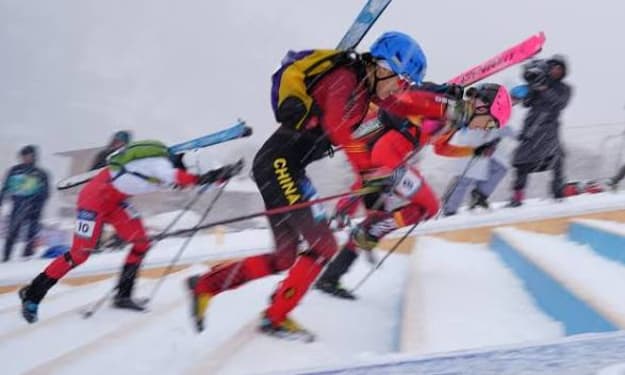
The future of the Winter Olympics is increasingly threatened by the very climate conditions that once defined it. Rising global temperatures, shrinking glaciers, and unreliable snowfall are forcing organizers to confront an uncomfortable truth: without urgent environmental reform, the Games may soon struggle to find suitable natural winter settings. Recent editions of the Winter Olympics have relied heavily on artificial snow and extensive infrastructure projects to compensate for warming conditions. While technology has allowed competitions to proceed, it has come at a significant environmental cost. Artificial snowmaking requires vast quantities of water and energy, placing additional strain on fragile alpine ecosystems already stressed by climate change. Climate Change and Vanishing Snow Scientists warn that many traditional Winter Olympics host regions may no longer be viable within decades. Areas in the Alps, once considered snow-secure, now experience shorter winters and more frequent rain instead of snow. According to climate research groups, average winter temperatures in mountainous regions have risen by nearly two degrees Celsius over the past century, drastically reducing dependable snow cover. This trend is forcing Olympic planners to consider fewer and fewer potential host cities. By mid-century, only a small number of high-altitude or northern locations may be able to provide natural snow conditions for outdoor events such as skiing, snowboarding, and biathlon. The Environmental Cost of Hosting Beyond snowmaking, the construction of Olympic venues has long raised environmental concerns. New roads, hotels, and ski facilities often require deforestation and large-scale land reshaping. After the Games end, many venues are underused or abandoned, leaving behind what critics call “white elephants” in sensitive landscapes. Transport is another major contributor to the carbon footprint. Tens of thousands of athletes, officials, media personnel, and spectators travel internationally to attend the Games, producing millions of tons of carbon emissions. For an event that celebrates human endurance and natural beauty, this contradiction has become increasingly difficult to ignore. Calls for Reform Environmental groups and athletes alike are urging the International Olympic Committee (IOC) to adopt stricter sustainability standards. Some propose limiting host cities to a fixed rotation of climate-resilient venues rather than building new sites every four years. This would reduce construction emissions and allow organizers to invest in long-term green infrastructure. Others suggest shifting more events indoors or redesigning sports formats to reduce reliance on perfect snow conditions. Innovations in energy use, such as fully renewable-powered venues and electric transport systems, are also gaining support. The IOC has already pledged to make future Games climate-positive, promising to cut emissions and offset remaining carbon output. However, critics argue that offsets alone are not enough and that fundamental changes in how the Games are planned and hosted are required. Athletes Speak Out Many athletes who train in mountain environments are among the most vocal advocates for change. They witness disappearing glaciers and unpredictable seasons firsthand. Several Olympic champions have joined climate campaigns, warning that winter sports themselves are at risk of becoming inaccessible to future generations. “You can’t celebrate snow sports if there’s no snow left,” one former skier remarked. “Protecting the climate is protecting our sport.” Their message resonates with younger audiences, who increasingly expect major global events to demonstrate environmental responsibility. A Race Against Time The challenge now facing the Winter Olympics is not only logistical but moral. As one of the world’s most visible sporting spectacles, the Games carry symbolic weight. They can either continue to adapt in ways that worsen environmental damage or become a model for sustainable international events. If current warming trends continue, experts warn that future Winter Olympics could be confined to a handful of locations with artificial conditions resembling theme parks rather than natural winter landscapes. Such a shift would undermine the spirit of the Games, which has always been rooted in ice, snow, and mountains. Conclusion The Winter Olympics stand at a crossroads. Climate change has transformed snow from a guarantee into a luxury, and the environmental cost of maintaining the Games is rising sharply. To survive, the Olympics must evolve—by cutting emissions, rethinking host locations, and embracing genuine sustainability rather than temporary fixes. Without decisive action, the world’s greatest winter sporting event may find itself running out of snow—and time.
By Fiaz Ahmed 5 days ago in Earth



Comments
There are no comments for this story
Be the first to respond and start the conversation.