
Northern lights (aurora borealis): what they are and how to see them
Northern lights

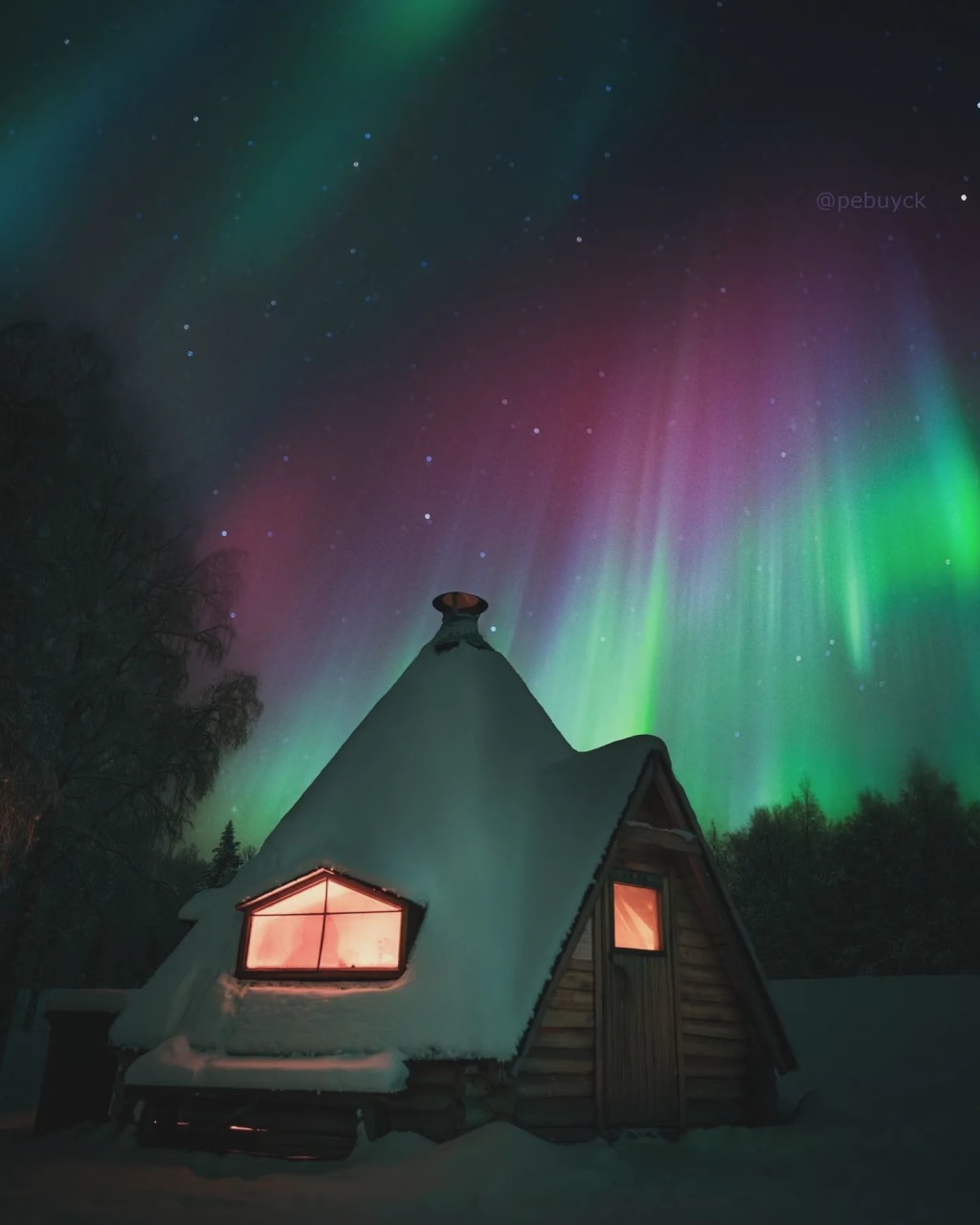
The Northern Lights: A Breathtaking Cosmic Dance
The northern lights, or aurora borealis, are one of nature's most mesmerizing spectacles. These dancing ribbons of light have been enchanting observers for thousands of years. But behind their beauty lies a fascinating and dynamic process involving the sun, Earth's atmosphere, and our planet's magnetic field.
How Do the Northern Lights Form?
At the heart of the aurora borealis is a powerful interaction between the sun and Earth. The sun continuously sends out a flow of charged particles, known as the solar wind. When these particles reach Earth, they collide with gases in our upper atmosphere, called the ionosphere.
Our planet’s magnetic field is crucial in shaping the northern lights. It acts like a shield, directing the solar particles toward the poles. When these particles meet the gases in the atmosphere, they transfer their energy, causing the gases to emit light. This light is what we see as the beautiful auroras.
The colors of the auroras depend on the types of gases involved. For instance, oxygen produces green and red hues, while nitrogen can create purples and pinks. This colorful display is akin to a unique fingerprint for each type of atom and molecule in our atmosphere.
Understanding the Phenomenon
Despite their beauty, auroras result from a violent process. Charged particles from the sun travel up to 45 million miles per hour (72 million kilometers per hour) before crashing into Earth's atmosphere. Thankfully, our magnetic field helps protect us from these high-speed particles and turns their energy into the stunning light displays we witness.
Auroras are not exclusive to Earth. They occur on other planets, too, provided they have a magnetic field and atmosphere. For example, Jupiter, with its strong magnetic field, has vibrant auroras far more intense than Earth's.
Best Places and Times to See the Northern Lights
Many skywatchers dream of seeing the northern lights. The best places to catch this phenomenon are within the auroral zone, a roughly 1,550-mile (2,500-kilometer) radius around the North Pole. Ideal locations include Fairbanks, Alaska; Tromsø, Norway; Yellowknife, Canada; and Reykjavik, Iceland.
To maximize your chances of seeing the auroras, visit these areas between September and April when the nights are long and dark. The most spectacular displays usually happen between 9 p.m. and 3 a.m., so plan your viewing times accordingly.
Even though the auroras happen constantly, they can be tricky to spot due to local weather conditions. Clear skies are essential, so keep an eye on weather and aurora predictions from sources like the Geophysical Institute of the University of Alaska Fairbanks.
The Solar Cycle and Aurora Activity
Aurora sightings are closely tied to the solar cycle, an approximately 11-year period of varying solar activity. During periods of high solar activity, known as solar maximum, the northern lights become more frequent and intense. We are approaching a solar maximum, expected between early 2024 and late 2025, making this an excellent time for Aurora enthusiasts to plan their trips.
The Southern Lights and STEVE
Just as the northern lights illuminate the skies of the northern hemisphere, the southern hemisphere experiences a similar phenomenon known as the southern lights or aurora australis. While these lights are identical to their northern counterparts, they occur in the opposite hemisphere. They can sometimes show up at different times because the sun’s magnetic field affects Earth’s magnetic field asymmetrically.
In addition to the northern and southern lights, there is another aurora-like event called STEVE (Strong Thermal Emission Velocity Enhancement). STEVE is a narrow, purple streak often accompanied by a green “picket fence” structure. It is visible from lower latitudes compared to the traditional auroras and is a fascinating subject of ongoing research.
Capturing the Magic
Photographing the northern lights can be a rewarding yet challenging experience. To get the best shots, use a camera with manual settings, a sturdy tripod, and a remote trigger to avoid camera shake. Despite the temptation to focus solely on your camera, don’t forget to enjoy the spectacle with your own eyes. The depth and movement of the auroras are something your eyes can appreciate in a way that a camera might not fully capture.
The Historical and Cultural Impact
The northern lights have been a source of wonder and inspiration throughout history. Many cultures have woven auroras into their legends, from ancient cave paintings to Norse mythology. Galileo Galilei named them "Aurora borealis" in 1619, but references to these lights appear in records dating back to 567 B.C. The scientific understanding of auroras has evolved significantly over time, with Kristian Birkeland's 20th-century theories providing key insights into the nature of these lights.
Conclusion
The northern lights are more than just a beautiful display in the night sky. They testify to the complex interactions between the sun, Earth's atmosphere, and our magnetic field. Whether you’re a seasoned skywatcher or a curious traveler, witnessing this natural wonder is an unforgettable experience that bridges the gap between science and wonder.
About the Creator
SK
Sajawal is an 18-year-old student in Class 13, known for his curiosity and determination. With his fair complexion and thoughtful demeanor, Sajawal stands out among his peers. He is dedicated to his studies and has a passion for storytellin
Birds with Wild Hairdos
Cockatoos are known for their expressive crests, which they raise or lower depending on their mood. The crests can be white, yellow, or pink. These charismatic birds are native to the Australian continent, the islands of the Indo-Australian archipelago, and parts of New Guinea. There are 21 different species of cockatoo, varying in size from the diminutive Galah to the imposing Sulphur-crested Cockatoo. Most cockatoo species are highly social birds, forming strong pair bonds that often last a lifetime. Cockatoos are primarily herbivores, with a diet consisting of seeds, nuts, fruits, roots, and occasionally insects and larvae.
By Rasma Raistersa day ago in Earth
Regenerative Agriculture's Quiet Revolution
by Futoshi Tachino Regenerative agriculture — a holistic approach to farming that restores soil health, biodiversity, and resilience — has rapidly gained traction in recent years. This shift remains largely underappreciated by the public; in a 2024 survey, around 43% of U.S. consumers had never heard of regenerative agriculture (and another 28% had only minimal awareness) [4]. Despite this low profile, tangible developments in regenerative farming are delivering robust results. Farmers are proving that it’s possible to maintain high yields with fewer chemical inputs, improve profitability, and enhance ecological outcomes — all at once. This article explores the evidence-backed progress of regenerative agriculture across regions, the policies and technologies driving its adoption, and why this overlooked sustainability success story deserves greater recognition.
By Futoshi Tachino7 days ago in Earth



Comments
There are no comments for this story
Be the first to respond and start the conversation.