
North Korea's Hidden Hand in Russia's War
Reports that North Korea may be about to become involved in Russia's war against Ukraine represent a grave and concerning development

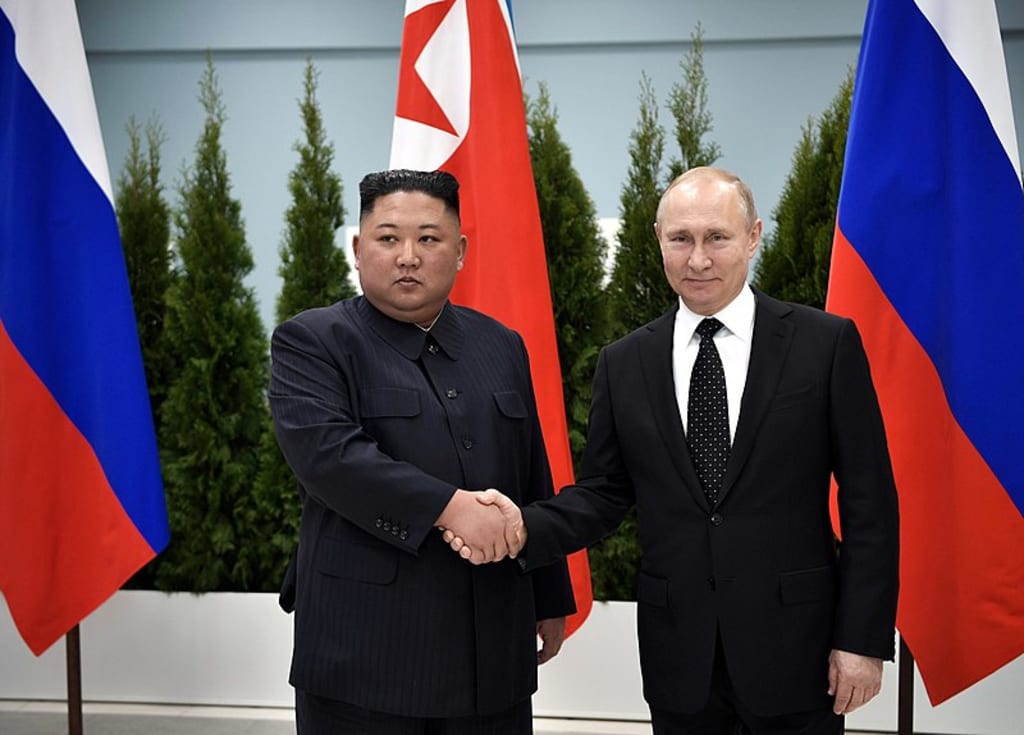
In yet another sign of the increasingly complex and interconnected nature of modern geopolitical conflict, reports have emerged that North Korean troops have entered the war in Ukraine.
Intelligence sources and political leaders, especially from Ukraine and South Korea, have expressed fears that North Korea may have sent-or will send-up to 12,000 soldiers to support the Russian invasion.
Neither NATO nor the United States has confirmed the presence of North Korean troops on the battlefield, but the very prospect of such a coalition is a dangerous turn in the conflict, which could threaten to destabilize world security even more.
North Korean Troops in Russia: Accusations and Intelligence Reports
Suspicion over North Korea's involvement in Ukraine first emerged when intelligence agencies from South Korea and Ukraine started reporting that North Korea sent soldiers to help Russia.
According to South Korean intelligence, some 1,500 North Korean soldiers were sent to the Russian city of Vladivostok, who afterwards would be moved to the Ukrainian theater. These soldiers, allegedly including special forces among them, reportedly traveled on vessels from Russia and may already have begun training to be deployed for combat duty in Ukraine.
Reports about this were corroborated by Ukrainian President Volodymyr Zelenskyy, who had said that his government received intelligence on 10,000 North Korean soldiers who are allegedly planning to go fight against Ukraine. During a meeting with the leaders of the European Union in Brussels, the revelation he provided bolsters the reports about the involvement of North Korea.
It has increasingly concerned the Ukrainian military that there is an appearance of foreign fighters supporting Russian efforts, most especially from states like North Korea that have been historically isolated from any Western influence.
Whatever the case may be, the growing reports did little to deter NATO Secretary-General Mark Rutte's caution in saying such claims are worrisome but remain unconfirmed thus far. Following a meeting of the defense ministers in Brussels, Rutte repeated that NATO closely monitored the situation but had not seen direct proof of North Korea's involvement in combat activities.
The absence of an official confirmation by NATO did not reduce tensions: both Ukraine and its allies in South Korea consider the possible deployment of North Korean troops as a serious development of the conflict.
Military Cooperation between Russia and the DPRK
The military interaction between North Korea and Russia has become more intensified since the outbreak of war in Ukraine.
Traditionally, relations between North Korea and Russia have been transactional: Pyongyang receives large-scale economic and military assistance in exchange for political loyalty and episodic support for Russian military interests. But as the West sanctioned Russia into increasing isolation, the Kremlin has attempted to solidify its ties with other authoritarian powers-most notably North Korea.
The agencies and Western media reported that North Korea has supplied Russia with large volumes of artillery shells estimated to reach three million rounds per year. According to The Times, almost half of the ammunition used by Russian forces in Ukraine is now made up of North Korean artillery shells. This constitutes a major contribution to Russia's war effort in light of the heavy reliance on artillery in the grinding, attritional nature of the conflict in Ukraine.
In return, if reports are true, Russia is offering substantial amounts of food, fuel, and military technology that North Korea badly needs.
According to intelligence reports, this collaboration with Russia aids the advancement of the military under Kim Jong Un, even reportedly satellite technology and ICBM systems. These developments are a source of growing international concern about the implications of an increasingly militarily capable North Korean state for regional stability, especially on the Korean Peninsula.
The Role of North Korean Special Forces in Ukraine
Confirmation of North Korea's sending its special forces to Ukraine would be a serious escalation in the war.
The special forces are usually trained and prepared for high-standard operations such as sabotage, reconnaissance, and selective strikes. The South Korean intelligence reports said the units would be provided with Russian uniforms and fake identification documents to conceal their nationality, which may be hard to verify on the battlefield.
Whereas the North Korean forces have limited experience in large-scale conventional warfare outside their borders, this involvement in the Ukrainian conflict would be giving them the necessary combat exposure to modern high-intensity warfare.
That aspect is disturbingly true for South Korea, considering North Korea's military advances as a direct threat to its national security.
It would also set a very dangerous precedent for the possible intervention of North Korean troops in other conflicts in the future, where small, isolated regimes intervene in larger geopolitical conflicts-as in this case-driven by the desire for military experience and diplomatic leverage.
Moscow's Denials and the Silence of NATO and the United States
However, despite a building body of intelligence pointing to involvement, Russia and North Korea have constantly denied such reports.
Russian officials have categorically denied reports of North Korean soldiers fighting alongside Russian troops in Ukraine, labeling the reports disinformation aimed at discrediting Moscow's military campaign into Ukraine. Authorities in North Korea have similarly denied involvement in the conflict, insisting that their military activities are targeted only at defense.
But with no public confirmation of this from either NATO or the U.S., speculations abound on how much involvement North Korea actually has. So far, its intelligence agencies have also kept mum about the issue of alleged North Korean involvement, perhaps because it simply doesn't want to raise any question over credibility verification.
But the West has not issued a categorical denial, so there has been some wiggle room for suspicion that North Korean soldiers could, in fact, be involved in the fighting-more along covert lines.
Global Reactions and Diplomatic Fallout
Any involvement of North Korean troops in Ukraine has brought widespread diplomatic recriminations, especially from South Korea.
Reacting to the intelligence reports, the South Korean government summoned the Russian ambassador to express its concern about North Korea's supporting Russia. South Korean officials have characterized the deployment of North Korean soldiers as a direct threat to regional and global security, calling for a unified international response to deter further cooperation between Moscow and Pyongyang.
Ukrainian President Zelenskyy has been most outspoken among those urging a response from the West to this new development. In a public address, he warned that the involvement of North Korean troops would prolong the war and increase Ukrainian suffering.
With that new alignment, Zelenskyy has called for more military aid from NATO and Western governments to help Ukraine; he has framed the situation as not just a battle against Russian aggression but against an authoritative power alliance trying to dismantle worldwide stability.
The implications of possible involvement by North Korea in Ukraine go well beyond the conflict itself. If the North Korean soldiers gain combat experience in Ukraine, there is a big, long-term threat for South Korea.
If they return to North Korea with improved battlefield capabilities and access to more sophisticated Russian weapons, that could be a game-changer on the Korean Peninsula, increasing the potential for conflict. Furthermore, the budding alliance between North Korea and Russia could also embolden Pyongyang to conduct more audacious military operations in the region, knowing its back is covered by a major nuclear power.
Given that Russia remains reliant on external assistance to sustain its military operations, the entry into the conflict by other authoritarian governments, like North Korea, has the potential to redefine the nature of global security. To Ukraine and its Western allies, the new alliance marks a dangerous escalation of the conflict-one that demands an emergency, internationally directed response.
What started as a war between Ukraine and Russia is no longer just that; it has graduated into a proxy war for great ideological and geopolitical contestation.
It even involves North Korea, further underlining the fact that the war has drawn in actors from across the globe, each with their strategic objectives in relation to the ongoing war. The challenge, if approached from a Western point of view, is twofold: one of defense of Ukrainian sovereignty, on one hand, and containment, on the other, of such regimes as North Korea, which would wish to take advantage of war's chaos for their own purposes.
With a grinding conflict, the international community cannot take their eyes off the alliances and partnerships emerging from this war. The involvement of North Korea in Ukraine is a signal that the ripples resulting from this conflict are going to be felt far away from Eastern Europe and may reach traumatizingly as far as global peace and stability.
(dpa, AFP, reuters)
About the Creator
Tanguy Besson
Tanguy Besson, Freelance Journalist.
https://tanguybessonjournaliste.com/about/
Keep reading
More stories from Tanguy Besson and writers in Earth and other communities.
“Painful Times in My Marriage” — Melinda French Gates Reacts to Ex-Husband in Epstein Files
Public attention has intensified after comments attributed to Melinda French Gates referenced “painful times” in her marriage while discussions surrounding documents connected to Jeffrey Epstein continue to surface in public discourse. The situation has reignited conversations about accountability, public image, and the long-lasting impact of associations with controversial figures.
By Aarif Lashari3 days ago in Earth
The Light Turns
It's Tuesday 7:13 a.m. A cold and clear November morning awaits Ray on his morning commute. Ray rubs his hands together in the front seat of his Subaru. He turns the air temperature up, but keeps the air on low until the air warms up. He looks at the backup camera screen and reverses the Subaru out of his driveway onto Trimble Road.
By John R. Godwinabout 23 hours ago in Fiction


Comments
There are no comments for this story
Be the first to respond and start the conversation.