
The African Colonial Hangover
On how historical injustices shape Africa's quest for economic independence today

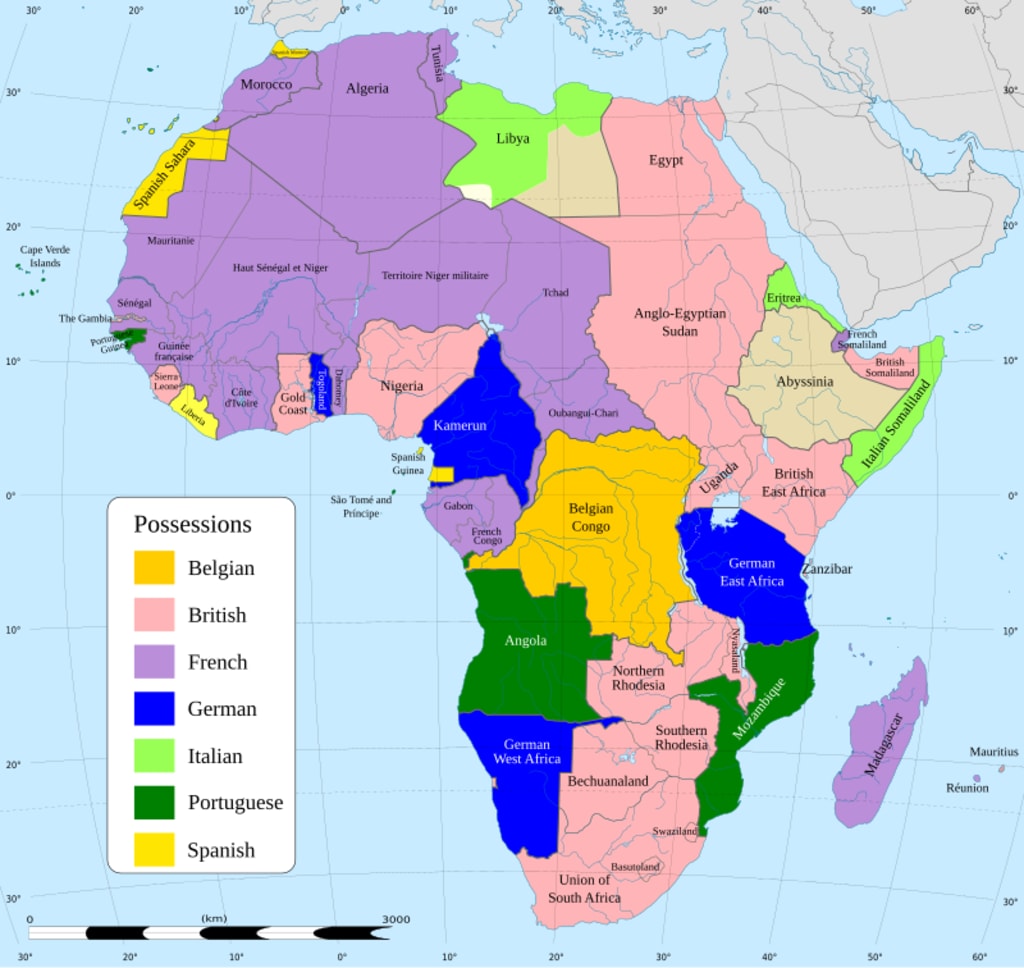
Africa. The colonial past, combined with the neocolonial aftermath, has contributed much to the latter's convoluted socio-economic configuration on the continent.
Artificial borders were created for most modern African nations through the powers of Europe, during the 'Scramble for Africa' in the late 19th century. It is in this historical context that a legacy of fragmentation, exploitation, and economic dependence has lived on into the present.
Considering the current debt crisis in the continent, which COVID-19 and geopolitical conflicts only made worse, there is an increasing need to reassess the conventional financial system and seek directions for movement toward economic justice and sovereignty.
Drawing on perspectives located at the crossroads of colonial legacy, the socioeconomic consequences of IMF policies and vectors for activism, we here seek to identify some of the challenges and opportunities that African nations face in their struggle toward economic independence.
Historical Approach to Colonialism in Africa
The Scramble
Late the 19th century was the era of hardcore European Imperialism popularly known as the 'Scramble for Africa'. Subsequent to the Berlin Conference of 1884–1885, the African continent was divided between different European powers thereby paving the way of colonization without considering the prevailing ethnic, cultural, or linguistic identity.
These included Germany, Britain, France, and Belgium, which claimed large tracts of land, often amalgamating different groups into one political entity. It was this arbitrary fixation of boundaries that created a recipe for future conflicts and socio-political tension when groups who earlier competed at worst and coexisted at best were brought together under the colonial yoke.
The motivations of European colonization were basically economic; powers sought to exploit the abundant mineral and agricultural products of Africa. Resource extraction fueled the growth of European economies, while local populations often benefited little and were subjected to intensive brutality, forced labor, and violence.
It is in this context that the transatlantic slave trade has become emblematic of the human cost of colonial ambition: millions forcibly taken from their homelands to be treated in a thoroughly inhumane manner.
Genocides and Resistance
The Namibian German colonial experience epitomizes brutalities of imperial rule.
The Herero and Nama rebelled against German occupation in 1904; it met a vicious response when General Lothar von Trotha ordered the extermination of the Herero people.
The death toll after this was estimated at 80% for the Herero and 50% for the Nama, which then again turned into one of the first acts of genocide to occur in the 20th century. Many were forced into the desert to starvation or into concentration camps with inhumane conditions.
These atrocities form part of history and expose the violent nature of colonialism when indigenous people fought against foreign powers that intruded into their territories. Yet, even as decolonization proceeded apace in the mid-20th century, the residual influence of colonialism went on defining the political and economic order of newly independent states.
From Decolonization to Cold War
With the end of World War II, a new beginning dawned in the history of decolonization as colonial powers across their territories were pressed by nationalist movements.
Self-determination through the restoration of sovereignty instigated countries across Africa to seek their independence. Yet, it was also complex since the decolonization process came with many challenges in which external powers, such as the United States and the Soviet Union, looked to their influences upon the independent nations in the light of the Cold War.
The recognition by the United States in 1884 of the personal claim of Belgian King Leopold II to the Congo River basin initiated what would be a long, and often contentious, relationship with the Democratic Republic of Congo.
Millions were killed through the exploitation of the Congo Free State under Leopold's rule, a brutality that continued into the subsequent rule of the Belgians. The U.S. had strong interests in the region, especially because it was highly rich in minerals, such as uranium that is used in nuclear weapons.
Patrice Lumumba, the first elected Prime Minister of the DRC, soon became an outspoken driver for pan-African economic independence.
This engendered hostility from both the Western powers and their local proxies, who perceived his pursuit of genuine sovereignty as a threat to their interests. In January 1961, Lumumba was brutally murdered by the U.S. and Belgian governments to ensure the continuation of that control.
In most cases, the U.S. interventions in Africa during the Cold War favored leaders that were pro-Western, irrespective of whether they were committed to democratic governance. This trend continued with the then-leaders like Kwame Nkrumah in Ghana, whose ambitious development plans were stifled by a military coup abetted by Washington.
As famously said by Nkrumah himself in his book Neo-Colonialism: The Last Stage of Imperialism, foreign powers would seek to undermine any attempt at self-determination by African nations.
The Impact of Colonialism on Economic Structures
Most African nations entered the legacy of colonialism with economic structures heavily dependent on the export of primary commodities.
Dependence further increased as policies adopted, particularly from the international financial institutions like the IMF and World Bank, kept accentuating debt servicing over sustainable development. The post-independence countries felt themselves ensnared in the trip of borrowing for servicing of debts and thus could not invest in vital infrastructure and social services.
The World Bank said many African countries were into the habit of skewed ratios of current spending to capital investments, which have been channeled mainly into servicing debt. This trend continued unabated until the COVID-19 pandemic struck. The COVID-19 pandemic, which started with the Chinese New Year in 2020, had further exposed the vulnerabilities of African economies.
With crumbling growth rates, these economies saw their debt burdens balloon, with the IMF warning of impending banking crises in the emerging markets.
The International Monetary Fund and Austerity Measures
The response of the IMF to debt crisis in poorer nations has often come with stringent austerity measures that are ostensibly aimed at economic stabilization but more often than not result in devastating social consequences.
This was amplified by the IMF's 2022 Fiscal Monitor Report, which called on governments to focus on affordable food and protecting low-income households but discouraged price controls or subsidies-a financial objective cut off from reality for millions.
Austerity measures set by the IMF have created a self-reinforcing cycle of dependence, where priority is given to repayments toward rich bondholders rather than reinvestment in health, education, and social welfare. In fact, as presented in a 2019 UNICEF report, many poor countries invest more in debt servicing than in basic services.
This is symptomatic of systemic failure, in which economic policy favors creditors at the expense of the most vulnerable.
Activism
In today's arts landscape, Seun Kuti, the youngest son of iconic Afrobeat innovator Fela Kuti, has risen to join the front ranks of those who raise their voices in criticism of economic exploitation and social injustice.
His music represents one of the strongest criticisms against the financial policies imposed on African nations - a trend he epitomizes in his song "IMF." Through his lyrics, Kuti portrays IMF officials as figures that siphon the lifeblood from African economies, turning sovereignty into empty shadows of greed.
The work of Seun is not one of self-expression but an appeal to the nations of Africa to rise up and assume their rightful place in matters that concern them amidst external pressures.
Here, the impact of Afrobeat as a medium of political expression underlines the serious contribution which art makes to activism-in fostering senses of community identity and resistance.
The Larger Battle Against Economic Injustice
This is a struggle at many levels, and an overweight one, not limited to musical activism.
Art may well inspire and create movements, but real political work must be carried out to dismantle structures of debt dependence. In concert, African nations should work to oppose the policies of the IMF and other international financial institutions, where such policies favor external interests at the expense of local development.
New emerging alternatives to traditional financial structures create avenues for more sustainable solutions. Emerging countries like China have become significant contributors to providing financial assistance without the strict conditionalities attached by the IMF, thereby opening avenues for African countries in their pursuit of financial independence.
Rethinking Foreign Aid and Economic Strategies
The debate related to foreign aid in Africa has reached a fever pitch, especially after the publication of Dambisa Moyo's provocative book titled Dead Aid in 2009.
Moyo argues that the billions of dollars in aid given to African nations since the 1970s have been highly ineffective, with little developmental gain. Instead, she says that large-scale corruption and civil wars have been enabled by such aid, hindering actual economic progress.
Moyo concludes that an about-face in the direction of aid dependence to private market debt may be the better path toward more sustainable development, with a reduction in Western aid while encouraging African nations to borrow from private creditors.
This view is consistent with the broad-based trend of financialization in capital flows to Africa, as reflected in the proliferation of sovereign bonds recently issued by African countries.
The Global South and Current Fiscal Crises
Indeed, as of 2022, fiscal crises dent countries of the Global South, especially in Africa, and are largely the result of global events such as the COVID-19 pandemic and the war in Ukraine.
Indeed, the IMF estimated that around 60% of low-income countries are at high risk of, or already in, debt distress. In such a context, critical questions regarding the role and relevance of international financial institutions have been raised with respect to challenges that uniquely affect African nations.
Reconsideration of International Financial Institutions' Role
The IMF criticisms indicate a dire need for revisiting its role in the African economies.
The notion that such international institutions are dispassionate actors regarding the economy is easily challenged by the life experience of nations carrying the yoke of debt. Historic analysis, instead, tends to turn up evidence of proposals - presently put forward time and again - designed to favour the interests of creditors at the expense of local populations' socio-economic needs.
These are just a few of the many challenges that beg for reform of the IMF and World Bank as calls grow for greater transparency, accountability, and more genuine concern with the needs of African countries. Proposed reforms run the gamut from frameworks for debt cancellation to investment in human development.
The aftermath of colonialism is evident in Africa's socio-economic predicament, which contributes to the present debt crisis the continent is facing.
In this regard, the role of international financial institutions - especially the IMF - has to be revisited with critical analysis so that policies can serve the interests of African nations. Music and political activism are indeed important means of articulating the demand for economic justice and sovereignty, but systemic change will necessarily call for collective initiative at the level of African countries and their allies.
With economic dependence and the need for sustainable development facing Africa at this juncture, it goes without saying that the way forward should reflect a holistic grasp of the historical context and contemporary realities of its experiences.
It is only within this framework that the continent can maneuver its way through the labyrinth of debt, colonial legacies, and in pursuit of genuine economic independence.
About the Creator
Tanguy Besson
Tanguy Besson, Freelance Journalist.
https://tanguybessonjournaliste.com/about/
Keep reading
More stories from Tanguy Besson and writers in Earth and other communities.
The Looming Menace of World War III
Today, a coming together of global crises in the form of growing tensions between superpowers, regional conflicts, and advancements in military technology means the world is steadily building upon an ever-critical geopolitical environment.
By Tanguy Bessonabout a year ago in Earth
Super Intelligent Aliens
For centuries, humanity has gazed at the night sky with a mixture of wonder and curiosity. The question of whether we are alone in the universe has fascinated philosophers, scientists, and storytellers alike. With recent advancements in astronomy, artificial intelligence, and space exploration, the possibility of extraterrestrial life no longer belongs solely to science fiction. Among the many hypotheses about alien life, one of the most unsettling is the existence of super intelligent aliens—beings whose intellectual, technological, and strategic capabilities far surpass those of humans. While the idea may seem speculative, the potential threat posed by such entities raises serious concerns about human survival, autonomy, and the future of civilization.
By Ibrahim Shah about 10 hours ago in Earth



Comments
There are no comments for this story
Be the first to respond and start the conversation.