
No Parents, No Problem: Animals That Reproduce Without Mating
From lizards to sharks, meet the creatures that skip romance and still make babies.

Whiptail Lizards: All-Female and Fully Functional
Some species of whiptail lizards, like the New Mexico whiptail, are made up entirely of females. These lizards reproduce through parthenogenesis — a process where an egg develops into an embryo without fertilization from a male.
What’s even more fascinating is that these lizards often still engage in mating-like behavior with each other. This helps stimulate ovulation, even though reproduction doesn’t involve any actual sperm. The offspring are genetic clones of the mother, though mutations can occur over generations. It’s a natural way of reproduction that skips the need for males entirely.
Komodo Dragons: Giants with a Backup Plan
Komodo dragons are famous for their size and strength, but they’re also capable of something incredible — facultative parthenogenesis. When isolated from males, female Komodo dragons can lay viable eggs that hatch into offspring — without mating.
This was first observed in captivity and later confirmed in wild populations. Interestingly, all offspring from this method are male, which increases the chances of later reproduction when mates become available. It’s an evolutionary survival strategy that allows the species to continue even when populations are low.
Marbled Crayfish: The Self-Cloning Invaders
Unlike their sexually reproducing cousins, marbled crayfish are entirely female and reproduce by cloning themselves. Every individual can produce hundreds of genetically identical offspring without mating.
Discovered in the pet trade in the 1990s, they quickly spread to the wild, where they’re considered an invasive species in some regions due to their fast reproduction. Scientists believe they originated from a genetic mutation in a single crayfish, and now this species is spreading rapidly across parts of Europe and Africa — all without a single male involved.
Hammerhead Sharks: Surprise Virgin Births
In a surprising twist of nature, bonnethead sharks — a type of small hammerhead — have been found to reproduce through parthenogenesis in captivity. This was once thought to be impossible in sharks, but DNA tests confirmed that some young were born without any paternal genes.
While rare in the wild, this discovery proved that even large, complex animals like sharks can reproduce without mating under the right conditions. It’s not the norm, but it’s a backup mechanism that nature seems to use when needed.
Aphids: Reproduction on Fast-Forward
Aphids are tiny insects known for their rapid reproduction, and part of their success lies in alternating between sexual and asexual reproduction. During warm months, female aphids clone themselves, producing offspring that are already pregnant — a phenomenon known as telescoping generations.
This strategy lets aphid populations explode in number within a very short time. When conditions change or winter approaches, they switch back to sexual reproduction to ensure genetic diversity. But when time is of the essence, no mates are needed — just one aphid can start an entire infestation.
Bdelloid Rotifers: 80 Million Years Without Males
Bdelloid rotifers are microscopic aquatic animals that have not had males for at least 80 million years. They reproduce exclusively through asexual reproduction, and their survival challenges many assumptions about the need for genetic mixing.
Despite their lack of sexual reproduction, bdelloid rotifers remain genetically diverse through gene duplication, horizontal gene transfer, and resilience to environmental stress. Some scientists refer to them as evolutionary miracles, proving that long-term asexual reproduction is not only possible — but sometimes preferable.
Turkeys: Yes, Even Birds Can Do It
Though it’s extremely rare, domestic turkeys have been documented reproducing without a male through parthenogenesis. In these cases, unfertilized eggs develop into embryos, and some have hatched successfully.
The resulting chicks are often weaker and less viable, but the fact that it’s even possible shows that reproductive flexibility exists in more species than we think — even those we typically associate with traditional mating systems.
Snails and Worms: Hermaphrodites That Self-Fertilize
Some land snails and certain species of flatworms are hermaphrodites, meaning they have both male and female reproductive organs. While many still mate with others, some can self-fertilize when no mate is available.
This ability ensures reproduction even in isolated environments, allowing a single individual to start a new population. It’s a reproductive backup that keeps these small animals thriving in difficult or unpredictable ecosystems.
Community
Reproduction is often seen as a two-player game — but in the natural world, some species play solo. From lizards and crayfish to sharks and even birds, life finds a way without mating, without partners, and sometimes without even the need for change.
These unique animals challenge what we think we know about biology and evolution. Their ability to survive, adapt, and even thrive through asexual or parthenogenetic reproduction shows that independence can be powerful, and that nature always has another trick up its sleeve.
If this article surprised you, share it with someone who thinks “it takes two to tango.” Because sometimes in nature, it only takes one.
About the Creator
A Changing Environmental Landscape Impacts the Insurance Industry
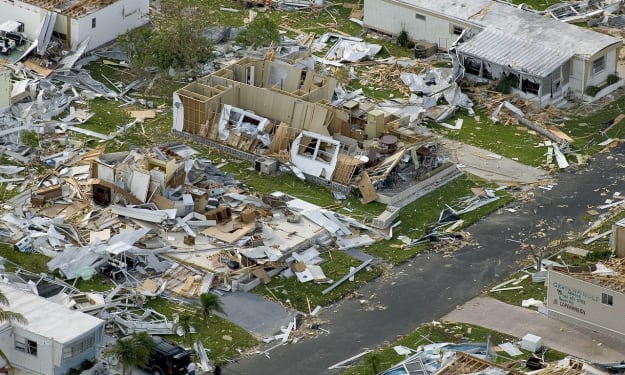
The phrase climate change simply refers to the changes in climate factors such as temperature and precipitation but over the last decade, the phrase has become much more polarizing, politicized and divisive. Non-scientific arguments aside, extreme weather events and natural disasters are increasing in number and severity and the effects of these events are causing more property damage in both commercial and residential spheres. Rising global temperatures can be attributed to the increase in damage causing storms and destructive wildfires. Insurance companies are seeing rising payout costs as an effect of climate change as more claims are submitted to cover losses from these events. As controversial as the phrase climate change is, insurance businesses and carriers are experiencing climate change first hand with increasing claims and losses as a direct result of weather and environmental events.
By doron levy5 days ago in Earth



Comments
There are no comments for this story
Be the first to respond and start the conversation.