
New Zealand sheep farting, causing global warming? Experts adjust feed and breeding to cultivate little fart sheep
New Zealand sheep fart, causing global warming

The dangers of global warming
Yesterday, the US Environmental Protection Agency released the results of a study that confirmed for the first time that human activity is also part of the cause of global warming. Global warming has severely affected Earth's ecosystems, human security, housing and health.
Scientists have confirmed that global warming is causing flooding along the Atlantic coast and coastal areas around the Gulf of Mexico about five times as often as in the 1950s.
Global warming has also rapidly melted the Arctic and Antarctic ice sheets, and seawater temperatures have reached unprecedented temperatures. The acidity of seawater from melting Arctic ice is also increasing, making global heatwaves about three times as likely as they were in the 1960s.
New Zealand sheep fart too much, causing global warming
Many scientists are working on ways to combat global warming, and so are those in New Zealand. The impression of New Zealand is often of large forests and grasslands and endless flocks of sheep.
New Zealand scientists have found through research that a large number of sheep will lead to global warming. It seems that both human and animal activities are to blame for global warming.
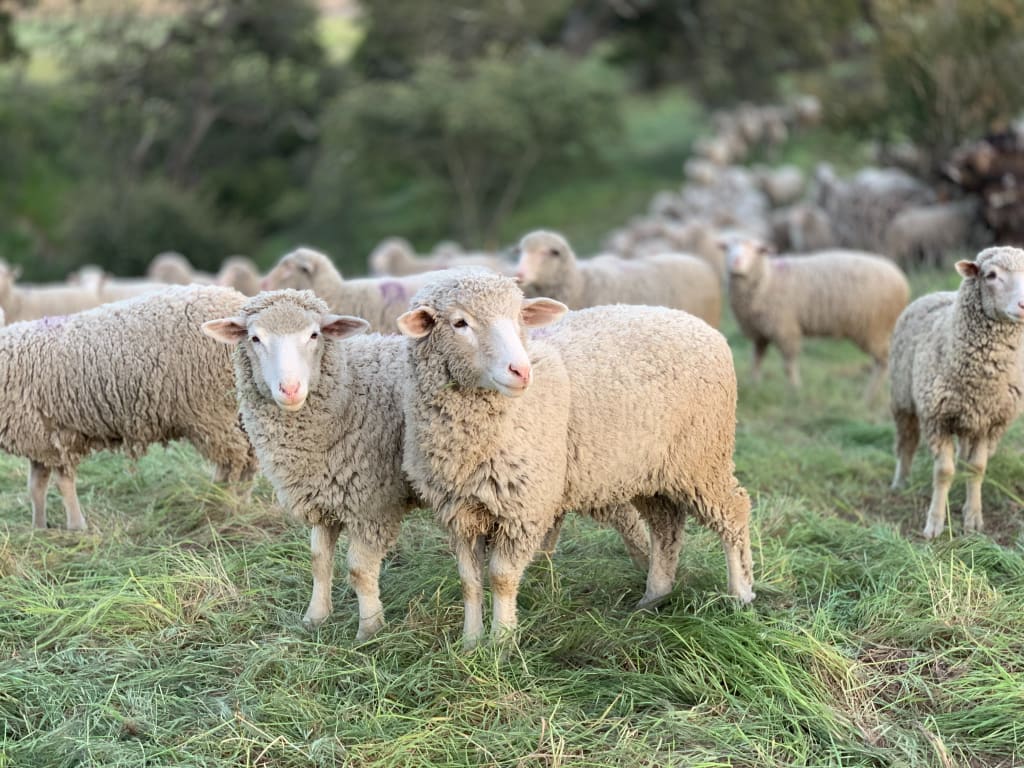
Some people may be scratching their heads, why do cute sheep cause global warming? That's because sheep often fart and burp, producing large amounts of methane, one of the most important gases responsible for global warming. Simply put, New Zealand's sheep farts too much and is a major cause of global warming.
cattle and sheep and produce a lot of methane
As the most common livestock, cattle and sheep are still very typical ruminant vegetarian animals. The grass they eat will be continuously digested in the stomachs of cattle and sheep, and finally produce a large amount of carbon dioxide and methane through burping and farting.
Carbon dioxide also contributes to global warming, but not nearly as much as methane. Methane is more than twenty times more potent than carbon dioxide in causing global warming. Methane is released into the air in large quantities, increasing the rate of global warming.
New Zealand scientists breed 'little fart sheep'
Scientists in New Zealand could no longer sit still, but they began to use what they had learned, determined to reduce the emission of methane from tens of millions of sheep in New Zealand.
The first idea that comes to mind is to combine the previous excellent breeding programs for animals and plants to cultivate sheep with the least fart, and then pass on this excellent gene from generation to generation, and use the most scientific method to breed "less fart sheep", thereby reducing the number of farts. Methane emissions.
This research has been going on for several years. At first, scientists selected nearly a hundred sheep for research and screening. Scientists recorded the amount of methane emitted by each sheep, and monitored in real time how much fart each sheep put out.
New Zealand's sheep produce 35% of the country's total methane emissions
Scientists then divide the flock into high methane and low methane groups. Only sheep with low methane emissions are allowed to breed. Through research, it has been found that the heritability of the offspring of these sheep is about 25%, and they have now been bred. The third generation of Shao fart sheep, their methane emissions have been reduced by one-tenth than before.
A long time ago, New Zealand was a typical agricultural and animal husbandry country, and its main income was from exporting agricultural products such as coarse wool and dairy products. The ratio of sheep to population in New Zealand has reached 7:1, and the current number of sheep in New Zealand may exceed 30 million.
Every sheep farts and burps, which can release a lot of methane and carbon dioxide, so the amount of methane gas emitted by tens of millions of sheep is quite large. Scientists have found through research that the total amount of methane emitted by sheep has accounted for 35% of New Zealand's total methane emissions. This is also the original intention of scientists to cultivate "less fart sheep".
Scientists are changing the eating habits of sheep
After cultivating the "Shao Fart Sheep", scientists in New Zealand have to work on the sheep's food. Through the study of sheep food, it is found that there is a significant difference in methane emissions between sheep that eat grass and those that eat rapeseed and sugar beets. The methane emissions of sheep eating vegetables are lower than those of sheep eating grass.
However, the rancher was still a little worried, and directly changed the sheep's diet, so that they could eat vegetables instead of grass. First, they were worried about increasing the cost of feeding, and second, they were worried that the quality and taste of the mutton would be affected.
It is urgent to control global warming
Relevant New Zealand authorities have put forward some countermeasures against the emission of methane gas by sheep a long time ago. Eighteen years ago, in order to control the emission of methane gas from sheep, the relevant departments of New Zealand formulated an agricultural emission research tax, which costs about 60 million RMB. In the end, it was unanimously opposed by the farmers, and finally it was nothing.
The harm of global warming is obvious to all. Scientists have confirmed that every time the average temperature of the earth rises by one degree, the size of animals in the sea will shrink by one-twentieth. Since the Industrial Revolution, global carbon dioxide emissions have increased by 25%, and average temperatures have risen by 1-2 degrees.
If all the north and south ice layers melt, the overall sea level will rise by about 67 meters, and most of the world's farmland and land will be submerged. Therefore, it is very necessary for scientists from various countries to respond to global warming. Pictures from the Internet must be deleted.
About the Creator
daron mychal
Give you a whole new vision to see the world
Keep reading
More stories from daron mychal and writers in Earth and other communities.
Is it useless to seal the sarcophagus? More neutrons, nuclear fission strengthens, Chernobyl may explode again
Fission reactions surge in concrete sarcophagus at Chernobyl nuclear power plant, risking another explosion. Thirty-five years after the nuclear accident, the number of neutrons picked up by on-site sensors has increased dramatically, a signal of fission that scientists have reason to believe is at risk of another runaway nuclear reaction. Scientists are evaluating the problem, however, and no alarm has been issued yet.
By daron mychal3 years ago in Earth
Global Polyethylene Market Size and Forecast 2025–2033: Growth Driven by Packaging, Infrastructure, and Sustainable Innovation
Introduction Polyethylene, the world’s most widely produced plastic polymer, continues to play a crucial role in modern industrial and consumer economies. From food packaging and construction materials to agricultural films and automotive components, polyethylene is deeply embedded in everyday life. Its lightweight nature, durability, versatility, and cost-effectiveness make it indispensable across numerous industries.
By Marthan Sirabout 17 hours ago in Earth
Why Greenland Matters for a Warming World
Greenland, the world’s largest island, often conjures images of endless ice, rugged landscapes, and isolation. Yet in the era of climate change, Greenland has become far more than a frozen wilderness—it is a critical player in understanding global warming, rising seas, and even geopolitical strategy. As scientists, policymakers, and nations increasingly focus on Greenland, the island offers a stark lesson: what happens in the Arctic does not stay in the Arctic. Its ice sheets, ecosystems, and resources affect the planet in ways that are profound, urgent, and far-reaching. Greenland’s Ice Sheets and Global Sea Levels The most visible and alarming aspect of Greenland’s global impact is its melting ice sheets. Greenland contains roughly 8% of the world’s fresh water, stored in massive ice sheets covering more than 1.7 million square kilometers. Over the past two decades, studies have shown that Greenland is losing ice at accelerating rates. According to NASA and the European Space Agency, Greenland’s ice loss contributes about 0.7 millimeters per year to global sea level rise. That might seem small, but every millimeter counts. If Greenland’s ice sheets were to melt completely—a scenario scientists consider extreme but possible under prolonged warming—sea levels could rise by over 20 feet, inundating coastal cities and displacing hundreds of millions of people worldwide. The ice melt also affects ocean currents and weather patterns. Freshwater from Greenland flows into the North Atlantic, disrupting the Atlantic Meridional Overturning Circulation (AMOC), a crucial component of the global climate system. Changes here could mean more severe storms in Europe, shifting monsoons in Asia, and hotter summers in North America. A Rapidly Warming Arctic Greenland is warming twice as fast as the global average. Scientists attribute this to Arctic amplification, where ice and snow loss reduce the Earth’s reflectivity (albedo), causing more heat absorption. The resulting feedback loop accelerates melting and affects local wildlife, indigenous communities, and global climate systems. Polar bears, Arctic foxes, seals, and migratory birds all face habitat changes, while Greenlandic communities see challenges in fishing, hunting, and infrastructure. Roads, airstrips, and settlements are increasingly vulnerable to permafrost thaw, floods, and landslides. For climate scientists, Greenland acts as a bellwether of global change, providing early warnings of trends that could eventually affect all continents. Greenland’s Geopolitical Significance Beyond climate, Greenland is gaining strategic attention from nations worldwide. Its location between North America and Europe, combined with its ice-free ports emerging in summer, makes it a hub for shipping, scientific research, and military strategy. The United States has historically maintained a military presence at Thule Air Base and monitors Greenland’s importance in Arctic defense. China has expressed interest in Arctic shipping lanes and mining opportunities, signaling potential economic and strategic competition. Denmark and Greenlandic authorities are navigating autonomy, resource development, and environmental protection, balancing sovereignty with global pressures. The melting ice, paradoxically, opens opportunities for mineral exploration, shipping, and scientific access, even as it poses serious environmental risks. Greenland has large deposits of rare earth minerals, uranium, and iron, all increasingly valuable in the global transition to clean energy and technology. Local Communities and Indigenous Voices The Greenlandic Inuit and other local communities are directly experiencing climate change. Traditional hunting and fishing practices are affected by shifting ice patterns, changing animal migration, and unpredictable weather. While global attention often focuses on ice melt and global impact, local voices emphasize sustainability, cultural preservation, and adaptive strategies. Many communities are exploring renewable energy, eco-tourism, and sustainable fisheries as ways to protect livelihoods while mitigating climate risks. Greenland and Global Climate Policy Greenland’s situation highlights the urgency of global action on climate change. The island illustrates several key lessons: Mitigation Matters: Reducing greenhouse gas emissions is critical to slowing ice loss and protecting sea levels. Adaptation Is Essential: Coastal cities worldwide must prepare for rising waters and changing weather patterns driven by Arctic changes. Scientific Research Is Vital: Greenland serves as a natural laboratory for studying climate, ice dynamics, and ocean circulation. Understanding its trends allows for more accurate modeling and forecasting worldwide. International collaboration, including research partnerships and climate agreements, is essential to ensure that Greenland’s ice sheets do not become a catastrophic tipping point. The Global Ripple Effect It’s easy to think of Greenland as distant, but its fate touches everyone: Rising seas threaten cities from New York to Tokyo. Ocean currents shifting from ice melt influence global climate patterns. Economic implications arise from shipping routes, resource access, and disaster mitigation costs. Greenland is not just an Arctic concern—it’s a global responsibility. How countries respond to its changes will influence the world for decades to come. Conclusion: Why the World Should Watch Greenland Greenland matters because it is a microcosm of our planet’s challenges. Its melting ice sheets remind us that climate change is already here. Its mineral wealth and strategic position show that human interests will increasingly collide with environmental imperatives. Its communities illustrate the human cost of warming and the resilience needed to adapt. For a warming world, Greenland is both a warning and a guidepost. Protecting its environment, respecting its people, and monitoring its ice are not just Arctic issues—they are global imperatives. The world cannot afford to ignore Greenland. Its future is inextricably linked to the health of our planet and the security, prosperity, and safety of populations everywhere.
By Muhammad Hassan5 days ago in Earth
Miss Persephone's Manual to a Seemingly Ordinary Life
Miss Persephone was found at the dining table, her blue eyes swollen, her tears arriving and retreating like the tides of the ocean. Earlier that day, her family had visited her in the retirement home where she had lived for eight years. It was her eightieth birthday.
By Imola Tóth5 days ago in Fiction


Comments
There are no comments for this story
Be the first to respond and start the conversation.