
Nature's Leaf Thief
The Extraordinary Adaptations of Mixotrophic Slugs

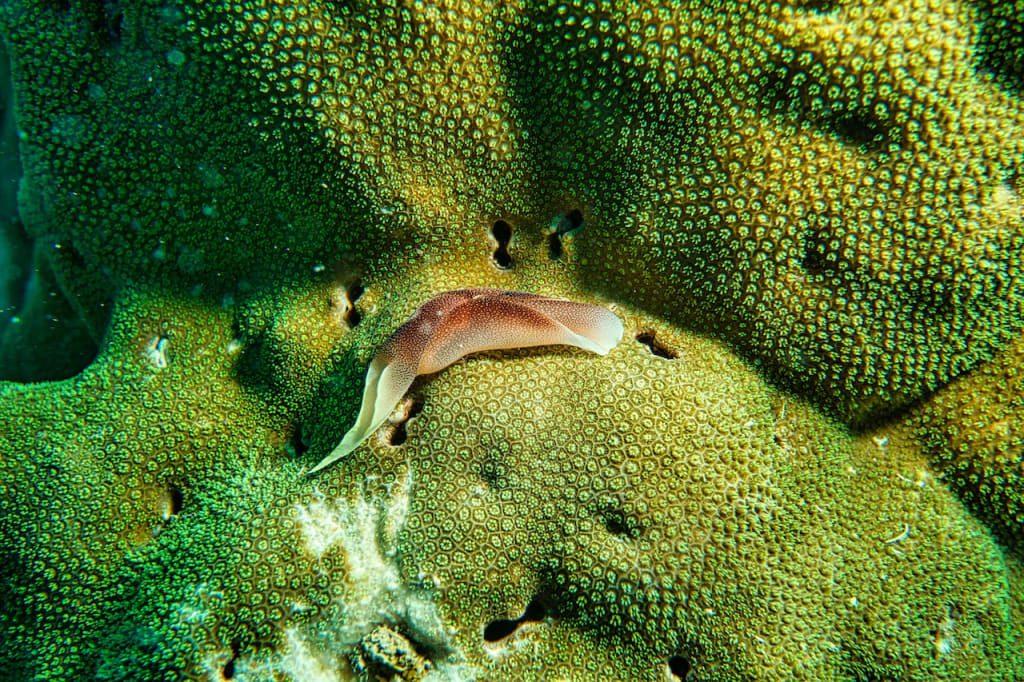
Have you ever taken a closer look at a slug? Not just any slug, but this particular slug—the Elysia chlorotica. While at first glance, it may resemble a vibrant green leaf, this seemingly unremarkable creature is, in fact, one of nature's most extraordinary beings. Residing in the salt marshes along the eastern coast of North America, Elysia chlorotica possesses the ability to survive for approximately a year without consuming food. During this period, it adopts a plant-like existence, blurring the boundaries between animals and autotrophs.
In the natural world, animals are classified as heterotrophs, incapable of producing their own sustenance and reliant on consuming other forms of life. Conversely, plants, as autotrophs, possess the remarkable ability to synthesize fuel using sunlight, CO2, and inorganic compounds through the process of photosynthesis. Elysia chlorotica, however, defies this categorization and falls under the classification of a mixotroph. It possesses the capacity to both consume food, akin to animals, and produce its own sustenance through photosynthesis, resembling plants.
Elysia chlorotica acquires its photosynthetic capability by stealing the ability to photosynthesize from the algae it consumes. By piercing the algal cells with its specialized radula, the slug sucks out the cell's contents, while the chloroplasts responsible for photosynthesis remain intact. These stolen chloroplasts are then assimilated into the slug's epithelial cells, which line its digestive system and extend throughout its flat body. This remarkable adaptation not only enhances the slug's leaf-like appearance for camouflage but also provides a source of nourishment.
What sets Elysia chlorotica, along with a few closely related species in the Mediterranean and Pacific regions, apart from other slugs is its ability to retain chloroplasts for an extended period. While most slugs can only maintain chloroplasts for a few weeks at best, these particular species exhibit exceptional longevity. This longevity can be attributed to the remarkable survival abilities of both the plastids and the slugs themselves. Certain algae species' chloroplasts can repair their own light-harvesting systems, a trait not commonly found in most chloroplasts that typically rely on the host cell for repairs. This self-sustainability allows the chloroplasts to persist within the slug for longer durations. Additionally, the slug adjusts its gene expression to establish a symbiotic relationship with the chloroplasts and eliminates damaged plastids to prevent the accumulation of potentially harmful substances.
While the phenomenon of organelle theft from one species to another is rare, the slugs mentioned above are not the sole beneficiaries of plant assistance. Various organisms, including corals, giant clams, and sponges, harbor symbiotic algae within their cells. These algae supply organic compounds to their hosts through photosynthesis, while the organisms provide shelter and inorganic compounds in return. Some mixotrophs even pass on the algae to their offspring. These mutually beneficial relationships are vital for the survival of filter-feeding corals, clams, and sponges, as they receive essential nutrition in nutrient-poor tropical oceans, ultimately contributing to the creation of magnificent coral reefs.
Mixotrophy also operates in reverse, as exemplified by the alga Tripos furca. This alga consumes several microscopic animals daily, allowing it to endure extended periods of darkness. Tripos, in turn, becomes the prey of other mixotrophic algae, facilitating the exchange of organelles, including chloroplasts. This unique ecological relationship enables certain algae to survive in dark ocean regions such as the Mariana Trench, where conventional plants would struggle to thrive. The processes observed in the photosynthetic transformation of Elysia chlorotica and the feeding mode switch of Tripos furca bear resemblance to the theories proposed by scientists regarding the origins of all plants. Single-celled animals once preyed on cyanobacteria, with some of these tiny plants surviving digestion and eventually evolving into chloroplasts within animal cells. However, these early eukaryotic plants fell victim to other animals, which seized the valuable chloroplasts, reminiscent of Elysia's actions. This cycle of consumption and being consumed occurred multiple times, resulting in the development of plastids with four membranes and the emergence of the ocean's most productive plants and forests.
The captivating story of Elysia chlorotica and its leaf-like transformation represents just one facet of the wondrous adaptations and symbiotic relationships found in the natural world. As scientists delve deeper into these intricate mechanisms, they uncover the secrets of the origins of life and the intricate connections between species. From mixotrophic slugs to coral reefs, nature never ceases to amaze us with its remarkable creativity and interdependence.
Henrik Leandro
About the Creator
Henrik Leandro Laukholm Solli
Free thinker, traveler and humanist <3
Keep reading
More stories from Henrik Leandro Laukholm Solli and writers in Earth and other communities.
The Astonishing World of Parrot Speech
In 2010, an incredible story unfolded when a parrot, speaking with the same British accent as its owner, went missing. Four years later, they were reunited, but the parrot's voice had undergone a noticeable transformation—it now chattered away in Spanish. Parrots, along with a few other bird species, possess the ability to produce human speech, and some parrots excel at it uncannily well. But how is this possible?
By Henrik Leandro Laukholm Solli3 years ago in Earth
The Universe That Dreams Us
For centuries, humanity believed the universe was expanding. Galaxies drifting farther apart. Space stretching endlessly like an invisible fabric. The theory had been supported by decades of observations, especially from the famous Hubble Space Telescope, which showed distant galaxies moving away from Earth in every direction.
By Abubakar2204 days ago in Earth




Comments
There are no comments for this story
Be the first to respond and start the conversation.