
Nature's Kaleidoscope: The Importance
Safeguarding Earth's Diverse and Colorful Ecosystems.

A Call to Action for Protecting Earth's Diversity:
The Earth is a breathtakingly diverse and beautiful planet, home to a vast array of plants, animals, and landscapes. From towering mountains to rolling plains, deep oceans to vast deserts, the Earth is a place of incredible variety and wonder. In this article, we will explore the diversity of the Earth and the importance of preserving it for future generations.
At its core, the diversity of the Earth is a product of its long history and complex natural processes. Over millions of years, the Earth's continents have shifted and changed, leading to the formation of new landscapes and habitats. Meanwhile, the forces of natural selection have driven the evolution of countless species, each uniquely adapted to their environment.
One of the most striking aspects of the Earth's diversity is the incredible variety of life that exists here. From tiny microorganisms to towering trees, the planet is home to an estimated 8.7 million different species, each with its own unique traits and characteristics. These species are found in every corner of the globe, from the frozen tundra of the Arctic to the steamy rainforests of the Amazon.
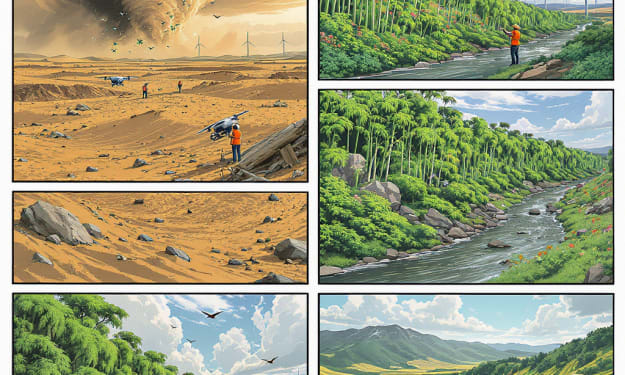
Beyond its biological diversity, the Earth is also home to an incredible variety of landscapes and ecosystems. From the rolling hills of the English countryside to the towering peaks of the Himalayas, the Earth's terrain is as varied as it is stunning. These landscapes support a wide range of different ecosystems, from the coral reefs of the ocean to the vast grasslands of the savannah.
Unfortunately, much of the Earth's diversity is under threat. Human activities, such as deforestation, overfishing, and pollution, have led to a significant loss of habitat and biodiversity. According to the World Wildlife Fund, the Earth has lost over 60% of its wildlife populations in just over 40 years.
This loss of biodiversity has serious implications for both the planet and for human well-being. The loss of natural habitats can lead to soil erosion, reduced water quality, and increased carbon emissions, exacerbating climate change. It can also lead to the loss of valuable resources and medicines, as many species have unique properties that are yet to be fully explored.
In order to preserve the Earth's diversity, it is essential that we take action to protect it. This can involve a range of different strategies, from conservation efforts to sustainable development. One approach is to protect areas of high biodiversity through the creation of national parks and protected areas. These areas provide a safe haven for endangered species, while also promoting tourism and education.
Another strategy is to promote sustainable development practices that balance the needs of people with those of the environment. This can include measures such as promoting renewable energy, sustainable agriculture, and reducing waste and pollution.
Education and awareness-raising are also critical to preserving the Earth's diversity. By teaching people about the value and importance of biodiversity, we can encourage them to take action to protect it. This can involve everything from school programs to public outreach campaigns.
Conclusion:
In conclusion, the Earth's diversity is a critical aspect of our planet that cannot be taken for granted. It is a product of millions of years of natural processes, and it is essential for the survival and well-being of all living organisms. The diversity of life and landscapes that exist on Earth not only provide us with resources and food, but they also inspire us with their beauty and complexity.
Despite the incredible value of the Earth's diversity, human activities have led to significant losses of habitat and biodiversity. These losses have had serious consequences, including soil erosion, water pollution, and increased carbon emissions, contributing to climate change. Additionally, the loss of valuable resources and medicines from many species that have unique properties is a significant concern.
However, there is hope. We can take action to protect and restore the Earth's diversity. National parks and protected areas can provide a safe haven for endangered species while promoting tourism and education. Sustainable development practices that balance the needs of people and the environment can help reduce the negative impact of human activities. Education and awareness-raising campaigns can encourage people to take action to protect the Earth's diversity.
Ultimately, the preservation of the Earth's diversity requires collective action and a global commitment to sustainable practices. We must work together to ensure that our planet's resources and ecosystems are protected for future generations. By doing so, we can ensure that the Earth's diversity continues to inspire and amaze us for many years to come.
About the Creator
Keep reading
More stories from blush n beauty and writers in Earth and other communities.
Exploring the Wonders of Our Blue Planet
The Earth is a truly remarkable planet. It is the only known planet that can support life, and is home to a diverse array of organisms, ranging from tiny microbes to massive blue whales. This beautiful and complex planet has a long and fascinating history, and continues to surprise us with its many secrets and wonders.
By blush n beauty3 years ago in Earth
Chinese Planetary Engineering: The Great Green Wall and the Reclamation of Climate
There are junctures in history where a civilization no longer chooses between comfort and progress, but between adaptation and extinction. At the dawn of the new millennium, China hit one of those silent thresholds where geography ceases to be a backdrop and becomes an adversary. The desert was advancing, not as a metaphor for decay, but as a physical, methodical, and relentless force. Sand was devouring the horizon, winds grew heavy with dust, and the soil lost its fertile memory, taking with it the promise of social stability.
By Laurenceau Porte3 days ago in Earth



Comments
There are no comments for this story
Be the first to respond and start the conversation.