
Mystery of James Webb Space Telescope
Is Time Travel Possible?

Greetings, everyone!
Recently, NASA launched the James Webb Space Telescope, which is the largest and most powerful space telescope in the world. This remarkable telescope offers a unique ability, allowing us to explore history in a way similar to time travel. While we cannot physically travel back in time, the James Webb Space Telescope enables us to catch a glimpse of the past, going back millions and billions of years. To be precise, it can observe events that occurred up to 13 billion years ago, just 0.7 billion years after the universe came into existence with the Big Bang.
The telescope's exceptional feature lies in its design, specifically to detect infrared light. Unlike regular telescopes that primarily capture visible light wavelengths, the James Webb Space Telescope focuses on the longer wavelengths of infrared light. Infrared light can penetrate dust and clouds, revealing what lies behind them. The Hubble Space Telescope, our previous most powerful telescope, captured images where space dust and gas clouds were visible. However, with the James Webb Telescope's infrared capabilities, we can expect clearer and more detailed high-definition images.
Infrared radiation refers to wavelengths below the red portion of the visible light spectrum. In Latin, "infra" means "below," hence the term "infrared." Infrared waves are emitted by objects that radiate heat, such as humans, animals, the Sun, and fire. Night vision goggles, commonly used by soldiers, rely on detecting infrared waves. Considering that stars, galaxies, and planets also emit heat, the James Webb Telescope can capture and study infrared waves emitted by these celestial bodies.
When the light from distant stars and galaxies reaches the telescope, it has traveled vast distances through an expanding universe. Consequently, the wavelength of the light is stretched and undergoes a phenomenon called redshift, shifting towards the color red. The telescope's ability to capture more light is determined by the size of its mirror. Hence, advanced telescopes are equipped with larger mirrors to enhance light capture and image resolution. The James Webb Telescope boasts a mirror plated with 24-karat gold, renowned for its exceptional reflectivity of red light, allowing for a 98% reflectiveness.
One challenge arises from the fact that the telescope itself emits infrared waves due to its heat radiation. This interference can hinder the capture of clear and high-quality images from galaxies. To mitigate this problem, the James Webb Telescope operates at extremely cold temperatures of -223°C (-369.4°F). Achieving such low temperatures is not possible on Earth, as the temperature has never dropped below -89°C (-128.2°F). However, in space, particularly in areas not exposed to direct sunlight, temperatures can remain extremely cold. Hence, the telescope will be deployed approximately 1.5 million kilometers (932,056 miles) away from Earth at a location known as the L2 point, where it can effectively shield itself from the Sun's heat and light.

To prevent the Sun's interference, a sunshield in the shape of a kite, as large as a tennis court, has been developed for the James Webb Telescope. It utilizes a special material called Kapton, which blocks sunlight and maintains the telescope's cold temperature. The sunshield consists of five thin layers of Kapton, with each layer having an aluminum coating. The two layers closest to the Sun are additionally coated with doped silicon. The L2 point, located on the opposite side of the Sun, revolves with the Earth, ensuring the Sun remains hidden throughout the telescope's orbit. This configuration mimics the effect of shielding the Sun with one's hand, allowing for clearer observations.
The construction and launch of the James Webb Space Telescope have presented numerous complexities. NASA has identified over 300 potential problems that could arise during the mission, with any single failure potentially jeopardizing the entire project. The endeavor has required a staggering $10 billion in funding, leading to the reallocation of resources from other research projects. In addition to NASA, the European Space Agency and the Canadian Space Agency have contributed to this ambitious undertaking.
Scientists hold great anticipation for the James Webb Telescope's discoveries, particularly in studying the formation of stars, galaxies, and planetary systems after the Big Bang. With its ability to observe events up to 13 billion years ago, this telescope surpasses the Hubble Space Telescope, which could only reach approximately 1 billion years after the Big Bang. By observing objects millions of light-years away, we effectively peer into the past, as the light from those celestial bodies has taken millions of years to reach us. This capacity provides us with glimpses into the history of our universe.
In theory, if we could teleport 100 million light-years away from Earth and observe our planet using an advanced telescope, we would witness events from 100 million years ago, a true form of time travel. However, practical challenges, such as the immense time required for such travel, make it currently unfeasible. Nonetheless, the James Webb Telescope will continue to expand our knowledge and might even lead to the discovery of exoplanets with conditions conducive to supporting life. Only time will reveal the remarkable insights this groundbreaking telescope will provide.
Thank you for your attention!
About the Creator
Keep reading
More stories from Umar Sayed and writers in Earth and other communities.
14 Psychological Facts about Human Behaviour
Hello Everyone! Today, we will explore 14 fascinating psychological facts about human behavior. Despite our differences in culture, ideas, and paths, there are fundamental psychological similarities that bind us together. These shared behaviors influence our choices, social interactions, and goals. Unfortunately, many misconceptions about human nature lead us to defy our innate tendencies. Let's delve into these intriguing facts that shed light on our human behaviors:
By Umar Sayed3 years ago in Humans
Trump Calls UK’s Chagos Islands Sovereignty Decision an Act of ‘Great Stupidity’
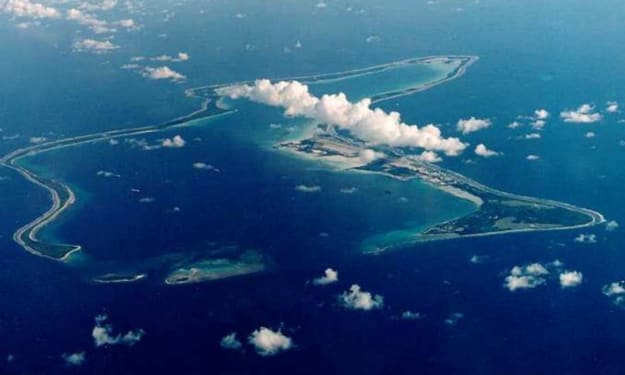
Former U.S. President Donald Trump has criticized the United Kingdom’s decision to hand over sovereignty of the Chagos Islands to Mauritius, calling it an act of “great stupidity.” This high-profile statement has reignited debates over colonial legacies, geopolitical alliances, and the rights of local communities. While the issue may seem distant to many, it carries significant implications for global politics, regional stability, and the affected communities. The Chagos Islands, a strategically located archipelago in the Indian Ocean, have long been a point of contention between the UK, Mauritius, and the United States, which maintains a military base on Diego Garcia, one of the largest islands. The latest political statements have highlighted not only international disagreements but also how decisions by governments can affect local populations and global perceptions. Why the UK Is Handing Over the Chagos Islands The UK’s decision to transfer sovereignty to Mauritius comes after years of legal challenges and international pressure. The United Nations has repeatedly called for the return of the islands to Mauritius, stating that the previous detachment in 1965 was illegal. The move aims to: Resolve a longstanding international dispute Acknowledge the rights of the Chagossian people, many of whom were forcibly removed from the islands decades ago Comply with international law and UN recommendations For many in Mauritius and the Chagossian diaspora, the transfer represents justice and recognition of their historical grievances. Trump’s Criticism and Its Context Trump described the UK’s decision as “an act of great stupidity,” emphasizing strategic and military concerns. The United States relies on Diego Garcia for one of its key military bases, crucial for operations in the Indian Ocean region and beyond. From Trump’s perspective, the sovereignty transfer could: Complicate U.S. military logistics Create uncertainty over strategic agreements Signal weakness in alliances with close partners like the UK However, critics argue that such statements overlook the rights of the displaced Chagossian communities and the importance of resolving colonial-era injustices. Impact on Local Communities The Chagos Islands have a unique human story. In the 1960s and 1970s, the indigenous Chagossian population was forcibly removed to make way for a U.S. military base. Families were relocated to Mauritius, the Seychelles, and other areas, often under harsh conditions. The sovereignty transfer could: Support efforts for Chagossians to return home Enable compensation and recognition of historical wrongs Promote cultural and community restoration Community advocates argue that international legal decisions should prioritize the welfare and rights of displaced populations, not just geopolitical or strategic interests. Geopolitical Implications The dispute is more than a bilateral issue between the UK and Mauritius. It has global political ramifications, including: U.S.-UK relations: While the UK maintains a strategic alliance with the U.S., the sovereignty decision may raise tensions over military operations. Indian Ocean stability: The islands are located in a key maritime region, affecting naval operations, trade routes, and regional security. International law precedent: Recognizing Mauritius’ claim reinforces UN rulings on decolonization and territorial sovereignty. For communities that follow global politics, these dynamics highlight how high-level political decisions impact both strategy and society. Media and Public Reaction Trump’s comments have dominated media coverage, sparking debate in international communities and online forums. Public opinion is divided: Supporters of Trump’s viewpoint cite national security concerns and strategic importance. Critics highlight colonial injustices and the need to respect the rights of indigenous populations. Social media discussions reveal growing interest in the balance between military strategy and human rights, showing that global decisions resonate with everyday communities. Legal and Ethical Considerations The transfer of the Chagos Islands raises several legal and ethical issues: Sovereignty and Self-Determination: The Chagossian people’s right to return and their cultural identity must be respected. Colonial History: Addressing past injustices is an ethical obligation for governments involved in colonial-era displacement. Military Agreements: Ensuring strategic stability while honoring international law is a complex balancing act. Legal scholars note that this case could set a precedent for other disputed territories, influencing how communities worldwide perceive justice, sovereignty, and rights. Why This Matters to Communities Even though the Chagos Islands are remote, the controversy touches on community awareness and engagement: Diaspora Communities: Chagossians and Mauritians see this as a historic moment affecting their families and heritage. Global Citizens: People interested in human rights and international law follow such cases to understand justice and accountability. Policy Advocates: NGOs and advocacy groups use this dispute to promote awareness of displacement, sovereignty, and ethical governance. In short, political decisions at the top level ripple down to real people, influencing lives, cultural identity, and community cohesion. Looking Ahead The future of the Chagos Islands will depend on: Implementation of sovereignty transfer: Ensuring legal and diplomatic arrangements are respected. U.S.-UK negotiations: Maintaining strategic interests while addressing human rights. Chagossian return programs: Supporting the restoration of communities affected by displacement. The controversy is a reminder that politics and community welfare are intertwined, and decisions made in boardrooms or government offices can have lasting effects on populations far from the center of power. The Takeaway Trump’s statement about the Chagos Islands sovereignty highlights the tension between geopolitical strategy and community justice. While international relations and military interests are important, the voices of the displaced Chagossian community cannot be ignored. For communities following global politics, the case demonstrates how: International decisions affect local populations Human rights and sovereignty are key considerations Awareness and advocacy by communities can influence global policy As debates continue, the story of the Chagos Islands serves as a reminder that political and strategic choices have human consequences, and that protecting community rights is as vital as maintaining alliances.
By Muhammad Hassan3 days ago in Earth
From Seal Meat to Ice Sheets: A Century of Reporting From Antarctica
Antarctica—the frozen southernmost continent—has long fascinated scientists, explorers, and journalists alike. From the earliest expeditions in the late 19th and early 20th centuries to modern climate research missions, journalists have chronicled Antarctica’s extremes, documenting both its human stories and its environmental mysteries. Over the past century, reporting from this remote and forbidding landscape has evolved dramatically, reflecting changing societal interests, technological advances, and growing concerns about climate change.
By Muhammad Hassanabout 14 hours ago in Earth



Comments
There are no comments for this story
Be the first to respond and start the conversation.