
Mystery of Antarctica Creepy Doorway Finally Cracked
Unlocking the Secrets Beneath the Ice: The Truth Behind Antarctica's Mysterious Doorway


So, there's a mysterious doorway in the middle of Antarctica. Some people think it's Bigfoot's vacation home, or a shuttlecraft from Star Trek, or maybe a door to Agartha, a mythical kingdom some people believe is located in the center of the Earth. Well, the scientists debunked all these poetic theories and explained that what looks like a mysterious doorway is located in an area of fast sea ice. It's offshore of the coast and is full of little islands with shallow water around them. When ice flows around hard rocks hidden underneath, it can create patterns that look odd but are totally normal. In this spot, the ice is thin. So, the rocks underneath have a big effect on how the ice moves. The cold winds in Antarctica also shape the ice and snow and make it look like they're lines and shapes. So, the mysterious doorway is just a rocky ridge poking out because the ice has melted a little. The top of the doorway is the tip of the rock and the sides are snowy trails left by strong winds blowing in the same direction. It's essentially an iceberg that got stranded and is melting in one place. One YouTuber found another out ofplace mysterious object more than 150 m off the shore of Antarctica. a 400 ft long ice ship. The internet went wild with theories like that the ship must have ended up there right from the Bermuda Triangle. But there was no scientific proof that it was a ship and not just a large chunk of ice. And once some other internet users revisited the place, they noticed the ice melted in the summer and the hypothetical ship was gone. Another mysterious Google Maps find in Antarctica was a pyramid. And before you make up an exciting theory about how the ancient Egyptians built a secret base here, I have to tell you it turned out to be just a mountain. It's part of the tallest mountain range in Antarctica that stretches for almost 250 mi. It's not the first pyramid on this continent, as explorers from the British Antarctic Expedition found another unusually shaped mountain and nicknamed it the pyramid. But this one didn't even have a pyramid shape. Here's one Antarctic find that definitely won't disappoint you. A giant ice shelf that reminded scientists of the Grand Canyon. A special submarine robot named Ran covered over 600 miles under the thick ice and brought back some amazing footage of icy mountains, valleys, flat plateaus, and swirly patterns made entirely of ice. One of the strangest things Rand found was giant ball-shaped holes or scoops in the ice. Sadly, scientists lost track of the robot. They think that curious Wendell seals may have accidentally bumped into Ran and caused it to get stuck. To save energy, Ran probably shut itself down, and the scientists couldn't find it again. But the team is hoping to build a new robot and continue exploring this icy canyon to see how the patterns under the ice might change over the years. Another huge Antarctic canyon was found thanks to bad weather. A team of sound experts had to pause their work at the Casey Research Station in a storm.
Instead of waiting around, they decided to use the unexpected free time to map the seafloor near Adam's Glacier. And that's how they found a canyon that is almost 7,000 ft deep, almost 30,000 ft wide, and stretches over 28 mi away from the glacier. During the mapping, they discovered just part of the canyon before they had to go back to the research station. But when bad weather came in again, the ship went back and mapped more of the canyon. They were working in waves up to 13 ft high and super powerful winds, but they managed to get about 15 hours of data to complete their map. On the way back to Australia, they stopped one last time, and now they've got a full picture of the canyon. Studying it is helping scientists learn more about the history of glaciers and the interaction between the Antarctic ice sheet and the ocean.
Now, there's a frozen lake in Antarctica called Lake Enigma. For a long time, people thought the lake was completely frozen solid. But during one expedition, researchers found that under the thick ice, there was a layer of liquid water about 40 ft deep. To learn more, they drilled through the ice and sent down a camera to explore what was hiding in the lakes's depths. The lakes's water, which they think comes from the nearby amorphous glacier through a secret underground pathway, was filled with strange microbial life. These tiny microbes lived in mats that covered the lake bed. Some of the mats were thin and spiky, and others look like crumpled carpets or even small treelike shapes that grew up to 16 in. Many of the microbes could make their own food through photosynthesis just like plants do. And it gave the lake a high amount of oxygen. One of the coolest discoveries was a type of microbe which usually lives in low oxygen places. Lake Enigma might be similar to environments on icy moons like Europa or Encetylus.
So it could mean that these moons also have hidden water under their ice and possibly microbial life too. One more mind-boggling discovery from Antarctica is tiny pieces of amber in mudstone found here for the very first time. It took scientists years of studying incredibly wellpreserved fossilized roots, pollen, and spores that they found back in 2017. Amber proves that resin producing trees once grew in Antarctica, part of a lush rainforest that existed near the South Pole during the mid cretaceous period. Back then, disclaimer, I wasn't around then, the trees would have had to survive through months of darkness during the long Antarctic winters.
Scientists believe they adapted by going dormant for a long time. The amber pieces the scientists found are tiny, but there are beautiful shades of yellow and orange with bumpy surfaces that show how the resin flowed out of the trees.
This resin likely leaked out to protect the trees from insects. It was preserved because water quickly covered it and kept it safe from sunlight and air.
A scientist was browsing through satellite images for brown trails of penguin waste and found four new colonies of emperor penguins at the base of the globe. These new colonies likely have been around for years, though three of them are rather small with fewer than a thousand breeding penguins each. One of the new colonies was found close to a place called the Lazar of ice shelf where there used to be a larger penguin colony. They thought this colony went extinct in 2019, but it seems the penguins have just moved a bit because of changing sea ice conditions. So studying them can help us learn more about how emperor penguins adapt to changes in the environment. Now, there used to be a giant river system in Antarctica 40 million years ago.
Researchers found proof of it after studying soft sediments and hard rocks from the frozen seabed. They looked at tiny bits of radioactive elements like uranium and lead and learned that the deeper dirt came from the time of dinosaurs. The dirt closer to the surface was younger and had an interesting pattern like the kind you see in river deltas today, such as in the Mississippi River or Rio Grand.
Scientists found tiny signs of life in the sand. The river that once flowed here started in the trans Antarctic mountains and traveled 930 m before it reached the sea. Researchers kept studying newer layers of dirt from about 20 million years ago. They hope this will help them predict what the Earth's weather patterns might be like in the future. So, what comes to your mind when you hear the word Antarctica? Most likely cold, snow, ice, and penguins.
Yet, this is one of the least explored regions in the world that hides many strange and unique things. Check them out. You don't have to go to Antarctica to see this weird thing. All you need to do is open Google Earth and move to one of the southernmost islands of Antarctica, King George Island.
Recently, internet users have noticed a large and pretty strange cave entrance there. Where does this wide, dark passage lead? People started making suggestions. It's the entrance to a secret base or some laboratory. This is the part of the spaceship that crashed there thousands of years ago. This is the door to the ancient city of Antarctica. Perhaps there's a giant rock mountain with an ancient cave beneath all this snow and ice. Well, there's some ideas. Users have calculated the approximate dimensions of this cave. It might be about 74 ft high and 250 ft wide. You could hide a Boeing passenger jet in there. Nature probably created this entrance. This is a logical explanation, but there are two strange factors. First, take a look at the foot of the mountain. It seems that there are steps there. They're dark in color, as if they're made of stone. And if you look closely, you can notice something similar to human footprints. Has anyone entered this cave? Or maybe someone is still living there. Now, the second oddity is the disappearance of the mysterious finding. For the first time, people noticed it in a Google Maps snap in 2007. Then, the entrance disappeared.
Then, it reappeared a few years later.
After that, it vanished. And in 2022, people saw it again. Perhaps old snow melts, a new layer falls, and then the wind blows it away, and the cycle repeats. But the alleged steps leading deep into the cave make one doubt the natural origin of this tunnel. You can easily find the coordinates on the internet and visit the cave via Google Earth. You might see something there and tell the world. There's another strange thing people discovered with the help of Google Earth. In 2020, one user found a strange object that looked like a giant ship 100 m off the coast of Antarctica.
It was covered with ice and snow and lying on its side. It looked like a cruise ship. You could notice the windows, the deck, and the bridge. But not all people agreed with this. Some claimed it was a spaceship. Others said it was some kind of secret building. The user who first noticed the ship stated that its size was about 400 ft, which is the perfect length for a passenger vessel. But what is this ship doing in such a remote place in the middle of a glacier? How did it get here? Who was its captain? No one has found the answers to these questions yet. In 2016, people using Google Earth discovered a photo of an unknown sea monster floating off the coast of Antarctica. This creature resembled a giant squid with a length of about 200 ft. This is slightly shorter than three train cars. Just imagine this kraken swimming in Antarctica's dark icy waters and dragging to the bottom everything it meets on its way. Maybe it's the great and terrible chulu or one of its offspring. You will quickly notice this blood red waterfall among Antarctica's endless dazzling white landscapes. Don't worry, it's not blood. For many centuries, the waterfall has been painting snow in a bright red color. The stream flows straight out of a white iceberg. Let's look inside and find out what's happening there. Millions of years ago, there was a small crystal clearar pond. But then a glacier formed around it. A thick layer of ice and snow blocked sunlight, heat, and oxygen access. For millennia, the reservoir remained in this cold vacuum. But at one point, the water made a hole in the icy wall and broke out. When this salty water comes into contact with oxygen, it immediately turns scarlet or rusty.
Antarctica is the only place where you can find such a unique natural phenomenon. One of the driest places on Earth is located in Antarctica. It's one of the most lifeless deserts in the world, the McMmero Dry Valleys. In this desert, you won't see the scorching sun, hot sand, and cacti. A desert means a place with a lack of precipitation in life. The Mcmeuro dry valleys meet these parameters. But this place is also unique for Antarctica since you won't find glaciers there. Despite the frost, ice can't form in the desert because it hasn't rained for millions of years there. It also never snows. A strong wind coming from the mountains reaches speeds up to 200 mph. It would be difficult for you to stay on your feet there. The wind is filled with moisture.
It heats up and evaporates all the liquid and snow in the desert because of its high speed. Only dry air reaches the ground. But you can find several lakes there. They don't freeze only thanks to the high concentration of salt. The water is so salty that large life forms can develop there. But scientists have found microscopic organisms near the lakes. 20 million years ago, Antarctica was filled with swamps and trees and swarming with insects and animals. But now it resembles the surface of Mars, literally. Scientists and astronauts are exploring such regions as the McMmero dry valleys since the natural conditions there are similar to those on the red planet. So before you go to Mars, you can practice living in similar places on Earth. Also, scientists discovered an underwater world in the Antarctic filled with hundreds of amphopods, crustation animals similar to shrimp. Wait a minute. It happened in the Antarctic, but the Mcmmerto dry valleys are located in Antarctica. Well, the words are very similar, but what is the difference? Oh, and don't forget the Arctic. The Antarctic is the region in the southernmost part of Earth that houses the continent of Antarctica. and the Arctic is another land altogether. They have the same natural conditions, frost, ice, and snow, but they're located in different parts of the planet. The Arctic is at the North Pole. Antarctica is at the South Pole. Now, back to the discovery. Scientists put forward theories that the ice of the Antarctic hides a vast network of freshwater rivers and lakes. And in 2022, they found a new ecosystem. Researchers explored the Antarctic Ross ice shelf and its underwater rivers. This is a massive piece of ice floating in the ocean. A team from New Zealand used a special drilling rig equipped with a hot water supply to drill a hole 1,640 ft deep. That's more than the height of the Empire State Building.
Then they lowered some video cameras and saw thousands of crustaceians swimming in different directions. So, it seems they're very unorganized. In the waters of the Antarctic, you can also meet some of the scariest creatures on the planet. These are sea spiders. They got this name because they resemble land spiders, but they're actually a species of marine arthropods. And unlike land spiders, those in the ocean are much larger. They look like eight strong legs without a body. One such spider can be a dinner plate in width. Some of them have no eyes and have probosuses instead of jaws. Sea spiders are poorly studied because they live in deep, cold waters.
Antarctica hides many little known animals. There are long tunnels in its glaciers leading to scary darkness. On this cold continent, people have found the remains of giant dinosaurs and other ancient creatures such as the ancestors of modern ducks. Many underground rivers and lakes hide unexplored wildlife. Even the ice here can be weird. Take a look at these striped icebergs. They have blue, black, green, and turquoise shapes. The color depends on the conditions of the water during freezing.
For example, green lines appear because of algae. Blue ones form when the water freezes too quickly. Okay, I'm freezing.
Time to go thaw somewhere warmer.
Hawaii.
Yeah, we've all dreamed of visiting the Arctic and witnessing the natural wonders of polar bears frolicking on ice flows or the Aurora Borealis dancing across the sky. Well, sorry to break it to you, but you won't find any tourists flocking to Antarctica anytime soon.
Why, you may ask? Let's dive into it.
First off, where is Antarctica? It's located in the Southern Hemisphere, specifically at the South Pole. The southern ocean surrounds it and most of the continent is covered by ice, making it one of the most remote and frigid places on Earth. Now, have you ever met someone who's visited Antarctica?
Probably not. It's one of the least visited places on the planet, and only a handful of lucky explorers have seen its interior, which is mostly made up of glaciers and ice fields. But trust me when I say the wildlife and scenery are out of this world.
Why shouldn't you travel to Antarctica?
Well, for starters, the environment is incredibly fragile and can be easily damaged. Plus, there are no native human populations on the continent, so your travels would essentially be like visiting an uninhabited island. And let's not forget that it's also one of the most expensive destinations to travel to. Despite all that, Antarctica is not exactly guarded like a fortress, but there is an international agreement called the Antarctic Treaty. This treaty was negotiated to prevent any unwanted activity on the continent and bans some forms of testing done there by member states. But the primary reason we can't just waltz into Antarctica is that it has a delicate ecosystem that needs protection. The treaty states that Antarctica should be used for peaceful purposes only and should be free from any human activity that could harm the environment. Scientists are still learning about the continent's unique ecosystem, and our activity and machines could disrupt the delicate balance that exists there. If you're still itching to go to Antarctica, getting permission isn't exactly a walk in the park. US citizens, for example, need to complete a special form and send it to the Office of Ocean and Polar Affairs. And once you're there, you'll need to follow some strict guidelines to protect the environment, like not disturbing any wildlife or taking souvenirs like rocks, plants, or animals. Now, technically, can you live in Antarctica? While there are no laws banning people from living there permanently, it's a very inhospitable environment and unsuitable for human habitation. Temperatures can reach negative 76° F and below, making it nearly impossible for anyone to survive without the proper equipment and experience. Plus, the nearest piece of land is over 1,000 m away, making any inhabitants completely cut off from the rest of the world. Who knows, maybe one day we'll get the chance to visit this unique and fascinating continent. But until then, let's admire it from afar. Let's now talk a bit about the discovery of Antarctica. Unlike other places that were already inhabited, Antarctica never had a native human population. Ancient Greek philosophers had an idea about the continent and called it Ant Arcts, meaning opposite the bear. The bears it refers to are not the polar ones though, but rather the great and little bear constellations, which are only observable in the northern hemisphere. As a result, the term signifies the opposite of the land of the bear. Whailing and sealing voyages in the late 1700s and early 1800s would venture further south when rounding Cape Horn at the tip of South America. It was known that going further south often meant stronger winds, but also the risk of hitting floating ice of all sizes and of winds and seas that could prove dangerous to the ship and crew. Captain James Cook was the first to cross the Antarctic Circle on January 17th, 1773 in the Ross Sea region. He reached a point further north a year later. And though he didn't sight land, he came to within 50 mi and saw deposits of rock held in icebergs indicating that a more southerntherly land existed.
The first sighting of Antarctica is widely acknowledged to have taken place in January of 1820 during the voyage of two ships under the command of Captain Fabian Gotautly von Bellings as part of a 2-year exploratory expedition around the world to discover new lands. The captain's ships were the first to have crossed the Antarctic Circle since Cook.
[Music] The first undisputed landing on Antarctica didn't happen until much later on January 24th, 1895 at Cape Adare during the whailing voyage of the ship Antarctic led by Henrik Bull. A small boat with six or possibly seven men on board rode ashore during calm conditions. You might not believe it, but Antarctica is actually a desert.
With all that ice, you'd think it'd be like a winter wonderland with snowball fights and hot cocoa all day long. When we think of deserts, we picture camels and cacti and people struggling to find water. But in Antarctica, it's a whole different story. The struggle isn't to find water. It's to find anything that's not covered in ice. And the average rainfall has been just over 0.4 in in the past 30 years. That's like a few drops of rain compared to what we're used to. So, technically, it's not the dunes or sizzling heat that makes a desert, well, a desert. It's the lack of precipitation. But don't worry if you ever find yourself lost in Antarctica.
You won't have to worry about getting thirsty. Just make sure you bring a jacket and some mittens because it's cold enough to make you into a popsicle.
Not only is Antarctica one of the driest places on Earth, but it's also the coldest, the windiest, and the highest.
Talk about overachieving. The penguins and scientists down in Antarctica have at times found themselves in a bit of a pickle when it comes to time. You see, unlike the rest of us on this big blue planet, there is no Antarctica time zone. All the lines of longitude meet at a single point at the South Pole, making it a bit of a headscratcher when trying to figure out what time it is. Now, you might be thinking, "But how do the scientists and researchers keep track of time down there?" Good question. They typically stick to the time zone of the country they departed from. However, with stations from all over the world on the Antarctic Peninsula, things can get a little wacky. Imagine trying to coordinate with your neighboring countries without accidentally waking them up in the middle of the night. You might think that not much could survive in a place where the temperature is extremely cold, the sun barely shows up, and the wind could blow you away faster than a tumble. Well, as in many places on Earth, life found a way in Antarctica, too. Believe it or not, this frozen continent is buzzing with activity. It's home to billions of krill, which in turn attract lots of seals and more penguins than you can shake a fish at. But don't let their cute and cuddly appearance fool you. Penguins are the ultimate swimmers with streamlined bodies that would make Olympic medal winners jealous. They come ashore to breed and chill. But their real talent is stealing pebbles from each other and forming mathematically precise huddles to stay warm. Antarctica is also home to the largest species of penguin on Earth.
It's called the emperor penguin. Sure, these creatures are flightless birds, but that doesn't mean they can't jump.
In fact, some of them can leap up to 120 in. And let's not forget about the seals. With their furry bodies and special songs, these marine mammals are protected by the Antarctic Treaty, and they're thriving in the cool waters of the Southern Ocean, too. But the real stars of the show are the whales. During the Antarctic summer, these huge creatures show up in droves to chow down on the abundant krill. It's indeed like a whale buffet down there. Leave it to people wandering on Google Earth to stumble upon the world's newest and weirdest places ever. like this mysterious pyramid discovered in Antarctica. Soon enough, the internet blew up with all sorts of theories regarding this unusual shape. Could it be a sign from a different life form? Is this pyramid indeed natural, or is it man-made? For starters, it's not the first time we've discovered a pyramid in the Antarctic. The first one was observed by the British Antarctic Expedition in the 1910s and kept secret for a long time. Its discovery being kept hidden only added to the mystery. A second such structure was discovered in 2016 which further increased the interest in the matter. The mystery was soon enough deciphered by scientists.
These formations are just mountains. They're located near the Ellsworth Mountains, a range over 250 mi long. So they're just mountain peaks that have broken through the ice sheet.
As for their particular shape, it's just a coincidence. Pyramids are found throughout nature. The Matterhorn in the Alps and Mount Balstinder in Iceland, for example, are quite similar in terms of shape. As for the official name of these peaks, they're called nun attacks or peaks of rock peeking through a glacier or an ice sheet. Antarctica has way more incredible features like the fact that it's home of 60 to 90% of the world's fresh water. That's because its ice sheet is the biggest on our planet, stretching across 5.4 million square miles. I'll spare you the calculations, but that leaves only 1% of the continent ice free. Antarctica's ice reaches 2.7 mi thick at its deepest point, meaning half the height of Mount Everest. Should it ever melt completely, our sea levels would rise to roughly 200 ft. It wasn't always this cold, though. At some point in our planet's history, Antarctica had some average temperatures as the city of Melbourne has today. It took a lot of research, but scientists figured out that Antarctica's temperatures could have reached up to 62.6° F. Sure, that was 40 to 50 million years ago, but if you think about it, it was at the same time when dinosaurs roamed our Earth.
Time is also different on this icy continent. All the lines of longitude that help us calculate different time zones merge into a single point at the South Pole. Here there are six months of daylight in the summer followed by 6 months of complete darkness during the colder season. So scientists working here stay on average in the same time zone they've come [Music] from. The Bloodfalls aren't a chapter of a thriller movie. They are merely a series of waterfalls located in one of the driest regions of Antarctica. They emerge from an underground lake filled with a special type of bacteria. These little organisms use sulfates as fuel instead of sugars, which makes them very intriguing for scientists. The water contained in this lake is so full of iron that it basically just rusts when it meets air. So, the reddish color of the waterfall also gives it its trademark name.
The megalodon was the largest predator ever known in our planet's history. In terms of its location, the megalodon lived practically in all waters on our globe except near the poles. The reason why there are no megalodon teeth found in Antarctica is probably because the gigantic creature was adapted to only warm tropical and subtropical waters. If you plan to visit Antarctica by boat someday, just know you might not get there on a non- metallic boat. The hull of your transportation device must be made of either steel or aluminum to withstand the harsh weather conditions here. Antarctica isn't home to a lot of bugs. In fact, there is only one true species of insect that calls this place home. It's a wingless mitch called Belgica Antarctica. This fly is so tiny that it only reaches 08 to 23 in long, but it's still the Antarctic's largest terrestrial animal. A lot of Antarctic fish also come with an antifreeze substance in their blood. They don't necessarily need it for protection against the cold temperature, but mostly against touching ice. These antifreezes are made up of large glyoprotein molecules. They surround any small ice crystals that may form, making sure they don't spread through the animals tissues, which could cause a lot of damage. They also create a sort of small pillow blocking the sharp ice crystals, so they're less likely to cause any pain. It also doesn't rain a lot here on this icy continent, but one amazing meteorological quirk of Antarctica is that it's full of diamond dust. This dust is basically small ice crystals that pop out of humid air close to the Earth's surface. Think of it like an icy fog. As they flow through the air and get touched by sunlight, they begin to sparkle, making visitors here feel like they're surrounded by diamonds. It's probably the last place you'd want to go into labor, but in 1978, the first person was born here ever. Emil Marco Palma was its name. And ever since, 10 other people have been born here in Antarctica. There's a lake on this icy continent that is so full of salt, it makes it impossible for it to freeze over, even if temperatures can go as low as 5° F. That's because pure water freezes at 32° F. Water that has salt in it or any other substance for that matter will freeze, but at a way lower temperature. That lower temperature is adjustable depending on the substance itself and the amount that has been placed into the water. Antarctica was the last official continent to be discovered. It remained completely unseen until the 1820s, but it took another 20 years to confirm it was actually a continent and not just a group of icy islands. Just because it's really cold here doesn't mean you can't go on a date here. One December night, an American scientist that was posted in Antarctica logged into a dating app simply out of curiosity. He was certain no other profiles would show up. But to his surprise, he found someone soon enough.
Another researcher who was stationed just 45 minutes away by helicopter, of course. They eventually got together and went on the first date in Antarctica ever recorded. Apart from ice, this continent has something else way more abundantly than any other piece of land on Earth.
Meteorites. If we look at the research done by scientists, meteorites have equal chances of reaching any place on our planet. However, once they go through our atmosphere, the situation is a bit more complex. That's because different climates on our planet, like the humid ones found near the jungle, have a lot of moisture and oxygen, which will corrode most meteorites. The climate in Antarctica is really dry, so the possibility of meteorites corroding is little to none. More so, it's way easier to spot these rocks on the icy white surface of this area than in any other place on Earth. If you're not scared of the cold, you'll surely freak out when you hear about the winds here.
That's because Antarctica is for the most part the windiest place on Earth.
Wind speeds have been reported here to reach even 200 mph. Discovering hidden places on our planet is extremely exciting. Today, I'm taking you on a trip that you aren't going to forget anytime soon. But suit up. This is about to get very cold. You hop on a plane and land on the ice covered island of Greenland. An unbelievable view of the Aurora Borealis. aka the northern lights is greeting you. You can't believe your eyes. Your guide tells you how rare this phenomenon is. Usually, people spend days trying to hunt it down. You feel lucky and take your time to appreciate these beautiful dancing greenish lights.
You're glad you brought your camera along, aren't you? Between clicks, you learn that the Aurora Borealis is the result of some rather rough events. This spectacular light show occurs when energy particles from the sun slam into Earth's upper atmosphere. On day two, you continue to explore the place by air. This may not come as a surprise, but Greenland is one of the world's largest islands. This time, on board a helicopter, you can see the infinite icy landscape. In case you're curious, you're now flying over 656,000 square miles of thick ice. Oh, what's that down there? It looks like a family of polar bears. You don't want to get too close, of course.
The conditions in Greenland might be too tough for people to live there, but some animal species do very well in this land of ice. Those are reindeer, wolves, and arctic foxes. On your way to Greenland, you probably made a pit stop in Copenhagen. Denmark is one of the few countries that have commercial flights to Greenland. You didn't know this before, but you find out that the island is actually part of the Kingdom of Denmark. On a map, it's right between the Arctic and Atlantic oceans. You're lucky to have a local pilot that tells you about the secrets hidden in this scenery. Under this 2-m thick white surface, there's an entirely different world. A world filled with canyons, meteor craters, and millennia old plant fossils. You are beyond excited to go visit one of these spots, but of course, you'll have to use your imagination as all of it is hidden under ice. Believe it or not, nearly 80% of the island's surface is covered with it. The first stop on your tour is Greenland's Grand Canyon. You land not far from it, somewhere in the northern part of the island. You may know that canyons are deep, narrow valleys with steep sides. But I bet you didn't know that the word canyon actually comes from the Spanish word canon, which means tube or pipe. Now, this grand canyon has some similarities with the one in the US.
First of all, in size, it's at least 460 mi long and up to 2,600 ft deep in some places. There's a true subglacial valley down there. And if you're wondering how this happened, well, the canyon had probably been formed by a river that had been flowing through Greenland before the ice took over. Oh, yeah. Greenland hasn't always been covered with ice. It was once green, no pun intended. Many other icy places on Earth, such as Antarctica, were once covered in greenery. Scientists have figured out that in the past, Greenland was mostly ice free. With the help of airborne radar, they made amazing discoveries. By the way, ice is invisible to radar technology. If you have trouble believing it, try putting an ice cube inside your microwave. It won't melt or heat up. A recent discovery of fossilized plants allowed researchers to estimate that Greenland used to be much warmer than they could imagine. 2021 research conducted by the University of Vermont found fossils of twigs and leaves, which left researchers very confused. They expected to discover sand and rocks in the deepest layer of ice, but instead they found some clear proof of rich flora. Judging by what you've seen of the landscape, it's hard to believe that forests were once growing here. Today, you'll find some tundra vegetation on the coastal part of the island, and that's pretty much it. But according to the genetic material found in these fossilized plants, researchers believe the island used to be much greener. It's very likely that there were insect filled forests with butterflies and beetles flying around and the average temperature on the island varied from 50° Fahrenheit in the summer to 1° F in the winter. NASA's Operation IceBridge has flown over Greenland more than 100 times. This has allowed researchers to create 3D maps of the island and figure out the age of each layer of ice in Greenland's ice sheet. Ice sheets can help answer many scientific questions as they form over the span of thousands of years. They're layers of snow on top of more snow. The snow gets compacted into ice which in turn creates what we call an ice sheet. Remember those fossils we were talking about? They're believed to be from the Emian period which was 130,000 to 115,000 years ago.
According to the groundbreaking 3D footage from NASA, we can see three distinct climate periods within the ice sheet. The uppermost layer is quite flat and uniform. If you decided to dig deeper, you'd find the layer formed during the last ice age. It's more complex and rugged. The ice there is darker than what you see on the surface.
If you let your mind wander, you can picture what this part of the world looked like when mammoths were roaming around. If you kept digging, you would eventually find leftover ice from the Emian period I've told you about. Now, canyons aren't the only unusual thing found under ice. If you could sneak a peak under all those layers of snow, you'd see an impressive mountain range and also plunging fjords. In 2017, scientists created a map that showed what Greenland had looked like without all that ice. There was a bull-like depression in the middle of the enormous island. This depression was most likely an ancient lake. Around it, there was a circle of coastal mountain ranges. This scenery probably resembled the landscapes of modern Patagonia. Big mountains with snowy tops surrounding crystalline lakes. This ancient lake in Greenland is a wonder on its own. Imagine a pit the size of Rhode Island and Delaware put together. The lake is believed to have covered over 2,700 square miles. And back in the day, it was fed by at least 18 different streams. These crystalline blue waters were surely very inviting and freezing, of course. But if you ended up going for a swim, I'd say be careful as the water could get up to 800 ft deep in some places. On day three of your adventure, you discover a true under ice water park. While you're wandering around the ice covered island, your guide tells you to be mindful of the cracks in the surface. These cracks are responsible for the modern-day aqua lounge going on down there. Melt water and rain water flow down the cracks in the ice all the way down to the river beds. This forms a landscape of jewel lake lakes and streams filled with crystalline water.
Researchers estimate that about 60 small under ice lakes exist there. And yes, they're actual lakes. Perhaps one of the most impressive hidden features on this island is a meteor crater. Under the Hayawa glacier, you can find a 19-m wide impact crater big enough to swallow the city of Washington. Apparently, a mile wide iron asteroid struck Earth's atmosphere within the past 100,000 years and chose Greenland as its landing point. If anyone had been around to see it, they'd have witnessed a real show. A white glowing fireball cutting through the sky.
Scientists speculate that if it had landed on an ice sheet, it certainly vaporized both water and stone. Someone standing hundreds of miles from the impact site would have heard a deafening thunderclap and experienced hurricane force winds. But it actually makes sense. The approximate speed of meteors entering Earth's atmosphere is 45,000 mph. For comparison, that is 2 and 12 times the speed of a spaceship. It's bound to make some noise and leave a huge crater in the ground. In 2011, scientists from Chile found a weird looking fossil in Antarctica that looked like a squashed football. Almost 10 years later, the rock just sat on a shelf in Chile's National Museum of Natural History with no specific label.
It went by the thing in the museum because it looked like something from a science fiction movie. When the scientists finally got their hands on the strange fossil, it turned out it was actually a giant soft shell egg from around 66 million years ago. This one is more than 11 in long and 7 in wide. A regular chicken egg is just 2 1/2 in long, and an ostrich egg is almost 6 in long for comparison. So, the thing won the title of the biggest soft shell egg ever found and the second largest egg of any animal we know of. The only bigger egg that was ever found was that of the extinct Madagascan elephant bird, which is also one and a half times as tall as Michael Jordan. The bird, not the egg.
The Antarctic egg is also special because it's the first fossil ever found in this part of the world. So, whoever left it there must have been one big creature, probably a giant sea turtle that lived long ago, like a mouse. This is surprising because most scientists thought these creatures didn't even lay eggs. So, this discovery could change what we know about them. The egg is also unique because it has a thin eggshell and no pores, which is totally different from most dinosaur eggs. It actually looks more like the eggs of lizards and snakes, but it came from a giant creature related to these animals. No known dinosaurs or flying reptiles from that time and place were big enough to lay such a huge egg. So, it must have been a mossaur after all.
But, we can't be 100% sure. Scientists did a lot of work and studied 259 types of living reptiles like lizards and snakes and their eggs. From this, they figured out that the mommy who laid the egg was probably at least 23 feet long, not counting her tail. During the late Cretaceous period, this part of Antarctica might have been like a nursery. Paleontologists have found bones of tiny mosasaurs and plesiosaurs in the same area along with bones from the grownup ones. Archaeologists in Norway made another cool but literally discovery and found dozens of arrows that have been hidden in ice for 6,000 years. They were melting out of a large ice patch in the high mountains covering an area of about 45 football fields. In 2014 and 2016, when the summers were extra warm, scientists went to an ice patch called Langon to look around. They also found lots of reindeer bones and antlers there. Some of the arrows were whole and some in pieces along with five arrow heads around the melting ice patch. This is more arrows than have been found at any other frozen site in the world. Some of the 68 found arrows date back to the Neolithic period, and the newest ones are from the 14th century of the common era. Ice is like the perfect time machine that can preserve whatever ends up there in an almost perfect condition.
Langon became famous as one of the first ice patch sites after a local hiker found a 3,300y old leather shoe right next to its edge. Scientists are studying places like this to understand how people used these sites and how the ice patches from Norway to North America changed over time. Now, once upon a time around 32,000 years ago, to be exact, a squirrel buried some seeds near a river in Siberia. Am I the only one getting the ice age vibes? Anyway, these seeds belong to a plant with cute white flowers. Thousands of years later, a group of scientists found these seeds buried deep in the frozen ground about as far down as a 12story building is tall. The seeds were surrounded by ice and bones of animals like mammoths, bison, and woolly rhinoceroses. The mature seeds had been damaged, maybe by some squirrel, but some of the younger seeds still had good plant parts inside them. The scientists carefully took those out and put them in small containers to help them grow. And here comes the coolest part. They were able to grow the plants. Their flowers were shaped a little differently from the flowers of the same plant that grows today. After a year, the ice age plant even made new seeds. Based on this, the scientists suggested that perafrost could be a depository for an ancient gene pool and we could find extinct species there and bring them back to life.
Scientists on an icebreaker in Antarctica were looking for whales, but found something way more unusual. The camera behind the ship, which is as heavy as a car, detected 16 million ice fish nests on the floor of the Wedell Sea. The nests were located about every 10 in in all directions and covered an area of 93 square miles, which is slightly bigger than the whole of Washington DC. The colony even had a distinct border, which was a line in the sand. The scientists were in the area because they were studying a special spot in the ocean where the water was a little warmer than the water around it.
In this warmer water, they found tiny animals called zoo plankton near the top. When the young ice fish hatch, they swim up to this area to eat the zoo plankton before going back down to the seafloor to grow up and have their own offspring. Since there was so much food, it made sense to see ice fish in this warm water. But they didn't expect to find such a huge number of ice fish nests, much more than anyone had ever seen before. New Zealand's Antarctic Heritage Fund found some old photo negatives in a HUD in Antarctica. They turned out to be unique images from the Ross Sea Party.
It was a famous failed expedition led by Ernest Shackleton. He wanted to become the first person to cross Antarctica by land from the Wedell Sea to the Ross Sea, passing through the South Pole. But things went wrong when their ship, the Aurora, was blown out to sea. They had to use the hut from another explorer, Captain Robert Falcon Scott. His goal was to be the first person to reach the North Pole, but sadly he didn't succeed either. The negatives were made of cellulose nitrate and were found stuck together in the small box. The trust took the negatives back to New Zealand where they carefully separated them and discovered 22 hidden images. Many of the photos were damaged, but the trust could still recognize some familiar places around McMmero Sound, a well-known area in Antarctica. No one knows for sure who took the pictures. In December 2021, some scientists noticed a strange mark on the Larsson ice shelf, a giant sheet of ice off the eastern coast of Antarctica.
They thought it might be a river flowing under the ice. So, they drilled down over 1,600 ft to check it out. They expected to find water, but they didn't expect to see that the water was full of fastmoving creatures called amphipods.
The scientists also found that the water in the underground river had unusual layers of currents moving in different directions which they still don't fully understand. Another surprising thing happened during their research. On December 20th of the same year, a volcano erupted far away in Tonga and the pressure waves from the eruption were detected all the way down in the ice river in Antarctica. It shows how everything on our planet is connected, even in the most distant places. Do you know that NASA explores not only stars, planets, galaxies, or black holes? Hard to believe, but yes, the agency also works on discoveries here on our home planet Earth. So, what has NASA recently discovered? Is there life under the ice?
While they were analyzing data recently, they discovered something unbelievable hiding under Antarctica's ice. And this discovery not only changes everything we know about the whole water system of the Earth, but it may also help with research about life in space. Humankind's existence might depend on understanding Antarctica and its secrets. So, the recent discoveries reveal vital information about our survival.
But before we continue, let's see how much you know about this place where it's only ice as far as your eyes can see. Antarctica is one of the world's seven continents in the southern hemisphere. It's the fifth largest continent in terms of total area, and that means it's almost twice the size of Australia. Want to see real meteorites?
Go to Antarctica. Due to its dry climate, Antarctica is one of the best places to observe space. But what's even greater is that you can find meteorites on the white surface of the continent.
Scientists have already plucked about 45,000 meteorites from the ice, and they think they can see another 300,000.
Since there aren't many terrestrial rocks there, it's easy for them to spot them thanks to their dark color.
Antarctica's dry desert environment also helps preserve them. even the ones that fell to Earth more than 1 million years ago. And can you imagine any volcanic activity in Antarctica? It's hard. But this place is where fire meets the ice. West Antarctica is where most volcanic activity occurs. Scientists recently found that 138 volcanoes exist in West Antarctica alone. Wow.
You would think that Antarctica is always cold, but no. Its coastal regions can get as warm as 50° F. But have you ever wondered what Antarctica would look like if there were no ice? It may seem unimaginable now, but it was not always covered by ice. That was 34 million years ago, though, so nobody could tell how the continent's surface would be without the ice.
But NASA changed that. They generated computer simulations and created the most accurate map of it as of today.
What they saw was incredible. The continent was not flat at all like it seemed. It's pretty bumpy with valleys, rolling plains, and high mountains. But this was nothing next to what they had discovered under Antarctica's ice. So what is it? Drum roll, please.
NASA found two new subglacial lakes. And what's even cooler about it is that they spotted these lakes from space. How is that? If your answer is high-tech satellites, then you're right. In 2003, NASA launched a satellite called Ice SAT. It measured ice sheet mass balance and cloud and aerosol heights.
The satellite also helped create the ice-free map of Antarctica. In 2010, the European Space Agency launched the second satellite, Cryosat 2. It was for tracking the changes in the thickness of the ice. Then in 2018, NASA launched the third one, Iceat 2, a follow on to the iceat spacecraft. It measured ice sheet elevation and sea ice thickness.
It was NASA's most advanced earth observing laser instrument, it delivered the highest precision data. And when that was combined with the data from the other satellites, it was possible to spot these two new lakes near a pair of larger ones. But how is it possible that these lakes exist in the first place? The average thickness of most Antarctica ice is approximately 1.2 m.
However, it can get over 1.8 mi thick in some places, especially during the winter. So, you might think that there's nothing under there, but science says otherwise. It's not quite possible to see it with your bare eyes, but the continent's ice is slowly but constantly flowing in different directions under the force of its weight. But scientists could not figure out how water moved for many years.
That started to change in 2007 when data gathered from the iceat provided insight into what hides beneath the surface. They first discovered an entire network of meltwater lakes connected under Antarctica's fast flowing ice streams and there were hundreds of them.
Scripp's institution of oceanography glaciologist Helen Amanda Fricker figured that the elevation changes measured by iceack happened because of the dynamics of these lakes. They did not hold melt water statically. Instead, they were filling and draining continuously over time through a system of waterways. And as they did that, the ice above rose and fell. But where do they drain? The ocean, of course. and it drains a lot. A recent study co-authored by Fricker found that the drainage of one lake flushed as much as 198 billion gallons into the ocean in only 3 days. Countless mysteries about how nature works are still waiting to be solved. But finding the two new lakes will give scientists a better picture of how fast the Antarctic ice sheet will change as the climate gets warmer and how this will affect global ocean currents and sea level rise.
The filling and draining cycle of the lakes also cause the ice sheet to suffer cracks and crevices. So the information they find from these new lakes will also give them a better understanding of the damage on the surface of the ice. They will also be able to assess how this filling and draining system influences the speed at which ice slips into the oceans and seas. And that means they can evaluate how the added fresh water may alter marine ecosystems.
This discovery may also suggest whether life is under the ice.
Wow. Scientists drilled through about 3,54 ft of ice and found that water samples taken from one of the lakes contained approximately 10,000 bacterial cells per milliliter. Such a high number of bacterial life is a good sign because that means the icy waters might also support higher life forms such as micro animals. And one of these new lakes might even be their home. But the most exciting thing is that the new lakes might help them understand whether life on other planets is possible. Scientists believe any life below the frozen surface of the planet Mars might follow the patterns seen in Antarctica's legs. So there is a possibility that they might find critical new information on the type of life that may have existed on the red planet. You wouldn't want to be there during the winter, though. The lowest temperature on Earth you can experience is -128° F. In 2010, there was an even lower temperature of -135° F. You may feel this cold much worse due to the strong and dry winds. Did you know that the size of the ice surface on Antarctica also changes throughout the year? It's about 1.2 2 million square miles during the summer. But when it's winter, it grows to 7.3 million square miles. Yet, despite the change, it remains the largest piece of ice on Earth. Sorry, Arctic, you lose. Do you know these cute little penguins? Consider these animals the locals because there is no native population in Antarctica. It's a no man's land because no single country owns it. But do you know who really owns it? Five different species of penguins, seals, and killer whales.
Haha. Despite the continent's harsh conditions, you can visit it as a tourist for fishing and research purposes. Around 5,000 people reside on the continent during summer at research stations. But when winter comes, the number naturally drops down to a thousand. Antarctica's ice blanket makes up 70% of the world's freshwater reserves. Imagine what would happen if it melted. The global sea levels would be raised by almost 200 f feet. Ooh, you're diving into the dark and icy waters of Antarctica. The eerie blue darkness is enveloping you, reminiscent of the vast expanse of open space. In these depths, where you least expect to encounter any living creature, you suddenly hear a loud, strange sound.
A quacking noise as if a giant duck was hidden in the deep. In 1960, researchers first recorded this sound and named it Bioduck. Clever. For decades, they tried to unravel the mystery of its source.
Was it a giant Kraken? an extraterrestrial spaceship that had crashed into the ocean, a mysterious sea monster, or perhaps an enormous duck.
There were many versions, one more bizarre than the other. Oceanographers detected similar sounds in other locations as well. Off the western coast of Australia and near New Zealand, they recorded similar but higher pitch signals, which they named Bios. It seems the creepy atmosphere of the story disappears with such names. Anyways, these sounds were not isolated incidents. They happened multiple times with consistent intervals. Many initially thought the source must be mechanical given the regularity of the sounds. However, studying the oceans in the latter half of the 20th century was challenging because of limited technologies.
Nevertheless, scientists persisted in collecting data on bioduck and bio goose, driven by their insatiable curiosity. As more data accumulated, so did the theories. But scientists eventually uncovered the mystery. Bio duck turned out to be a form of communication with a biological origin.
When researchers analyzed the repeating sounds, they noticed that the signals never overlap.
One source would speak while the others remain silent, suggesting a form of communication. The question remained, which ocean creature possessed such an extraordinary method of communicating through varied frequency sounds? The answer, as many have guessed, is whales. Scientists compared the bioduck sound from Antarctica with the calls of minky whales and found striking similarities.
The bio goose sounds from the waters of Australia and New Zealand likely belong to other species or very young minky whales. This discovery, however, only deepened the mystery. What purpose did these sounds serve? Were the whales discussing their dinner plans, laughing at the humans, recording their voices, or perhaps sharing deep insights about the universe? The possibilities were endless. But the most astonishing revelation was that humans might one day learn to communicate with these magnificent creatures. Communicating with whales is no longer a far-fetched idea. Scientists from the University of California have already established contact with a humpback whale named Twain. In a groundbreaking experiment, researchers conducted a 20inut conversation with the marine mammal. Here's how they did it.
The specialists went on a marine expedition to the coast of Alaska where they recorded the sounds of a group of humpback whales. Then they played these sounds through speakers sending the signals back into the ocean. The recorded sounds resembled a greeting like, "Hey, what's up?" but in the whale language. These greetings are used by whales to call each other or indicate their location.
Now, soon after sending the signals, the researchers received a response. Twain approached the boat, circled it, and replied with a hey of its own. This marked the beginning of the first ever human whale conversation. For 20 minutes, the scientist sent 36 signals to Twain, and each time the whale responded. Moreover, it waited for time intervals before answering. That is, the team received a response from the whale, waited 10 seconds, and turned on the sound again.
Researchers then waited 10 seconds and answered. It seems that Twain was a very delicate interlocutor. Maybe it was a gentleman in the whale world. Who knows?
Or maybe it was simply intrigued by the unusual interaction. The signals used in this communication belong to a group of whales that included Twain. It's likely that the researchers had recorded Twain's own sounds and used them to communicate with it. In a sense, Twain was conversing with itself. Now, let's continue our journey and venture into the deepest oceanic trench on Earth, the Mariana Trench. A quick reminder, the Mariana Trench is a colossal chasm in the ocean floor, stretching over,500 m south of Japan and reaching a depth of nearly 36,000 ft at its deepest point. To put that into perspective, the height of the Burj Khalifa, the world's tallest building, is like 1/10enth of the Mariana Trench's depth. Now imagine this. In this deep, dark abyss, scientists recorded a strange sound. Unlike Bioduck, this sound resembles something from a science fiction movie. A low rumble.
followed by a metallic ping reminiscent of the sounds made by spaceships and sci-fi movies.
Researchers named this mysterious phenomenon biot twang noises. Scientists first detected this strange sound in 2014 during an acoustic survey of the Mariana Trench and they quickly identified its source, whales, specifically brides whales. Using artificial intelligence, researchers analyzed around 200,000 hours of audio recordings from the ocean and found matches with a group of brides whales.
Like other animals, these whales use sounds as a form of communication. Now, did you know what else was found at the bottom of the Mariana Trench? A plastic bottle. It's unlikely it was done by a kraken or a whale or some type of monster.
Everything is simpler here. The bottle ended up there because of a human, but that's a topic for another video. Okay, let's deal with one more sound. No whales this time, just a mysterious sound in the loneliest place on Earth. This place is called Point Nemo, and that's why it's so lonely.
Located in the South Pacific Ocean, Point Nemo is the most remote spot from any land. The nearest island is 1450 nautical miles away. It's about the same long distance from land in all other directions. Moreover, here there's almost no marine life since few water currents reach this spot and therefore few nutrients are supplied. In a sense, it's a water desert. And so, in 1997, oceanographers recorded a very strange and frightening sound coming from the depths in the area of Point Nemo.
It was something gigantic and scary.
People called it the bloop. As soon as journalists found out about this phenomenon, people around the world began to invent the most fantastic versions. The most popular of them was that the sound source was a giant sea monster, kraken, or some other creature. The hype around the bloop didn't last very long. Scientists managed to find out the nature of the mysterious noise. It turned out it belonged to an iceberg. When they crack and collapse, they create powerful ultra- low frequency sounds that can be heard from a very long distance. To confirm this version, scientists recorded the sounds of other icebergs and heard something similar to the blue.
Oh, by the way, Point Nemo is so lonely that space agencies drop out of service satellites here. Space objects just fall in the water. There's a 99% chance that no animal or human will be harmed by falling debris in this lonely place.
That's why many people call it the satellite cemetery. But what if someday a spaceship from another planet falls here? What if it has already fallen in Point Nemo and sometimes emits an emergency signal that breaks through the ocean?
Ooh. All the mysteries you have heard have already been solved. How about we end this video with a mystery that still baffles scientists. Meet Upsweet. One of the most mysterious sounds ever recorded in the ocean. It's not just noise. It's a series of sharp ascending tones repeated at intervals of several seconds. It was first discovered in 1991 using hydrophones installed in the Pacific Ocean. At first, oceanographers suggested that upswep could be associated with volcanic activity or underwater earthquakes. But the seasonal nature of the sound and its intensity change depending on the time of year, which rules out these versions.
People began to consider hypotheses related to the biological life of the ocean. They studied the migration routes of marine animals and their behavior at different times of the year. However, despite all efforts, the sound source has not been identified. Some studies suggest that upswep may be associated with certain species of fish or other marine animals that make sounds for communication or navigation, but no one has been able to prove it.
Consider Lake Enigma. What a fitting name. It's already strange enough because it's not even supposed to exist.
But now we stumbled upon actual life deep beneath it. And this just might help NASA in their search for life in outer space. The lake lies deep in the icy heart of Antarctica. So, it's not really a water pool like we're used to.
More like a like block of ice. Or so we thought. Just recently, Italian scientists discovered a secret that had been buried for ages. An actual body of water. And in this water, life is thriving. Various microorganisms and even some weird little hunters, which is super weird since Enigma sits in a remote and harsh corner of our planet, the northern Victoria land in Antarctica. The entire South Pole is cold, but woo! In this place, temperatures can plummet to a horrifying minus41° F. Though on average, it's around 7. Chile. Like we said, this lake shouldn't even be there at all.
Antarctica is technically the largest desert on Earth, even though it's covered in snow because it's super dry.
There are zero rains, truly little snowfall, and the sun barely evaporates anything. And even if there is some water, the insane winds make sure to dry everything out super quickly. Putting on our thinking caps, this lake should lose an unimaginable 7 million cubic feet of water every year. Yet, the water remains. Why? No one knows. Scientists say there could be something deep underground that refills it constantly.
They just have no idea what that might be. Maybe deep underground rivers, melting ice, or something else entirely.
But hence the name, the Enigma Lake. The block of ice we mentioned is permanent and super thick. At least 36 ft of it, and that's higher than a three-story building. So researchers decided to check out if there's anything beneath it. They used a so-called ground penetrating radar, a super smart echo detector for the ground. This radar sends invisible radio waves into the Earth. When they hit something underground, like rocks, water, or anything else, they bounce back to the device. By measuring how long it takes for the signal to return and how strong they are, we can determine the distance and what exactly the radar hit. That's how animals like bats, whales, and dolphins can see underwater. And we humans stole this cool nature idea to research buried structures in hidden caves. Scientists used this device all over the enigma surface. This way, they were able to create an entire map of this under ice world beneath. The water itself wasn't surprising. It's the unique ecosystem in it that shocked them.
Unfortunately, no secret monsters or extraterrestrial secrets this time, but there are microorganisms there that may not exist anywhere else on Earth.
Somehow, these creatures have managed to survive in complete isolation in extreme cold. It's not that we don't know these microorganisms. We've met them before, just not exactly like this. There are a couple groups hanging out down there.
The first one is Bactaroid. They love breaking down complex molecules, especially in your stomach and help digest tough plant fibers. They mostly hang out inside us, but in the outside world, we might occasionally find them in soils and oceans. Then, Actinoacteriota, genius chemists among bacteria. They decompose organic materials and help the soil get healthier. They're also famous for producing antibiotics, so we owe a lot of our medicine to them. The third one is pseudo monidota. These guys weren't a surprise. They're crazy adaptable. They can thrive pretty much anywhere from soil to water to the human body. Some of them are good helping plants grow and in nutrient cycles, but others can be opportunistic pathogens. Ooh, bad guys.
But what is actually a surprise is that Lake Enigma has tons of passacteria.
They're ultra small even for microorganisms and can barely do anything themselves. So they prefer to live in symbiosis or be little parasites relying on their hosts for nutrients and other necessities. All these little chompers might be ancient. They could be remnants of a time before the lake froze over completely which is hundreds of thousands of years ago. It's simply weird to encounter these bacteria in the enigma lake, especially the little parasites. Pissa bacteria usually love low oxygen environments, but this lake is very oxygenrich. Not even mentioning an almost 40 ft of ice above. So all this means that even though we know who these guys are, this specific species might be new to us. They could have evolved with some unique adaptations and abilities using the lakes's unusual chemistry. They probably rely on a super simple and delicate food web. Some of the microorganisms produce energy from light. Well, whatever light gets down there or the lakes's chemicals. The symbiosis guys most likely survive by living on or inside their neighbors.
Yep. These microscopic creatures hunt each other. Nope. Things can't be peaceful even in a place like that. If we find out what their secret to survival is, we might learn more about chemistry, medicine, and even extraterrestrial life. Because if life can endure such extreme conditions, then it can probably appear pretty much anywhere, including our closest neighbors, Europa or Encettilus, the moons of Jupiter and Saturn. They definitely hide oceans beneath their frozen surfaces. And now there's a very high chance there might be some life there. Antarctica must be the closest thing we have to extraterrestrial exploration before we actually land on other planets. It's full of hidden mysteries and surprising creatures. Even outside of Lake Enigma, the South Pole harbors life. Just take the MCMO dry valleys, which are often referred to as Earthly Mars. These are among the most mysterious and extreme places on our planet. They're stretching across Victoria land in Antarctica. And this is one of the driest places on Earth. Makes sense if you remember the name.
Surprisingly, unlike other parts of the South Pole, this land is almost entirely devoid of snow and ice. Just lots of super cold ground. There might even be some sand dunes nestled here and there between the rugged mountains. The ground is mostly covered in loose gravel, scattered with ancient rocks made of granite and something interesting called nice, just spelled differently. It's the type of rock that's been through a lot, literally. It's usually born when granite and sedimentary rocks have to endure insane pressure or horrifying heat for a while, a process called metamorphism. These conditions are so intense that they literally rearrange the minerals into layers. That's why Nice has such beautiful folate looks.
It's the planet's version of baking a layered cake. It's amazing because this place is almost exactly the way it was millions of years ago. These valleys are frozen in time, and they give us a little glimpse into Earth's distant past, and that includes life. Once again, local winds are absolutely terrifying gusts of cold air racing downhill, and they evaporate snow faster than it can even melt. So, logically, you shouldn't find much water here, not even mentioning life. But somehow, you can still stumble across frozen lakes and selen ponds in the dry valleys. And local life stretches all reason and our understanding of biology. It exists inside the rocks themselves.
Microorganisms are hidden in slightly moist cracks and crevices. Deep inside there's endolithic bacteria. These guys are super chill. Instead of moving around like other microorganisms, they always stay put inside their little rocky homes. How do they survive?
Through photosynthesis. Just like plants, they take teeny tiny parts of light that gets in crevices and acts like little solar panels getting energy from the sun. Meanwhile, in another place beneath the Taylor Glacier, there's bacteria that literally doesn't eat anything. Not comfort, not sunlight, not even oxygen. These guys rely on a diet of dusty rocks and sulfur to fuel their weird metabolisms. By breaking down sulfur and iron, they get energy to sustain themselves. This way, they easily survive in deep seas at subfreezing temperatures, completely cut off from sunlight, oxygen, and the world itself. This place is fascinating for both its life and the lack of it. In some parts of the valleys, like University Valley, yes, that's what it's called, the perafrost is so harsh that no microbes were found at all. This might be one of the only places on Earth where life appears to be completely absent. A quite scary idea. Anyway, now scientists are thinking about learning more about Lake Enigma and drilling this Mars-like environment. Exactly for that reason, to see how we could get samples from Mars in the future. Hey, look at this rock. At first sight, it looks like a regular boring rock the likes of which you can see when walking along the beach. Its color doesn't stand out and its weight is pretty regular around 4 lb. But everything changes when you learn that this rock was born on Mars, traveled all the way to Earth, and ended up in Antarctica. Ah, now the story sounds much more fascinating. So, let's find out the details. Researcher Roberta Score, who worked on the ENSMET project, which stands for Antarctic Search for Meteorites of the Denver Antarctic Program, found this meteorite in 1984.
If you want to decipher the name of the space traveler, I can help you. It comes from the place where the scientists spotted it, the Allen Hills of Antarctica, hence Alh. And then we've got the year of the discovery and the number of the sample. If you think that Roberta picked up the rock and exclaimed something like, "Woohoo! I'm holding a chunk of Mars." I'll have to disappoint you. At the very beginning, it was totally unclear where the meteorite came from. And one thing confused researchers even more. The meteor was very different from other meteorite groups found on our planet. Okay, but then how did they finally figure out it was a visitor from Mars? All thanks to traces of gas similar to those that make up the atmosphere of the red planet. We learned about its composition thanks to the brave Viking lander that carried out the necessary analysis in Saitu in 1976. Anyway, back to our rocky discovery. It's actually very special and not only because the rock arrived from far, far away. Among those several thousand meteorites found on Earth, just around a hundred have likely come from Mars. And even so, our guy is different from them and seems to be part of a separate group. So, let's go into the past and follow the life story of this cosmic traveler. It most likely formed around 4 billion years ago on its home red planet. One day, which wasn't very different from others, turned out to be life-changing for this peaceful rock. A meteorite impact catapulted into space, and it started its own journey as a small asteroid. At that time, it was way larger than at the moment of discovery on Earth. At one point, Alh got close to Earth and who knows, probably decided to explore something. That's how 13,000 years ago, it ended its space journey by colliding with our planet. At the moment, this Martian fragment is the oldest we've got. But at first, it wasn't all that popular. Only in 1996 did it become way more famous after a groundbreaking discovery. You see, some NASA researchers started wondering, well, the fragment is obviously very old. But then, could it have recorded any traces of life that could have been thriving on Mars at the time ALH formed on the red planet? And guess what? Those scientists turned out to be right.
They detected traces of very fine magnetite particles. Those were completely similar in structure and chemical composition to the particles we have on Earth. They're called magneto fossils and magnetotactic bacteria produce them. So it might mean that at one point there were some forms of life on Mars. In April 2020, scientists from the Japanese Space Agency made another discovery. They detected nitrogen containing organic material of Martian origin in our meteorite. So who knows what new astounding secrets further examination of the meteorite might reveal? At the moment though, all you can do is travel to Antarctica and find more of them. The thing is, this place is great for meteorite hunting. Surprisingly, we have found nearly 50,000 meteorites in Antarctica, and hundreds of thousands are still waiting to be discovered. Each of these space rocks can tell us a story of the evolution of the solar system. For example, the very first lunar rock found on the icy deserted continent prove that chunks of space objects larger than asteroids can also end up on Earth. So, let's say you got inspired and decided to go meteorite hunting all the way to Antarctica. Well, get ready for some serious challenges. Despite their potential abundance, finding space rocks isn't as easy as it might seem. You'll have to visit remote areas and there's still no guarantee that you'll be able to spot a meteorite. And that's actually a huge problem. Meteorites are vanishing from sight. Oh no.
Currently, scientists find about a thousand meteorites in Antarctica each year. But according to a new study, about 5,000 more get hidden out of sight every year. The culprit is warming temperatures. Worried scientists created a model that could help them figure out where those meteorites might surface.
This model was quite complicated, taking into consideration snow cover, surface temperature, the speed at which ice flows, and even the steepness of the terrain. After that, they ran simulations under various warming scenarios. It turned out that meteorites indeed sank out of sight as temperatures rose. To say that the researchers were upset is obvious. They didn't expect that climate change would affect their work so much. Even though those areas are below freezing, people still managed to ruin a crucial archive of the solar system. But let's get back to your meteorite hunt. If you want your chances to find one to be higher, travel to the base of mountains or outcrops where ice, which usually flows to the lower ground, is forced to move upward. But make sure to take your windbreaker with you. In those places, powerful winds brush away snow, exposing bright, vivid blue ice.
Instead of melting, this ancient ice can change directly into water vapor. And it helps expose meteorites that would otherwise remain hidden. You need to hurry, though. Meteorites at the surface disappear quickly. Even when temperatures are well below freezing, the rocks can still absorb some of the sun's heat and melt the ice. It's like they're creating underground, or shall I say under ice, tunnels for themselves, sinking and hiding from sight. Sometime later, refreezing closes the entrance to those tunnels, effectively trapping meteorites inside, tucked out of sight. Now, scientists admit it's very tricky to find working methods to spot meteorites. And if we don't hurry and develop such methods, we might lose between 80,000 and 250,000 space rocks in total. No wonder scientists are on a mission to find more meteorites. They're focusing on meteorite stranding zones.
Those are places where meteorites often gather on the surface because of specific features of geology, ice flow, and climate conditions. As you already know, you can find meteorites on blue ice without snow cover. This makes meteorites easy to spot. But finding such hot spots is often pure luck. Or you got to sit day and night scouring maps and satellite images in attempts to spot blue ice zones near research [Music] stations. Let me introduce Veronica Tolenar, a glaciologist, and her team.
They've taken things to the next level by developing a smart Antarcticwide map.
To do it, they've used machine learning and satellite data from NASA, the Canadian Space Agency, and others. This map highlights areas where meteorites might be hiding based on past finds and all kinds of climate and ice data.
Apparently, the best places to find meteorites are along the edges of the continent and near mountains with blue ice. Unfortunately, it's not just the blue ice that matters. The temperature and speed of the ice flow are also super important. For example, if the ice flows too quickly, meteorites get swept away before they can accumulate. So, if you want to find a meteorite, you have to wait for very precise conditions. The surface temperature has to stay below 16° F almost all the time, otherwise meteorites sink. You can start with the Allen Hills region. Yep, that's where our Alh friend was discovered. This area is kind of a meteorite gold mine with more than a thousand finds. But there are even more promising places like the Fimbleheimman Mountains, and no one has searched there yet. You might be the first. In any case, with this new map, researchers developed a where to go index that ranks the best meteorite hunting spots, making future field trips much more targeted.
And with plenty of blue ice regions still unexplored, there are tons of meteorites just waiting to be found. So, what are you waiting for?
This sleek, state-of-the-art submarine named Run was sent to explore the depths of Antarctica. But as soon as it discovered something, it mysteriously disappeared.
So, what happened? It all started when scientists wanted to explore one of the most remote and mysterious places on Earth, the Dodson ice shelf in West Antarctica. This ice shelf, silent giant, stretches 30 m wide. That's almost the length of New York City. It stands between two icy promonitories, the Martin and Bear Peninsulas, and it hides an entire world of geological mysteries. If you think that Antarctica is nothing but a desert of super thick snow and ice, you're wrong. There are entire landscapes hidden deep down there. The underside of the Dotsson ice shelf is a rugged, dynamic terrain shaped by the slow, relentless forces of nature. There are towering ice formations, deep troughs, and bizarre structures stretching for hundreds of feet. Scientists are super curious about it. But as you can imagine, this landscape isn't easy to explore at all.
To find out more, we have to scan the area with satellites or try drilling through the snow, trying to collect the big picture, piece by piece. But these methods only gave us vague hints. The real breakthrough happened when scientists came up with the idea to let the submarines explore it. Autonomous submersibles could swoop deep into the icy waters beneath the Dodson ice shelf and tell us what's up down there. These robotic explorers have fantastic advanced sonar systems. It's that thing that bats or dolphins do.
They can use sound to see the world.
Basically, they send out sound waves underwater. And when those waves hit something like the ice shelf above or the seafloor below, they bounce back to the system. Animals feel how long it took for the sound waves to return and how they changed. And this helped them understand what's located where. For example, clicks that dolphins send out tell them where the fish are. We copied this crazy evolutionary trick and adapted it to our underwater exploration. Only our version is much cooler with a higher level of precision.
So we created detailed maps of the environment. The Rand submarine was one of those robotic explorers. It was named after the Norse deity of the sea. Run had been meticulously programmed to navigate a treacherous landscape of Antarctica. But even with all this training, its journey led to an unexpected and eerie end. In 2019, Ran was sent to explore the depths beneath the Dodson ice shelf. It was a hero, the first one to go on a mission like this.
The team said it was like seeing the other side of the moon. For 27 straight days, it worked tirelessly. It traveled over 620 m beneath the thick ice. That's like a journey from Paris to Berlin. Ran went further and deeper than anyone could have imagined. At one point, it reached over 10 m into the glacier's belly, and what it discovered down there was astonishing. Scientists thought there would be some smooth, uniform ice surfaces, but Ran revealed an underside marked by huge cracks, ridges. There were formations that looked like sand dunes frozen in time. And finally, it found some mysterious swirling and teardropshaped patterns. They all looked more like art than geology.
This actually tells the story of ice shelves and the ocean around it. Warm water sneaks in under the ice and melts it from below. Sometimes it smooths the ice out, but other times it carves out these weird uneven shapes that look like patterns and drawings. And some of these shapes are huge, over 1,300 ft long.
That's about three and a half football fields. The reason why they look like swirling doodles is because the earth spins. It makes the water turn in special ways, bending the shapes and drawing these spirals. It's called the corololis effect. Imagine you were on a merrygoround and tried to throw something like a ball. It would go in a curve, not a straight line. Same thing happens with the water on Earth. Later, scientists found similar patterns in other Antarctic ice shelves, though they weren't as epic as the ones under Dodson. But Ran also discovered something horrifying. Turns out that these warm waters, aside from being great artists, are also a huge danger. The Dawson ice shelf isn't just hanging out serenely on the sea. It's part of a very delicate system and acts as a protective barrier that holds back huge glaciers in West Antarctica. The ice shelf is floating on the ocean, but it's still connected to the land. As warm water sneaks underneath it and the ice melts, the Dodson can't hold on to the land as tightly anymore, the protective barrier starts to weaken, and this lets the glaciers behind it move faster into the ocean. When those glaciers flow into the sea, they add more water, which could cause sea levels to rise, eventually changing our coastlines. Ran stumbled upon huge pockets where the ice was melting at alarming rates, all due to powerful underwater currents. It was like seeing a ticking clock on the glacier. The stakes were high, but luckily the submarine was ready. This time it managed to return. And then it worked for five more years, helping scientists with tons of useful data. The missions were daunting. There could be periods where Rand slipped into the pitch black cavity beneath the glaciers, spending 24 hours without communication. But it was mapping every peak and every valley. It gained experience from over 40 missions below ice. Then in early 2024, Ran went on a mission to the Thuait Glacier. The mission was bold from the start. This place is also ominously referred to as the Doomsday Glacier. It's called that because it's slowly melting and has the potential to raise sea levels worldwide if it collapses, causing catastrophes everywhere.
That's why Rand was dispatched to explore its underbelly, a place that had never been mapped so intricately before.
The idea was to uncover the glacier secrets, study how rapidly it was melting, and why. This was Ran's second time exploring Thuait. During the previous visit, it became the first sub to ever map the glaciers underside.
Rand was exploring the depths from 650 ft to 1,650 ft. It sent a lot of data about how the doomsday glacier was slowly melting due to warm ocean currents. But while venturing into these icy depths, something went wrong. Out of nowhere, Ran vanished without warning, without a trace.
One moment it was sending back crucial data and the next it had slipped into the abyss. No distress signals, no final transmission, and it didn't return to the point it was supposed to. People sent extensive searches.
Helicopters soared overhead. Drones buzzed through the frozen skies, but no sign of the submersible emerged from the glacier's grasp. After a while, Ran's batteries would certainly run away. So at this point it had definitely been swallowed by the abyss beneath 1,500 ft of ice. That was a huge and sad loss for the scientific team. The scientists at the University of Goththingberg are now looking to replace Rand and continue their important research under Thuait.
To this day, scientists have no idea what happened to it. Some say it may have been trapped in the ice. Others believe it was pulled away by an unseen current. It also might have collided with something unexpected. Whatever the truth is, its disappearance has left scientists stunned. And it looks like the ice shelf will hold on to its secrets a little longer. At least we gained a treasure trove of knowledge from Ran's journey.
Scientists keep exploring Antarctica, looking for history that hides under the snow. For example, they discovered that around 90 million years ago, a lush, temperate rainforest thrived near the South Pole. They revealed an ancient world far warmer than they ever imagined. Deep in Antarctica, they unearthed fossilized roots, pollen, and spores preserved in the soil. All this shows that there was a swampy rainforest that flourished despite months of polar darkness. All these discoveries changed our understanding of Earth's climate, both in the past and the future.
Oh boy. Scientists predict a volcanic eruption that is likely to be one of the most destructive in the history of our species. There's a 1 in6 chance of it happening in the century and it could seriously change the climate even more and put millions of lives in danger.
Back in January 2022, the Hunga Tonga Hunga Haapai volcano erupted in the South Pacific Ocean, creating a huge explosion. It sent tsunamis all the way to Japan, North America, and South America. Tonga itself was hit hard with damage costing nearly 20% of the country's entire economy. Now researchers at the Neilsbore Institute in Copenhagen have studied ice samples from Greenland and Antarctica and their findings are worrying, predicting potential global volcanic disaster. They say there's a real chance of a much bigger eruption, a whopping 10 to 100 times larger than Tongas. In the past, eruptions this size used to change the climate and even cause civilizations to collapse. Despite future volcanic eruption risks, experts say the world isn't prepared at all. Michael Cassidy, a volcanologist from the University of Birmingham, warns that no sufficient effort is made to handle a disaster like this. He says that NASA and other space agencies spend billions on asteroid defense. At the same time, a volcanic super eruption is way more likely than an asteroid impact. And right now, there's no global plan for dealing with a massive eruption, even though it's likely to be far more destructive. The last magnitude 7 eruption happened in 1815 at Mount Tambora in Indonesia. Then, thousands of people lost their lives in just a few days. The disaster also disrupted weather and caused food shortages worldwide, affecting millions. That eruption was the biggest in recorded history. It blasted a massive cloud of particles into the sky. Those particles blocked sunlight, cooled the planet, and caused worldwide chaos. The year after the eruption became known as the year without a summer. Temperatures plummeted, crops failed, famine spread, and a Colorado pandemic broke out, leading to tens of thousands of lost lives. A shocking fact, the eruption may have even inspired Mary Shelley to write Frankenstein while stuck indoors during the unusually cold summer of 1816 in Switzerland. Now, since then, many volcanoes have erupted, but none have matched Tambbora scale. Now over 200 years later, scientists warned that there's a new super volcano threat.
Another massive eruption could be on the way and the world might not be ready for it. So while scientists seriously discuss the likelihood of the next volcanic eruption, experts are calling for urgent action to prepare before it's too late. So the thing is a massive volcanic eruption today could be even more devastating than the year without a summer. Unlike back then, we're already dealing with all kinds of weather changes and a more fragile global system, which could make the effects even worse. Dr. Michael Rampino, a geological scientist, warns that the world is more unstable now, and it means that a modern-day mega eruption could have even more severe consequences. But this time, greenhouse gases from fossil fuels may make the aftermath of such an eruption even colder instead of warmer.
So, we're talking about volcanic activity endangering humanity. Dr.
Thomas Aubry, a volcanologist, found that in a hotter, more turbulent atmosphere, the sulfur dioxide gas released by a volcanic eruption would spread faster and farther than in the past. This gas forms sulfate aerosols, which reflect sunlight and cause global cooling. Because these tiny particles would be more evenly distributed, they'd have a stronger cooling effect than in 1815. Another atmospheric scientist at Cambridge explains that the size of these airborne particles matters. It affects how they absorb sunlight and in a future warmer climate, an eruption could make the surface cooling stronger by 15%. At the same time, there are still many unknowns. Scientists from the University of Geneva say that we're only beginning to understand the full impacts of such an event. It's also difficult to precisely estimate future volcanic eruption risks since we have very little data on older eruptions. So to understand past volcanic activity, researchers analyze ice cores from Greenland and Antarctica as well as ancient tree rings. Those act as historical records of weather changes.
These measurements suggest that several eruptions in the past few thousand years temporarily cooled the planet by about 2 to 2 1/2° F. One of the most catastrophic examples is the 1257 Somalus eruption in Indonesia which was so powerful that it likely triggered the little ice age. It was a period of global cooling that lasted for hundreds of years. More recently, the 1991 Mount Pinatubo eruption in the Philippines slightly cooled Earth for a few years. Because this eruption happened in the satellite era, scientists were able to measure exactly how much sulfur dioxide was released and how it affected the atmosphere. But even with modern tools like satellites and seismic instruments, scientists still have difficult times forecasting the next big volcanic eruption. Luckily, even though we can't predict the exact timing, we can study worst case scenarios to help authorities prepare. This includes creating evacuation plans and stockpiling food in case of global crop failures caused by volcanic cooling. The changes in weather patterns might make volcanoes more active. Melting glaciers can reduce pressure on underground magma, which will increase the chances of an eruption. Plus, more extreme rainfall, which is becoming more and more common, can seep into volcanic cracks and cause powerful steamdriven explosions. It can affect both active and dormant volcanoes. Because of these risks, researchers are now mapping volcanoes that are the most vulnerable to climate change. Their studies show that the highest super volcano threat comes from such areas as Iceland, Chile, and Indonesia. Those are places where glaciers are melting quickly or rainfall is increasing dramatically. A 2022 study found that 716 volcanoes worldwide, that's about 58% of all known active above ground volcanoes, could be triggered by extreme rainfall, increasing the likelihood of another mini ice age. Now, let's get back to that Hunga Tonga Hunga Haapai eruption that occurred on January 15th, 2022.
Scientists have confirmed that it created the highest plume ever recorded.
The volcano located underwater in the South Pacific sent an ash cloud 187,000 ft high. That's higher than any previously recorded eruption. What makes this eruption even more remarkable is that it was the first to ever reach the meosphere. It's the third layer of Earth's atmosphere. The messosphere begins at about 160,000 ft above Earth, where meteors start burning up and creating shooting stars. To measure the plume's height, researchers from the University of Oxford and Ralph Space used data from three geostationary weather satellites. Before this, the record for the highest volcanic plume was held by Mount Pinatubo's 1991 eruption in the Philippines, which reached 131,000 ft high. Interestingly, this kind of measurement was only possible thanks to modern satellite technology. And a decade ago, no one would have been able to do this. Another volcano we should mention in relation to a potential global volcanic disaster is located on Iceland's Rikenus Peninsula.
Its latest eruption happened in November of 2024, leading to evacuations in nearby areas. The eruption began just after 11 p.m. with little warning. The volcano released orange lava from a nearly 2-m long fissure. Authorities ordered evacuations for about 50 homes and guests staying at the Blue Lagoon Spa Resort, a popular tourist destination southwest of Reiku. While air travel was not affected, officials still warned of potentially dangerous gas emissions spreading across parts of the peninsula, including the nearby town of Grindic. Grindic, home to 3,800 residents, has repeatedly witnessed volcanic activity and past eruptions even damaged its infrastructure and forced evacuations. For example, in August 2024, a 2 and 1/2 mile long crack opened at the Sunum and Kongigar crater near Grind. It led authorities declaring a state of emergency as lava flowed in multiple directions. Fortunately, Iceland's meteorological office reported that the latest eruption was significantly smaller than the one in August. Geoysics experts conducted aerial surveys and figured out that the situation appeared less intense than the previous eruptions. These days, Grindic is not at risk, but the possibility of further developments cannot be ruled out. Scientists predict more volcanic eruptions.
We're in Siberia. It's so cold here that freezing gusts of wind are burning your face. All that white snow seems to be blinding you. This place resembles Antarctica because of the perafrost.
Recently, a group of scientists researched one of the local rivers. With the help of a drilling rig, they extracted several samples of frozen soil. The scientists were shocked to find living creatures inside the ice.
Later in the laboratory, they realized that the creatures were microscopic multi-selled organisms known as deloid roifers. These creatures looked like little worms. Scientists knew that these worms could live in frozen conditions for up to 10 years. But the age of the roifers found in the ice was about 24,000 years. And after defrosting, they began to reproduce as if they had been sleeping for several hours, not thousands of years. Further analysis showed that these organisms could stay frozen for hundreds of thousands of years. The roifers might have lived during the time when people didn't invent the wheel yet. And this isn't their only superpower. Deloid rotifers are among the most radioactively resistant animals on Earth. They can survive in places where there's no oxygen and water. They can also stay alive in areas with high acidity and can live without food and water for a long time. By the way, these are not the only creatures that are known for living for thousands of years. Particular types of moss and some microorganisms are also almost immortal. Nematodes, also called round worms, are some of the most adaptive varieties of worms in the world. Imagine the Eiffel Tower standing tall and proud. And now, let's make it 10 times higher and place it underground. Exactly at this depth, many thousands of feet under the surface, scientists discovered these creatures.
There's no sunlight and almost no air in this place. And since it's much closer to Earth's core than the surface of our planet, the temperature here is higher than in the middle of the hottest desert. Millions of tons of soil above create insane pressure. But all this couldn't prevent life from developing here. When round worms run out of air, food or when the temperature becomes too high, they get into a unique state of stasis or deep hibernation. In this mode, the worms metabolism slows down and almost all the processes in their bodies stop. The creatures can sleep for a very long time and only wake up when the environment becomes more livable. By the way, you don't have to go so deep underground to find these creatures.
Nematodes are found all over the world.
They can live in hot springs, deserts, high in the mountains, among the harsh ices of Antarctica, or inside animals and humans. Our next invulnerable creatures are tardigrades, also known as water bears. These are microscopic eight-legged invertebrates, closely related to arthropods. It's impossible to see them with the unaded eye, but a conventional microscope will allow you to see tardigrades in detail. They look like minuscule bears. They're called water bears because they need a thin layer of water around their bodies at all times. It's necessary to prevent dehydration. Tardigrades have been found in all kinds of environments from ocean depths to sand dunes. They're incredibly robust thanks to their unique organism structure. Yeah, they look soft, but their body is covered with a tough cuticle. This coating resembles the exoskeletons of grasshoppers, mantises, and many other insects. Water bears shed their old layer of the cuticle when they need to grow. Each of their eight legs has four to six claws, which helps them cling to any surface. The bears can survive at a temperature that's almost three times as cold as the temperature in the ice of Antarctica. Heat doesn't harm them either. They have been proved to survive at the temperature that makes water boil. Also, water bears are not afraid of radiation and high pressure.
In the depths of the ocean, pressure can destroy alloys of the strongest metals.
But these creatures can withstand pressures six times greater. But the coolest thing is that they can live in the vacuum of space. Our planet has a magnetic field. This is a shield that protects us from solar radiation.
Tardigrades don't need this protection.
They can go into near Earth orbit and come back unharmed. All thanks to a protein protecting their DNA from ionizing radiation. Like other immortal organisms, water bears can fall into a state of cryptobiosis. Tardigrates pull their head and legs inside their bodies and fall asleep. If the surrounding conditions suggest freezing, drying out, or experiencing a lack of oxygen, they will remain in this barrel form until the situation improves. So, those are microscopic organisms and microbes that can only be seen through a microscope.
But how about something bigger? Meet ironclad beetles. They live in the southwestern US and Mexico. These insects cannot survive high temperatures, live without oxygen, or in conditions of increased radiation. But their shells are so tough that they can only be pierced with a drill or hammer.
Their durable exoskeletons are made of a special substance, kitan. It can also be found in the armor of crabs or shrimp.
And still, the kitan of the ironclad beetle is so durable that it allows this creature to withstand the impact of a car moving at high speed. In times of danger, they can hide their whiskers and strong legs in special recesses in their shell. Other animals can't bite through the armor, so they spit the beetle out and leave to look for lunch somewhere else. As soon as the danger disappears, the bug stretches out its legs again and goes about its business. Also, the armor saves the beetles from dehydration, which is very useful in hot areas of Mexico and the southwestern US. Inside the exoskeleton, they can store moisture. In other words, these bugs can absorb water whenever they find it and transport this liquid inside themselves.
The next creatures are incredibly fragile, but they know how to survive in places where almost no other animals can live. We're going to the southeast of Romania near the Black Sea. Here on a desolate wide plane, you can notice a pit. This is a mine leading deep underground. The air on the surface of our planet usually contains around 20% oxygen. But in the mine, it's only 10%.
Inside the cave, the air also has an increased content of hydrogen sulfide and carbon dioxide. People can't breathe there without an oxygen tank. We can probably say that the water and air there are poisoned. Almost no animals would be able to survive here. Still, 48 species of living organisms have been found in this cave. 33 of them are newly discovered species. And they aren't the only microbes or bacteria that can't be seen without a microscope. Something bigger lives here. Strange white snails crawl over the walls of the mines.
Transparent shrimp and a bunch of unknown kind of leeches swim in the water. White centipedes with huge whiskers and creepy white spiders run on the ground and they all have been growing here for almost 5 million years.
You might notice a water scorpion and another unidentified species of this animal. It doesn't look like its relatives living in hot sands or tropical forests. No living creature here looks ordinary at all. All animals are either white or transparent. They have no eyes, but are equipped with long paws and antenna whiskers that help them navigate in this dark space. The deeper you go into the cave, the less oxygen the air contains. But the number of living organisms is increasing. The air is filled with methane and carbon dioxide. All the inhabitants of this cave have never seen the light of the sun and have never gone out of the darkness. It seems impossible to survive in such conditions where plants don't produce oxygen. The answer to the question of their survival is hidden in a small lake. The surface of the water is covered with strange foam. If you look closely, you can see that this white substance is alive. It resembles soft wet paper that is easy to tear. The thing is billions of living organisms, bacteria called autootroes. There's much more carbon dioxide in the cave than there is outside. And these bacteria, like plants, absorb it. But they don't do this with the help of photosynthesis, which means they don't need sunlight.
They use water for chemosynthesis. What these bacteria secrete is food for other bacteria. And these other bacteria are food for bigger creatures. A unique food cycle that you can't find anywhere else on the planet only exists here.
In a frosty Canadian park, hidden deep beneath layers of thick ice, scientists discovered a bizarre skeleton they named the frozen dragon. The skeleton had been in the frozen ice for millions of years.
It took experts decades to work out the species of this strange fossil. It was identified as a new genus of terasaur.
Terasaurs were massive flying reptiles with wingspans of over 16 ft. Their heads were 3.5 times the size of their bodies. Terasaurs lived 76 million years ago when they soared above the dinosaurs. Scientists described them as the biggest, meanest, and most bizarre animals that ever flew. The new genus has been named Cryodra Borius, which translates to frozen dragon of the north winds.
In 2013, a young mountaineer was climbing one of the tallest mountains in Western Europe, Mont Blancc. He noticed a strange metal box poking out of the snow. The mountaineer pried the box open and found that it was filled with precious rubies, emeralds, and sapphires. The climber immediately handed the box to the authorities. It was discovered that the box likely belonged to a passenger on one of two flights from India that crashed into the mountain over 50 years ago. The box was valued to be worth over $200,000 and authorities are still searching for the heir to the small box of treasures. In northwest Siberia in 2007, a reindeer herder was on an outing with his sons when he noticed something strange in the ice. The man realized it was a frozen mammoth calf and immediately contacted the local museum.
The calf was named Luba and was the best preserved mammoth mummy in the world at the time of its discovery. Luba had been in the ice for 41,800 years and is around 30 to 35 days old. From trunk to tail, the mammoth calf is roughly the same size as a large calf. If you're interested in seeing for yourself, Luba travels to museums all around the world. On the frozen continent of Antarctica, covered in layers of ice and snow, is Mount Arabus, the frozen volcano. The volcano was discovered in the middle of an eruption in 1841 by explorers on an Arctic expedition. The volcano is over 12,000 ft tall and has been active for the last 1.3 million years. Deep within the middle of the volcano is a huge crater filled with large volumes of molten lava. The volcano has occasional explosions, which means it's classified as being in continuing eruption.
However, these eruptions are nothing to worry about because they're generally rather small. Back in 1991, two hikers were traveling across the Italian Alps when they stumbled across a body that they presumed to belong to a recently lost hiker. The duo trudged back down the mountain to report their unfortunate findings. Once the remains were recovered, it was clear that the body was not recent at all. Scientists determined that the Iceman was more than 5,000 years old and named him ASI. The discovery was unlike anything scientists had ever before seen because the body was so well preserved. For years, ASI was studied by scientists who discovered that our ancestors have a lot more in common with us than we ever knew before.
AI was covered in ink body art. Research done on the contents of his stomach revealed that his last meal was dry cured meat, similar to the bacon we eat today. AI has at least 19 relatives living today somewhere in central Europe. Scientists were researching ancient squirrel burrows in Siberia when they came across something interesting.
One of the squirrels had hidden away precious seeds deep beneath the ground.
The seeds had been encased in ice for 32,000 years. The seeds were for the flower silene senophilia which had long since gone extinct. Amazingly, scientists were able to recover plant tissue from inside the seeds and grow an entire crop of flowers. They've since reintroduced the previously extinct flower to natural habitats all across the world. In 1930, a team of Norwegian scientists sailed around the Arctic Ocean, conducting research on the seas and glaciers. They reached White Island, a dangerous and icy land no human had set foot on before. Or so they thought.
The scientists were shocked to discover the tip of a small boat sticking out of the snow. Frozen inside the boat, they found scientific equipment and various personal items, including a jacket monogrammed SA Andre. They had discovered the wreck of the famous Andre Arctic Balloon Expedition. In 1897, Swedish explorers led by Andre attempted to travel to the North Pole by hydrogen balloon. No one had ever heard from them ever again. People only found out what happened to them when the wreck was discovered 33 years later. It turns out that the balloon had crashed on White Island only 2 days after departing from Sweden. The explorers traveled along the island on a small makeshift boat, but were unable to make it any further. The best preserved woolly mammoth ever found was discovered in an area of perafrost in Siberia in 2010.
Scientists named the frozen mammoth Yuca after the small village near where it was found. Yuka had been frozen for 39,000 years and is thought to have been around 6 to 8 years old. Because Yuka is so well preserved, it has been studied for years and provided new information about mammoths. In 2019, scientists reported that they were able to activate cells taken from Yuca's tissue. Maybe one day we'll have woolly mammoths roaming the land.
From looking at pictures and videos of Antarctica, the continent appears to be freezing cold, covered in snow, and flat, except for a few small hills.
Scientists believe that, too. When studying the Gambertv Mountains in the early 2000s, they were shocked to discover that the small rocky hills were actually the peak of a gigantic mountain formation under a mile of snow. Using radar technology, researchers worked out that the mountains are really around 10,000 ft tall and sprawl across 750 m.
This is around the same size as the European Alps, except hidden under tons of ice and snow. At a gold mine in Siberia, a businessman was examining a nearby river when he noticed something interesting in the frost. It was a small woolly rhino calf that was later named Sasha. The woolly rhino has been extinct for 15,000 years. It's thought that Sasha could have been frozen in the ice for up to 39,000 years. Sasha is unique because it's the only full body woolly rhino to have ever been discovered.
Glaciers around the northern Italian town of Po have begun to melt. Artifacts from decades and even centuries ago have been discovered pouring out of the ice.
Personal belongings from soldiers have been found. things like diaries, photographs, and even love letters.
Historians have even uncovered an entire cabin preserved beneath the ice. The cabin was filled with hard metal helmets and clothes. In 1845, Sir John Franklin embarked on an ill- fated expedition to the North Pole. The crew traveled on two ships, HMS Arabus and the ironically named HMS Terror. The expedition met with disaster, and both ships were lost to the icy waters. In 2016, the HMS Terror was discovered by a team of researchers. Despite being lost for 170 years, the freezing cold waters had maintained the ship in pristine condition. Scientists described the ship as frozen in time. Dinner plates and glasses were still on shelves, beds and desks were still in order, and even the passengers luggage appeared to be in good condition. The HMS Arabus was also discovered nearby, but due to changing water conditions, the ship wasn't in great shape. The glacial ice surrounding a mountain passageway in Norway that was notoriously used by the Vikings has revealed hundreds of ancient artifacts.
One of these artifacts was a giant unopened wooden box that was welded together. Researchers were beside themselves with anticipation, waiting to open this box. They believed it would be filled with Viking treasures or artifacts that would give us an insight into ancient society. When they opened the box, all that was inside was a plain old beeswax candle. It turns out that this box wasn't actually as old as they thought it was. By analyzing the candle, they discovered that the box dates back to the 17th century. The age of the Vikings had ended by the 11th century.
It's likely that the candle box belonged to a farmer who was shipping it from his summer farm to his winter farm to light up the long [Music] nights. There's not much to do in Antarctica except scientific work. You could check out the wildlife like some cute penguins and seals and you'd get to see the occasional whales swimming around. Antarctica is one of the biggest lands out there that's only inhabited by scientists and researchers from all over the world. These scientists dug a hole through some pretty thick ice to study the ancient air and how the atmosphere cleans itself. They used a special drill and dug a clean cylindrical hole 450 ft below the surface. Some of this ice can be up to 800,000 years old and is a good indicator of what the climate was like in the past. It's like checking out tree rings to determine how old a certain tree is, except it's more complicated than that. After the effortless digging, they decided to drop some ice to the bottom of the hole to see what would happen next. They heard some really unusual [Music] sounds. It felt like being on a spaceship traveling through a bunch of obstacles with many rocks smashing into each other. The pitches changed over the quick descent of the block of ice, ranging from high pitch and ending with a low heartbeat-like sound. The scientists were puzzled when they first heard this and dropped some more ice, only to find out that the same type of sounds were being produced, just in different variations. They couldn't tell what was down there and more importantly, why these kinds of sounds were produced.
Antarctica boasts quite a few volcanoes, many of which are under super thick sheets of ice. Scientists discovered 91 volcanoes and claimed there could be more, potentially making it the most extensive volcanic region in the world.
While they were doing regular scientific research, they came across many unmistakable large cone-shaped figures underground. Some were as deep as 2 m in the ice. Some of the peaks were over 3,000 ft tall and dozens of miles across, but on the surface, it's as plain as a sheet of paper. They may have dropped that block of ice inside an actual volcano that they were standing on, but it's unlikely. Even though the underground volcano presence was discovered by accident, there's a small chance they were actually standing on one where they had their workstation set up. It's more likely that they worked in an area where studying ancient climates is easier and less dangerous than other places. They collect ice samples and study them in a lab. It's like discovering a prehistoric insect embedded in amber millions of years ago when dinosaurs used to roam the land.
But instead of little bugs, scientists study ancient dust, air bubbles, sea salts, volcanic ash, and anything else that may have come from the environment.
They can practically tell how the climate was during that time. These ice samples might show that Antarctica's western ice sheet melted when the Earth's climate warmed up. If it did, then it's likely to happen again. That would mean sea levels rising, affecting coastal cities and small remote islands.
But scientists aren't sure it's true, despite some evidence to back it up. The process of studying ice samples can take a week or even a year depending on what they find. They crush or melt the sample bit by bit. And like those tree rings, the deeper the layer, the further we go back in time. In order to study ancient bubbles trapped in ice, researchers have to crush the samples under a vacuum hood to keep the air out while extracting the air and putting it in vials. There are various instruments and devices to study the ice samples. But because it's so sensitive to damage, each measurement must be in a clean room setting so that nothing gets compromised, the scientists have to wear proper bodysuits and many layers of gloves and constantly get ventilated. Even something as tiny and insignificant as a fingerprint can ruin a sample. They look for certain patterns to see changes in the atmosphere's composition and temperature. But dropping a few blocks of ice down a hole wouldn't be so bad. The reason why it made such a peculiar sound is the same reason why a moving car sounds different when it's honking than when it's stationary. The scientific word for it is the Doppler effect. It's an obvious change in the frequency of a wave with respect to an observer who is moving relative to the wave source. The effect doesn't mean the frequency of the sound changes. It just shifts. And this can be said about other types of waves like water and light. But sound waves are the most popular ones when it comes to the Doppler effect. So when the scientists dropped the ice block down the bottom of the hole, the sound waves traveled back up and bounced around the narrow tube where they drilled. That's why they got the pew pew sound. Let's not forget that this ice block traveled 450 ft beneath us. Oil ships dig holes in the oceanic crust that go thousands of feet beneath the Earth. The Cola super deep bore hole in Russia is the deepest hole ever made by humans. It goes more than 40,000 ft below the surface and took almost 20 years to reach 7.5 mi. Below it is only half the distance to the mantle. In terms of the whole earth, this very deep hole is literally scratching the surface. This wasn't a hole to dig for oil and wasn't in the ocean either. The drilling was stopped in 1992 when the engineers found out that the temperatures were 100° F higher than they predicted and then it was abandoned and it's just been a barren hole now.
But that's the closest we've dug to the center of the planet. The scary thing is that some of the workers on the site could hear voices coming from within.
All the way in Yemen, an ancient hole exists in Baroot in the east of the country in the middle of the desert.
It's actually closer to Oman than to the capital Saha. This hole has puzzled experts and locals. Unlike the holes in Russia and Antarctica, this wasn't man-made, or was it? It's been around for many years, and the locals try to steer away from it. They don't even like talking about it since they claim it brings bad luck to those around it or to whoever utters its name. They claim it was created as a prison for spirits, but many rule that out. The hole is 98 ft wide and somewhere between 330 to 650 ft deep. You can also hear strange sounds coming from the inside. But according to some scientists, the well has little to no ventilation and barely has any oxygen down there. So, it's unlikely that anyone or anything lives down there. The Challenger Deep in the Mariana Trench caught some low-pitched grumble sounds in March of 2016. Some of these grumbles were followed by screeches. They caught these sounds in a span of weeks using a titanium encased microphone so that the immense pressure of the lowest point on Earth wouldn't crush it. They had to lower it slowly as well since it's 1,000 times the atmospheric pressure at sea level. For 23 whole days, the microphone recorded typical sounds of whales passing by and boats sailing across from above and even rumbles of nearby earthquakes. But they still couldn't determine what caused those initial sounds. The researchers couldn't understand if the noise from the bottom of the Mariana Trench was caused by humans or was natural. They also wanted to know if these sounds affected marine life like dolphins and whales that rely on echolocation. They still can't figure it out, but scientists estimate that the ocean is about 10 times noisier than it was 50 years ago. With technological developments in shipping, submarines, and underwater construction, the ocean will only get louder with time. Northern lights come with sounds, which nobody talks about. They're usually audible when the auroras are at their most powerful presence. Scientists were always puzzled as to what caused the faint popping and crackling, even though they were very far above us. They used some special microphones and found out that the sounds came just 230 ft above us, which is pretty low. They're caused by electrical charges gaining power in a specific region of the auroras. The electrical charges are disturbed by magnetic storms that fire up the northern lights. As a result, some tiny sparks are released into the atmosphere, causing the faint crackling and popping noise. It was the beginning of the 20th century, and two rivals, Robert Scott and Rald Amenson, set on their expeditions to become the first people in history to reach the South Pole. The race wasn't easy, and it ended tragically for Scott. Amenson has won and set his tent on the pole before his rivals.
A member of Scott's expedition known as Pteranova, British geologist Thomas Griffith Taylor, not only survived the harsh conditions, but also made an unexpected discovery. He found a waterfall of what appeared to be blood at the rocky base of the glacier, which now has his name. In 1911, it took scientists more than a century to figure out what is behind the eerie coloring.
[Music] A team of American scientists journeyed to Taylor Glacier with powerful electron microscopes to analyze its contents.
Previous studies had scratched the surface of the Crimson Enigma, but no one had previously done a full-scale analysis of its minological makeup.
These researchers unleashed a whole arsenal of analytical equipment and spotted little ironrich nanospheres.
These teeny tiny particles, a hundth the size of human red blood cells, originate from ancient microbes. They flourish abundantly in the melt waters of Taylor Glacier. These nanospheres are jam-packed with iron, silicon, calcium, aluminum, and sodium, forming a unique composition that paints the subglacial water a vivid shade of red. These nanospheres don't have the usual crystallin structure found in minerals, which is why previous detection methods failed to spot them. Taylor Glacier's icy depths harbor an ancient microbial community that has thrived in isolation for thousands or possibly even millions of years. This discovery could help us in the search for life outside of Earth. Dr. Ken Levy, a research scientist at John's Hopkins University, has some impressive expertise in planetary materials and the analysis of Martian samples. He decided to find out what would happen if a Mars rover landed in Antarctica. Could it figure out what makes Bloodfalls so mesmerizingly red?
So researchers treated Bloodfalls as a simulated Martian landing site. They used techniques inspired by the rovers exploring the red planet. The samples they collected were sent to John's Hopkins processing facilities. There, Libby unleashed the power of transmission electron microscopy and revealed the enigmatic nanospheres. He made the conclusion that our current methods of analyzing other planets surfaces with rovers fall short. They can't unravel the true nature of environmental materials, especially on chilly planets like Mars. These materials might be super tiny and non-crystalline, throwing off our detection methods. To truly grasp the essence of rocky planets, we'll need transmission electron microscopes.
Strapping one onto a Mars rover isn't feasible yet, but it could mean a start of a new era in space exploration. Have you ever seen a waterfall on fire? Every February, when the stars align just right, Horsetail Fall in Yusede National Park gets a sensational makeover. As the sun sets, its rays hit the waterfall at the perfect angle, transforming it into a blazing display of vibrant orange and red hues. We don't know exactly who and when discovered this natural miracle. The original valley dwellers may have known about it, but they kept it to themselves. It wasn't until 1973 that photographer Galen Row captured the first known photo of the waterfall, bringing it into the limelight. Since then, the firefall has become a global sensation, spreading like wildfire on social media and drawing crowds from far and wide.
This magnificent cascade draws hundreds of spectators every year, but they can only see the show under certain conditions. First things first, Horse Tale Fall needs a flowing stream. If there's not enough snowpack in February, the waterfall won't have enough water to create the magic. The temperatures must be warm enough to melt the snow pack during the day. If it's too chilly, the snow will stay frozen, and the fiery spectacle won't ignite. Second, we need a clear western sky at sunset. Those sunbeams need a straight path to hit horsetail fall and make it come alive.
And since the weather in Yoseite is ever changing, clouds can magically clear up just in time for the show. If all the conditions are just right, you'll witness the Yusede firefall in all its glory for about 10 minutes. The mystery of the sailing stones in California's Death Valley National Park has puzzled scientists for years. Heavy stones seem to have a mind of their own and move across racetrack play, a dried up lake bed. They leave behind a trail on the cracked mud. There were all kinds of theories to explain this phenomenon, from magnetic fields or dust devils, which are strong whirlwinds to mischievous pranksters. No one has actually witnessed these rocks in action, which only added to the mystery. In 2006, a NASA scientist named Ralph Loren entered the scene.
He was studying weather conditions on other planets, but he couldn't resist the allure of Death Valley and those elusive sailing stones. He had an Eureka moment while tinkering at his kitchen table with a Tupperware container. Loren filled the container with water, leaving a small rock poking out, and chucked it in the freezer. Then he placed this icy construction in a big tray of water with sand at the bottom and gently blew on it. The rock began to glide across the water, leaving a trail in the sand. Loren had been studying how ice can make big rocks float and move along tidal beaches in the Arctic Sea.
Applying this knowledge, he and his research team figured out that under certain winter conditions in Death Valley, enough water and ice could form to make the rocks float across racetrack playa in a light breeze. And as they glided, they left their mark in the muddy terrain.
The river of five colors, Kano Cristales in Colombia, has the unofficial title of the most beautiful river in the world.
For most of the year, it looks like any other regular river. The real magic happens between the wet and dry seasons when the water level is just perfect.
This unique river floor is lined with a special plant, and when the conditions are right, it bursts into a dazzling display of colors. Think vibrant reds, stunning yellows, and lush greens, all mingling with the blue water. It's like stepping into a living rainbow with a thousand shades in between. This phenomenal display only lasts for a few weeks from September through November.
During Colombia's wet season, the river flows too fast and deep, covering up the river floor and denying the plant the sunlight it needs to turn red. And in the dry season, there's simply not enough water to support the vibrant life in the river. So, you have to catch it at just the right time. The reason behind Maldivian beaches glowing in the dark at night isn't a mystery, but it doesn't make them any less impressive. It happens thanks to the bioluminescent plankton.
These tiny creatures are like little underwater disco balls, emitting a cool blue glow when they are agitated or on the move. Imagine walking along the shoreline and leaving behind glowing footprints. You can even take a night swim amongst these magical plankton.
Researchers have discovered that their bioluminescence is actually a clever defense mechanism against predators.
When these microorganisms flash their little blue lights, it disorients and surprises their attackers. The plankton produces this light using a chemical called luciferin. These enchanting plankton can appear at any time of the year. The best chances of seeing them in all their glowing glory are from June to December. During this period, there's a higher volume of plankton in the seas of the Maldes, creating the perfect conditions for a luminous show after the sun sets and the night sky takes over.
You'll only witness the magic of bioluminescent plankton when tidal currents bring them close to the shore in large numbers. It's hard to predict exactly when this spectacular show will happen. So, make sure to do your research and prepare to take photos with a high ISO to capture it exactly like it looks in travel cataloges.
In the high altitudes of northern China, there is one mountain that remains frozen all year round. It's a naturally occurring spot of cold earth. A thick layer of perafrost lies underneath the mountains top layer of soil, freezing everything above it. The climate defying pocket of frozen land covers over 26 ft of a mountain slope in Pingchuen County, a place famous for its scorching hot summers, reaching highs of 90° F. This frozen spot of land manages to survive the blazing temperatures due to the coarse, blocky layer of soil covering the perafrost. This coarse soil prevents the hot climate from reaching and melting the perafrost, allowing the ground to stay frozen all year round.
Argentina may be famous for its beautiful beaches and hot sun, but in southern Argentina, you can find Pareto Mareno Glacier. This stunning blue glacier covers over 100 square miles and is constantly growing. When visiting this natural wonder, you might notice an archway of ice forming off the side of the glacier, reaching out to the nearby land. Suddenly, the archway ruptures and the ice collapses into the water below.
This is completely natural. The glacier goes through a process of forming these arches until they collapse. It'll form another one in no time. On California's glass beach, there is no sand and only colorful gemstone-like pebbles called sealass. Surprisingly, these beautiful pebbles are the result of garbage. For decades, the beach was used as a massive dumping ground for locals to abandon their glass, appliances, and even cars on the beachfront. The state eventually prohibited anyone from disposing of their garbage on the beach. Over the years, the waves broke down all the remaining junk and turned it into brightly colored pebbles that attract tourists from all over. The highest waterfall in the world, Angel Falls, can be found in southern Venezuela. The water there travels along one of the biggest tabletop mountains in Venezuela and plummets 2500 ft down into the jungle below. That's three times taller than the Eiffel Tower. The water falls from so high that most of it evaporates into mist before even reaching the ground. Visitors can feel the mist settling on their skin from over half a mile away. In Scotland, hidden away from the main roads and tucked deep within the woodlands is Fidic Glenn. This area looks like something out of an ancient fairy tale with looming glass moss covered rock formations and crimson red waters. The water's red color is due to the red sandstone lying beneath the shallow river. To get to this stunning natural beauty, you have to embark on a dangerous hike down steep, muddy hills, clambering onto trees to stop you from falling. But when you reach the bottom, it'll all have been worth it to watch the sunlight shine off the ruby waters and see the towering rocks of this enchanting world. With bubblegum pink water and a surrounding circle of emerald green forests, it's hard to believe that Lake Hillier is a real place. Located in Western Australia, no one can truly explain why the lake has pink color. However, scientists have theorized that the high quantities of salt in the lake have attracted a salt-loving pink bacteria called halo bacteria, responsible for the lakes's trademark shade. In a small peninsula in South America, there is one of the most beautiful natural wonders in the world, the marble caves. These look like any other caves from the outside. Inside these caves, the walls consist of smooth, swirling blue marble formations.
Over thousands of years, water has eroded the marble deposits within these caves, forming this unique cave system.
So, while deep blue color seems like it's part of the marble, it's the reflection of the water that causes these blue shades along the cave walls. Azure's mud volcanoes are exactly what they sound like. Over 300 of these natural phenomena are located in Azure Baian. more than anywhere else in the world. There have been over 200 eruptions since records began. Mud volcanoes are landforms caused by the eruption of mud, water, and gases.
Pockets of gas form underground and force their way to the surface, eventually erupting and splattering mud everywhere. These volcanoes can be pretty dangerous. In 2006, a mud volcano erupted in Indonesia and coated an entire nearby village in thick mud.
Pamuk Kala is a marvelous hillside of tiered thermal pools. The name of the Turkish city translates to cotton castle. The pools are made of travertine, a type of limestone that gives the hillside its stunning white color. In addition, the stone has geothermal properties making the pools hot springs. There are 17 pools in total and all are open to the public 7 days a week. The temperatures range from 95° F all the way to 212° F. They are essentially nature's version of a hot tub. Legend has it that the giant causeway in Northern Ireland was formed when a great Irish giant was challenged to battle a Scottish giant. The causeway was built across the sea so the two giants could meet. When the Irish giant defeated his foe, the Scottish giant ran home and destroyed the causeway behind him. All that remains are the beginnings of the causeway at the water's edge. The stunning rock formation of interlocking columns was the result of an ancient volcanic eruption. The columns are a hexagonal shape and form a natural staircase from the Irish Sea to a foot of a cliff. The tallest columns are 39 ft high. The Giant's Causeway is the most popular tourist destination in Northern Ireland, receiving almost 1 million visitors in 2019. Deep within the Nika mines in Mexico, you can find the Cave of Crystals. The cave is full of massive shards of bright selonite crystals. The largest is 37 ft tall. These are some of the largest natural crystals in the world. It's thought that the water that previously filled the cave was incredibly rich in minerals, allowing the crystals to grow to their full potential. Unfortunately, tourists cannot visit the cave of crystals due to its scorching temperature and humid conditions. Even scientists are required to have a special permit to enter the cave. The river of five colors is located in the Colombian province of Meta, known locally as the Rainbow River. The waters are famous for their striking colors. The river is variously colored yellow, green, blue, black, and most prominently red from summer till winter. Due to a lack of nutrients, the river's water is naturally clear, so it's easy to see diverse and colorful plant life on the riverbed. It's these vibrant plants that give the waters its many colors. In New Zealand, you can take a boat ride through the beautiful Witomo Caves. The walls of the caves glow luminescent like bright stars against the night sky. But these glowing lights aren't stars, they're worms.
Luminescent glowworms live in the walls of the cave, giving the cave its trademark glow. The particular species of glowworms cannot be found anywhere else in the world. For thousands of years, the fairy chimneys have stood tall in Capidoshia, Turkey. These unusual rock formations are tall, thin spires of rock that were initially formed by lava. The tallest chimney is 130 ft high. Humans have hollowed out the insides of these rocks for hundreds of years to create homes for themselves. Today, you can visit one of the many hotels that currently exist inside the fairy chimneys. Wave Rock is a popular spot for a photo shoot in Western Australia.
The giant rock is 46 feet tall and shaped like a breaking ocean wave.
Millions of years of strong winds and hard rainfall eroded the rock into the wavelike shape it has today. The rock has a stunning mix of red and gray colors caused by minerals washed down the rock. The sight of the wave rock has become a famous camping ground due to its proximity to beautiful lakes and a variety of wildlife. The Zany National Geo Park in China has previously been voted one of the most beautiful landscapes in the world. The park is famous for its colorful rock formations, popularly known as the Rainbow Mountains. Layers of minerals and different colored sandstone were slowly pushed together across 24 million years to create the stunning landscape. Alert, alert. Leave all your things behind and find safety immediately. The southern continent has just erupted. This is not a drill. You see people running around screaming their heads out. Cars bumping into each other. The whole nation is in panic.
You're on the southern coast of Australia, but the sky is black and it stretches further than your eye can see.
Your friend in southern India calls you and says the same thing. There's ash in the sky and it's raining down on you.
You hear rumbling in the distance and it isn't even your stomach to blame. Everyone starts running inland.
The black clouds swallow up everything in sight. Cars, trees, buildings. You're unable to see anything in front of you.
Everyone's confused and scared. A tsunami breaches the shores, covering everything in its path. This is the Great Antarctic eruption. Antarctica is that big continental desert covered in ice. In fact, it's technically the largest desert in the world. It's also covered with a whole lot of volcanoes just chilling around. Scientists discovered that there are 138 volcanoes in Antarctica, 91 of which are hidden beneath the icy surface and 47 on top.
And there might even be more. But most of these volcanoes are dormant. And for a volcano to be dormant, it has to be fast asleep for the last 50,000 years.
The last volcano eruption was Mount Arabus in the western part of the continent. It's the most active volcano in the south side of the world and is roughly 12,500 ft above sea level.
That's as high as stacking the Burj Khalifa on top of itself five times.
There's a whole bunch of these volcanoes stretched across the entire continent.
In the most concentrated region, the volcanoes spread the distance equivalent to that between Canada and Mexico. And that's not even all of them. Scientists have warned that if any of these interior icec contained volcanoes were to erupt, they'd melt the western Antarctic part of the land and increase the spill of ice into the ocean. It would raise the sea level and flood many endangered lands that are already at risk. And that's not mentioning the tectonic plates shifting underneath the surface, which allows some of the magma to squeeze its way to some surfaces.
It's scary enough to expect what would happen if a huge volcano erupted. But what would happen if all the volcanoes in the Antarctic continent erupted at the same time? If you were one of those scientists on a boat on their way to conduct some experiments, you would begin to feel unease. You'd notice the water carrying a bit more of the current than usual. You look at your fellow scientists and they too have the same look on their faces. As you land at the shore and take out all your tools and equipment, things don't seem normal. But the work has to be done. You head to the base and settle in. Business as usual.
In the barren land, you see some emperor penguins waddling around, hunting, playing, and doing penguin stuff. But as you look around, you notice that the penguins all suddenly head to the ocean.
And many of the wild Antarctic birds also begin flying towards the horizon.
Weird. Then the ground starts shaking and behind you appears a tower of smoke reaching to the sky. The ashes from a volcano can be very harmful for anyone with lung conditions and even healthy people. The gases that come with it are usually blown away quickly, but are also harmful to humans and cause irritation to the eyes and throat. But if you're nearby, you may need a gas mask. Or better yet, evacuate. The gases and ashes are the most dangerous part of a volcanic eruption. Even though the lava spewing and explosion may seem scary, the smoke in the sky can spread far away and even halt planes flying around. You look to your fellow scientists and they signal to you that it's time to go. Make like the penguins and swim off. But the waters are extremely rough and the rumblings getting louder and louder. Suddenly, you see more smoke wafting towards the sky, but from different locations. Back to the boat. It's sad to say, but leaving all that equipment was needed to survive. Carrying all that stuff would have slowed you down, but you're safe for now. Looking behind you, you see a dark smoke screen covering every corner of the continent. Volcanoes have different types of eruptions. It's not just the shooting out lava into the sky scenario. They can range from aggressive to calm. Some spew out lava and some don't. This all depends on the environment, the number of gases contained, or if there's any groundwater present, and even the chemistry of the magma. So, chances are you'd be seeing all various types of explosions around you. You're out of Antarctica's mainland, but it's surrounded by lagoons and giant ice caps all around. You're doing your best to maneuver around them, but the ash is falling down all around.
The sky is dark as the smoke blocks out the sun. Volcanic ash comes in all sizes and can cause different damage from as little as lung and eye irritation to smothering vegetation and crops. And that's just the thing. More often than not, these volcanic ashes are extremely thick. They can even collapse the roofing of some buildings if a lot of ash is accumulated. Not to mention blocking roads and compromising aquatic life. And that flash in the sky isn't your imagination. Ash clouds in the sky are so powerful that they create electrical fields that can create lightning storms. And these bad boys can interfere with radio signals and even start fires. Also, these clouds are extremely hot on their own. As if that lava flow isn't enough to start any fires. Oh well. But there are some volcanoes that are explosive. And along with the ashes flying around, there are flying rocks. This overheated rubble comes striking down like meteoroids from the sky and can be pretty dangerous. You see the rocks hit the surrounding ice caps and water around you. As you reach a somewhat safe zone, you see the volcanoes all nicely lined up behind you, spewing all that thick red gooey fire. But the water tide isn't exactly peaceful. Volcanoes near oceans and seas can even cause tsunamis. Great.
Submarine earthquakes shake the ocean bottom and produce large, powerful waves. And don't even think about surfing on them. If there are volcanoes spitting out red hot lava, then why hasn't all the ice in Antarctica melted? The answer lies beneath the Earth's surface.
Tectonic plates barely move underneath there. It's pretty safe to say they're stable. So for such a large piece of land, the coldest continent on Earth, the few active volcanoes are insufficient to melt all the ice. The real reason why the ice is melting and water levels are rising is the warm ocean current around Antarctica. But this time, they're all erupting at the same time. With the volcanoes discovered, who knows how many are left underground covered in ice. And that's the scary part. Some of these volcanoes are hidden so deep beneath the icy surface that they now heat up from the lava spewing out. The ice begins to destabilize everything around. The ice on the ridges begins cracking open little by little like giant cans of soda bursting open. Lava shoots from the snowy depths, causing enormous cracks in the ground. And then magma finds its way to the party. This uninvited guest will begin to melt the surroundings, causing the ground to destabilize even more. Slowly but surely, the ice around Antarctica will melt. And if all the ice is melted, the Earth's sea level would rise by around 230 ft. That means coastal cities would be submerged underwater. The ocean currents would be flipped around and hurricanes and typhoons would not want to take a break.
Marine life would be in danger and many small islands would completely disappear. And not to mention the smoke in the air that would travel around the world, halting many flights in the southern region. And if the winds were strong enough, the whole world, the economies would flop, and a worldwide panic would begin, health emergencies all year round. Yeah, a real nice picture. That's it for today. So hey, if you pacified your curiosity, then give the video a like and share it with your friends.
About the Creator
Keep reading
More stories from taylor lindani and writers in Earth and other communities.
The Place Where Nature Turned Against Itself
Guam is not like any other island. It should be, from the looks of it, a peaceful green paradise in the vast blue of the Pacific. But something happened here that changed this place forever. Guam was invaded by awful little creatures, millions of them.
By taylor lindani9 months ago in Earth
Do Not Touch the Roses
There is a quiet power in the phrase “Do Not Touch the Roses.” It sounds like a warning, but it feels like an invitation — one that asks us to pause, admire, and respect something without claiming it. Roses have long symbolized love, beauty, and passion, yet they are also guarded by thorns. That contradiction makes them the perfect metaphor for many of life’s most meaningful things.
By Aarif Lashariabout 17 hours ago in Earth
Honey, I Shrunk the Datacentres: Is Small the New Big?
When most people think of datacentres, they picture sprawling warehouses full of servers, humming fans, and mountains of cabling. These massive facilities power everything from Netflix streams to artificial intelligence, but they also consume enormous amounts of energy and space. Now, a new trend is emerging: micro-datacentres. Tiny, modular, and often portable, these “datacentre in a box” solutions are challenging the old assumption that bigger is always better. Could small really be the new big in the world of computing? What Are Micro-Datacentres? Micro-datacentres are compact computing hubs designed to perform the same essential functions as traditional datacentres but in a fraction of the space. Think of them as miniaturized cloud factories — smaller, energy-efficient, and often placed closer to the users they serve. Key characteristics include: Compact size: Often no larger than a shipping container or even a cabinet. Energy efficiency: Use less power by focusing on localized computing needs. Modularity: Can be scaled horizontally by adding more units rather than expanding a single huge facility. Edge computing readiness: Positioned closer to where data is generated, reducing latency for IoT devices, AI applications, and streaming services. In short, micro-datacentres take the power of traditional computing and shrink it to fit modern, flexible infrastructure demands. Why Companies Are Embracing Smaller Datacentres There are several reasons the tech world is warming up to smaller datacentres: Energy and Cost Savings – Traditional datacentres consume massive amounts of electricity, sometimes as much as a small town. Micro-datacentres use less power and generate less heat, reducing both energy bills and cooling costs. Local Speed and Low Latency – For applications like AI, gaming, and streaming, milliseconds matter. By placing computing resources closer to users, micro-datacentres reduce latency and improve performance. Flexibility and Rapid Deployment – Big datacentres take years to build. Micro-datacentres can be deployed in weeks, allowing companies to respond quickly to spikes in demand or to expand into new regions. Resilience and Redundancy – Smaller, distributed units reduce the risk of a single point of failure. If one micro-datacentre goes down, others can pick up the load. Sustainability Goals – With energy efficiency at their core, micro-datacentres are often paired with renewable energy, making them an attractive option for companies seeking greener operations. From Data Warehouses to Data Cabinets Historically, the datacentre arms race has been about size. Companies like Amazon, Google, and Microsoft built massive facilities housing hundreds of thousands of servers. These centers achieved economies of scale but came with high energy use, long construction timelines, and heavy regulatory scrutiny. Micro-datacentres, on the other hand, flip the script: instead of one mega-facility, you deploy many smaller units closer to users. This is sometimes called edge computing, and it’s particularly useful for AI applications, smart cities, and the Internet of Things (IoT). Imagine self-driving cars, smart traffic lights, or factory robots. These devices generate enormous amounts of data that can’t be efficiently sent to a distant datacentre for processing. A nearby micro-datacentre solves the problem in real-time, enabling faster decisions and smoother operations. Real-World Examples Several companies are already experimenting with smaller datacentres: Google’s Edge Nodes: Google has deployed compact datacentres in regional locations to speed up cloud services. Microsoft Azure Stack Edge: A modular datacentre solution that brings cloud computing capabilities closer to businesses. Amazon Web Services (AWS) Snowcone: A portable computing and storage unit that can operate in remote or temporary locations. Even municipalities and hospitals are exploring micro-datacentres for localized applications like traffic management, healthcare data storage, and emergency services. Challenges of Going Small While micro-datacentres have many advantages, they’re not without challenges: Limited capacity: They can’t match the raw scale of traditional datacentres, so some large-scale AI training tasks still require mega-facilities. Security concerns: Smaller units distributed across many locations require robust cybersecurity protocols. Maintenance and monitoring: Managing multiple small units can be more complex than running a centralized datacentre. Energy trade-offs: If not designed efficiently, multiple micro-datacentres can sometimes use more energy than a single optimized large facility. Despite these challenges, many experts argue that the benefits — speed, flexibility, and reduced environmental impact — outweigh the downsides for many applications. Why “Small” Could Be the Future The rise of micro-datacentres signals a broader shift in how we think about computing infrastructure. Instead of centralized, monolithic powerhouses, the future may look like a network of small, smart, and sustainable units. This trend aligns with several larger tech movements: Edge computing – Computing closer to the user or device. Green technology – Reducing energy consumption and carbon footprints. AI proliferation – Handling massive data loads locally to enable faster processing. For companies, governments, and communities, the message is clear: smaller doesn’t mean weaker — it can mean smarter, faster, and more adaptable. Conclusion: Small but Mighty Micro-datacentres may not replace all mega-facilities, but they are carving out an essential niche in the computing ecosystem. They offer speed, flexibility, and sustainability that large datacentres can’t always provide, particularly for localized applications and edge computing. As technology evolves and energy concerns intensify, these “datacentres in a box” could become a core component of how we process, store, and access data in the 21st century. So the next time someone asks if small is the new big, the answer might just be yes — at least when it comes to datacentres.
By Muhammad Hassan6 days ago in Earth
Wild Card Weekend Recap: What Happens Now?
I think I figured out why I love Wild Card Weekend so much. It's because it's the first playoff anything of the calendar year. The NFL season starts in the fall, and once upon a time, the champion was crowned either on or slightly before New Year's. The evolution of the NFL schedule has resulted in the playoffs starting just into the New Year, and currently, the final week of the season falls on the first weekend of the New Year, with Wild Card Weekend coming a week after that. So yes, chronologically, the NFL's Wild Card Weekend serves as the first playoff anything of the calendar year.
By Clyde E. Dawkins7 days ago in Unbalanced
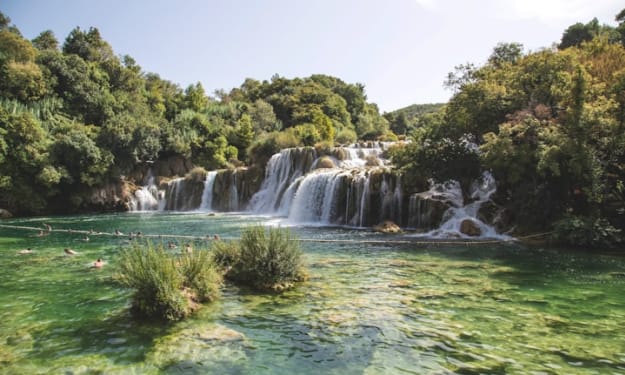


Comments
There are no comments for this story
Be the first to respond and start the conversation.