
Dr. Umar Johnson Returns: A Passionate Voice for Pan-Africanism and Social Justice
Dr. Umar Johnson’s Comeback: Championing Pan-Africanism and Confronting Social Injustices


In a vibrant and thought-provoking conversation, Dr. Umar Johnson, the outspoken Pan-African scholar and activist, made a triumphant return to the podcast scene, broadcasting from his birthplace of Philadelphia. Known for his unapologetic advocacy for Black empowerment and unity, Dr. Johnson shared his insights on a range of pressing issues, from historical reflections to contemporary controversies, all while emphasizing the importance of cultural pride and self-determination.
Warm Welcome and Global Impact
Dr. Johnson expressed gratitude for the warm reception he receives worldwide, from college campuses to international speaking engagements. “I’m just a scholar and Pan-Africanist,” he said, humbly dismissing the label of celebrity. “The love I get from city to city, country to country, continent to continent-it’s overwhelming. There are a few detractors, but I’m blessed to have this platform to awaken and unite our people.” His mission, rooted in uplifting the Black community, resonates deeply, as evidenced by a particularly memorable moment at Oakwood University, a historically Black college in Huntsville, Alabama.
A Historical Connection at Oakwood University
Dr. Johnson recounted a powerful experience at Oakwood, where students greeted him with an electrifying ovation. Unbeknownst to him at the time, the campus sits on the site of a former plantation where Dred Scott, the enslaved African who sued for his freedom in the landmark 1857 case, was once held. “That response from the students felt ancestral,” Dr. Johnson reflected. “It was as if the spirits of those who suffered there were present.” He noted the irony of HBCUs like Oakwood transforming spaces of oppression into centers of education and empowerment, a testament to the resilience of Black communities.
Despite initial pushback from some Seventh-day Adventist alumni and church members wary of his outspoken views, Dr. Johnson emphasized his respect for the institutions he visits. “I never disrespect the churches or schools that invite me,” he said. “I’m not anti-religion; I’m against behaviors that harm our people. Once I spoke, they saw there was no need to fear my message.”
Navigating Scrutiny at HBCUs
Dr. Johnson highlighted a recurring challenge: greater scrutiny from HBCUs compared to predominantly white institutions (PWIs). “It’s ironic,” he said. “I’m welcomed warmly at PWIs, but at HBCUs, there’s often hesitation before I arrive. Yet, I’ve never received negative feedback after my visits—not from any college president, board, or student affairs office.” He attributes this to unwarranted fears about his message, which he insists is about empowerment, not division. His popularity as a guest lecturer, particularly at PWIs, underscores his broad appeal, though he believes this history deserves greater documentation.
The Shannon Sharpe Controversy: A Cautionary Tale
The conversation turned to a high-profile legal battle involving sports commentator Shannon Sharpe, who faces a $50 million lawsuit from 19-year-old Gabriella Zuniga. Dr. Johnson approached the topic with nuance, acknowledging Sharpe’s missteps while questioning the motives behind the case. According to reports, Zuniga alleges emotional distress and sexual assault stemming from a two-year relationship that began when she met Sharpe at a Los Angeles gym in 2023. The relationship, which included BDSM elements, became contentious when Zuniga refused to sign a non-disclosure agreement (NDA).
Dr. Johnson criticized Sharpe’s judgment, particularly for engaging with a much younger woman who fit his publicized preference for “pale and skinny” partners. “When she refused the NDA, that was a red flag,” he said. “Sharpe should have ended it right there.” He also questioned Zuniga’s intentions, pointing to text messages where she discussed wanting a “big Black baby” and financial demands escalating from $10,000 to $50 million. “This smells like a setup,” Dr. Johnson asserted, suggesting external influences may be exploiting Sharpe’s vulnerabilities to derail his rumored $100 million contract.
While acknowledging the legal complexities-Sharpe’s actions were not illegal, as Zuniga was 19-Dr. Johnson expressed solidarity with Sharpe to prevent another Black man’s downfall. “Morals don’t matter in a court of law,” he said. “I don’t want to see his life destroyed like others before him.” He urged Black male celebrities to exercise greater caution, citing historical patterns of white women being used to discredit prominent Black figures.
The NFL Draft and Shador Sanders: A Racial Reckoning
Dr. Johnson passionately addressed the NFL draft controversy surrounding Shador Sanders, son of legendary athlete Deion Sanders. Despite being projected as a top-10 pick, Shador fell to the fifth round, selected 144th overall-a move Dr. Johnson labeled a deliberate act of sabotage by NFL owners and Commissioner Roger Goodell. “This was about humiliating Deion Sanders,” he said. “They used Shador as a pawn to remind Black America who controls the plantation.”
Shador’s exceptional college performance, including an FBS record for completing 80% of his passes, made his draft slide inexplicable. Dr. Johnson argued that the NFL’s actions not only diminished Shador’s earning potential-top picks secure contracts worth $40 million or more, compared to fifth-round deals of $4-5 million-but also served as a media ploy to boost draft viewership. “They kept the world watching to see where Shador would land,” he said.
He called for Deion and Shador to sue the NFL for racial discrimination and collusion, emphasizing the broader implications for Black athletes. “This wasn’t just about Shador; it was about showing Black people we have no power,” Dr. Johnson said. He also condemned a prank call targeting Shador, allegedly orchestrated by the son of an Atlanta Falcons defensive coordinator, as further evidence of racial animus.
Carmelo Anthony’s Stand: A Fight for Self-Defense
Dr. Johnson staunchly defended 17-year-old Carmelo Anthony, a high school student in Frisco, Texas, charged in the death of Hunter, a white peer, during a track meet altercation. According to reports, Carmelo sought shelter from rain under a tent when Hunter and his brother Austin confronted him, demanding he leave. The confrontation escalated when Hunter allegedly knocked Carmelo’s phone from his hand, and both brothers attempted to forcibly remove him.
Weighing 160 pounds, Carmelo faced two larger opponents-Hunter at 225 pounds and Austin of similar size. Dr. Johnson argued that Carmelo acted in self-defense, invoking Texas’s stand-your-ground law, which permits the use of deadly force when one’s safety is threatened. “He was a skinny Black boy cornered by two racist bullies,” he said. “He had no duty to flee, and he warned them to back off.”
Dr. Johnson condemned the media’s portrayal of Carmelo as a criminal, noting his 3.73 GPA, leadership in sports, and stable family background. He also highlighted the harassment faced by Carmelo’s family, including death threats and false accusations about misusing GoFundMe funds. “White America is outraged because a Black boy valued his life enough to defend it,” he said, drawing parallels to historical patterns of Black men being punished for resisting white aggression.
Sinners: A Cinematic Triumph
On a cultural note, Dr. Johnson praised the horror film *Sinners*, directed by Ryan Coogler and starring Michael B. Jordan. Describing it as a “must-see” for Black audiences, he lauded its blend of ancestral protection, demonic possession, and the battle between good and evil. “This movie speaks to the power of music and the consequences of lowering your spiritual frequency,” he said, referencing the story of a chosen musician, Sammy, who succumbs to temptation.
Dr. Johnson, an initiated priest of African ancestral traditions, appreciated the film’s portrayal of an ancestral priestess who confronts demonic forces. He rebutted criticisms from some Christians who labeled the movie demonic, arguing that it aligns with universal themes of morality. “Stop with the selective outrage,” he said. “If you pledge allegiance to a racist flag or worship a white Jesus, don’t criticize a Black film that’s uplifting our people.”
A Call to Action
Throughout the conversation, Dr. Johnson’s message was clear: Black empowerment requires unity, vigilance, and cultural pride. From defending Black men against systemic attacks to celebrating Black cinematic achievements, he urged his audience to resist oppression and support their own. “We are not slaves,” he declared. “We must organize, unify, and overthrow the systems that seek to control us.”
As Dr. Johnson continues his mission, his voice remains a beacon for those committed to justice and self-determination. His return to the platform is not just a moment of reconnection but a rallying cry for a community ready to reclaim its power.
About the Creator
KWAO LEARNER WINFRED
History is my passion. Ever since I was a child, I've been fascinated by the stories of the past. I eagerly soaked up tales of ancient civilizations, heroic adventures.
https://waynefredlearner47.wixsite.com/my-site-3
Keep reading
More stories from KWAO LEARNER WINFRED and writers in Interview and other communities.
Tupac’s Truth: Life, Death, and the Fight for a Forgotten Generation
Imagine stepping out your front door every day, not knowing if you’ll make it back home. Picture a world where the sound of sirens is as common as birds chirping, where the weight of survival presses down harder than any dream of escape. This isn’t some distant battlefield-it’s the reality Tupac Shakur described, a life forged in the crucible of America’s urban underbelly. In a raw, unfiltered conversation, the rapper laid bare the struggles of his generation, painting a vivid picture of a community caught between despair and defiance.
By KWAO LEARNER WINFRED11 months ago in Interview
Part 2 Interview With Joe Patterson, Author Of Melanin Memoirs
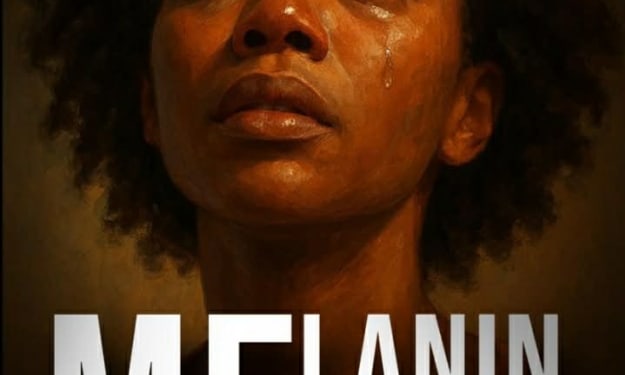
This is my second interview with Joe Patterson. His 4th anniversary writing on Vocal will be in March 2026. He has one achievement on Vocal, The Other Foot. He has over 17,000 reads on Vocal since he started on Vocal in 2022. Joe Patterson is very creative poet and rapper. Joe is deep thinker and I feel it is reflected in his latest published book, Melanin Memoirs.
By Mariann Carroll27 days ago in Interview
Enzo Zelocchi: Exploring the Journey of an Actor, Producer, and Visionary Shaping Modern Independent Cinema
Independent cinema has long been a space where creativity thrives and unique voices emerge. Unlike large studio productions that often follow established formulas, independent films allow creators to experiment with ideas, explore deeper themes, and tell stories that might otherwise remain untold. Within this dynamic environment, artists who combine passion with vision can create meaningful contributions to the film industry. One such figure is Enzo Zelocchi, whose growing career reflects dedication to storytelling and modern filmmaking.
By Brian Smith7 days ago in Interview



Comments
There are no comments for this story
Be the first to respond and start the conversation.