
Mysteries of Antarctica
The history of Antarctica reaches back in time, long before humans set foot on the continent. Geologists and paleontologists have uncovered evidence suggesting that Antarctica was once part of the supercontinent Gondwana, which included South America, Africa, Australia, the Indian subcontinent, and the Arabian Peninsula. Around 175 million years ago, Gondwana began to break apart, leading to the gradual isolation of Antarctica and the formation of the Southern Ocean around it. Piri Reis Map: One of the most enduring mysteries surrounding Antarctica is the Piri Reis Map, drawn in 1513 by Ottoman cartographer Piri Reis. The map is known for its remarkable accuracy in depicting coastlines of various continents, including Antarctica. What is perplexing is that Antarctica's coastline was not officially discovered until centuries later. Some theories propose that the map's data originated from ancient sources, lost civilizations, or even extraterrestrial knowledge, leading to heated debates among historians and conspiracy theorists. Hidden Ancient Civilization Theories: Numerous speculations and conspiracy theories suggest that Antarctica might have once hosted an ancient, advanced civilization. Alleged satellite images and aerial surveys have unveiled peculiar formations that resemble man-made structures. The most famous among them is the "Pyramid of Antarctica." However, most scientists dismiss these claims, attributing the formations to natural geological processes like erosion and glacial movements. The Lost City of Atlantis: A captivating myth connects Antarctica to the legendary lost city of Atlantis, described by the ancient Greek philosopher Plato. According to some theories, Atlantis once existed on a vast island in the Atlantic Ocean and might have been located where Antarctica is today. However, no concrete evidence supports this hypothesis, and the search for Atlantis remains confined to the realms of mythology and speculation. UFO Sightings: Antarctica has also become a hotbed for UFO enthusiasts, with numerous alleged sightings and encounters reported over the years. Some ufologists believe that Antarctica's remote and inaccessible nature makes it an ideal location for extraterrestrial activity. However, these claims often lack scientific evidence and are considered by skeptics as mere stories and hoaxes. Anomalous Ancient Fossils: The discovery of anomalous ancient fossils in Antarctica has sparked intrigue among paleontologists. Fossils of Glossopteris, an ancient fern-like plant, have been found in regions where the environment would have been unsuitable for its growth. This has led to speculations about the continent's ancient climate, tectonic movements, and potential links to other continents in the past. Climate Change and the Unknown: Antarctica's ice holds crucial information about Earth's climate history. Scientists drill ice cores to unlock ancient climate data, offering insights into past environmental changes and the impact of human activity. However, Antarctica's rapid ice melting due to climate change remains a major concern. The implications of this phenomenon on global sea levels and weather patterns are yet to be fully understood, adding to the mystique of this frozen land. International Geopolitical Tensions: As Antarctica's potential resources become more accessible due to ice melting, international geopolitical tensions have arisen. While the Antarctic Treaty System (ATS) has maintained peace and scientific cooperation since 1959, territorial claims by several countries and the possible expiration of the Treaty in 2048 raise questions about the continent's future. Conclusion: Antarctica remains a land of paradoxes and mysteries, an uncharted realm that continues to intrigue and challenge human understanding. Its vast icy expanse conceals secrets of our planet's history and its climate future. As scientific research advances and technologies improve, the mysteries of Antarctica may slowly unravel, offering profound insights into the Earth's past and the challenges that lie ahead for humanity. For now, the enigma of Antarctica will persist, reminding us of the resilience and adaptability required to explore and protect this unique and fragile continent.


Antarctica is a unique continent with distinct characteristics that set it apart from other regions on Earth. One of the most striking features of Antarctica is its extreme cold, with temperatures dropping as low as -89°C. Additionally, it is known for its strong winds, reaching speeds of up to 300 km/hr, which can create dangerous snowstorms.
Interestingly, despite its cold climate, Antarctica is considered the world's driest continent, receiving only around 51mm of rain annually. In fact, it is classified as a desert, and when precipitation does occur, it usually falls as snow before reaching the ground.
One of the most remarkable aspects of Antarctica is its lack of human influence. Unlike other continents, Antarctica has no indigenous tribes or native populations living there for ages. This is partly due to its harsh conditions, which make it challenging for human settlement.
Throughout history, various countries have made claims over different parts of Antarctica, leading to geopolitical tensions. France, Norway, Australia, Britain, Chile, Argentina, and New Zealand are among the nations that have laid claim to portions of the continent. However, these claims are not universally recognized, and some territories overlap, leading to potential conflicts.
The history of human exploration in Antarctica dates back to the 1890s, with numerous expeditions leading to scientific discoveries and the establishment of research stations. In the early 20th century, the "Heroic Era" saw significant exploration efforts and the discovery of plant life, such as mosses, on the continent.
During the Colonial period, from 1908 to 1942, several countries asserted sovereignty over parts of Antarctica, including Argentina, Australia, Chile, France, New Zealand, Norway, and the United Kingdom. Some other countries, such as the USA, the Soviet Union, Japan, Sweden, Belgium, and Germany, conducted expeditions and research without making territorial claims.
In 1959, the Antarctic Treaty was signed, aiming to maintain Antarctica as a peaceful and free zone dedicated to scientific research. The treaty suspended the territorial claims temporarily, but they remain legally valid and could become relevant again when the treaty expires in 2048.
In recent years, there have been concerns about potential future conflicts over Antarctica due to climate change, which could make the continent more accessible and economically viable for resource extraction. However, the Madrid Protocol, established in 1991, places restrictions on drilling and mining activities to protect Antarctica's environment.
Today, Antarctica serves as a collaborative space for scientific research, with numerous countries maintaining research stations and conducting various studies. However, there are ongoing discussions about the need for additional regulations to protect the region's delicate ecosystems, such as creating a new treaty to regulate fishing in the surrounding oceans and ensure sustainable practices.
As we look to the future of Antarctica, questions arise about how the international community should approach the continent. Should it continue as a space for peaceful scientific collaboration, with no mining or drilling allowed? Or should there be further exploration and potential economic activities, regulated to safeguard its unique environment?
The fate of Antarctica will depend on the decisions made by the international community and the willingness of countries to cooperate and protect this remote and pristine region for generations to come.
I hope you find this rewritten article informative and engaging. If you have any further questions or need additional information, feel free to ask!
About the Creator
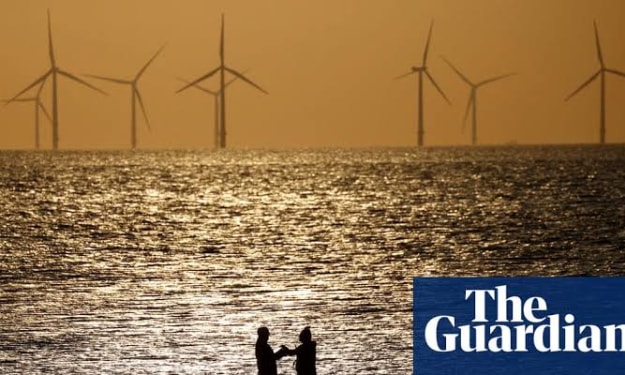
UK must double down on renewables as wars drive up energy costs, experts say
Britain must accelerate its transition toward renewable energy sources as geopolitical conflicts continue to drive global energy prices higher, according to leading energy analysts and climate policy experts. The warning comes as wars and political tensions across key energy-producing regions expose the vulnerability of countries still heavily reliant on imported fossil fuels. In recent years, the United Kingdom has made significant progress expanding renewable energy capacity, particularly in offshore wind and solar power. However, experts argue that the pace of the transition remains insufficient to shield the country from the volatility of international energy markets. Conflicts in the Middle East and Eastern Europe have demonstrated how quickly supply disruptions can translate into rising costs for households and businesses. Energy economists say the lesson from recent global crises is clear: the more dependent a country is on imported oil and gas, the more exposed it becomes to geopolitical shocks. Britain imports a substantial portion of its natural gas and refined fuel products, meaning instability in global supply chains can quickly affect domestic energy bills. During periods of international conflict, oil prices often spike due to fears that shipping routes or production facilities could be disrupted. Even rumors of attacks near key energy chokepoints — such as major pipelines or shipping lanes — can cause markets to react sharply. These fluctuations, analysts say, ultimately filter down to consumers through higher electricity and heating costs. Renewable energy sources offer a potential solution to this problem because they rely on domestic resources such as wind and sunlight rather than imported fuels. Once renewable infrastructure is built, operating costs remain relatively stable because there is no need to purchase fuel on global markets. The United Kingdom already operates some of the world’s largest offshore wind farms, and renewable energy now accounts for a significant share of the country’s electricity generation. Government data indicates that wind power alone has become one of the largest sources of electricity in Britain, particularly during periods of strong weather conditions. Despite this progress, energy specialists argue that further investment is essential. Expanding renewable generation capacity requires not only building more wind and solar farms but also upgrading the national electricity grid. A modernized grid would allow energy produced in remote offshore locations to be transmitted efficiently to cities and industrial centers. Energy storage is another critical piece of the puzzle. Because renewable sources like wind and solar are intermittent, large-scale battery systems or alternative storage technologies are needed to ensure a stable supply of electricity during periods when generation drops. Developing these systems will require both technological innovation and sustained financial investment. Some experts also emphasize the importance of diversifying the country’s renewable portfolio. While offshore wind remains a cornerstone of Britain’s energy strategy, solar power, tidal energy, and green hydrogen could also play important roles in the future energy mix. The government has already announced plans to increase renewable capacity dramatically over the next decade. Officials argue that reducing reliance on fossil fuels will not only strengthen national energy security but also help the country meet its climate targets. However, critics say policy uncertainty and slow planning approvals have sometimes delayed renewable projects. Industry leaders have urged authorities to streamline regulatory processes and provide clearer long-term incentives for investors. For many analysts, the link between energy security and climate policy has never been more obvious. Wars and geopolitical tensions have shown that fossil fuel dependence can create economic vulnerability, while domestically produced renewable energy offers greater stability. “The global energy system is changing,” said one energy policy researcher. “Countries that invest early in renewable infrastructure will be better protected from geopolitical shocks and price spikes.” As international conflicts continue to reshape global energy markets, the debate over Britain’s energy future is likely to intensify. For supporters of renewable power, the current moment represents both a warning and an opportunity — a chance to accelerate the transition toward a more secure and sustainable energy system.
By Fiaz Ahmed 7 days ago in Earth



Comments
There are no comments for this story
Be the first to respond and start the conversation.