

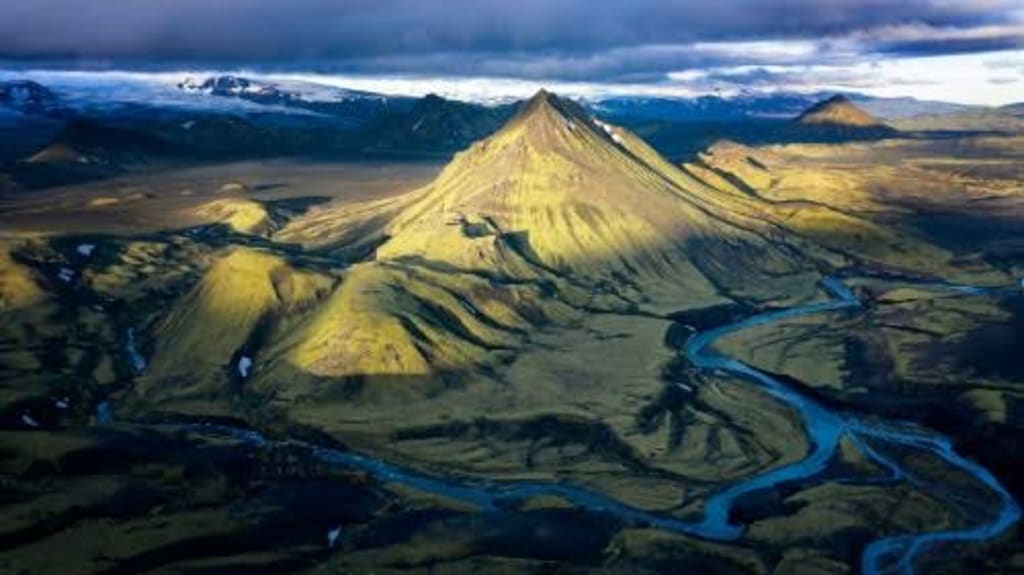
Mountains are one of the most awe-inspiring and majestic natural wonders of the world. They are rugged, majestic, and can evoke a sense of wonder and awe in those who view them. Mountains have always fascinated and inspired humans, with many cultures and religions assigning spiritual and symbolic meaning to these great peaks. In this essay, we will explore the beauty, history, and significance of mountains.
Mountains are natural elevations that rise above the surrounding landscape, typically featuring steep slopes, rocky terrain, and often snow-capped peaks. They can be found on every continent, and range in size from small hills to massive ranges spanning thousands of miles. Some of the most famous and iconic mountain ranges include the Himalayas, the Andes, the Rockies, and the Alps.
The formation of mountains can be attributed to a variety of factors, including tectonic activity, volcanic activity, and erosion. Tectonic activity occurs when two tectonic plates collide, forcing one plate to subduct under the other. This can cause the formation of fold mountains, which are characterized by long, parallel ridges and deep valleys. Volcanic activity can also create mountains, as lava and ash accumulate to form new landmasses. Lastly, erosion can play a significant role in the formation of mountains, as rivers and glaciers erode the surrounding landscape, carving out valleys and leaving behind jagged peaks.
Mountains have played a significant role in human history and culture. In many cultures, mountains are seen as sacred, and have been the site of important religious and spiritual practices. For example, in Hinduism, Mount Kailash in Tibet is believed to be the abode of Lord Shiva, one of the most important deities in the religion. In Greek mythology, Mount Olympus was believed to be the home of the gods and goddesses. In addition to their spiritual significance, mountains have also played an important role in human exploration and settlement. Many early civilizations were located near mountains, as they provided protection from enemies and natural resources such as water and timber.
Mountains are also home to a diverse array of plant and animal life, with many species unique to high-altitude environments. Mountain ecosystems are typically characterized by low temperatures, thin air, and harsh weather conditions, which have led to the development of hardy and specialized species. Some of the most iconic mountain animals include bears, mountain goats, and bighorn sheep.
In addition to their cultural and ecological significance, mountains are also important economic resources. Many communities rely on tourism, skiing, and other mountain-related activities to drive their local economies. Additionally, mountains are often a source of natural resources such as timber, minerals, and freshwater.
Despite their beauty and significance, mountains are facing a number of challenges in the modern world. Climate change is causing glaciers to melt and weather patterns to shift, threatening the delicate ecosystems and species that call mountains home. Additionally, the economic development and tourism that have contributed to the livelihoods of mountain communities can also cause environmental degradation, such as deforestation and pollution.
In conclusion, mountains are a natural wonder that have played an important role in human history, culture, and ecology. They are a source of awe and inspiration, and have helped shape the course of human civilization. However, as we continue to face the challenges of climate change and economic development, it is important that we work to protect and preserve these majestic peaks for generations to come.
The formation of mountains can be attributed to a variety of factors, including tectonic activity, volcanic activity, and erosion. Tectonic activity occurs when two tectonic plates collide, forcing one plate to subduct under the other. This can cause the formation of fold mountains, which are characterized by long, parallel ridges and deep valleys. Volcanic activity can also create mountains, as lava and ash accumulate to form new landmasses. Lastly, erosion can play a significant role in the formation of mountains, as rivers and glaciers erode the surrounding landscape, carving out valleys and leaving behind jagged peaks.
About the Creator
Areej Fatima
Unlock the potential of your brand with our content writing services. Let us transform your ideas into words that connect, persuade, and make a lasting impression on your audience.
Keep reading
More stories from Areej Fatima and writers in Earth and other communities.
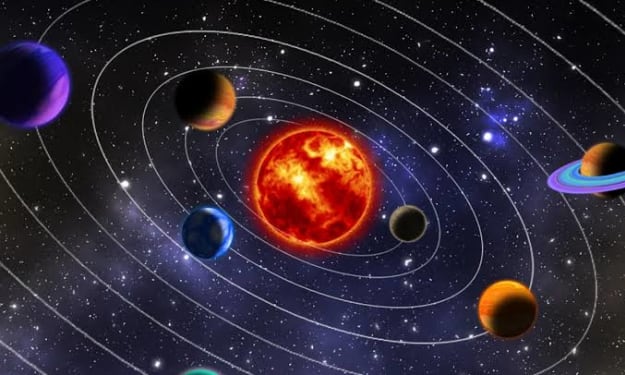
Solar System
The solar system is a fascinating and complex system that includes the sun, planets, moons, asteroids, comets, and other celestial bodies that orbit around the sun. It is believed to have formed around 4.6 billion years ago from a giant cloud of gas and dust known as a solar nebula.
By Areej Fatima 3 years ago in Earth
Nuclear Transmutation: The Accidental Dream of Making Gold
Picture a laboratory humming with quiet intensity, banks of instruments blinking in the low light, and somewhere inside a shielded reactor chamber, something almost magical is happening. An element is changing. One thing is becoming another. What was mercury is now, atom by atom, becoming gold.
By CurlsAndCommas5 days ago in Earth


Comments
There are no comments for this story
Be the first to respond and start the conversation.