


It is incredible how much of our lives is based on Mother Nature. We live in such a high tech world that it can be hard to even see the natural world which we actually live in.
Planes that fly us from one country to another ‘copy’ birds in flight. Engineers have studied these birds flying and adapted planes so that we are safer in the air. The shape and movement of a bird’s wings have been ‘used’ to develop and design more efficient and effective aircraft.
Ships very often incorporate elements that are inspired by marine life and whales, especially in the area of propulsion. This is a form of biomimicry which aims to improve speed and fuel efficiency. For example, whales are naturally streamlined and efficient when moving through the Oceans of the Earth, and this has inspired engineers to create ships with similar shapes to reduce resistance which improves speed.
Even some cars, which we kind of take for granted, are biomimic. The McLaren P1’s design is inspired by the sailfish for better efficiency. The Mercedes-Benz Bionic’s exterior is modeled after the yellow boxfish, with a focus on its rigid exoskeleton. The Mazda Kodo is influenced by the cheetah and its powerful and controlled movements, (to name just 3 makes of cars).
The most ‘famous’ example of biomimicry is “Velcro”, something that we buy and use every day without really giving it a thought. This useful piece of equipment was ‘inspired’ by burrs (hooked seed pods) from the burdock plant (Arctium). George de Mestral, who created Velcro, was inspired when on a trip in 1941 these ‘burrs’ kept sticking to his clothes and his dog’s fur. Thus today, we have Velcro.
It is so interesting when we just sit down and read about how Mother Nature ‘teaches’ us.
The intricate patterns of a snowflake can very often be found in the intricate detail of lace. The vast space of the Oceans teaches us the importance of space and having our own space and allowing others to have their own space.
One of the most important lessons we learn from Mother Nature is that it is so important to “adapt”. Nature is constantly changing with the 4 seasons => Summer, Autumn, Winter and Spring. Trees lose their leaves and animals hibernate to conserve energy during the Winter months and yet how quickly flowers start to bloom during Spring. Every part of Nature is flexible in order to survive during the year. With the ‘challenges’ we face in everyday life, we need to ‘copy’ Mother Nature and be flexible in our dealings with others.
“Resilience” is a big aspect that we see every day from Nature. Animals find ways of surviving even though the planet is going through climate change, and it doesn’t matter how much concrete we put down, plants always pop through those cracks. Mother Nature is strong and determined and so can we be.
A third lesson from Mother Nature is “balance”. The Cycle of Life is a delicate balance that works to maintain harmony in the ecosystem of planet Earth. The Sun, the Moon, the seasons and even the food chain are all ‘aligned’ to support life on Earth. We can use this “balance” in our everyday lives, remembering that ‘life’ is more important than any material possessions.

Patience, beauty and simplicity are all qualities that Mother Nature teaches us when we look to “Her” for guidance.
The human race will always be learning from Mother Nature, and just as Nature has always cared for us, we need to care for and look after the Earth we live on, because the Earth really is a “Jewel in Space”.
About the Creator
Ruth Elizabeth Stiff
I love all things Earthy and Self-Help
History is one of my favourite subjects and I love to write short fiction
Research is so interesting for me too
Keep reading
More stories from Ruth Elizabeth Stiff and writers in Earth and other communities.
Images Show Aftermath of Deadly Crash on Thai Railway Line
Some images stay with you long after you scroll past them. The photographs coming out of Thailand this week do exactly that. Twisted steel, overturned train carriages, scattered luggage, and exhausted rescue workers tell a devastating story — one that words alone cannot fully explain. A deadly crash on a Thai railway line has claimed multiple lives and left dozens injured, turning an ordinary journey into a nightmare. As images from the scene circulate globally, they reveal not just destruction, but grief, courage, and difficult questions about safety in one of Southeast Asia’s busiest rail networks. A Normal Journey That Ended in Disaster For the passengers on board, the day began like any other. People were heading to work, returning home, or traveling to see family. The train moved steadily along the tracks — until everything suddenly changed. According to officials, the crash occurred when heavy construction equipment collapsed onto an active railway line, striking a moving passenger train. The impact derailed multiple carriages, causing chaos inside the train as metal twisted and windows shattered. Within moments, smoke filled the air and cries for help echoed from inside the wreckage. For many passengers, there was no time to react. What the Images Reveal The aftermath photos are haunting. In some images, train carriages lie on their sides, crushed and burned. In others, rescue teams climb over debris, cutting through metal to reach trapped passengers. Personal belongings — backpacks, shoes, food containers — are scattered across the tracks, quiet reminders of lives abruptly interrupted. One particularly striking image shows emergency workers standing silently beside the wreckage, their faces reflecting exhaustion and sorrow. These visuals do more than document damage; they capture the emotional weight of the tragedy. Images like these remind us how fragile routine can be — how quickly normal life can turn into crisis. The Human Cost of the Crash Authorities confirmed that multiple people lost their lives, while dozens were injured, some critically. Hospitals in nearby areas were quickly overwhelmed as ambulances transported victims from the scene. Families rushed to medical centers, searching for loved ones. For many, the wait for information was agonizing. Phone calls went unanswered. Names were not immediately confirmed. In moments like these, uncertainty can be as painful as loss itself. Survivors have described scenes of panic, confusion, and shock. Some helped fellow passengers escape wrecked carriages. Others waited helplessly, trapped until rescuers could reach them. Rescue Efforts Under Pressure Emergency response teams acted quickly, working against time and unstable conditions. Firefighters, paramedics, and volunteers used cutting tools and heavy machinery to clear wreckage and pull survivors to safety. Despite the dangers, many rescuers worked for hours without rest. Some images show medics kneeling beside injured passengers on the ground, administering care before transport. Others show cranes lifting destroyed train cars away from the tracks. Their efforts likely saved lives — but the scale of the damage made the operation incredibly challenging. How Did This Happen? As the shock begins to settle, attention has turned to how such a catastrophic accident was allowed to occur. Early reports suggest the crash involved construction work taking place near or above an active railway line. This has raised serious concerns about oversight, safety planning, and coordination between construction teams and railway authorities. Questions being asked include: Why was heavy equipment operating so close to a moving passenger train? Were safety inspections properly conducted? Were warning systems or track closures considered? An official investigation is now underway, but for many families, answers will come too late. A Wake-Up Call for Railway Safety Thailand has invested heavily in rail infrastructure in recent years, aiming to modernize transport and improve connectivity. But this tragedy highlights the risks that come with rapid development when safety measures fail or are ignored. Experts warn that construction near live railway lines requires strict controls, constant monitoring, and zero tolerance for shortcuts. Even a single failure can lead to irreversible consequences — as this crash painfully demonstrates. Public trust in rail safety has been shaken, and restoring it will require transparency, accountability, and meaningful reform. Grief, Solidarity, and Remembrance In the days following the crash, communities across Thailand have expressed sorrow and support. Vigils have been held. Messages of condolence continue to pour in. Volunteers have donated blood and supplies to help victims and hospitals. The images from the scene have united people in grief — not just in Thailand, but around the world. They serve as a reminder that behind every headline are real people, real families, and real loss.
By Muhammad Hassanabout 16 hours ago in Earth
Trump Administration Moves to End Deportation Protection for Somalis
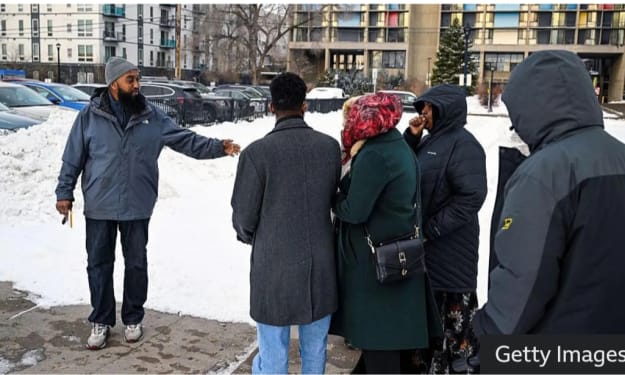
The Trump administration has moved to end long-standing deportation protections for Somali nationals living in the United States, a decision that could place tens of thousands of people at risk of removal. The move has sparked alarm among immigrant communities, human rights organizations, and legal experts, who warn that returning Somalis to a country still grappling with instability could have severe humanitarian consequences. As the policy change unfolds, it has reignited debate over immigration enforcement, executive authority, and America’s obligations to people fleeing conflict.
By Aarif Lashariabout 19 hours ago in Earth
Wild Card Weekend Recap: What Happens Now?
I think I figured out why I love Wild Card Weekend so much. It's because it's the first playoff anything of the calendar year. The NFL season starts in the fall, and once upon a time, the champion was crowned either on or slightly before New Year's. The evolution of the NFL schedule has resulted in the playoffs starting just into the New Year, and currently, the final week of the season falls on the first weekend of the New Year, with Wild Card Weekend coming a week after that. So yes, chronologically, the NFL's Wild Card Weekend serves as the first playoff anything of the calendar year.
By Clyde E. Dawkins2 days ago in Unbalanced


Comments
There are no comments for this story
Be the first to respond and start the conversation.