

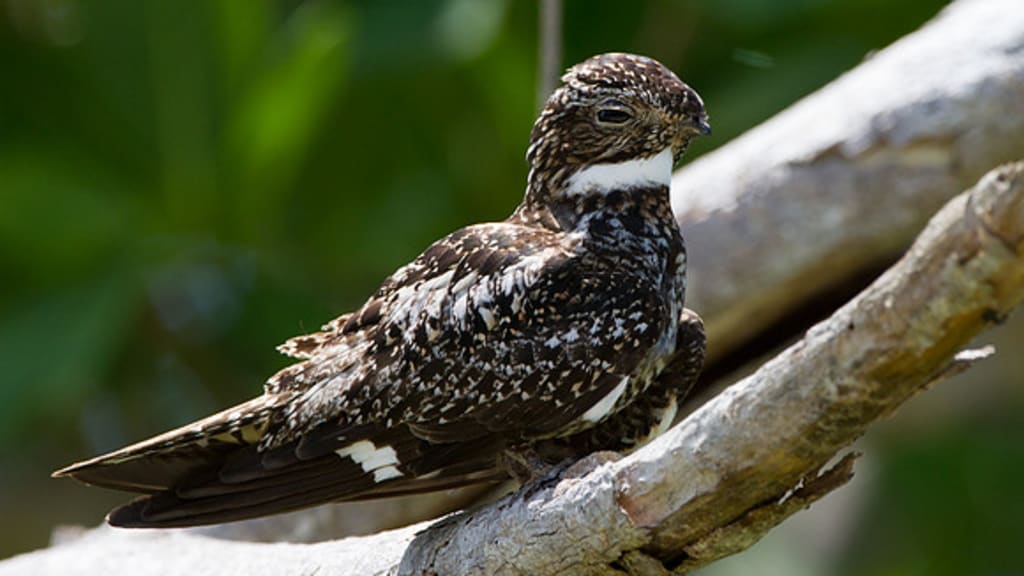
Antillean nighthawks are known for their long wings and white wing bars. During the summer they inhabit coastal marshes in Florida. They have distinctive “peent” calls sounding at dusk. These birds have flight patterns and show off aerial displays. Antillean nighthawks catch flying insects on the wing, mainly foraging near dawn and dusk or sometimes at night with a full moon.

Apolomado falcons are birds of prey flying across the skies of the southwestern US. They have long pointed wings and vibrant plumage with bold patterns of slate gray, russet, and white. They inhabit open landscapes such as grasslands and deserts. These falcons prey on insects and small birds. Conservation efforts are underway to ensure their survival.
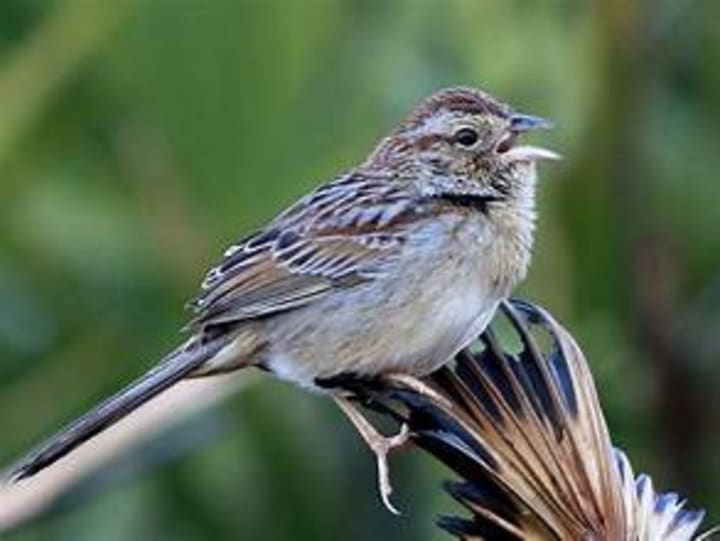
Bachman’s sparrows have melodic songs. They inhabit open pine woods in the southeastern US. These birds have brown and gray plumage and blend in with their surroundings. They are interesting to see during the breeding season when male birds actively sing. Bachman's sparrows forage on the ground for plant seeds and arthropods.

Baird’s sparrows have distinctive yellowish faces and streaked backs. They inhabit the open prairies of the northern US. Their coloring provides for great camouflage among grasses. During breeding season they sing out with melodious songs. Baird’s sparrows are omnivorous and can eat both animals and plants. These predominantly vegetarian birds usually forage for food on the ground.

Black rails are the smallest of the rail family and inhabit the salt marshes of the southeastern US. They have black bodies and piercing red eyes. They are known for their distinctive ‘kik-kik-kerr’ calls. Their diet includes seeds, insects, crustaceans, and mollusks.
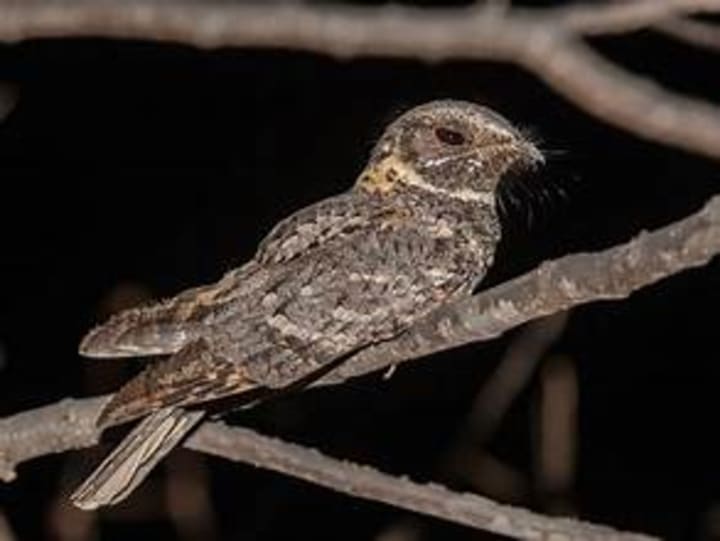
Buff-collared nightjars have brown and buff plumage and are masters of camouflage. They inhabit the deserts of Arizona. During the nighttime, their calls can be heard through the night. Buff-collared nightjars mainly eat nocturnal flying insects. Their diet includes moths, beetles, and other insects. They forage by sitting on a perch or by flying out to catch insects midair or by flying up from the ground. This feeding behavior helps control insect populations, making them significant in their ecosystem.

California condors have a wingspan of nearly ten feet and are a majestic sight flying across the skies. Unfortunately, they are endangered birds and primarily found in California and Arizona. These birds dine on carrion and play an essential role in the ecosystem by finishing off carcasses.

Elegant terns are interesting birds with slender orange bills and graceful wings. They inhabit the coastal beaches of California. These birds are known for their social colonies, aerial acrobatics, and distinctive calls. Elegant terns primarily eat small fish and crustaceans but also feed heavily on northern anchovies. Their diet consists mainly of marine life, which they catch by plunge-diving into the sea.
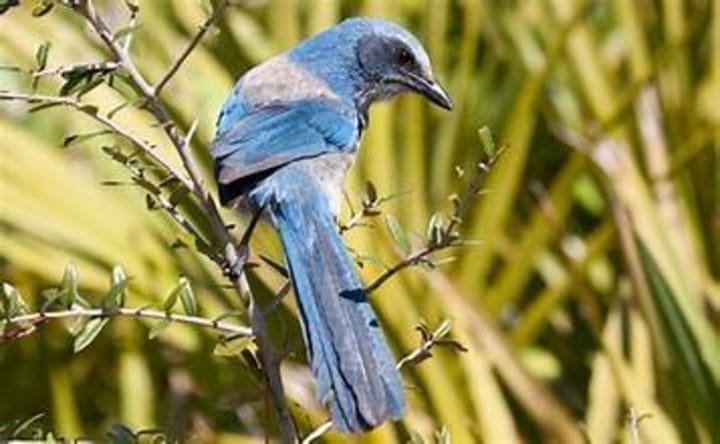
Florida scrub jays are known for their vivid blue coloring. They are the only bird species native to Florida and inhabit scrubby flatwoods. These birds have a friendly demeanor and distinct calls. Florida scrub-jays primarily eat insects, acorns, and small animals. A significant part of their diet, they can harvest and bury 6,000 to 8,000 acorns annually for later use.

Gunnison sage-grouses are captivating birds in Colorado. They are known by their striking plumage and fan-like tails. These birds inhabit sagebrush areas. It is amazing to experience their elaborate mating dance. Gunnison sage-grouse are omnivores; they feed on forbs, leaves, buds, flowers, beetles, ants, and grasshoppers. Where habitats are fragmented, they forage and roost in fields of alfalfa, beans, and wheat.
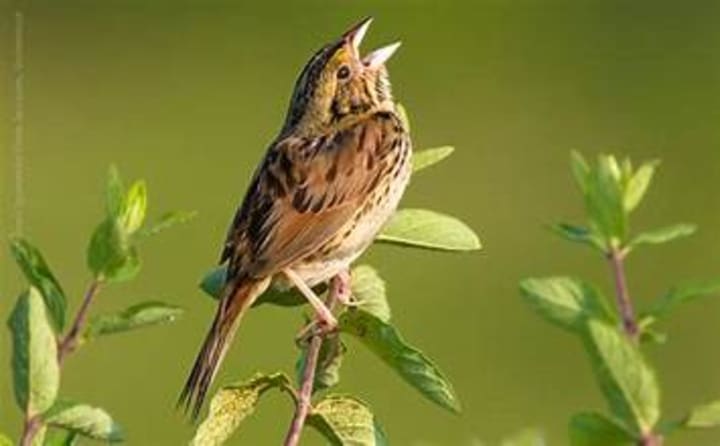
Henslow’s sparrows have olive-green faces, finely streaked chests, rust-colored wings, and short dark forked tails. They inhabit Midwestern prairies, preferring tall grasses. Their presence signifies a healthy prairie ecosystem, encouraging conservative efforts. They breed in grasslands, wet meadows, and shrubby fields and migrate to marshes and open pine woods in the southeastern United States. Henslow's sparrows mainly eat insects such as grasshoppers, beetles, and caterpillars but also spiders and snails. In winter they feed on seeds and some berries.

Ivory-billed woodpeckers are large birds with striking black and white plumage. They inhabit the dense swamps of Arkansas. They prefer thick hardwood swamps and pine forests with large numbers of dead and decaying trees. Ivory-billed woodpeckers are diurnal birds; they spend their nights in individual roost holes, which are often reused. They are omnivores preferring beetle larvae, but they also eat the fruit of the southern magnolia, pecans, acorns, hickory nuts, and poison ivy seeds. They also feed on wild grapes, persimmons, and hackberries.

Kirtland’s warblers are small songbirds migrating between Michigan and the Bahamas. These birds have distinctive yellow bellies and gray backs. They prefer young jack pine forests. Kirtland’s warblers enjoy the berries of lantana, a common shrub, and will also eat the berries of black torch and snowberries.

Mangrove cuckoos are birds with distinctive curved bills and soft gray and yellow plumage. They inhabit mangroves in Florida. Their distinctive calls can be heard resonating through dense mangrove forests. Mangrove cuckoos primarily eat insects and small reptiles.

Red-cockaded woodpeckers inhabit mature pine forests in the southeastern US. These birds are known for their cooperative breeding behavior and live in family groups. They have unique black caps and white cheek patches. Their presence signifies a healthy, well-managed ecosystem. Red-cockaded woodpeckers primarily eat insects and arthropods. They occasionally dine on seeds and fruits from plants like pine, poison ivy, and blueberries.

Sprague’s pipits are grassland songbirds known for their distinctive aerial display flights. They are primarily found in the northern Great Plains, inhabiting grasslands. These are migratory birds spending winters in the southwestern US and northern Mexico. They are a buffy brown with darker streaking, slender bills, and pinkish to yellow legs. Sprague’s pipits eat various insects, spiders, and seeds. The adults are almost entirely insectivorous and feed the young on insects as well during the breeding season,

Whooping cranes are among the tallest birds in North America. They are recognized by their white plumage and graceful stance. Cranes migrate between Canada and the coastal marshes of Texas. They inhabit wetlands. Their distinctive calls can be heard across marshes. Whooping cranes are diurnal, roosting at night on the ground. They are omnivorous and eat a range of wetland animals. In the winter clams and blue crabs; in the summer aquatic invertebrates, frogs, small fish, and berries. During migration, they mainly eat waste grain from agricultural fields.

Yellow rails are birds with striped brown and yellow plumage. They inhabit wetlands and are most active at dawn and dusk. Conservation of wetland habitats is crucial for their survival. Yellow Rails primarily eat invertebrates and plant matter.
About the Creator
Rasma Raisters
My passions are writing and creating poetry. I write for several sites online and have four themed blogs on Wordpress. Please follow me on Twitter.
Keep reading
More stories from Rasma Raisters and writers in Earth and other communities.
Nitrogen is necessary for young tropical rain forests to combat climate change.
By absorbing carbon dioxide from the atmosphere and storing it in wood, tropical rainforests contribute to the slowing of climate change. Forests that develop quickly are even more important because they absorb carbon more quickly.
By Francis Damiabout 10 hours ago in Earth
DoJ Attorneys Resign Over Decision Not to Investigate Agent in Minneapolis ICE Shooting
A Justice Department Decision Sparks Fallout Several US Department of Justice (DoJ) attorneys have resigned following an internal decision not to pursue a criminal investigation into a federal immigration agent involved in a shooting in Minneapolis, according to multiple officials familiar with the matter. The resignations have intensified scrutiny of the DoJ’s handling of the case and fueled public debate over law enforcement accountability, particularly when federal agents are involved. The shooting, which occurred during an Immigration and Customs Enforcement (ICE) operation in Minneapolis, has already drawn local outrage and national attention. The decision not to open a formal investigation has now added a new layer of controversy—this time from within the Justice Department itself. What Is Known About the Minneapolis ICE Shooting Details surrounding the incident remain limited, as authorities have not released a full public account. What has been confirmed is that an ICE agent discharged a firearm during an operation, resulting in a civilian being shot. The condition of the victim has not been fully detailed in official statements, though local officials confirmed the individual survived. Local law enforcement initially responded to the scene, but jurisdictional authority shifted quickly due to the involvement of a federal agent. Under standard procedure, incidents involving federal officers are typically reviewed by the DoJ to determine whether a civil rights or criminal investigation is warranted. It was this review—and its outcome—that ultimately triggered internal dissent. Why DoJ Attorneys Walked Away According to sources familiar with the resignations, multiple attorneys—some with experience in civil rights and public integrity cases—objected strongly to the decision not to open a formal investigation. They argued that the shooting met the threshold for independent review, regardless of whether charges were ultimately brought. One former official described the decision as “a dangerous precedent,” warning that declining to investigate could erode public trust. Others reportedly felt that political considerations, rather than legal standards, influenced the outcome. While the DoJ has not publicly confirmed the number of resignations, officials acknowledged that departures occurred and said they were handled in accordance with internal procedures. The Justice Department’s Position In a brief statement, the Department of Justice said it had conducted an initial assessment of the incident and concluded that there was insufficient basis to proceed with a criminal investigation at this time. Officials emphasized that such decisions are made after reviewing available evidence, including use-of-force policies and witness statements. The department rejected claims that the decision was politically motivated, insisting that prosecutors follow established legal thresholds rather than public pressure. However, the DoJ declined to provide further details, citing the sensitive nature of law enforcement operations and personnel matters. Minneapolis Officials and Community Reaction In Minneapolis, the reaction has been swift and critical. City leaders and community advocates have called for greater transparency, arguing that federal agents operating within city limits should be subject to the same level of scrutiny as local police. “This isn’t about politics—it’s about accountability,” said a local civil rights advocate. “When someone is shot, there must be an independent investigation, regardless of the badge involved.” Protests and community meetings have followed, with residents demanding the release of body camera footage, operational details, and a clearer explanation for the DoJ’s decision. ICE Operations Under Renewed Scrutiny The shooting and subsequent fallout have reignited broader concerns about ICE enforcement tactics. Critics argue that immigration operations often take place with limited oversight, creating conditions where accountability gaps can emerge. Advocacy groups note that ICE agents are armed and authorized to use force, yet incidents involving shootings are relatively rare—and therefore require especially careful review when they occur. Supporters of ICE counter that agents operate in dangerous environments and must make split-second decisions, warning against rushing to judgment without full facts. Political Pressure and the Rule of Law The resignations have also raised questions about political pressure within federal law enforcement agencies. While no direct evidence has been made public, former prosecutors say internal disagreement of this magnitude is unusual and concerning. “When career attorneys resign over a single decision, it signals a serious breakdown of trust,” said a former federal prosecutor. “That doesn’t happen lightly.” Lawmakers from both parties have begun asking questions, with some calling for congressional oversight hearings into the incident and the DoJ’s decision-making process. Legal Standards vs Public Expectations At the heart of the controversy is a long-standing tension in US justice: the gap between legal thresholds for prosecution and public expectations of accountability. Opening an investigation does not imply guilt, but declining to investigate can be perceived as preemptively closing the door on transparency. Civil rights experts argue that even if prosecutors believe charges are unlikely, a formal investigation can still serve an important public interest. “The process matters as much as the outcome,” said one legal scholar. “Especially when federal authority is involved.” What Happens Next While the DoJ has indicated it will not revisit its decision at this time, pressure is mounting. Civil lawsuits, independent reviews, or congressional inquiries could still follow. Meanwhile, the resignations themselves may become part of a broader reckoning inside the Justice Department, as leaders assess how internal dissent is handled—and how public confidence can be restored. For the attorneys who resigned, the decision appears to have been a matter of principle. For the public, the unanswered questions surrounding the Minneapolis shooting remain unresolved. Conclusion: A Case That Won’t Fade Quietly The resignations of DoJ attorneys over the decision not to investigate an ICE agent involved in a Minneapolis shooting have turned a single law enforcement incident into a national flashpoint. Beyond the specifics of the case, the episode raises fundamental questions about accountability, transparency, and the independence of the justice system. Whether through further investigation, legal action, or political oversight, the issue is unlikely to disappear—and the consequences may shape how similar cases are handled in the future.
By Aarif Lashari2 days ago in Earth



Comments
There are no comments for this story
Be the first to respond and start the conversation.