
Mosses in the Ice: The Extreme Survivors of Permafrost
Meet the Tiny Green Survivors Thriving Where Almost Nothing Else Can — Inside Earth's Deep Freeze

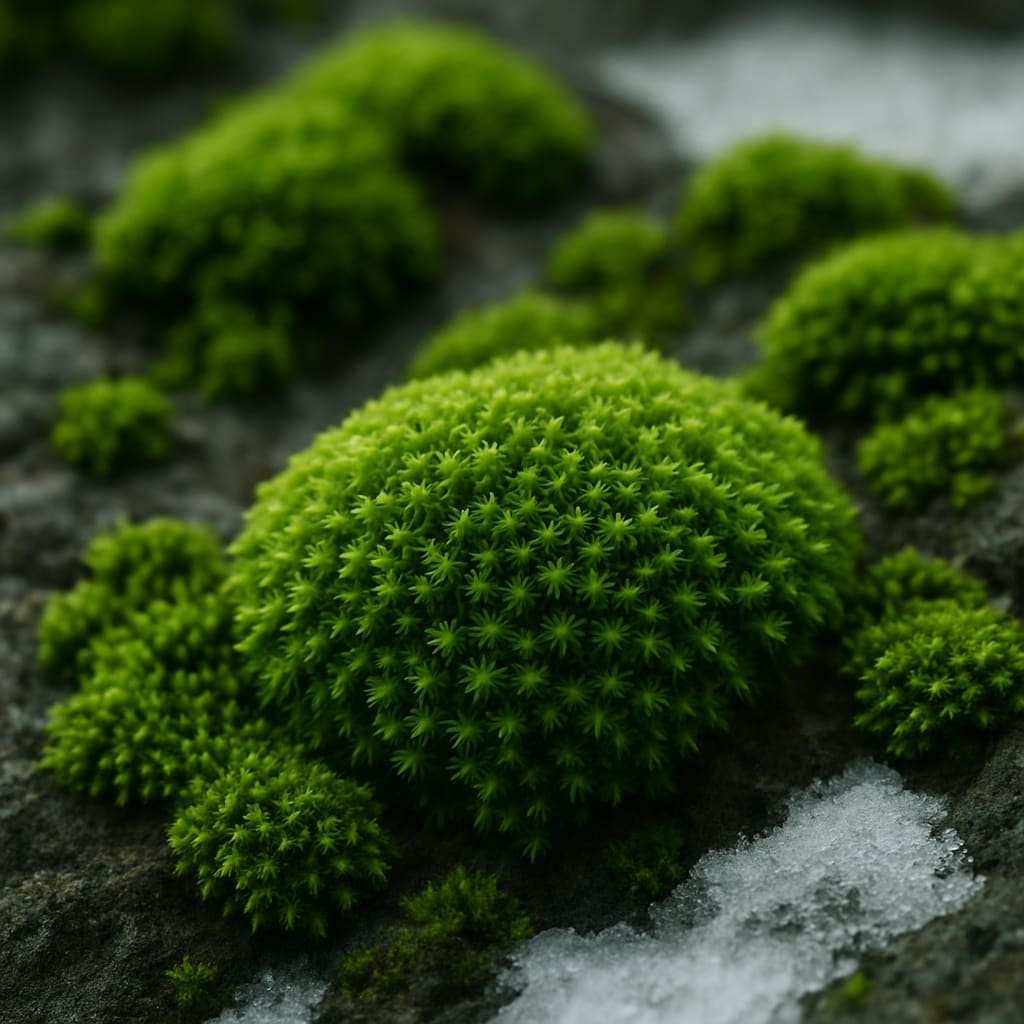
When we think of survival in extreme environments, we usually imagine tardigrades floating through space, bacteria living near volcanic vents, or polar bears braving the Arctic cold. But there's an unsung hero quietly thriving where few others can — moss. Small, unassuming, and ancient, mosses have mastered the art of survival in some of the harshest conditions on Earth — including the frozen, hostile world of permafrost.
What Makes Moss So Special?
Mosses belong to a group of plants called bryophytes, among the earliest land plants to colonize the Earth. Unlike trees or grasses, mosses don’t have roots or complex vascular systems. Instead, they absorb water and nutrients directly through their leaves. That simplicity is their superpower.
When conditions turn dry or freezing, mosses don’t die. They pause. They can completely dry out — a state known as anhydrobiosis — and spring back to life when water returns. It’s a trick that has allowed them to thrive on nearly every continent, including the frozen realms of the Arctic and Antarctica.
Life on (and in) the Ice
Permafrost is ground that stays frozen for at least two consecutive years — often for centuries or even millennia. The environment is brutally cold, dark for half the year, and offers almost no liquid water. Yet mosses not only survive in this frozen landscape — they flourish.
Take Bryum cryophilum, for example — a cold-loving moss that thrives in Arctic Canada and Greenland. Even under layers of snow and ice, it photosynthesizes during brief thaws, slowly building up life on barren ground.
In Antarctica, another moss species, Antarctodolus, has been found clinging to rock faces and growing on the edge of glaciers. Despite being exposed to temperatures well below freezing, fierce winds, and intense UV radiation, these mosses persist — green against a world of white and gray.
The Lazarus Moss: A 1,500-Year Resurrection
Perhaps the most incredible story comes from a study published in 2014. British scientists retrieved ancient moss samples from Antarctic permafrost. These specimens had been frozen for over 1,500 years — yet when thawed and given sunlight, they grew. Not just survived. Grew.
That level of biological endurance is nearly unmatched. Unlike seeds, which generally degrade over time, mosses can seemingly hit pause on life for centuries, then resume as if nothing happened.
How Do They Do It?
Mosses have developed several adaptations that let them push the boundaries of what life can tolerate:
- Anhydrobiosis: the ability to survive near-total dehydration.
- Cryoprotection: special sugars and proteins that protect their cells from ice damage during freezing.
- Minimal metabolism: in cold conditions, their metabolic activity drops to near zero, preserving energy and cellular structures.
- Cellular repair: when rehydrated, mosses can repair DNA damage caused by radiation or ice crystals.
These traits make mosses one of the few plant types that can survive complete freezing — not just during winter, but continuously for centuries.
Why Should We Care?
Beyond their resilience, these mosses have real-world value:
- Climate records: mosses growing in permafrost can serve as biological time capsules. Scientists study their layers to learn about past climate patterns, snowfall, and even pollution levels.
- Agriculture: understanding how mosses resist cold and dehydration could help scientists develop crops that survive droughts or frosts.
- Space exploration: mosses are already being studied for missions to Mars or the Moon. If we want to grow plants in space or terraform other planets, we’ll need organisms as tough as these.
- Biotechnology: the cryoprotectants and stress-response proteins in mosses could be used in medicine, such as in organ preservation or vaccine storage.
Where Can You Find Them?
If you ever travel to places like Siberia, northern Canada, Iceland, or even high-altitude mountain ranges, take a closer look at the ground. You’ll find patches of green, brown, or red moss clinging to rocks, growing in shallow soil, or even forming soft cushions on frozen ground. These are the extreme mosses — quiet pioneers of frozen worlds.
Some mosses are even being discovered in ice caves, where temperatures remain below freezing year-round and sunlight is scarce. Yet, somehow, they survive. It’s not flashy, but it’s profoundly impressive.
Final Thoughts
Mosses in permafrost remind us that life finds a way — even in the coldest, darkest, and driest corners of the planet. They’ve been here since the dawn of land plants, weathering ice ages, surviving glaciations, and outlasting much more complex organisms. In their simplicity lies a quiet strength.
So the next time you see a patch of moss on a cold stone or tucked into a snowy crevice, take a moment to appreciate it. You’re looking at a lifeform that could teach us how to survive in space, adapt to a changing climate, or even live on other planets. Not bad for something without roots.
About the Creator
Helga Che
My name is Olga, I love studying plants and ecology.
“Are You Dead?”: A New App Reflects the Loneliness of Young Chinese Living Alone
In China’s rapidly changing cities, living alone is no longer unusual—especially among young adults pursuing education, careers, and independence. But as solo living increases, so do concerns about isolation, safety, and what happens when no one is around to check in. Against this backdrop, a new app with a blunt, unsettling question—“Are you dead?”—has captured public attention and ignited debate. Despite its shocking name, the app is not designed to provoke fear. Instead, it aims to address a practical and emotional gap in modern urban life: how to ensure the well-being of people who live alone, and how technology is stepping in where traditional community networks have weakened. The Rise of Solo Living in China China has witnessed a dramatic shift in household structures over the past two decades. Urbanization, delayed marriage, rising housing costs, and changing cultural values have contributed to a growing number of single-person households, particularly among people in their 20s and 30s. For many young Chinese professionals, living alone represents freedom and self-reliance. It allows flexibility, privacy, and independence from family expectations. Yet this independence often comes with trade-offs: fewer daily social interactions, weaker neighborhood ties, and limited support in emergencies. In megacities like Beijing, Shanghai, and Shenzhen, it is increasingly common for neighbors not to know each other at all. In this environment, concerns about what happens if someone becomes ill, injured, or simply disappears from daily routines have become more pronounced. What the App Actually Does Despite its provocative name, the app’s purpose is surprisingly simple. It functions as a digital check-in system. Users set regular times to confirm they are okay—by tapping a notification or completing a brief check-in. If the user fails to respond after a certain period, the app automatically alerts designated contacts, such as friends, family members, or emergency responders. The stark question, “Are you dead?”, is intentionally designed to grab attention and prompt action. Developers argue that softer language is often ignored, while blunt phrasing cuts through digital noise and encourages consistent use. In essence, the app acts as a safety net, especially for people who live alone and may not have daily contact with others. Why Young People Are Downloading It The app’s popularity reflects deeper anxieties among young adults navigating modern life. Many users say they downloaded it not because they fear the worst every day, but because it provides peace of mind—both for themselves and for loved ones. For parents living far from their children, the app offers reassurance without constant phone calls. For users, it creates a sense of being quietly watched over, without sacrificing independence. Some users have also described the app as a form of emotional comfort. Even a routine notification can feel like a reminder that someone, somewhere, would notice if they vanished from daily life. A Name That Sparked Debate The app’s name has been its most controversial feature. Critics argue that the phrase “Are you dead?” is unnecessarily harsh and reflects a growing desensitization in digital culture. Others worry that such language could amplify anxiety rather than reduce it. Supporters, however, see the name as a reflection of reality rather than a provocation. In densely populated cities where people can go unnoticed for days or weeks, the question is uncomfortable—but relevant. They argue that avoiding blunt language does not eliminate the underlying problem of isolation. The debate highlights a broader tension in tech design: Should apps prioritize emotional sensitivity, or practical effectiveness—even if it makes people uncomfortable? Technology Filling a Social Gap The rise of this app points to a larger issue: technology increasingly compensates for weakened social structures. In the past, extended families, close-knit neighborhoods, and workplace communities naturally checked in on individuals. Today, those informal safety nets are often absent. Apps like this one are not just tools; they are symptoms of a society where digital solutions are replacing human presence. While convenient, this raises questions about whether technology is addressing the root causes of loneliness—or simply managing its consequences. Still, for many users, the app is not a replacement for relationships, but a supplement to modern life realities. Living Alone Does Not Mean Wanting to Be Alone An important takeaway from the app’s success is that living alone is not the same as wanting isolation. Many young Chinese adults value independence but still crave connection, security, and acknowledgment. The app’s routine check-ins, though minimal, provide a structured moment of contact. In a fast-paced, high-pressure environment, even small gestures of recognition can matter. This trend also reflects changing attitudes toward mental well-being and personal safety. Younger generations are more open to discussing vulnerability and using tools that previous generations might have dismissed. What This Says About Modern Urban Life The popularity of an app that asks such a stark question speaks volumes about the realities of contemporary urban living—not just in China, but globally. As cities grow larger and lives become more individualized, people are searching for new ways to ensure they are seen, remembered, and protected. The app’s success suggests that people are willing to engage with uncomfortable ideas if they address real needs. It also underscores the importance of designing technology that is honest about modern challenges, rather than masking them with euphemisms. Conclusion: A Wake-Up Call, Not a Warning While the phrase “Are you dead?” may sound alarming, the app behind it is less about fear and more about care. It reflects a generation navigating independence in a world where traditional support systems no longer function as they once did. Rather than signaling a morbid obsession, the app serves as a quiet reminder of something deeply human: the need to be noticed. In that sense, its blunt question is not about death at all—but about presence, connection, and the reassurance that someone would check if you were gone. As solo living continues to rise, tools like this app may become less shocking and more commonplace—symbols of how society adapts to changing ways of life in the digital age.
By Muhammad Hassan4 days ago in Earth



Comments
There are no comments for this story
Be the first to respond and start the conversation.