
Morocco Earthquake Strikes High Atlas Mountains Hundred's of People Died
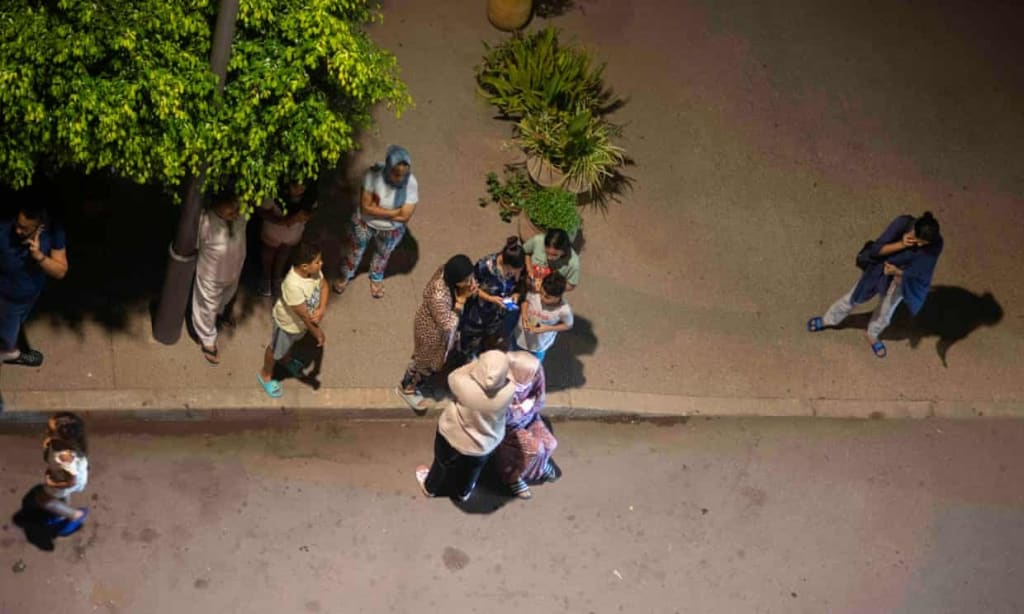
Marrakech's historic old city was among the regions affected by the 6.8 or stronger earthquake that was centered in the High Atlas mountains.

Introduction
A powerful earthquake originating in Morocco's High Atlas mountains has caused widespread devastation and loss of life. The Moroccan government reported that hundreds of people lost their lives as buildings collapsed, and citizens fled their homes in fear. This tragic event has left a deep impact on the affected regions, including Marrakech, a city near the epicenter, which saw significant damage to its historic old city. In this article, we will explore the details of the earthquake, its effects on various areas, and the response efforts.
The Earthquake's Impact
Residents of Marrakech, which is the closest major city to the epicenter, reported witnessing the collapse of several buildings in the old city, a UNESCO World Heritage site. Local television broadcasts displayed images of a fallen mosque minaret, with rubble scattered around crushed cars in the aftermath of the quake. The earthquake struck with great force at precisely 11:11 pm on a Friday night.
The Moroccan interior ministry released grim statistics early on Saturday, confirming that at least 296 people lost their lives in the provinces near the earthquake's epicenter. Additionally, 153 individuals sustained injuries and were rushed to hospitals for treatment. It is important to note that most of the damage occurred in rural and mountainous areas that were challenging to access.
One local official emphasized that the majority of the casualties occurred in remote mountainous regions. The violent shaking lasted for approximately 20 seconds, causing doors to swing open and shut on their own. Hamid Afkir, a teacher living in a mountainous area west of the epicenter, described the terrifying experience and noted the occurrence of aftershocks.
Details About the Earthquake
Morocco's geophysical center determined that the earthquake had a magnitude of 7.2 and originated in the Ighil area of the High Atlas mountains. Meanwhile, the US Geological Survey reported a slightly lower magnitude of 6.8 and stated that the earthquake had occurred at a relatively shallow depth of 18.5 kilometers (11.5 miles). Ighil, a mountainous region characterized by small farming villages, is situated approximately 70 kilometers (40 miles) southwest of Marrakech. The earthquake struck shortly after 11 pm, catching residents by surprise.
In Marrakech, where the tightly packed old city was severely affected, many houses had collapsed. Residents worked tirelessly by hand to clear the debris, awaiting the arrival of heavy equipment. Footage from the medieval city wall revealed extensive cracks in some sections, with parts of it having collapsed onto the streets. Brahim Himmi, another resident of Marrakech, reported seeing damaged building facades and ambulances navigating the old town. Frightened citizens opted to stay outside, fearing the possibility of additional quakes.
The earthquake's impact extended beyond Marrakech. Residents in Rabat, located approximately 350 kilometers (220 miles) north of Ighil, and in the coastal town of Imsouane, about 180 kilometers to the west, also fled their homes out of fear of stronger tremors. In Essaouira, 200 kilometers west of Marrakech, people gathered in public squares and cafes, choosing to sleep outdoors due to the ongoing risk. Reports indicated that some building facades had crumbled.
Amid the chaos, videos circulated on social media, showing the collapse of at least one building and debris scattered throughout the streets. Other videos captured people evacuating shopping centers, restaurants, and apartment buildings, seeking safety outdoors.
Vulnerability to Earthquakes
The US Geological Survey warned that the region's population lives in structures highly vulnerable to earthquake shaking. This vulnerability magnified the impact of the earthquake and contributed to the destruction witnessed in various areas. Additionally, the earthquake disrupted internet connectivity in Marrakech due to regional power cuts, as reported by the global internet monitoring organization NetBlocks.
Historical Context
Morocco is no stranger to earthquakes, particularly in its northern region, as it is situated between the African and Eurasian tectonic plates. In 2004, a devastating earthquake struck al-Hoceima in northeastern Morocco, resulting in the loss of at least 628 lives and leaving 926 people injured. In 1980, the region experienced the El Asnam earthquake in neighboring Algeria, measuring 7.3 on the magnitude scale. This catastrophic event claimed the lives of 2,500 people and left over 300,000 individuals homeless.
Conclusion
The earthquake in Morocco's High Atlas mountains has left a profound impact on the affected regions, with significant loss of life and extensive damage to buildings and infrastructure. The response efforts of local authorities, emergency services, and the international community are crucial in providing relief and assistance to the affected population. As Morocco continues to grapple with the aftermath of this disaster, the importance of earthquake preparedness and resilient infrastructure becomes increasingly evident in mitigating future risks.
About the Creator
High-Speed Train Crash in Southern Spain Leaves at Least 21 Dead
A devastating high-speed train crash in southern Spain has left at least 21 people dead and dozens injured, shocking the nation and triggering a major emergency response. The incident, which occurred on a busy rail route connecting key southern cities, has reignited concerns over railway safety, infrastructure maintenance, and emergency preparedness in one of Europe’s most advanced rail networks.
By Aarif Lashari2 days ago in Earth
Icy Chaos in Central and Eastern Europe
Winter has unleashed its fury across central and eastern Europe, leaving travelers frustrated and transport networks struggling to keep up. Over the past few days, freezing rain and ice have wreaked havoc on airports, train stations, and highways — forcing flight diversions, delaying trains, and making roads treacherously slippery. From Vienna to Budapest, Prague to Bratislava, this icy grip has brought travel to a near standstill. Let’s take a closer look at what’s happening, how it’s affecting people on the move, and what it tells us about winter travel in Europe. A Sudden Winter Blow A sudden wave of freezing rain swept across the region, coating runways, rail tracks, and roads with a dangerous layer of ice. Major airports in Austria, Hungary, Slovakia, and the Czech Republic were particularly affected. At Vienna International Airport, operations were temporarily suspended when runways became too slick for flights to land safely. Travelers already in the air had to divert to alternative airports in Munich, Frankfurt, and Venice. Meanwhile, Budapest’s Ferenc Liszt International Airport paused all arrivals and departures, and Prague’s Václav Havel Airport continued operating but at limited capacity. Trains Crawling Through Ice Rail networks weren’t spared. Across Austria, Hungary, and the Czech Republic, ice on tracks and power lines caused delays and cancellations. Austria’s national rail operator, ÖBB, urged passengers to postpone non-essential journeys. In the Czech Republic, travelers at Prague’s main station faced long waits as trains struggled to maintain schedules. Hungary’s tram and suburban rail services were temporarily suspended due to ice buildup on power lines. This combination of black ice, frozen switches, and heavy snowfall has tested the limits of winter infrastructure in Europe. Roads Turn Into Skating Rinks The icy weather didn’t just affect public transport — roads became treacherous, too. Authorities in Slovakia and the Czech Republic warned residents to avoid non-essential travel as highways turned into slippery skating rinks. Accidents and minor collisions were reported, and emergency services were busy responding to dozens of injuries from slips and falls. Even schools weren’t immune: parts of Romania shifted to online learning, keeping children safe during the extreme temperatures, which dropped to around -13°C in some areas. Why This Weather Is So Disruptive Meteorologists point to several factors that made this storm particularly severe: Freezing rain on top of existing snow creates an icy layer that’s extremely hard to clear. Rapidly refreezing surfaces make conditions unpredictable. Temperatures hovering around freezing prevent efficient melting during the day. This “perfect storm” scenario underscores just how vulnerable transport systems are to extreme weather. Even well-prepared airports and rail networks can struggle when weather transitions from snow to freezing rain. Voices From the Ground Passengers took to social media to express their frustration: Crowded airports as travelers scrambled to rebook flights. Train stations packed with delayed commuters, unsure when the next train would depart. Warming centers opened to provide shelter and hot drinks for stranded travelers. For many, a simple trip turned into a test of patience and resilience. Tips for Traveling in Freezing Conditions If you must travel during winter storms, experts recommend: Check flight and train schedules regularly, as delays can change quickly. Allow extra time for travel to avoid missing connections. Consider travel insurance that covers weather-related disruptions. If driving, carry winter essentials: blankets, food, water, and check road conditions before departure. Most importantly, prioritize safety over schedules — icy conditions can change rapidly, making travel risky. A Reminder From Winter This recent chaos in central and eastern Europe serves as a stark reminder of how interconnected transport systems are, and how vulnerable they can be to extreme weather. Flights grounded, trains stalled, and highways turned icy show that winter can bring travel to a halt — sometimes with very little warning. As Europe continues to face volatile winter conditions, travelers and authorities alike are reminded: preparation and flexibility are key. Sometimes, the weather truly has the final say. ❄️🛫🚆
By Muhammad Hassan7 days ago in Earth


Comments
There are no comments for this story
Be the first to respond and start the conversation.