

A
Science fiction and disaster films have always had a deep-rooted appeal, blending the spectacle of destruction with the thrill of survival. Moonfall (2022), directed by Roland Emmerich, is a movie that attempts to combine these elements into a thrilling, high-stakes narrative about Earth's impending doom. Known for his previous disaster epics like Independence Day (1996), The Day After Tomorrow (2004), and 2012 (2009), Emmerich once again crafts a film that delivers large-scale destruction, outlandish science, and a group of unlikely heroes.
The Premise: A Cosmic Catastrophe
At its core, Moonfall presents a doomsday scenario where the Moon is mysteriously knocked out of its orbit and begins a collision course with Earth. As global destruction looms, a small group of people must uncover the truth behind this celestial anomaly and attempt to stop it before it's too late.
The film follows three central characters: NASA executive Jo Fowler (played by Halle Berry), disgraced astronaut Brian Harper (Patrick Wilson), and conspiracy theorist K.C. Houseman (John Bradley). They discover that the Moon is not what humanity has always believed—it is, in fact, an artificial megastructure with a hidden secret. As the Moon's orbit decays, tides rise, gravity shifts, and destruction spreads across the planet. With limited time, the trio embarks on a desperate space mission to prevent Earth's annihilation.

Roland Emmerich’s Signature Style
Roland Emmerich has long been known for his penchant for large-scale destruction and over-the-top action sequences. Moonfall is no different, featuring crumbling cities, giant tidal waves, and gravity-defying disasters. The film revels in its apocalyptic imagery, providing viewers with stunning CGI sequences that depict the chaos caused by the Moon's descent.
Much like Emmerich's previous works, the film embraces a mix of science fiction, conspiracy theories, and human resilience. It draws inspiration from real-world speculative theories, such as the "hollow Moon" hypothesis, which suggests that the Moon might be an artificial structure rather than a natural satellite. This concept, though scientifically unfounded, adds an intriguing mystery element to the movie.
The Characters and Performances
Halle Berry, Patrick Wilson, and John Bradley form an unlikely trio of protagonists, each contributing to the film’s story in different ways. Berry plays the determined NASA official who takes charge when the government struggles to respond. Wilson’s character, a former astronaut blamed for a past mission failure, gets a shot at redemption. Bradley provides comic relief and serves as the voice of conspiracy theories that turn out to be true.
While the performances are solid, the film’s dialogue often falls into the realm of cliché. The characters follow familiar disaster movie tropes: the disgraced hero who redeems himself, the determined scientist ignored by authorities, and the outsider who knows the truth. Despite these predictable elements, the actors bring enough charisma to keep audiences engaged.
Scientific Accuracy vs. Sci-Fi Spectacle
Like many disaster films, Moonfall takes significant liberties with science. The concept of the Moon being an artificial megastructure is purely speculative and not supported by mainstream astrophysics. Additionally, the way gravity fluctuates as the Moon approaches Earth is exaggerated for dramatic effect. While some aspects of space travel and orbital mechanics are loosely based on real science, they are often stretched to fit the film’s narrative.
However, the movie doesn't aim for realism—it embraces its science-fiction roots fully. For audiences looking for an accurate depiction of astrophysics, Moonfall may be frustrating. But for those who enjoy wild, high-stakes scenarios with sci-fi twists, the film offers plenty of entertainment.
Themes and Underlying Messages
Beneath the chaos and destruction, Moonfall touches on themes of redemption, teamwork, and the power of human resilience. Brian Harper’s journey from a disgraced astronaut to a hero reflects the idea of second chances, while Jo Fowler represents leadership in the face of crisis.

The film also delves into the notion of hidden knowledge, playing on conspiracy theories and secret government cover-ups. The idea that humanity’s understanding of the universe is incomplete adds an extra layer of intrigue, appealing to those who enjoy speculative storytelling.
Reception and Impact
Upon its release, Moonfall received mixed reviews from critics. While its visual effects and ambitious premise were praised, its dialogue, character development, and scientific inaccuracies were criticized. Some viewers appreciated the film’s embrace of classic disaster movie tropes, while others found it too far-fetched.
Despite its flaws, Moonfall delivers exactly what it promises—an explosive, action-packed ride filled with destruction and adventure. It caters to fans of Emmerich’s previous work and those who enjoy large-scale sci-fi spectacles. While it may not achieve the status of a classic, it remains an entertaining watch for those in the mood for a high-concept disaster film.
Conclusion: A Fun, If Flawed, Sci-Fi Adventure
Moonfall is a film that thrives on spectacle rather than deep storytelling. It combines stunning visual effects with a wild, conspiracy-driven plot, making it an enjoyable experience for fans of the genre. While it doesn’t break new ground, it offers plenty of thrills and over-the-top action.
For those who love disaster movies with a sci-fi twist, Moonfall delivers on its promise of chaos and adventure. It may not be scientifically accurate or narratively profound, but it provides an exciting escape into a world where the impossible becomes reality.
About the Creator
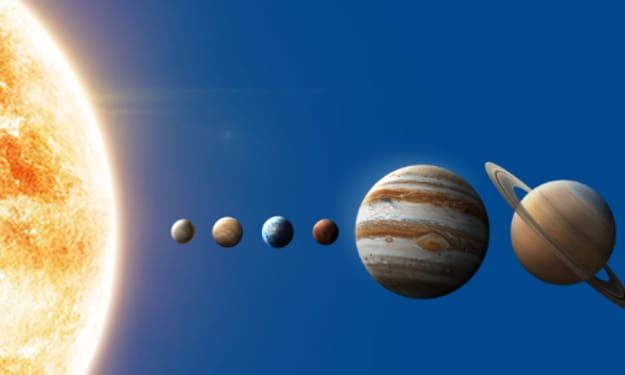
A Planetary Alignment will coincide with Mercury Retrograde
Double phenomena in the heavens Some people say in jest that the planets have aligned in their favor when life works the way they desire. Were you aware that there are seasons when things do line up in the heavens? There will be a planetary alignment AKA a planet parade, on February 28, 2026.
By Cheryl E Preston4 days ago in FYI



Comments
There are no comments for this story
Be the first to respond and start the conversation.