
Maybe the way I was taking care of you was a cycle of taking care of myself.Trees: Guardians of Life and Pillars of the Earth
Maybe the way I was taking care of you was a cycle of taking care of myself.

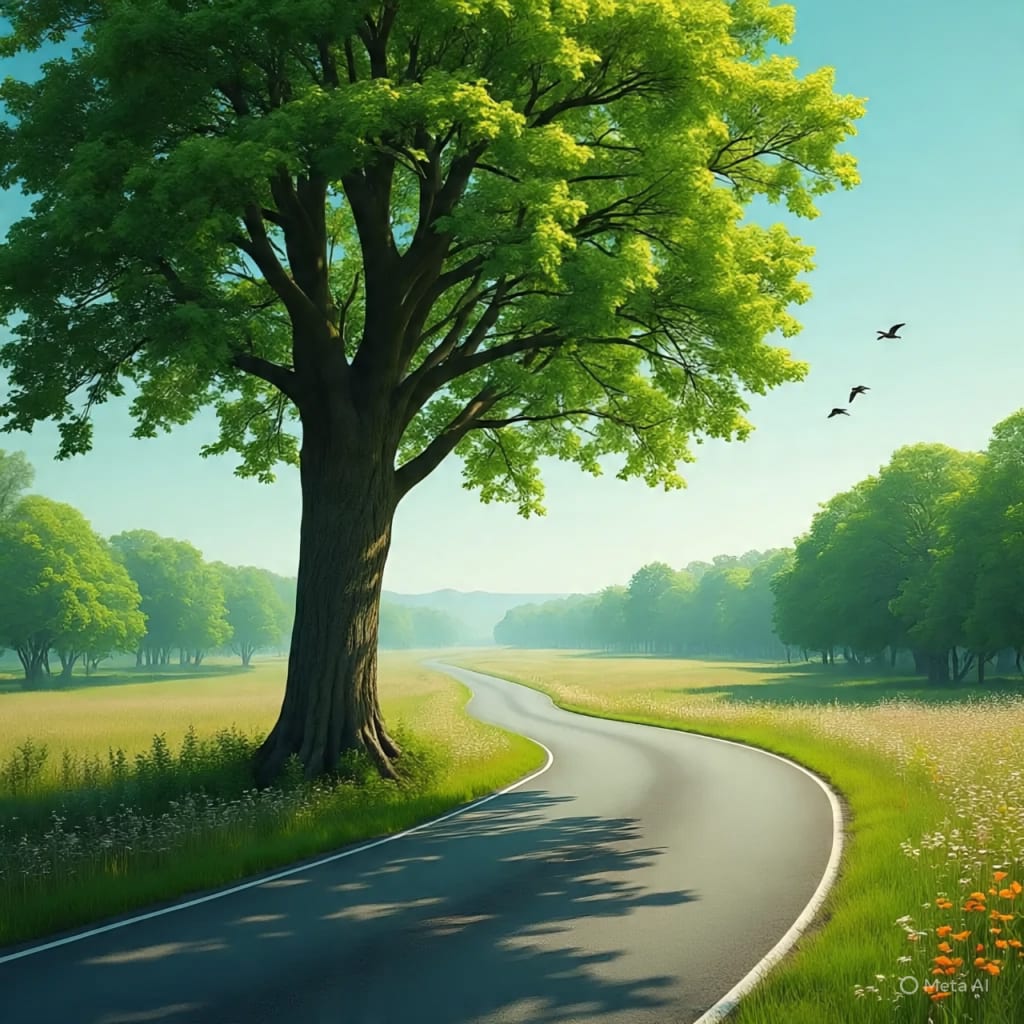
Start writing..Trees are among the most important life forms on Earth. Towering over landscapes and thriving in diverse climates—from tropical rainforests to arid deserts—trees are more than just part of the scenery. They are silent sentinels of time, providers of oxygen, homes to countless organisms, and essential regulators of our global climate. Their role transcends the biological realm; trees hold deep cultural, economic, and spiritual significance in many societies. As the planet faces unprecedented environmental challenges, the importance of trees has only grown more apparent. In this essay, we will explore trees from multiple perspectives: their biology, ecological functions, economic value, cultural symbolism, and the urgent need to protect them.
---
1. The Biology of Trees
Trees are perennial, woody plants that usually have a single main stem or trunk, supporting branches and leaves. Unlike shrubs, trees typically grow to significant heights and live for many decades—some for thousands of years. The structure of a tree is divided into three main parts: roots, trunk, and canopy.
Roots anchor the tree and absorb water and nutrients from the soil.
The trunk serves as the central support system and houses vascular tissues (xylem and phloem) that transport water, nutrients, and sugars.
The canopy, consisting of branches and leaves, captures sunlight through photosynthesis, converting carbon dioxide and water into oxygen and glucose.
Trees belong to two main categories: deciduous and evergreen. Deciduous trees shed their leaves annually, adapting to seasonal changes, while evergreen trees retain their foliage year-round.
Reproductive strategies also vary. Some trees produce flowers and fruit, aiding pollination through animals and wind. Others rely on cones or spores. Regardless of method, tree reproduction ensures the continuation of ecosystems and species diversity.
---
2. Trees and the Environment
Trees play a critical role in maintaining ecological balance. They contribute to the health of the environment in several key ways:
A. Air Purification and Oxygen Production
One of the most vital services trees provide is the conversion of carbon dioxide into oxygen through photosynthesis. A mature tree can absorb up to 48 pounds of CO₂ annually. Simultaneously, trees act as natural air filters, removing pollutants such as sulfur dioxide, ammonia, and nitrogen oxides.
B. Climate Regulation
Trees are essential for climate regulation. Forests, especially tropical rainforests like the Amazon, act as carbon sinks, absorbing vast amounts of greenhouse gases. The shade from trees also cools urban areas, reducing the “urban heat island” effect and lowering the need for air conditioning.
C. Soil Conservation
Roots stabilize soil, preventing erosion. In hilly or mountainous regions, trees are often planted to reduce landslides. Leaf litter from trees enriches the soil, promoting biodiversity and fertility.D. Water Cycle and Rainfall
Trees influence the hydrological cycle by capturing, storing, and releasing water. Forests improve groundwater recharge and reduce the severity of floods by slowing down runoff. Trees also contribute to cloud formation and local rainfall through a process known as transpiration.
---
3. Biodiversity and Habitat
Trees are ecosystems in themselves. A single tree can host hundreds of species: birds, insects, fungi, mosses, and mammals. Forests, made up of thousands or millions of trees, support 80% of the world’s terrestrial species.
Tropical rainforests, though covering just 6% of Earth’s surface, are home to more than half of all known species. Deforestation in these areas threatens biodiversity on a massive scale. Without trees, food chains collapse, leading to species extinction and ecological imbalance.
---
4. Economic Importance of Trees
Trees are vital to economies around the world. They provide raw materials, jobs, and food.
A. Timber and Wood Products
Forests supply timber for construction, furniture, paper, and fuel. The global forestry industry is worth hundreds of billions of dollars. Sustainable forest management is essential to ensure that wood harvesting does not lead to ecosystem destruction.
B. Non-Timber Forest Products
Trees also provide valuable non-timber products: fruits, nuts, rubber, resins, oils, and medicinal compounds. For example, quinine (used to treat malaria) and aspirin were both derived from tree species.
C. Ecotourism
In many countries, forests and ancient trees attract tourists. National parks and reserves generate revenue through entry fees, guided tours, and eco-lodges. This form of income supports local economies while promoting conservation.
---
5. Cultural and Spiritual Significance
Throughout history, trees have held a special place in human culture and spirituality. They appear in mythology, literature, and religious texts across civilizations.
A. Sacred Trees and Forests
Many cultures consider trees sacred. In Hinduism, the Peepal tree is worshipped, and in Buddhism, the Bodhi tree symbolizes enlightenment, as it was under such a tree that Siddhartha Gautama attained Nirvana. Indigenous communities often see forests as ancestral homes, with trees as spiritual beings or protectors.
B. Symbolism
Trees symbolize growth, strength, wisdom, and rebirth. The "Tree of Life" appears in many belief systems, from Norse mythology (Yggdrasil) to Christianity (Tree of Knowledge). Literary works often use trees to convey human emotion, permanence, and connection to nature.
C. Celebrations and Traditions
Cultural events around the world include tree-based traditions: Christmas trees, cherry blossom festivals in Japan, and Arbor Day tree plantings are just a few examples of how deeply rooted trees are in human traditions.
---
6. Threats to Trees and Forests
Despite their immense value, trees face numerous threats—most of them anthropogenic (human-caused):
A. Deforestation
Deforestation is a major global issue, especially in tropical regions. Driven by agriculture, logging, mining, and infrastructure development, millions of hectares of forest are cleared each year. This loss contributes to climate change, biodiversity decline, and displacement of indigenous peoples.
B. Climate Change
Ironically, while trees help combat climate change, they are also victims of it. Changing temperatures, prolonged droughts, wildfires, and pests—exacerbated by climate change—threaten forest health worldwide.
C. Urbanization and Pollution
Expanding cities often result in tree removal. Urban air and soil pollution can weaken or kill trees, while invasive species introduced by human activity disrupt native forest ecosystems.
---
7. Conservation and Reforestation Efforts
The world has recognized the importance of preserving and restoring forests. Numerous organizations, governments, and communities are engaged in conservation efforts.
A. Protected Areas and Forest Reserves
Establishing national parks and protected forest areas helps conserve biodiversity and prevents commercial exploitation. However, enforcement remains a challenge in many regions.
B. Reforestation and Afforestation
Reforestation (replanting in deforested areas) and afforestation (planting trees in previously non-forested lands) are gaining momentum. Global initiatives like the Bonn Challenge and the UN Decade on Ecosystem Restoration (2021–2030) aim to restore hundreds of millions of hectares of degraded land.
C. Urban Forestry
Planting trees in cities improves air quality, reduces heat, and enhances mental well-being. Urban forests offer shade, recreational space, and support for urban wildlife.
D. Community Involvement
Successful tree conservation depends on people. Indigenous knowledge, local stewardship, and public awareness campaigns have proven crucial. Programs like community forestry empower people to manage and benefit from forest resources sustainably.
About the Creator
zakir ullah khan
poetry blogs and story Year Vocal Writing Skill
Keep reading
More stories from zakir ullah khan and writers in Earth and other communities.
The Ongoing Search for Water on Mars
For decades, scientists have been fascinated by the possibility of water on Mars. Known for its dry, dusty landscape and reddish appearance, Mars was once thought to be a completely barren world. However, modern discoveries have revealed that the planet may have once had abundant water—and scientists are still searching for evidence of it today.
By Irshad Abbasi 5 days ago in Earth


Comments
There are no comments for this story
Be the first to respond and start the conversation.