

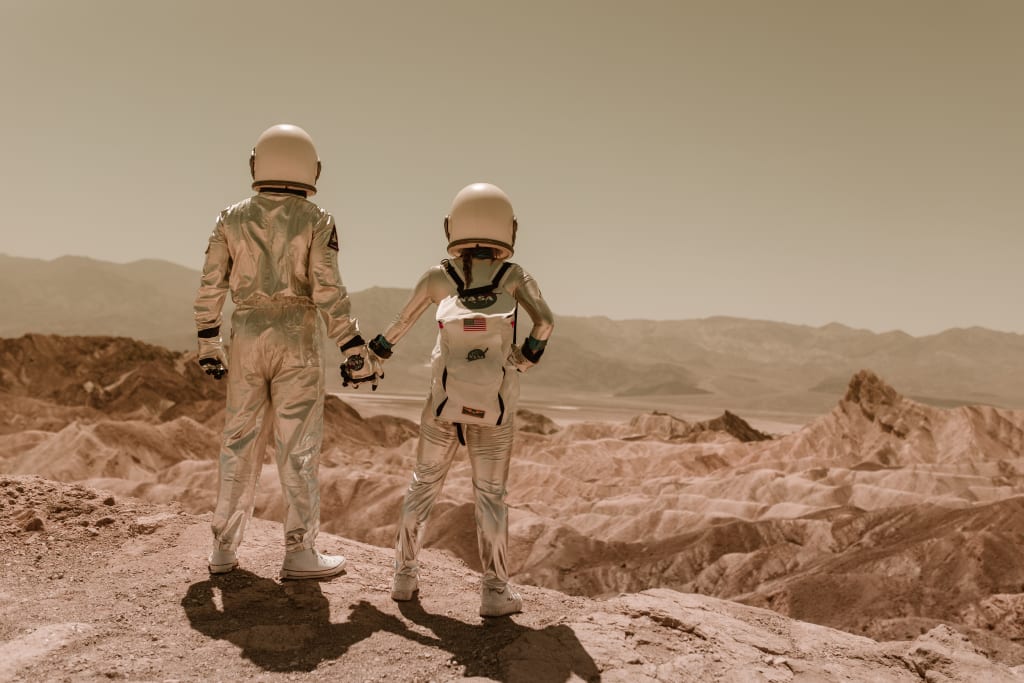
The technical and scientific challenges of human settlement on Mars:
Sending humans to the planet Mars and establishing a self-sustaining human civilization there is a challenge that has attracted attention from scientists and engineers worldwide.
Technical challenges, ranging from suitable habitats, food sources and obtaining energy, to the psychological effects of isolation from Earth, require a strong commitment from all involved.
Obtaining the resources necessary for a successful human settlement on Mars requires a range of capabilities that are currently under development.
Developments in new technologies, such as 3D printing, provide potential solutions for some of the challenges associated with establishing a colony on Mars.
The potential benefits and drawbacks of colonizing Mars:
Colonizing Mars has the potential to bring about immense benefits for humankind, from allowing us to expand our reach to new possibilities in interplanetary travel and discovery, to ultimately finding a way to ensure our species’ long-term survival.
On the other hand, there are some potential drawbacks to colonization that must be taken into consideration, including the cost of the process, potential environmental damage caused by humans, and the difficulty of creating self-sustaining colonies away from Earth.
Moreover, the process of creating a new home away from Earth could be time-consuming and expensive.
All of these factors must be weighed carefully before deciding to pursue the colonization of Mars.
"From Earth to Mars, a journey of dreams and stars."
Addressing the health and psychological impact of long-term space travel:
Space exploration is an exciting endeavor, but it can come with risks to the physical and mental health of astronauts.
Long-term space travel exposes astronauts to a variety of environmental hazards, such as radiation, and psychological strain due to isolation and limited contact with loved ones.
Additionally, weightlessness can cause issues with muscle and bone loss, as well as motion sickness and fatigue.
Despite these dangers, space exploration remains a worthwhile venture that allows us to explore the boundaries of our universe and gain knowledge about the universe and ourselves.

The role of private companies and international collaboration in settling Mars :
The Role of Private Companies and International Collaboration in Settling Mars
The colonization of Mars has been a dream of many scientists and entrepreneurs for many years.
This dream has been seen as a potential source of new resources and opportunities for humanity.
Recently, the idea of settling Mars has been gaining traction in the public discourse, with continued advances in technology and the involvement of private companies.
The colonization of Mars will require a tremendous amount of resources, from money to technology, and the involvement of many entities.
International collaboration is essential for this to happen, since a single country cannot handle all the logistics associated with such a project.
Additionally, private companies also play an important role in this endeavor, since they are able to provide the necessary capital and resources for the project.
Private companies can provide a significant amount of funding for the project, allowing for the development of technologies and resources needed to make the colonization of Mars viable.
Private companies can also use their expertise to develop new technologies and techniques that can be used in settling Mars
They can also help in establishing efficient supply chains and logistics systems, which are crucial for the successful colonization of the planet.
International collaboration is also essential for the colonization of Mars. This collaboration can be in the form of scientific knowledge sharing, technological advances, and financial resources.
By working together, different countries can share the burden of the costs associated with the project, as well as their expertise and resources.
Additionally, it is also important for different countries to work together in order to ensure that the colonization of Mars is done in a responsible and ethical manner.
Overall, Mars colonization is a daunting task that requires a tremendous amount of resources, technology, and collaboration.
Private companies and international collaboration are both essential components of this endeavor and can play a crucial role in making Mars colonization a reality.
With the right investments and resources, the colonization of Mars could be a crucial step in humanity's journey to the stars.
Protecting Mars' environment and preserving its natural resources:
Mars is an incredible planet that holds a wealth of potential for scientific exploration and discovery.
As such, it is important to take steps to protect its environment and preserve its natural resources.
This can be accomplished through a variety of methods, such as reducing space debris, preventing contamination from visiting spacecraft, and reducing the amount of energy used on the planet.
Reducing space debris is essential for protecting Mars' environment.
As more space missions are conducted, the risk of space debris increases, posing a threat to the planet's environment.
By implementing regulations that reduce the amount of debris left in orbit or that require spacecraft to re-enter the atmosphere when they've completed their mission, space debris can be significantly reduced.
Preventing contamination from visiting spacecraft is another important factor in preserving Mars' environment.
Microbial contamination is a real possibility if spacecraft are not properly sterilized before they launch, so it is important that stringent measures are in place to ensure that visiting spacecraft are not introducing any microbes to the planet that could threaten its delicate ecosystem.
Finally, reducing the amount of energy used on the planet is essential for protecting Mars' environment.
By utilizing renewable energy sources and employing technologies such as solar panels and wind turbines, we can reduce the amount of energy used on the planet, reducing the amount of pollution and greenhouse gases that are released into the atmosphere.
Will Humans can lead a good life in mars ?
Humans have been dreaming of colonizing Mars since the dawn of space exploration, but is it really possible to lead a good life there? The answer is a resounding "maybe".
The environment on Mars is incredibly hostile, with thin air and extreme temperatures. It also has no magnetic field, making it more vulnerable to radiation from the sun.
Plus, the atmosphere contains no oxygen and is made up mostly of carbon dioxide, making it hazardous to breathe without the proper equipment.
Nevertheless, the recent discovery of liquid water on the planet has made the possibility of human habitation more realistic.
If we can find ways to terraform the planet – that is, to make it more Earth-like – then maybe we could one day lead a decent life there.
Scientists are already exploring ways to do this, from engineering plants to produce oxygen to creating habitats that can protect us from the extreme conditions.
With enough money, creativity, and determination, it might be possible to turn the red planet into a place where humans can survive and even thrive. "Only time will tell".
Thriving to settle on mars that's good ,but make sure while leaving you make your home earth a good place for others to live.
About the Creator
nishand rm
Aspiring person to express my thoughts and love towards my content.
Keep reading
More stories from nishand rm and writers in Earth and other communities.
Locked Exits, Panic, and Desperate Calls: Survivors Recount Mall Fire Horror
A tragic fire at a busy shopping mall has left the public in shock as survivors recount the harrowing moments when flames and smoke consumed the building. Eyewitness accounts describe locked exits, panicked crowds, and desperate calls for help, painting a chilling picture of the chaos inside.
By Muhammad Hassan15 minutes ago in Earth
How AI Is Becoming the Next Geopolitical Frontier
Why This Matters Right Now The world is changing faster than ever. Wars, trade, jobs, and even daily life are being reshaped—not only by soldiers and weapons, but by artificial intelligence (AI). Right now, countries are racing to control AI. The reason is simple: whoever leads in AI will likely lead in power, money, and influence. This race is already affecting global politics—and it is quietly touching the lives of ordinary people everywhere. AI is no longer just a technology. It is becoming the next geopolitical frontier.
By LegacyWordsabout an hour ago in Earth



Comments
There are no comments for this story
Be the first to respond and start the conversation.