
Mangosteen Farming Guide For Higher Yield And Benefits
Medicinal Properties Of Mangosteen

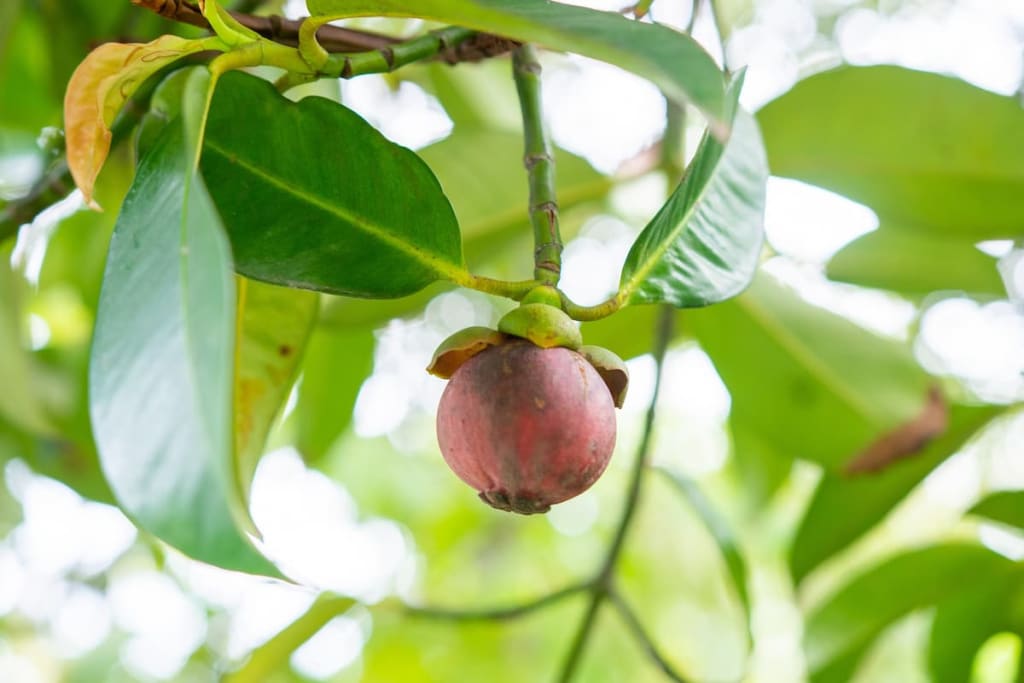
Farmers in India are now cultivating different types of horticulture crops to increase their income and sowing other crops, including traditional farming paddy, wheat, and maize. One such horticulture fruit is Mangosteen. Mangosteen fruit has anti-oxidant, antibacterial and anti-fungal properties. Also, scientists are using it to treat breast, liver, and leukaemia. Moreover, the scientific name of Mangosteen is Garcinia mangostana. It is a tropical fruit tree. The Mangosteen tree is cultivated mainly in Thailand, Vietnam, Burma, the Philippines and South-West India. Indian farmers can also earn good profit by Mangosteen farming.
Medicinal Properties Of Mangosteen
Mangosteen fruit is packed with a variety of nutrients. Its fruit has anti-oxidant, antibacterial, and anti-fungal properties. The taste of its fruit is slightly sour and sweet, so many people call it the queen of fruits. Many nutrients and minerals are found in Mangosteen, which helps in protecting our body from many diseases. Its fruits are used to maintain blood pressure. Apart from this, it is beneficial in preventing cancer, controlling weight, reducing problems related to menstruation, removing digestive problems and controlling blood sugar. Its fruit contains high amounts of fibre and carbohydrates. Apart from vitamins A and C, iron, potassium, calcium etc., are there.
Mangosteen Farming Requirements
Suitable Climate For Mangosteen Farming
Mangosteen farming needs a warm, moist and equatorial climate. Its plant needs much water, neither much heat nor much cold. A temperature ranging from 5 to 35 degrees is suitable for its cultivation. It does not require much rain to produce its fruits. But if drought conditions prevail, its production may be affected. According to experts, mangosteen plants do not require direct sunlight. Its plants need an average of 13 hours of sunlight every day.
Suitable Soil For Mangosteen Cultivation
Choosing the right soil for the proper development of mangosteen plants is very important. Sandy, loamy soil is suitable for its cultivation. While cultivating it, it is necessary to have more organic matter in the soil. To get a good yield of its fruit, the pH value of the soil should be between 6 to 8.
Mangosteen Farming Field Preparation
To cultivate Mangosteen, the first thing to do is eliminate the residues of the old crop in the field. After this, 2 to 3 deep ploughing is done with the help of an Eicher tractor. Then, the field is ploughed 1 to 2 times with the help of a rotavator to make the field's soil friable. After this, make the field level by placing footings in the field. So that the problem of water logging in the field does not arise during the rainy season.
Before planting mangosteen plants in the field, pits have to be prepared in the field. To make the pit, a one-metre wide and two feet deep pit is prepared in the field on the flat land. These pits are prepared in a row, where a distance of 5 to 6 metres is kept from one row to another.
After this, organic and chemical fertilizers are mixed in the prepared pits and filled with soil. After filling the manure in the pits, deep irrigation is given to the pits, and then they are covered. These pits must be prepared one month before the transplanting of mangosteen plants.
Mangosteen Farming Sowing Method
Sowing mangosteen plants through seeds is difficult because its real seeds are not easily available, so its plant should be bought from the nursery itself. New trees can take at least two years to reach a height of 12 inches. After transplanting the mangosteen tree with the help of a Sonalika tractor, it can take up to 7-9 years for these trees to bear fruit. Although in India, there are two seasons to get fruits from its tree. Its tree bears fruit from July to October and bears fruit for the second time in April-June.
Fertilizer Management For Mangosteen Farming
Mangosteen farming requires fertilizers just like normal crops. While transplanting the plant, 15 kg of well-rotted cow dung manure and 100 grams of NPK fertilizer are filled in the pits prepared with the soil. This quantity of fertilizer has to be given till the age of two years of the plant, and with the development of the plant, the amount of fertilizer should be increased. When the plant is fully developed for 15 years, it is necessary to give 30 kg of organic manure, 3 kg of superphosphate, 2 kg of urea and 2 kg of potash once or twice a year.
Irrigation In Mangosteen Farming
Mangosteen plants do not require much water. It is sufficient to water fully developed plants 7 to 8 times a year. A pond is made in the field to give water to the tree. Its basin is made by making a circle around the plant's stem at a distance of two feet. The width of this circle should be up to two feet. Its trees are irrigated for 10 to 15 days in the winter season, and water should be given once in 5 to 6 days in the summer season. The plant needs more water if you have transplanted plants in sandy loam soil. Therefore it is sufficient to water the plants twice a week in summer. Moreover, irrigation should be given to the plants only when there is no rain in the rainy season.
Mangosteen Farming Weed Control
Natural methods should be used for weed control in mangosteen farming. About 20 to 25 days after transplanting the mangosteen plant, do light weeding in the field. Fully developed plants require only 3 to 4 weeding per year.
Mangosteen Harvesting And Benefits
Average annual production of 100 to 110 kg is obtained from one tree of advanced varieties of Mangosteen. More than 300 plants can be planted in its one acre of mangosteen farming, easily producing around 20 tones.
Stay tuned with us for more details about profitable farming in India.
About the Creator
Mayank Sahu
Blogger by passion who enjoys finding things that inspire him and make sense by sharing them in words that can provide everyone with some of the best picks from around the web.
Keep reading
More stories from writers in Earth and other communities.
Weather and Climate Understanding the Forces That Shape Our Daily Lives
Weather and Climate Understanding the Forces That Shape Our Daily Lives Weather and climate play a central role in how people live work travel and plan for the future. From daily temperature changes to long term climate patterns these natural systems influence agriculture health economies and even global stability. Understanding the difference between weather and climate and knowing how they affect human life has become more important than ever especially as the world experiences more extreme conditions.
By America today 6 days ago in Earth



Comments
There are no comments for this story
Be the first to respond and start the conversation.