
Malaria
Malaria and Life Cycle of Plasmodium | Diseases | Don't Memorise
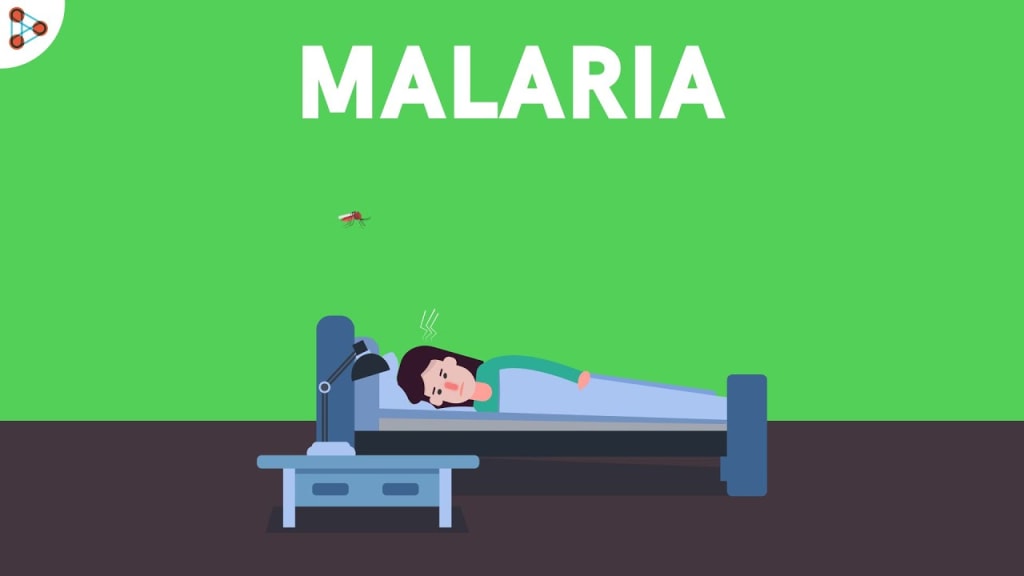
One fine day, after returning home from lectures, Zara developed extremely high fever. Also, she had frequent severe chills and sweating intermediately! What was really wrong with her? A few diagnostic tests revealed that Zara was suffering from Malaria! Yes! And now, she was given all the possible best treatments to recover as quickly as possible! But how did she get infected with malaria in the first place? What could have caused it? And how did the infectious agent take over her body? Let us learn this infectious disease in detail in this video! To begin with, can you tell me, what causes malaria? We have always heard…. Mosquito bites are the root cause of malaria. So are mosquitoes responsible for this infection? Nope! You will be surprised to know that mosquitoes do not cause malaria, but just spread it. And what do we mean by this? The actual causative agent of Malaria is the protozoan called Plasmodium. Plasmodium vivax, Plasmodium malaria, Plasmodium falciparum are a few species of Plasmodium that cause malaria in humans. Among these, Plasmodium falciparum is the most violent, and can also be life-threatening. So from where does a mosquito come into the picture? Well, the protozoan Plasmodium lives as a parasite in the female Anopheles mosquito. From there, it gets transmitted to humans with a mosquito bite. Hence, it is the infected mosquito BITE which can cause malaria, and not the insect itself! Plasmodium (parasite) → Female Anopheles mosquito → Transferred → Humans → mosquito bite Thus, the complete life cycle of the malarial parasitic protozoa involves two hosts. First one is the female Anopheles mosquito and the second one is the human host. Let us understand the complete life cycle of the malarial parasite. It all begins when an infected mosquito bites a human. This helps transfer the malarial parasite in the human body. In order to enjoy her blood meal, the female Anopheles mosquito secretes her saliva into the human bloodstream to prevent blood coagulation. It is with this secretion, that the parasite gets a chance to enter the human body. The disease causing Plasmodium, gets transferred from mosquitoes to humans in the form of sporozoites. Sporozoites is a stage in the life cycle of Plasmodium. At this particular stage they are capable to cause an infection in the human body. And how do they do that? Once they enter the bloodstream of the humans they eventually reach their target, that is the liver. Here, they attack the liver cells and stay inside them for quite a long time. Here, they reproduce asexually, in order to increase their number. After that, they release themselves back into the bloodstream by bursting out the liver cells. The form in which they are released into the bloodstream is known as merozoites. These merozoites now target the Red Blood Cells, the RBCs. Now in the RBCs, the merozoites develop into a ring like structure called Trophozoite. This form can have two fates. Most of the trophozoites begin with asexual cycle to give rise to new merozoites. And this occurs exponentially. The number of merozoites produced is too large for the RBCs to contain. Hence, they are released out, with the bursting of the RBCs. The released merozoites can now attack new RBCs and keep increasing their population exponentially. The other fate of the trophozoites is entering a sexual cycle. With this, the trophozoites give rise to two different gametocytes. Gametocytes in simple terms are like the germ cells of plasmodium. When a non-infected mosquito approaches the infected human for a blood meal, then these gametocytes quickly pass into the mosquito’s body with the sucked blood. Now here, in the mosquito’s body, both, male and female gametocytes, which are like the germ cells, fuse to form a zygote. That is, the fertilization of these gametocytes results in the formation and development of zygote in the mosquito’s gut.
About the Creator
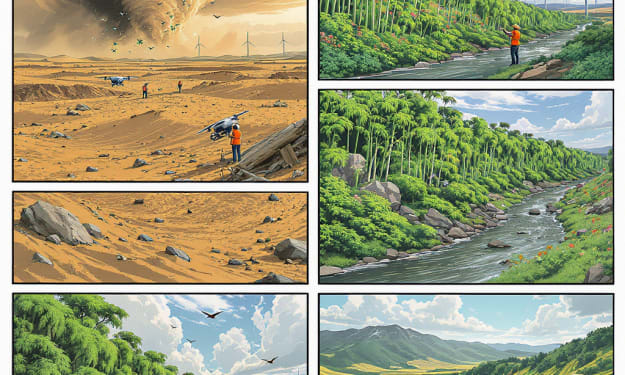
Chinese Planetary Engineering: The Great Green Wall and the Reclamation of Climate
There are junctures in history where a civilization no longer chooses between comfort and progress, but between adaptation and extinction. At the dawn of the new millennium, China hit one of those silent thresholds where geography ceases to be a backdrop and becomes an adversary. The desert was advancing, not as a metaphor for decay, but as a physical, methodical, and relentless force. Sand was devouring the horizon, winds grew heavy with dust, and the soil lost its fertile memory, taking with it the promise of social stability.
By Laurenceau Porte3 days ago in Earth



Comments
There are no comments for this story
Be the first to respond and start the conversation.