
Love Those Creatures of the Night
Nocturnal animals


Nocturnal animals are among the most intriguing because you know they are out there but you won't see them out and about during the daytime. These animals have keen senses that work for them in the dark at night. Usually their eyes are huge so that more light can get in them and they can see better at night. These night creatures have a special reflective layer in their eyes (tapedum lucidum) which bounces back light through the retina giving the animals super night vision.
American woodcocks
These nocturnal birds live in the woodlands of North America. These are plump, short-legged shorebirds with very long straight bills. They have large heads with short necks and short tails. They spend their times in fields and on forest floors searching for earthworms.
They are known for their nightly courtship diplay "sky dance". Males fly upward in spirals, creating a whistling sound followed by a fluttering descent. It is a wonderful thing to see beneath a starry sky.
Aye-Ayes
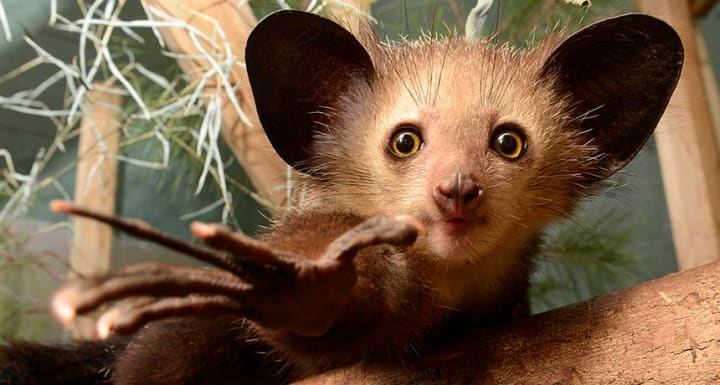
These animals are native to Madagascar and members of the lemur family. They are known for their large expressive eyes, bat-like ears, and have an elongated middle finger used as a probing tool. Beneath the cloak of night they are experts at finding hidden insects in trees. With their middle fingers they tap on wood, and listen for echoes revealing larvae then scoop them out for their nighttime meal.
Bilbies

These animals live in the regions of Australia. They are also known as rabbit-eared bandicoots. They come out at night digging into the red soil of the outback looking for insects, seeds, and bulbs. Their long ears enhance their hearing and help dissipitate heat.
Barn owls

These nocturnal predators are known for their silent flight and sharp hearing. They are most widespread of all owl species and known for their heart-shaped faces. These owls are found in almost all continents except Antarctica. They have medium-sized spotted bodies with golden brown on the dorsal side and grayish-white on the ventral side. They inhabit grasslands, deserts, marshes, and agricultural fields nesting in hollow trees, cliffs, and artificial structures like barn lofts, hay stacks, and church steeples. Barn owls feed on rodents and small mammals as well as lizards, amphibians, fish, and insects.
Bats
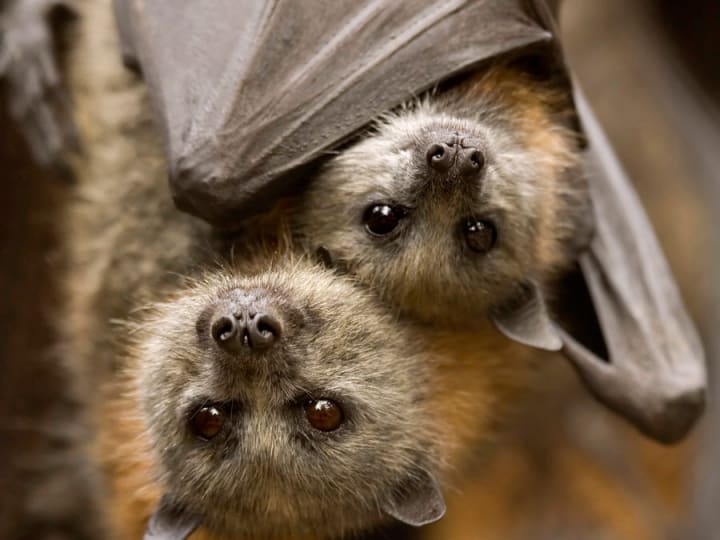
Bats are amazing nocturnal creatures that can live up to 30 years in the wild. They use eco-location to navigate and hunt in the dark. Bats emit high-pitched sounds and listen for the echoes to locate prey. They're important pollinators, helping plants reproduce by spreading pollen while feeding on nectar. They enjuoy fruit and seeds but some will also eat fish.
Echidnas

Particularly in hot climates these animals venture out in the evening hours. They are a part of four species of egg-laying mammals From Australia, Tasmania, and New Guinea. Their dome-like bodies are covered with spines. Echnids have beady eyes, slits for ears, and tiny mouths. They use their long sticky tongues to get insects. They diet on earthworms, ants, and termites.
Civets
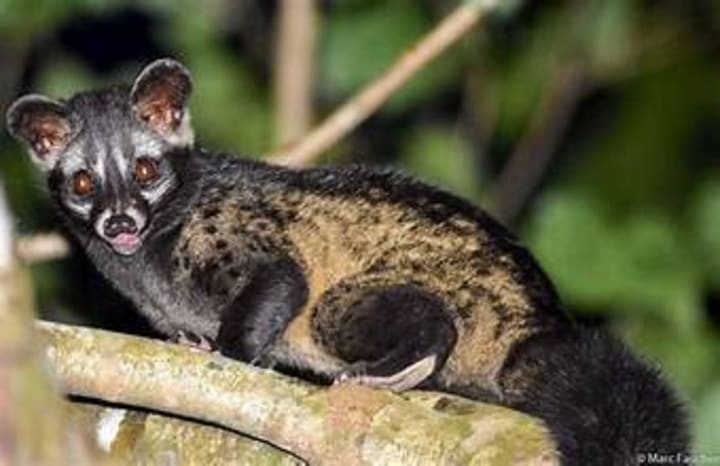
These small nocturnal animals are found throughout Asia and Africa. They are recognized by their distinctive facial masks and slender bodies. Their coats are tan/grey with black stripes, blotches, and spots.They inhabit forests, grasslands, scrub lands, and savannas and also some live close to water sources. African Civets are omnivores, which means that they eat plants and animals. Their diet usually consists of fruits, rats, mice, insects, eggs, snakes, frogs, lizards, birds, and carrion. They are known for producing civet coffee, made from coffee beans passed through their digestive systems.
Frogmouths

These are nocturnal birds that are native to Australia and Southeast Asia. During the day they make sure they are camouflaged looking like broken tree branches while they rest motionlessly. At night frogmouths become active hunter using their wide mouths to catch insects in mid-flight.
Galagos

These night creatures are also referred to as bushbabies. The small nocturnal primates live in Africa. Their nicknamed bushbabies due to the baby-like cries they emit. They are known by their large eyes and exceptional jumping abilities. Their powerful hind legs make them seem to glide through the air. Their diet includes insects, fruit, and gum. Galagos have acute hearing and sharp night vision.
Glowworms
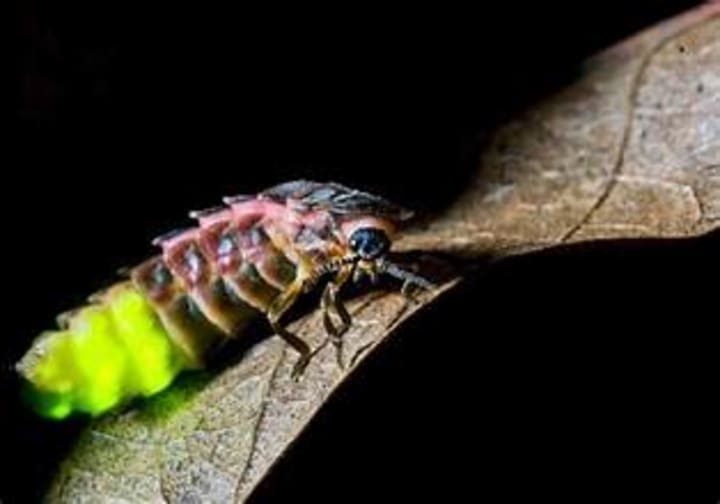
These night creatures light up caves and forests with an ethereal glow. They are also referred to as fireflies and lightning bugs. The colors can include red, yellow, orange, or green. There are over 2,000 species of fireflies.The light they emit is a result of bioluminescence—a chemical reaction that produces light without heat. This helps them communicate and attract prey with their glow. They live in moist and humid areas of Asia and the Americas. They feed on snails, slugs, worms and other insects.
Kinkajous
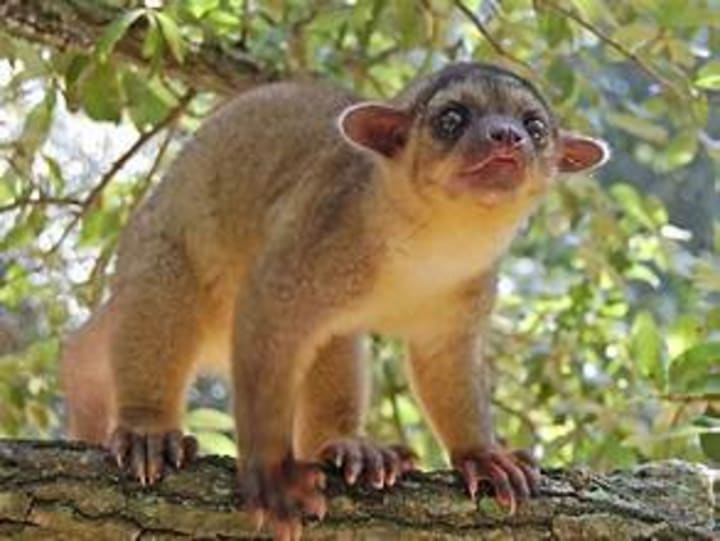
These animals are small rainforest mammals adapted to living in trees. They are also referred to as honey bears since they are fond of nectar. Kinkajous live south and east of the Mexican Sierra Madres, through Central America to Bolivia to the east of the Andes, as well as in the Atlantic Forest in southeastern Brazil. Kinkajos have prehensile tails to help them balance and maneuver. These creatures roam canopies in groups at night, playing and feeding on insects and fruit. They have round heads, large eyes, ashort, pointed snouts, short limbs, and a long prehensile tails. The eyes reflect green or bright yellow against the light. The long, thick tongue is highly extrudable. The snout is dark brown to black. The claws are sharp and short.Being frugivores, they mostly eat fruit, including melons, apples, bananas, figs, grapes, and mangoes. They also eat nectar, berries, bark, leaves, frogs, insects, honey, birds, and eggs.
Leopard cats
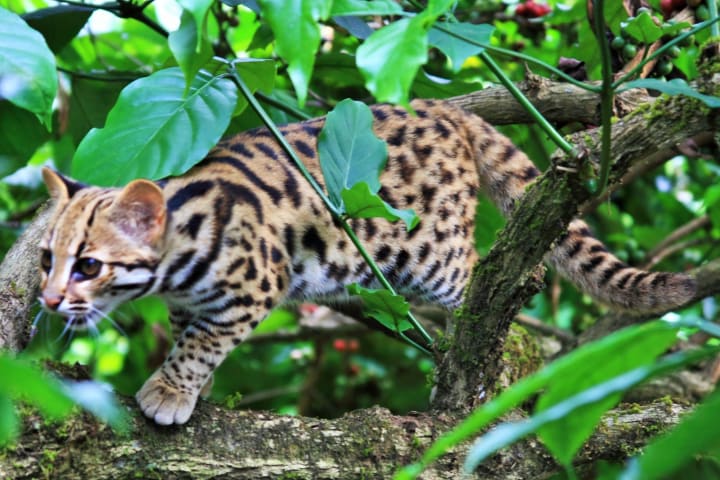
These nocturnal creatures are small wild felines with spotted coats to hide in the forests and grasslands. They make their homes in parts of Asia from India to China and even Indonesia. These cats are comfortable in both tropical rain forests and snowy mountains. They emerge at night to hunt for mice, birds, and lizards. Their large eyes help the see well in the dark and they are great climbers.
Little penguins

These birds are also known as fairy penguins and are the smallest species of penguins found in the coastal areas of Australia and New Zealand. As night draws near these nocturnal birds can be seen waddling along the beach to return to their colonies. They dive for fish during the day and reunite through social calls with their mates at night.
Night parrots

These are Australian birds that only emerge in the dark. They are relatively small and short-tailed parrots, the species' color is predominantly a yellowish green, mottled with dark brown, blacks and yellows.They feed on seeds and remain hidden among dense vegetation to hide from predators.
Ocelots
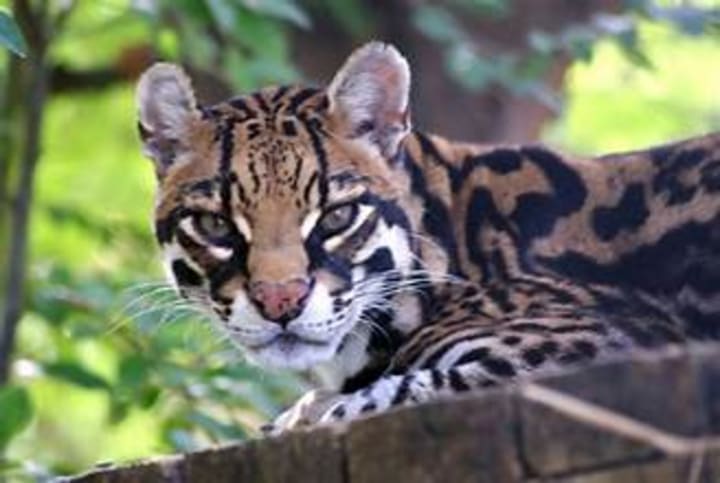
These are wild cats native to the forests of Central and South America. They have spotted coats that keep them camouflaged. During the night they hunt small mammals, birds, and reptiles. Ocelots are solitary and territorial creatures using their keen senses to navigate through dense forest.
Pangolins
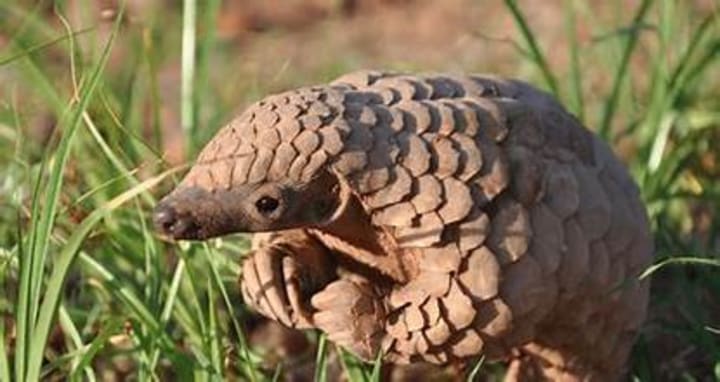
These animals have bodies covered in protective keratin scales. They can be found in tropical Asia and Africa. Their heads are short and conical with small thickly lidded eyes and long toothless muzzles. At night they use their long, sticky tongues to find and consume ants and termites. They have prehensile tails with hind legs that form a tripod for support.
Slow lorises
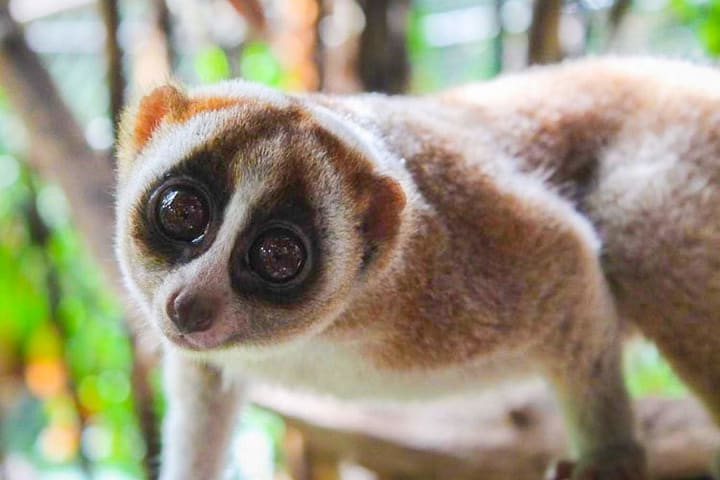
These are adorable looking creatures with big eyes but be careful these primates are among the few venomous mammals on Earth. They have a toxic bite. Slow lorises live in the forests of South and Southeast Asia. These animals have soft gray or brown fur and are known for their huge eyes encircled by dark patches. Their eyes help them see at night as they hunt for bugs and sip tree sap. During the day they sleep in tree holes and leafy hideouts. Slow lorises are great climbers.
Sugar gliders

These are small, nocturnal marsupials native to Australia and New Guinea. They're known for being able to glide between trees. Sugar gliders are social animals and often seen in groups. They enjoy nectar, fruit, and insects. Their huge eyes help them see at night.
Tarsiers

These nocturnal animals are small primates with enormous eyes for nighttime vision. They make their homes in Southeast Asia. When it comes to diet they are carnivores that eat small animals and insects. These creatures cling upright to trees, pressing their tails against the trunk for support. Tarsiers move through the forest by launching themselves from tree trunk to tree trunk propelled by their elongated hind limbs.
About the Creator
Rasma Raisters
My passions are writing and creating poetry. I write for several sites online and have four themed blogs on Wordpress. Please follow me on Twitter.
Keep reading
More stories from Rasma Raisters and writers in Earth and other communities.
Biggest Polly Wants a Cracker
African Grey These parrots make their homes in India. They weigh in at 4 pounds. African greys are noted for their soft feathers, loud squawks, high intelligence, and playful behavior. They can live up to 80 years. Their diet consists of fruit, nuts, and seeds.
By Rasma Raisters12 months ago in Earth
True Happiness
On a sturdy apple tree, a mother dove lived peacefully with her tiny baby. The tree provided them with shelter, shade, and a sense of security. Every day, the mother dove would watch over her little one, teaching it to flap its wings, coo softly, and enjoy the calm of the natural world. Life had been simple, quiet, and safe for them, and she felt content in the little world that belonged entirely to her and her chick.
By Sudais Zakwan2 days ago in Earth
Ancient Rocks Reveal Niobium Origins
On January 23, 2026, researchers from Curtin University announced a remarkable geological discovery hidden deep beneath central Australia. Rare rocks, formed more than 800 million years ago, have revealed the origin story of one of the world’s most promising niobium deposits. This critical metal, now essential for high-strength steel, electric vehicles, wind turbines, and advanced energy systems, owes its presence near Earth’s surface to powerful tectonic events that reshaped the planet during the breakup of an ancient supercontinent.
By USA daily update a day ago in Earth


Comments
There are no comments for this story
Be the first to respond and start the conversation.