
Lost in the Abyss: How Black Holes Challenge our Understanding of Space
The term "black hole" has a certain mystique to it, evocative of a place where the laws of physics break down and reality is stretched to its limits. Black holes are some of the most fascinating and mysterious objects in the universe, and their existence challenges our understanding of space and time. In this article, we will explore the basics of black holes, their formation, characteristics, and the challenges they pose to our current understanding of physics. We will delve into the paradox of information, the event horizon, and the supermassive black holes that inhabit the center of galaxies. Finally, we will discuss the future of black hole research and the possibilities of exploring these enigmatic objects.

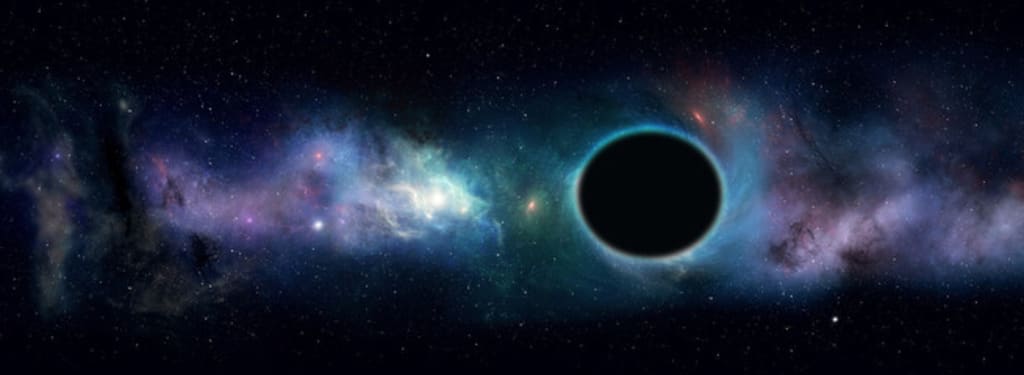
The term "black hole" has a certain mystique to it, evocative of a place where the laws of physics break down and reality is stretched to its limits. Black holes are some of the most fascinating and mysterious objects in the universe, and their existence challenges our understanding of space and time. They are not visible to the naked eye, but we can infer their presence through their effects on the surrounding matter. In this article, we will explore the basics of black holes, their formation, characteristics, and the challenges they pose to our current understanding of physics. We will delve into the paradox of information, the event horizon, and the supermassive black holes that inhabit the center of galaxies. Finally, we will discuss the future of black hole research and the possibilities of exploring these enigmatic objects.
Introduction: Black Holes and Their Mysteries
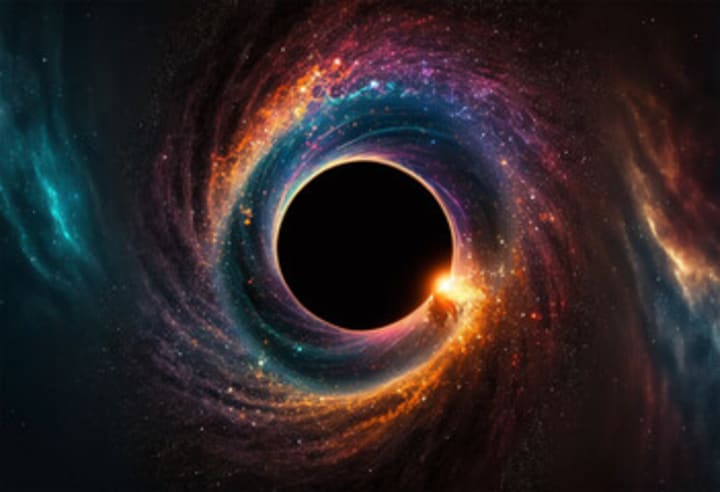
Black holes are some of the most fascinating objects in the universe. They're also some of the most mysterious. These gravitational monsters are like cosmic vacuum cleaners, sucking in everything that gets too close, including light. Scientists have been studying black holes for decades, but they still don't fully understand how they work. In this article, we'll explore the basics of black holes, including their formation and characteristics, the event horizon, and the paradox of information.
Defining Black Holes: The Basics of their Formation and Characteristics
Formation of Black Holes
Black holes are formed when massive stars run out of fuel and collapse in on themselves. As the star collapses, its core becomes extremely dense and creates a singularity, a point of infinite density. The singularity is surrounded by an event horizon, which is the point of no return for anything that gets too close. Beyond the event horizon, the gravitational pull is so strong that nothing, not even light, can escape.
Black Hole Characteristics
Black holes can vary in size, from small ones the size of a city to supermassive ones that are billions of times more massive than the sun. They can also spin, creating intense gravitational fields and warping the fabric of space and time around them. Scientists have also observed black holes with jets of matter shooting out of their poles, which can travel at nearly the speed of light.
Event Horizon: The Point of No Return
What is the Event Horizon?
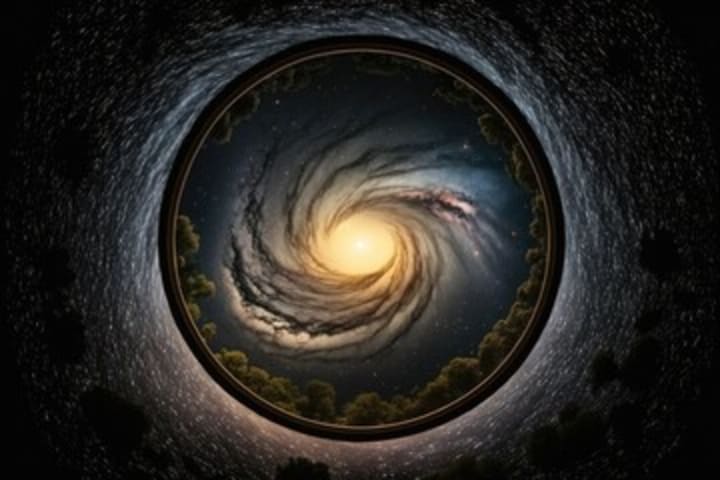
The event horizon is the point of no return around a black hole. Once something crosses the event horizon, it's impossible for it to escape the gravitational pull of the black hole. The event horizon is also where the gravitational pull becomes so strong that space and time are warped in a phenomenon known as spaghettification.
Science Fiction vs. Reality
Science fiction has often portrayed black holes as portals to other parts of the universe or as a gateway to time travel. However, these depictions are purely fictional. In reality, anything that falls into a black hole is crushed to an infinitely small point at the singularity. There's no chance of survival, let alone time travel.
The Paradox of Information: What Happens to Matter that Falls into a Black Hole?
Information Loss and the Black Hole Information Paradox
One of the biggest mysteries surrounding black holes is what happens to the information contained in anything that falls in. According to quantum mechanics, information can never be completely destroyed, but if matter falls into a black hole, it seems to disappear. This has led to the black hole information paradox, which is the idea that information is lost forever in a black hole.
The Debate Over the Fate of Information
Scientists have been trying to solve the black hole information paradox for years. Some theories suggest that information is somehow preserved in the Hawking radiation that black holes emit, while others propose the existence of a firewall of high-energy particles at the event horizon that destroys any incoming information. The debate over the fate of information in black holes is ongoing, and scientists hope to one day find a definitive answer.
Black Holes and Gravity: Reconciling General Relativity with Quantum Mechanics
The Theory of General Relativity
In 1915, Albert Einstein proposed the theory of general relativity, which revolutionized our understanding of gravity. According to this theory, gravity is not a force that pulls objects towards each other, but rather, it is the curvature of space-time caused by massive objects. The greater the mass of an object, the more it curves space-time around it, causing other objects to move towards it.
The Quantum World
On the other hand, quantum mechanics is the theory that explains the behavior of particles at the atomic and subatomic level. It describes a world where particles exist in multiple states at once, and where their properties are determined by probabilities rather than definite values. However, this theory is not compatible with general relativity, as it cannot account for the effects of gravity.
This conflict between general relativity and quantum mechanics has led to the search for a theory of quantum gravity, which would reconcile the two and provide a unified description of the universe.
Supermassive Black Holes: Building and Mapping the Universe
What are Supermassive Black Holes?
Black holes are regions of space where the gravitational pull is so strong that nothing, not even light, can escape from it. Supermassive black holes are at the centers of most galaxies and are millions of times more massive than the sun. These objects are incredibly important in shaping the structure of the universe, as they influence the motion of stars and galaxies around them.
Observing and Mapping Supermassive Black Holes
Despite their significance, supermassive black holes are difficult to observe directly. Scientists rely on indirect methods to detect them, such as observing the effects they have on nearby stars and gas, or measuring the radiation emitted from gas that is heated as it falls into the black hole. Recent advancements in technology, such as the Event Horizon Telescope, have allowed us to directly image the event horizon of black holes, providing valuable insight into their structure and behavior.
The Black Hole Information Paradox: A Challenge to Physics
The Debate Over the Fate of Information
One of the most significant challenges posed by black holes is the question of what happens to the information that enters them. According to the laws of quantum mechanics, information must always be conserved, meaning that it cannot be destroyed. However, when something falls into a black hole, it is believed to be lost forever, leading to the so-called black hole information paradox.
Solutions and Theories
Many solutions have been proposed to resolve the information paradox, including the idea that information is somehow stored on the surface of the black hole, or that it is released back into the universe in the form of radiation. However, these solutions remain speculative and have not yet been conclusively proven.
Conclusion: The Future of Black Hole Research and Exploration
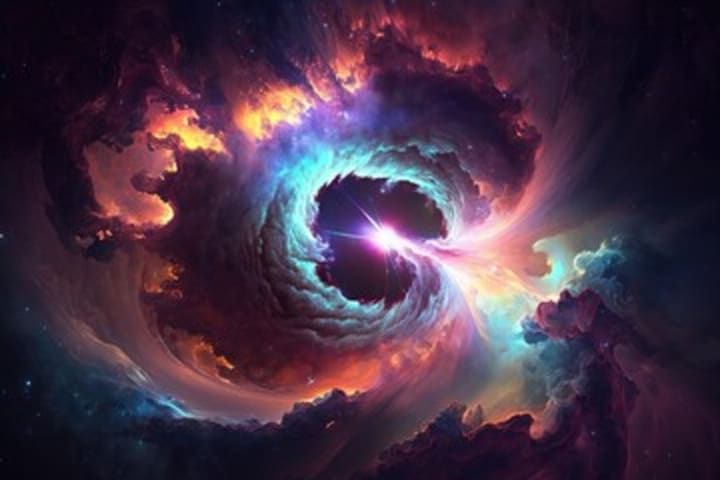
Although black holes have been studied for decades, there is still much to learn about them. As technology advances, scientists hope to gain a better understanding of their behavior and structure, and to resolve some of the outstanding questions surrounding them. The study of black holes holds the key to unlocking some of the deepest mysteries of the universe, and will undoubtedly continue to captivate and challenge scientists for years to come.
Black holes continue to be a subject of fascination and intense study for scientists around the world. From their formation and characteristics to the questions they pose about the nature of space and time, black holes have challenged our understanding of the universe. Despite the many mysteries that remain, we have made significant progress in understanding these enigmatic objects. With new technology and advanced methods of study, we can expect even more breakthroughs in the coming years. The study of black holes represents one of the most exciting frontiers in modern science, and it is an area that will undoubtedly continue to capture the public imagination for generations to come.
About the Creator
Krishna raj
"If your dreams don't scare you, they're too SMALL"
Keep reading
More stories from Krishna raj and writers in Earth and other communities.
The Unsolved Mysteries of the Bermuda Triangle: A Deep Dive into the Unknown
The Bermuda Triangle, also known as the "Devil's Triangle," is a region in the western part of the North Atlantic Ocean where ships and aircraft have disappeared under mysterious circumstances. This area, roughly bounded by Miami, Bermuda, and Puerto Rico, has been a subject of fascination and fear for decades. While many theories have been proposed to explain the strange occurrences, the Bermuda Triangle remains an unsolved mystery, shrouded in a veil of uncertainty. In this article, we will take a deep dive into the unknown, exploring the history, the theories, the scientific investigations, and the unexplained phenomena associated with the Bermuda Triangle.
By Krishna raj3 years ago in Earth
New Study Issues Dire Warning About Worsening Conditions in Major US River: ‘The Outlook … Does Not Look Good’
A recent study examining one of the United States’ most critical waterways has raised alarm bells for environmentalists, policymakers, and communities that rely on it for drinking water, agriculture, and commerce. The research, conducted by a consortium of scientists from leading universities and federal agencies, indicates that the river’s health is deteriorating at an unprecedented pace, and without immediate intervention, the consequences could be catastrophic.
By Fiaz Ahmed Brohi7 days ago in Earth
Wild Card Weekend Recap: What Happens Now?
I think I figured out why I love Wild Card Weekend so much. It's because it's the first playoff anything of the calendar year. The NFL season starts in the fall, and once upon a time, the champion was crowned either on or slightly before New Year's. The evolution of the NFL schedule has resulted in the playoffs starting just into the New Year, and currently, the final week of the season falls on the first weekend of the New Year, with Wild Card Weekend coming a week after that. So yes, chronologically, the NFL's Wild Card Weekend serves as the first playoff anything of the calendar year.
By Clyde E. Dawkins6 days ago in Unbalanced



Comments
There are no comments for this story
Be the first to respond and start the conversation.