
Loss and Grief
Explore the emotional impact of witnessing the destruction of natural habitats and species extinction, focusing on the feelings of loss, sadness, and mourning for the beauty and diversity of the natural world

In the heart of the verdant rainforest, where sunlight danced through a kaleidoscope of leaves, lived a young girl named Maya. Her days were painted in shades of green, her soul entwined with the rhythms of nature. Every morning, she would wake up to the melodious symphony of birdsong and embark on adventures through the lush undergrowth, mesmerized by the beauty and diversity that surrounded her.
But one fateful day, Maya's paradise began to unravel. A dark cloud seemed to settle upon her cherished sanctuary, casting a shadow of despair. News arrived of human progress encroaching upon the forest's edge, as trees were felled and habitats demolished. She witnessed the anguish etched upon the faces of the forest dwellers, creatures big and small, who lost their homes and their lives.
The once-vibrant landscape that had been her sanctuary transformed into a haunting scene of devastation. Maya's heart ached as she witnessed the destruction firsthand. The symphony of birds fell silent, and the once-bustling rivers turned shallow and murky. The gentle hum of insects faded into a distant memory. She wept for the loss of the lush, green tapestry that had once nourished her spirit.
As the days turned into weeks, Maya felt a profound sense of grief settle within her. She mourned the countless species that slipped away, like forgotten whispers in the wind. Each day brought the news of another animal driven to extinction, another leaf turned brown. The weight of sorrow clung to her, an ever-present reminder of the beauty and diversity that had been stolen from the world.
One evening, as the sun dipped below the horizon, Maya found solace in the embrace of a dying tree. Its gnarled branches reached out to her, as if pleading to be heard. In that moment, she understood the profound connection she shared with the natural world, a connection woven deep within her soul. Her tears mingled with the earth, a silent pledge to honor the memory of all that had been lost.
In her darkest hour, Maya discovered a flicker of hope. She realized that her grief could transform into a force for change, a catalyst for action. She embarked on a mission to raise awareness, to kindle the flame of compassion in the hearts of others. Through her words and art, she painted vivid portraits of the wonders that had slipped away, each brushstroke an elegy for the beauty that once thrived.
Maya's impassioned cries echoed through the halls of power, reaching the ears of those who held the fate of the natural world in their hands. Her voice, a chorus of pain and longing, refused to be silenced. She stood shoulder to shoulder with activists, scientists, and everyday people who shared her anguish, creating a movement that demanded change.
Together, they fought for the protection of endangered habitats, the conservation of fragile ecosystems, and the preservation of our shared planet. Through their collective efforts, they fostered a newfound respect for the intricate web of life, forging a path towards harmony and coexistence.
As Maya looked upon the slowly healing wounds of the natural world, her heart swelled with bittersweet emotions. While the scars remained, new life sprouted from the ashes of destruction. A chorus of birdsong returned, resonating through the forest once more. The rivers flowed with renewed vigor, nourishing the land and its inhabitants. The seeds of hope, sown in the depths of grief, had blossomed into a garden of resilience.
Maya's journey through loss and grief had been a testament to the indomitable human spirit. It taught her that sadness could be transformed into action, and mourning into a catalyst for change. With renewed determination, she vowed to carry the memories of the fallen within her, forever a guardian of the natural world.
For the love that once stirred within her heart would forever be entwined with the beauty and diversity of the world she held so dear. And as long as she lived, Maya would carry the silent goodbye of those lost, reminding humanity of the urgent need to protect and cherish the delicate tapestry of life before it was too late.
Climate change is an existential crisis that demands immediate attention and action from both individuals and governments. As the Earth's climate continues to undergo rapid and potentially irreversible transformations, it is crucial to explore the responsibilities that lie with individuals and governments in tackling this global challenge.
On an individual level, each person bears a certain responsibility to reduce their carbon footprint and adopt sustainable practices. This can be achieved through conscious choices in daily life, such as minimizing energy consumption, conserving water, practicing eco-friendly transportation, and embracing renewable energy sources. By making these choices, individuals contribute to reducing greenhouse gas emissions and mitigating the impacts of climate change.
Moreover, individual responsibility extends beyond personal actions. It encompasses the power of collective action, whereby individuals can come together to advocate for climate policies, engage in environmental activism, and support organizations that work towards sustainability. By raising awareness, mobilizing communities, and holding corporations and governments accountable, individuals can exert significant influence in driving systemic change.
However, the responsibility to address climate change should not solely rest on the shoulders of individuals. Governments play a crucial role in formulating and implementing policies that promote sustainability, invest in renewable energy infrastructure, regulate polluting industries, and set ambitious emission reduction targets. Effective government action is essential in creating an enabling environment that fosters sustainable practices, innovation, and the transition to a low-carbon economy.
Governments must prioritize climate change as a top agenda item, integrating it into national strategies, laws, and policies across sectors. This includes incentivizing and supporting renewable energy development, implementing carbon pricing mechanisms, promoting energy-efficient technologies, and establishing robust regulations for greenhouse gas emissions. Additionally, governments should invest in climate education, research, and development, empowering communities with the knowledge and tools to make informed decisions about sustainable living.
Furthermore, governments hold the responsibility of international collaboration and diplomacy. Climate change is a global issue that transcends borders, and concerted efforts are needed to address its magnitude. Governments must actively engage in multilateral agreements and initiatives, such as the Paris Agreement, and work towards collective solutions that prioritize the well-being of both people and the planet.
It is important to recognize that individual and government responsibility are interconnected and reinforce one another. While individuals can drive change through their choices and actions, governments have the authority and resources to implement large-scale measures that can accelerate the transition to a sustainable future.
The urgency of addressing climate change necessitates a holistic approach that encompasses the commitment and collaboration of individuals and governments alike. Both have distinct roles to play, with individuals fostering a culture of sustainability and governments creating the necessary frameworks and policies for transformative change.
In this critical moment, it is essential for individuals to hold governments accountable and demand ambitious climate action. Likewise, governments must listen to the voices of their citizens, prioritize the long-term health of the planet over short-term gains, and take bold steps to mitigate and adapt to climate change.
Ultimately, it is the collective responsibility of individuals and governments to secure a sustainable future for generations to come. By embracing this responsibility and acting decisively, we can strive towards a world that thrives in harmony with nature, safeguarding the planet and its diverse ecosystems for future generations.
About the Creator
Keep reading
More stories from writers in Earth and other communities.
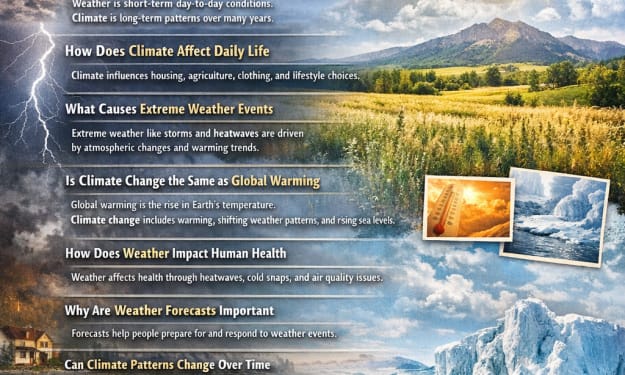
Weather and Climate Understanding the Forces That Shape Our Daily Lives
Weather and Climate Understanding the Forces That Shape Our Daily Lives Weather and climate play a central role in how people live work travel and plan for the future. From daily temperature changes to long term climate patterns these natural systems influence agriculture health economies and even global stability. Understanding the difference between weather and climate and knowing how they affect human life has become more important than ever especially as the world experiences more extreme conditions.
By America today 4 days ago in Earth
🅼🅸🅳🅽🅸🅶🅷🆃 🆂🅽🅰🅲🅺🆂
"It's 10 in Tuscon! We all know what that means... It's Time for Midnight Snacks with your man, Gerald Gee! Ready to spend the night together? Me too! I'm full of snacks and can't wait to regurgitate them all back into your hungry ears. Crack a brew! Pop some corn! Anything to get ready for one hell of a show where the talk maybe cheap but the words cut deep...
By Lamar Wiggins6 days ago in Fiction


Comments
There are no comments for this story
Be the first to respond and start the conversation.