
لماذا لا يريد الله ان يوقف الحرب
# Free Will and Human Responsibility


The question of why God does not stop wars, particularly in places like Sudan and Palestine, is complex and touches on deep theological, philosophical, and emotional issues. It raises fundamental concerns about the nature of suffering, free will, and divine intervention. Many people struggle to reconcile the existence of an all-powerful, loving God with the violence and destruction that occurs in these regions. This essay will explore various perspectives on this issue, focusing on free will, the nature of human conflict, and the possible reasons for divine inaction in the face of such suffering.
### Free Will and Human Responsibility
One of the most commonly cited explanations for why God does not directly intervene in wars is the concept of free will. In both religious and philosophical traditions, free will is often regarded as a gift given to humans by God, allowing them to make choices for themselves. This ability to choose is seen as essential for moral growth and personal responsibility.
In this context, wars are often viewed as a consequence of human decisions rather than divine will. In the cases of Sudan and Palestine, the conflicts are largely driven by political, ethnic, and territorial disputes—issues deeply rooted in human history. If God were to intervene and stop these wars, some argue that it would effectively remove human free will, reducing people to puppets without the ability to choose right from wrong.
This argument raises important questions about the balance between divine intervention and human autonomy. If God intervened in every act of violence, what would be the role of personal responsibility? Wars are undeniably tragic, but they are often the result of choices made by governments, armies, and individuals. Some theologians argue that God allows these choices to play out because humanity must learn the consequences of its actions.
### The Role of Suffering in Religious Narratives
Another explanation for why God does not stop wars is that suffering plays a crucial role in many religious traditions. In Christianity, for example, suffering is often seen as a means of spiritual growth or purification. The story of Job, who endured immense suffering but remained faithful to God, is a common reference point in discussions about why God allows pain and hardship. Similarly, in Islam, trials and tribulations are sometimes viewed as tests of faith, meant to strengthen a believer's connection to God.
From this perspective, wars and the suffering they cause could be interpreted as tests for the individuals and nations involved. The people of Sudan and Palestine, for instance, may be enduring hardships that, while tragic, serve a higher spiritual purpose. This line of thinking does not justify or excuse the violence, but it does offer a theological explanation for why divine intervention might be withheld.
However, this perspective also raises ethical questions. Is it fair to ask people to endure extreme suffering for the sake of spiritual growth? Can a just and loving God stand by while innocent lives are lost in conflict? Critics of this view argue that it risks trivializing human suffering by framing it as part of a larger divine plan.
### The Problem of Evil and Theodicy
The question of why God allows suffering, including the suffering caused by war, is part of a larger theological problem known as "theodicy"—the attempt to reconcile the existence of evil with the existence of a benevolent, all-powerful God. Many religious thinkers have grappled with this issue, offering various explanations for why evil exists and why God does not always intervene to stop it.
One common theodicy is the "soul-making" argument, which suggests that suffering is necessary for moral and spiritual development. In a world without pain or hardship, humans would have no opportunity to grow in compassion, courage, or resilience. Wars, in this context, are part of the brokenness of the human condition, but they also provide opportunities for people to act heroically, to show mercy, and to work for peace.
This argument has its merits, but it is also deeply unsatisfying to many people. The scale of suffering in places like Sudan and Palestine can feel overwhelming, and it is difficult to see how such widespread destruction could serve a higher purpose. The soul-making theodicy also raises uncomfortable questions about the nature of God: If suffering is necessary for growth, does that mean God intentionally allows or even wills the suffering caused by war?
### The Role of Human Sinfulness
In many religious traditions, wars are seen as a manifestation of human sinfulness. The conflicts in Sudan and Palestine, like many wars throughout history, are often driven by greed, pride, hatred, and a desire for power. From a theological perspective, these are all sins that separate humans from God. Rather than blaming God for not stopping the wars, some religious leaders argue that the responsibility lies with humanity itself.
In the Bible, for instance, wars are often depicted as the result of human rebellion against God's will. The same can be said for Islamic teachings, which emphasize that peace is the natural state God desires for humanity, and that violence often results from human failure to live according to divine principles. In this view, the wars in Sudan and Palestine are not evidence of God's inaction, but of humanity's failure to uphold justice, compassion, and peace.
### The Mystery of Divine Will
Ultimately, the question of why God does not stop wars may be unanswerable from a human perspective. In many religious traditions, God's will is seen as mysterious and beyond human comprehension. While believers may strive to understand God's reasons for allowing suffering, they must also accept that some aspects of the divine plan may remain hidden.
In Islam, for example, the concept of "qadar" (divine destiny) teaches that everything happens according to God's will, even if humans cannot always understand why. Similarly, in Christianity, the apostle Paul wrote that God's ways are "unsearchable" and His judgments "unfathomable" (Romans 11:33). From this perspective, the wars in Sudan and Palestine, like all human suffering, may be part of a larger divine plan that humans are not yet capable of understanding.
### The Call to Action
While theological explanations for why God does not stop wars can provide some comfort, they do not absolve humans of their responsibility to work for peace. Many religious teachings emphasize the importance of justice, compassion, and peacemaking. In both Islam and Christianity, believers are called to be active participants in creating a better world, rather than passively waiting for divine intervention.
In the cases of Sudan and Palestine, this means that while people may question why God has not stopped the violence, they are also called to take action—whether through diplomacy, humanitarian aid, or grassroots activism—to bring about peace. The fact that God does not intervene directly does not mean that humans are powerless to change their circumstances.
### Conclusion
The question of why God does not stop the wars in Sudan and Palestine touches on some of the most difficult aspects of theology and human existence. While free will, the nature of suffering, and the problem of evil provide some possible explanations, there are no easy answers. Ultimately, the question may reflect the mystery of divine will—a mystery that humans are unlikely to fully comprehend. However, this uncertainty does not absolve humanity of its responsibility to work for peace, justice, and the alleviation of suffering in the world.
About the Creator
Microbiota, microbiome or microflora: how to speak correctly and why it is for health.
You've probably heard the phrase, "We are what we eat." But modern science says more precisely: we are also those who live in us. Until 2016, it was believed that there are many times more bacteria in our body than our own cells. The latest calculations by mathematicians show that we divide the body with our microorganisms by about 50/50: about 30 trillion of our cells versus 38 trillion bacterial ones.
By Yaroslav Gorohov3 days ago in Earth
Chinese EVs Closing In on America After Canadian Tariffs Deal
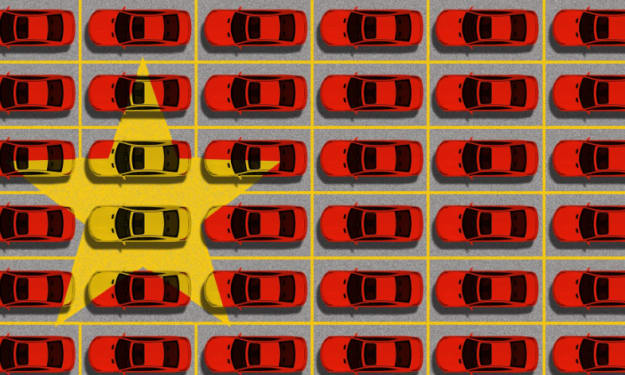
The electric vehicle race is no longer just about climate goals or consumer choice — it has become a geopolitical contest. And in early 2026, a subtle but powerful move by Canada may have tilted the board. By agreeing to sharply reduce tariffs on Chinese electric vehicles, Canada has opened a door that the United States has worked hard to keep shut. While Chinese EVs are still largely barred from the American market, they are now edging closer than ever — not by crossing the border directly, but by entering through Canada. This development raises a pressing question: Are Chinese EVs closing in on America, and what does that mean for the future of North American auto markets? The Deal That Changed the Game Canada’s new agreement with China allows up to 49,000 Chinese-made electric vehicles per year to enter the Canadian market at a tariff rate of just over 6%, a dramatic drop from the previous 100% tariff that effectively blocked them. On paper, the quota seems small. In reality, it carries enormous symbolic and strategic weight. For years, both Canada and the United States aligned closely on keeping Chinese EVs out, citing concerns over unfair subsidies, national security, and the protection of domestic auto industries. This new deal marks a clear shift — and a divergence from U.S. policy. Canada didn’t make the decision in isolation. The EV tariff reduction was part of a broader trade reset with China, tied to agricultural exports such as canola and efforts to stabilize a strained economic relationship. Why Chinese EVs Matter So Much China is the undisputed leader of the global electric vehicle industry. Its manufacturers produce EVs at scale, often at prices Western automakers struggle to match. Brands like BYD, Nio, and Xpeng have already expanded aggressively into Europe, Southeast Asia, and parts of the Middle East. North America has remained one of the final fortified markets — until now. Chinese EVs are appealing not just because they’re cheaper, but because they’ve rapidly improved in quality, range, and technology. For consumers priced out of North American and European EV models, Chinese vehicles offer something rare: affordability without sacrificing features. Canada’s decision gives Chinese automakers their first legitimate foothold in North America — and footholds tend to grow. Why the U.S. Is Nervous The United States still enforces a 100% tariff on Chinese EV imports, making them effectively unsellable in the American market. But Canada’s move has triggered concern in Washington. U.S. officials argue that Chinese EVs entering Canada could indirectly pressure American markets, influence supply chains, and weaken Washington’s leverage in future trade negotiations. There’s also a political dimension. Both major U.S. parties have framed Chinese dominance in EVs as a strategic threat — not just to auto jobs, but to technological leadership. Modern EVs collect vast amounts of data, and lawmakers have raised concerns about cybersecurity and foreign data access. While Chinese EVs aren’t rolling onto American roads yet, their presence just across the border changes the conversation. Canada’s Risk — and Opportunity Inside Canada, the reaction has been mixed. Automotive hubs like Ontario worry that opening the market could undermine domestic manufacturing and strain relations with the U.S., Canada’s largest trading partner. Some leaders have called the deal “lopsided,” warning it could cost jobs if American retaliation follows. Others see opportunity. A more competitive EV market could lower prices for Canadian consumers and accelerate EV adoption. It may also attract Chinese investment into Canada itself — including factories, battery plants, and supply chain partnerships. If Chinese automakers choose to build in Canada rather than simply export to it, the country could position itself as a bridge between Chinese EV innovation and North American demand. That balancing act — between economic opportunity and political risk — defines Canada’s strategy. Are Chinese EVs Really ‘Closing In’ on America? For now, the answer is: not directly — but strategically, yes. Chinese EVs sold in Canada won’t automatically flood the U.S. market. Regulations, trade rules, and tariffs still stand in the way. But proximity matters. Supply chains overlap. Consumer awareness spreads. Manufacturing footprints expand. There’s also the possibility of a workaround: Chinese companies could eventually build EVs in North America to bypass tariffs altogether. This idea has already been floated — but it faces fierce resistance from U.S. lawmakers and unions. Still, history shows that once a global industry leader gains regional access, momentum often follows. What This Means for Consumers For Canadian buyers, the impact could be immediate: more choice and lower prices in an EV market that has long been criticized for being expensive and limited. For American consumers, the effect will be indirect — at least at first. But increased competition could eventually pressure U.S. automakers to reduce prices, improve features, and accelerate innovation. The larger question is whether North America wants competition or insulation — and how long insulation can realistically last in a globalized EV economy. The Bigger Picture: A Global EV Power Shift Canada’s tariff deal reflects a broader reality: China’s dominance in electric vehicles is reshaping global trade, whether governments like it or not. Europe is already grappling with an influx of Chinese EVs. Emerging markets are embracing them. And now, North America has its first real crack in the wall. This isn’t just about cars. It’s about who controls the future of clean transportation, supply chains, and industrial policy. Final Thoughts Chinese EVs aren’t driving down American highways yet — but after Canada’s tariff deal, they’re closer than ever. This move doesn’t spell immediate disruption, but it does signal a shift. One country has decided that economic pragmatism outweighs political alignment. And in doing so, Canada may have opened the door to a new phase of EV competition in North America. Whether that door swings wider — or slams shut — will depend on how the U.S., automakers, and consumers respond. One thing is certain: the EV race just entered a new chapter.
By Muhammad Hassana day ago in Earth



Comments
There are no comments for this story
Be the first to respond and start the conversation.