
Living Sustainably: A Journey Towards a Greener Future (part-1)
Building a Better World through Conscious Choices and Collective Efforts.

Sustainability is a concept that has gained immense importance in recent times, particularly in the wake of the growing environmental crisis that our planet is facing. At its core, sustainability refers to the ability of an ecosystem to continue functioning, supporting life and providing resources in perpetuity. It is the foundation for a healthy and stable environment, as well as for human prosperity and well-being.
1. Introduction to sustainability and its importance in today's world
2. Overview of environmental problems, such as climate change and loss of biodiversity
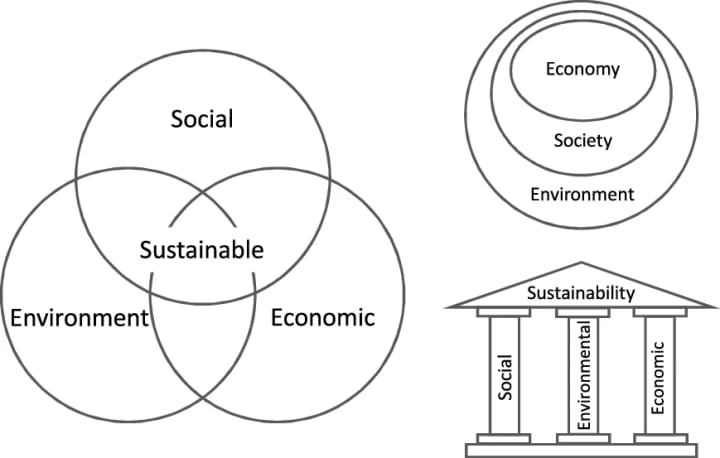
3. Explanation of the three pillars of sustainability: economic, social, and environmental
4. Discussion on the impact of human activities on the environment and ways to reduce it
5. Examination of sustainable technologies and renewable energy sources
6. Analysis of the role of governments, businesses, and individuals in promoting sustainability
7. Presentation of case studies of sustainable practices in different industries
8. Discussion of the challenges and barriers in achieving sustainability and potential solutions
9. Outline of steps for individuals to live more sustainably in their daily lives
1. Introduction - The Importance of Sustainability
Today, our planet is facing a number of serious environmental problems that threaten the balance of our ecosystem, including climate change, deforestation, soil degradation, loss of biodiversity, and the depletion of natural resources. These issues have far-reaching consequences for the planet, as well as for human health, social and economic stability, and the future of our children.
Therefore, sustainability has become a critical issue for our world and for future generations. By adopting sustainable practices and reducing our impact on the environment, we can preserve the delicate balance of our ecosystem, protect the planet for future generations, and secure our own long-term well-being.
The Three Pillars of Sustainability
Sustainability is a multi-faceted concept that encompasses economic, social, and environmental factors. The three pillars of sustainability represent the interdependence of these factors and their importance in achieving a sustainable future.
The economic pillar of sustainability focuses on the creation of a stable and thriving economy that provides for human needs while conserving resources and protecting the environment. This includes reducing waste and pollution, improving resource efficiency, and creating jobs in sustainable industries.
The social pillar of sustainability focuses on improving human well-being and reducing poverty, inequality, and social injustice. This includes ensuring access to food, water, and healthcare, promoting education, and creating equitable and sustainable communities.
The environmental pillar of sustainability focuses on the protection and preservation of the natural environment and its resources. This includes reducing greenhouse gas emissions, conserving biodiversity, and protecting ecosystems from degradation.
The Role of Governments, Businesses, and Individuals
Governments play a critical role in promoting sustainability by implementing policies and regulations that encourage sustainable practices and protect the environment. Governments can also provide incentives for businesses to adopt sustainable practices and invest in sustainable technologies.
Businesses have a key role to play in sustainability by reducing their environmental impact, adopting sustainable practices, and promoting sustainable products and services. By doing so, businesses can reduce their costs, improve their reputation, and create a more sustainable future.
Individuals also play a critical role in promoting sustainability by making conscious choices in their daily lives. This includes reducing waste, conserving energy, and choosing products and services that have a lower environmental impact. By making sustainable choices, individuals can help to create a better future for themselves and for future generations.
2. Overview of environmental problems
The environment is facing numerous challenges in the present day and age. Climate change and loss of biodiversity are two of the most critical environmental problems that are affecting the planet and its inhabitants. In this article, we will explore these issues in detail and understand their causes, consequences, and solutions.
Climate change is a global phenomenon that is primarily caused by the emission of greenhouse gases, such as carbon dioxide, methane, and nitrous oxide, into the atmosphere. These gases trap heat from the sun and cause the planet's temperature to rise. The resulting warming of the Earth's atmosphere is known as the greenhouse effect.
The effects of climate change are widespread and far-reaching, and include rising sea levels, melting polar ice caps, more frequent and intense weather events, and the spread of diseases to new areas. Climate change also exacerbates environmental problems such as deforestation and soil degradation, as well as causing food and water shortages. Moreover, climate change is affecting biodiversity, as species are unable to adapt quickly enough to changing conditions and are becoming endangered or extinct.
Loss of biodiversity is a decline in the variety of life on Earth, caused by factors such as habitat destruction, over-exploitation, and climate change. Biodiversity loss can have negative consequences for ecosystems, as species play important roles in maintaining their stability and providing essential services such as pollination, pest control, and water filtration. Biodiversity loss also affects human well-being, as it reduces the availability of resources, disrupts food chains, and contributes to the spread of diseases.
To address these environmental problems, action must be taken at the global and local levels. Reducing greenhouse gas emissions, transitioning to renewable energy sources, and protecting and restoring habitats are essential steps in mitigating climate change. Protecting and conserving biodiversity requires preserving habitats and ecosystems, reducing over-exploitation, and addressing the root causes of species decline. Governments, businesses, and individuals must work together to implement sustainable practices and policies that promote environmental protection.
In addition to these measures, educating the public about the importance of environmental protection and promoting sustainable lifestyles is crucial in addressing environmental problems. The widespread adoption of sustainable practices such as reducing energy consumption, conserving water, and reducing waste can help to mitigate the effects of climate change and loss of biodiversity.
In conclusion, environmental problems such as climate change and loss of biodiversity pose a threat to the planet and its inhabitants. Addressing these issues requires a collective effort from governments, businesses, and individuals. By taking action now, we can ensure a sustainable future for generations to come and preserve the Earth's diverse and vibrant ecosystems.
See you guys in next part, stay tuned.
continued...
About the Creator
Jagath kumar K S
Experinced software engineer with strong background in Java, Spring, Spring Boot, Angular and AWS. Passionate about using technology for positive impact, both as a philanthropist and as an advocate for the environment.
Keep reading
More stories from writers in Earth and other communities.
Philippines Paper Bags Market: Packaging Shifts, Environmental Policy & Changing Consumption Patterns
Philippines Paper Bags Market Overview The Philippines paper bags market is undergoing a structural shift as environmental regulation, packaging reform and consumer awareness increasingly influence material choices across industries. According to IMARC Group, The Philippines paper bags market size was valued at USD 28.59 Million in 2025 and is projected to reach USD 46.95 Million by 2034, growing at a compound annual growth rate of 5.66% from 2026-2034. This expansion reflects gradual but consistent changes in packaging practices rather than a single disruptive trend.
By Manisha Dixitabout 3 hours ago in Earth
How, Too
Many people wonder how, too. You are not alone, and I am an expert. I will teach you how, too! First, you need to remit a small application fee and fill out an application describing the nature of your financial situation and how often payments will be made, as this will have great bearing on how well I teach you how, too.
By Harper Lewis4 days ago in Fiction




Comments
There are no comments for this story
Be the first to respond and start the conversation.