

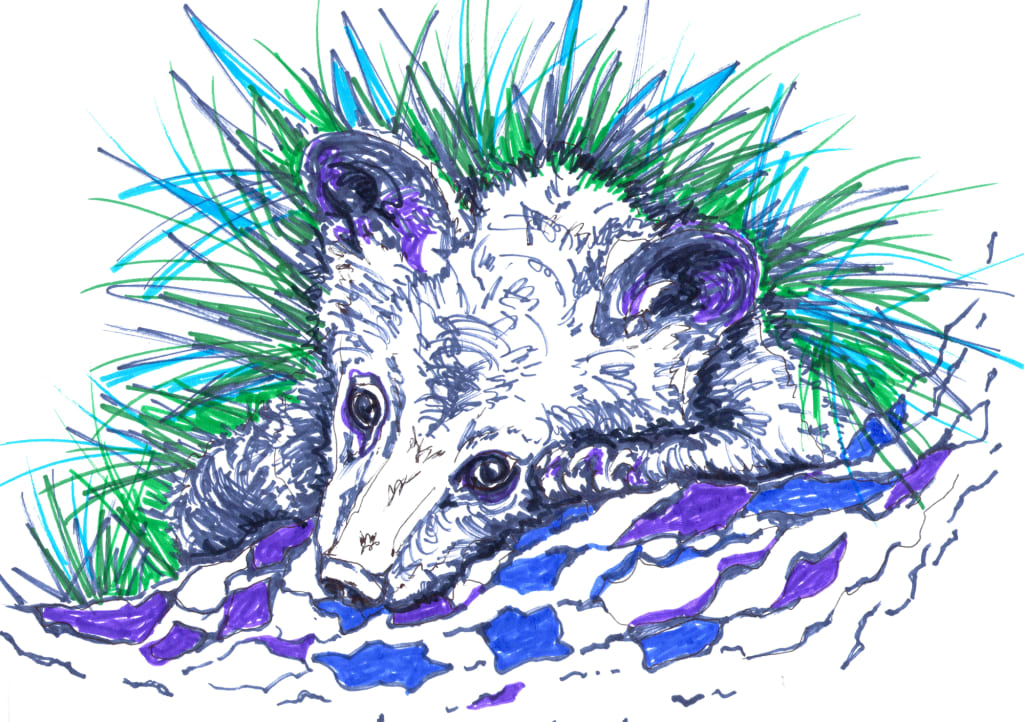
Hello, my name is Ursus, and I am a young Black Bear living in Florida’s Ocala National Forest. I recently left my mother after almost two years of training, and I’m on a big adventure! I have been wandering and foraging my way through the woods, and there is just so much delicious food to eat! There’s a multitude of plants and fruits from Palmetto berries, pond apples, sawgrass, cabbage palm, and sassafrass to wild coffee, grapes, and raspberries. There’s also a plethora of insects(Although I prefer berries!) such as ants, bees, wasps, grasshoppers, and centipedes. (That old myth about bears and honey stemmed from the fact that we love bee grubs, and that is what we are after if you see us near a hive.) I also see a lot of small animals, like turtles, snakes, opossum, and crayfish which I would only eat if I couldn’t find enough of my favorites. Needless to say, the Florida scrub is abundant with bear food(what is called “species-appropriate” food), and I have no desire for yours. The only reason a bear would ever start craving human edibles is if a human starts feeding us. When you leave out all kinds of goodies(Things like cat food, dog food, bird seed, the compost pile, pizza, bbq, etc.) in nice little bowls and bins for us, we can’t resist! What we don’t understand is why you would be so kind as to leave food for us, then get angry when we keep coming back for more? Obviously, different species just don’t get each other. Sometimes, these misunderstandings can lead to tragedy.
So how, you may wonder, did I become an “orphan”? Well, the confusion between what we should and should not be eating is what started the big problems between humans and bears in the first place. Word in the woods has it that a whole bunch of grown-up humans came out and took away a whole bunch of grown-up bears because they were becoming a “nuisance”. Some of those were Mother Bears, maybe even mine. I was ready to go out on my own, so I am not sure if she was “taken” or just went her own way, but you humans would refer to us baby bears without mothers as “orphans”. The truth is that while human children rely on their parents for many years(As many as 18 or 19, from what I hear!), bear children are ready to take off on their own by 2 years of age. We are a different species, and are raised to be independent and self-sufficient very early on. While a human baby of 2 years old would be considered “orphaned” if found alone, the same is not true for bear cubs. Why am I telling you this? So you don’t have to worry about me!
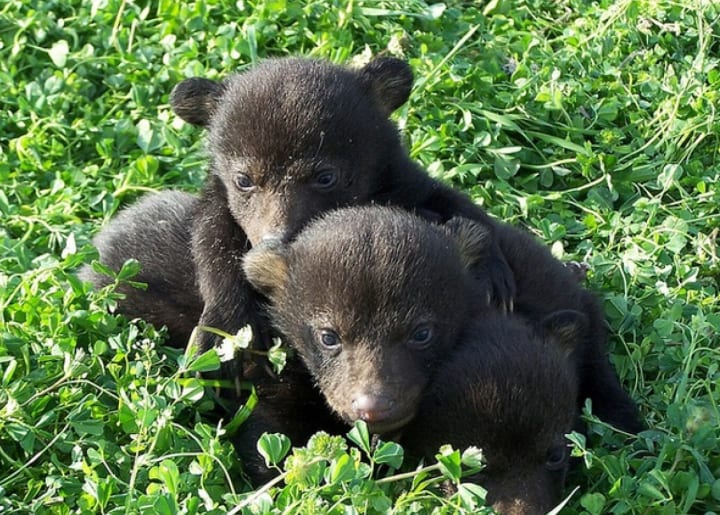
Another unfortunate consequence of mistaking a self-sufficient bear cub with a dependent orphan is that too many cubs are “rescued” from the woods and raised in captivity. Don’t get me wrong, it is wonderful for a warm-hearted human to take an infant bear cub to safety, and to ensure its survival with care and feeding. But us older ones should definitely be left in the wild, in our natural habitats, our homes. Those few tiny cubs who may not have survived without a little help, could easily be returned to the wild after a year or so. Too many are unnecessarily relegated to life in prison(zoos, sanctuaries, exotic animal collectors, etc.) when they should be released. If you ever see any other young bears, big and healthy enough to run from you, who are seemingly alone in the woods, please just leave them be. If the baby cub seems like an infant, and is noticeably malnourished or actually crying out for help then yes, by all means call the wildlife rescue humans! Just understand that it is very rare for such a tiny cub to be left alone on purpose, so the mother may be nearby foraging for food. If not, it may be the sad story of indiscriminate hunting or another traffic accident. I wish that these things never happened, but they do. For me, almost 2 years old now, I don’t know where my mother is and it really doesn’t matter. I am well-adapted to my environment and perfectly capable of finding food, shelter, and water on my own. We bears are solitary by nature, so we don’t get “lonely” like humans do, either.

I’ll bet you are wondering where I sleep at night, eh? Well, I happen to know that humans often sleep in “hammocks”, so you may not be so surprised that we bears also sleep in the “hammocks”! You use the word to describe something you made from rope or cloth and hang from trees or stands, while we build our sleeping nests from leaves, branches, twigs, and mosses found in our habitat which is often called the tropical hammock or hardwood(oak) hammock. Either way, the word describes a comfortable resting place for humans or bears in Florida. I have heard tales of an occasional grown-up bear taking a nap in some human’s hammock, however. I mean, if we see a comfy bed hanging in our trees, why not? If you are a camper or nature hiker, you probably won’t see many(if any) Florida Black Bears because we are so reclusive. We are just content to roam around, doing bear things in our natural environment, and have no desire to harm or even bother humans. The interactions only happen when humans build their homes right on the edge of our habitats. We are bears, so we don’t understand the invisible borders you humans establish. We also don’t get the whole concept of “land ownership”, which humans invented, and which creates a belief that people can just claim a chunk of our territory and then treat us like trespassers. It’s a baffling concept! So please, dear humans, try to walk a mile in our paws, and imagine how we feel about being bears in a human world. It’s very confusing, to say the least.
It is important for you to understand and teach your fellow humans as much as you can about us bears and other animals who share natural habitats and wild territory, in order to prevent any more tragedies like unnecessary shootings, euthanizations, or car collisions. So many injuries and deaths could be avoided with a little bit of cooperation. If humans could secure their garbage bins and stop leaving food out for us wild animals, we would just stay in the hammocks and eat our natural diet of plants, nuts, and berries. If humans could be more careful on the roads, keeping eyes out for us wildlife trying to cross, far fewer would get hit by cars and trucks. And if a bear wanders into your garage, it’s only because he or she sniffed something tasty, not to hurt you. If you catch one of us napping in your hammock or even taking a dip in your pool, please take a few pictures and then send us on our way. No need to go crazy or freak out! After all, how threatening can a sleeping or swimming bear be? Like I said, we don’t know what’s yours and not ours, we just think it’s all one big place to share. So relax, take a few breaths, and enjoy the show, and we’ll probably wander off on our own soon. If not, and you need us to leave the area quickly, there are plenty of ways to just chase an uninvited guest away. It’s not necessary to quickly grab your gun and prepare to shoot! I’m sure that you humans have to deal with uninvited human guests all the time. Do you immediately resort to violence when Auntie Karen just won’t leave? Maybe, but I doubt it. You probably come up with all kinds of non-lethal ways to deter her from coming over in the first place, or to shuffle her out the door early when she shows up for dinner anyway. I have heard of a horrible, peppery spray that will scare off a bear in a flash, and it would probably work on that annoying Auntie, too. Believe it or not, we are even more afraid of you than you are of us! If you could just yell and flail your arms about, or start banging on something loud most of us would head for the hills and never return. Barking dogs are pretty frightening, too, even those machines that make bark noises! Contrary to another popular misconception, bears do not eat dogs, we are terrified of them! Overall, just try to make your yard and house as unappealing to bears as possible. Motion-triggered lights and sprinklers are good ones for deterring most critters, tightly sealed trash bins are vital, and a higher fence would be a good idea, too. Most of the reported bear intrusions happen in unfenced yards and open garages. With pungent trash bins, food-crusted barbecue grills, and who-knows-what other tantalizing vittles may be lurking, that’s like putting up a neon sign that says, “Welcome to the party, Bears!”. Anyway, it is my wish that we Bears and you Humans can co-exist in our respective, sometimes shared environments. For now, know that most bear cubs are happy and healthy, thriving in their natural habitat, and we hope that the human babies are all safe and sound, too. Namaste.
About the Creator
Azwe
Freerange creator with a passion for painting and an addiction to writing. Enablers welcomed! We only inhabit these temporary forms for a brief blip, so why not indulge in and share all of our creative gifts while we can? Namaste
Honey, I Shrunk the Datacentres: Is Small the New Big?
When most people think of datacentres, they picture sprawling warehouses full of servers, humming fans, and mountains of cabling. These massive facilities power everything from Netflix streams to artificial intelligence, but they also consume enormous amounts of energy and space. Now, a new trend is emerging: micro-datacentres. Tiny, modular, and often portable, these “datacentre in a box” solutions are challenging the old assumption that bigger is always better. Could small really be the new big in the world of computing? What Are Micro-Datacentres? Micro-datacentres are compact computing hubs designed to perform the same essential functions as traditional datacentres but in a fraction of the space. Think of them as miniaturized cloud factories — smaller, energy-efficient, and often placed closer to the users they serve. Key characteristics include: Compact size: Often no larger than a shipping container or even a cabinet. Energy efficiency: Use less power by focusing on localized computing needs. Modularity: Can be scaled horizontally by adding more units rather than expanding a single huge facility. Edge computing readiness: Positioned closer to where data is generated, reducing latency for IoT devices, AI applications, and streaming services. In short, micro-datacentres take the power of traditional computing and shrink it to fit modern, flexible infrastructure demands. Why Companies Are Embracing Smaller Datacentres There are several reasons the tech world is warming up to smaller datacentres: Energy and Cost Savings – Traditional datacentres consume massive amounts of electricity, sometimes as much as a small town. Micro-datacentres use less power and generate less heat, reducing both energy bills and cooling costs. Local Speed and Low Latency – For applications like AI, gaming, and streaming, milliseconds matter. By placing computing resources closer to users, micro-datacentres reduce latency and improve performance. Flexibility and Rapid Deployment – Big datacentres take years to build. Micro-datacentres can be deployed in weeks, allowing companies to respond quickly to spikes in demand or to expand into new regions. Resilience and Redundancy – Smaller, distributed units reduce the risk of a single point of failure. If one micro-datacentre goes down, others can pick up the load. Sustainability Goals – With energy efficiency at their core, micro-datacentres are often paired with renewable energy, making them an attractive option for companies seeking greener operations. From Data Warehouses to Data Cabinets Historically, the datacentre arms race has been about size. Companies like Amazon, Google, and Microsoft built massive facilities housing hundreds of thousands of servers. These centers achieved economies of scale but came with high energy use, long construction timelines, and heavy regulatory scrutiny. Micro-datacentres, on the other hand, flip the script: instead of one mega-facility, you deploy many smaller units closer to users. This is sometimes called edge computing, and it’s particularly useful for AI applications, smart cities, and the Internet of Things (IoT). Imagine self-driving cars, smart traffic lights, or factory robots. These devices generate enormous amounts of data that can’t be efficiently sent to a distant datacentre for processing. A nearby micro-datacentre solves the problem in real-time, enabling faster decisions and smoother operations. Real-World Examples Several companies are already experimenting with smaller datacentres: Google’s Edge Nodes: Google has deployed compact datacentres in regional locations to speed up cloud services. Microsoft Azure Stack Edge: A modular datacentre solution that brings cloud computing capabilities closer to businesses. Amazon Web Services (AWS) Snowcone: A portable computing and storage unit that can operate in remote or temporary locations. Even municipalities and hospitals are exploring micro-datacentres for localized applications like traffic management, healthcare data storage, and emergency services. Challenges of Going Small While micro-datacentres have many advantages, they’re not without challenges: Limited capacity: They can’t match the raw scale of traditional datacentres, so some large-scale AI training tasks still require mega-facilities. Security concerns: Smaller units distributed across many locations require robust cybersecurity protocols. Maintenance and monitoring: Managing multiple small units can be more complex than running a centralized datacentre. Energy trade-offs: If not designed efficiently, multiple micro-datacentres can sometimes use more energy than a single optimized large facility. Despite these challenges, many experts argue that the benefits — speed, flexibility, and reduced environmental impact — outweigh the downsides for many applications. Why “Small” Could Be the Future The rise of micro-datacentres signals a broader shift in how we think about computing infrastructure. Instead of centralized, monolithic powerhouses, the future may look like a network of small, smart, and sustainable units. This trend aligns with several larger tech movements: Edge computing – Computing closer to the user or device. Green technology – Reducing energy consumption and carbon footprints. AI proliferation – Handling massive data loads locally to enable faster processing. For companies, governments, and communities, the message is clear: smaller doesn’t mean weaker — it can mean smarter, faster, and more adaptable. Conclusion: Small but Mighty Micro-datacentres may not replace all mega-facilities, but they are carving out an essential niche in the computing ecosystem. They offer speed, flexibility, and sustainability that large datacentres can’t always provide, particularly for localized applications and edge computing. As technology evolves and energy concerns intensify, these “datacentres in a box” could become a core component of how we process, store, and access data in the 21st century. So the next time someone asks if small is the new big, the answer might just be yes — at least when it comes to datacentres.
By Muhammad Hassanabout 13 hours ago in Earth
Tea of Silence
The snow had covered the hills for days, turning the land into a quiet white world where sound seemed afraid to exist. On the highest of these hills, beneath a dry, leafless tree, a young man sat alone. The tree had long ago lost its strength, its branches thin and broken, but it still stood, as if refusing to disappear. The young man chose this place often, not because it was comfortable, but because it was honest.
By Bilal Mohammadi4 days ago in Earth
Wild Card Weekend Recap: What Happens Now?
I think I figured out why I love Wild Card Weekend so much. It's because it's the first playoff anything of the calendar year. The NFL season starts in the fall, and once upon a time, the champion was crowned either on or slightly before New Year's. The evolution of the NFL schedule has resulted in the playoffs starting just into the New Year, and currently, the final week of the season falls on the first weekend of the New Year, with Wild Card Weekend coming a week after that. So yes, chronologically, the NFL's Wild Card Weekend serves as the first playoff anything of the calendar year.
By Clyde E. Dawkins2 days ago in Unbalanced




Comments
There are no comments for this story
Be the first to respond and start the conversation.