
Liquid Hunters: Animals That Can Dissolve Their Prey Before Eating
Nature’s very own soup chefs — they drink their meals.

When Nature Turns Prey into Soup
The animal kingdom is full of surprises, but few things are as fascinating — and a little unsettling — as creatures that don’t just eat their food, but liquefy it first. Unlike the common predator that tears, chews, or swallows, these animals have developed strategies to turn their prey into a digestible, drinkable form. It’s a method that might seem grotesque to humans, yet it’s a brilliant adaptation for survival.
This process, known as external digestion, allows these “liquid hunters” to access nutrients that might otherwise be difficult to obtain. From tiny insects to larger marine prey, these animals have mastered the art of transforming solids into soup, blending biology with ingenuity in ways that seem almost alien.
Spiders – Nature’s Enzymatic Artists
When we think of spiders, we imagine webs and venom. But many spiders, especially orb-weavers and jumping spiders, have another skill: they inject digestive enzymes into their prey. Once the enzymes break down the tissues, the spider returns to sip the resulting liquid.
This isn’t just messy feeding; it’s precise and highly effective. The enzymes begin breaking down the insect’s muscles and internal fluids, essentially liquefying it while the spider keeps the exoskeleton mostly intact. This method allows the spider to eat quickly, reducing the risk of other predators stealing its meal.
Some larger species, like the golden orb-weaver, can handle prey many times their size using this technique. Their digestive juices are strong enough to reduce the prey into a nutrient-rich soup within minutes — a living testament to evolution’s efficiency.
Starfish – Turning Stomach into a Tool
Starfish may appear slow and harmless, but their feeding method is one of the most bizarre in the animal kingdom. Instead of chewing, they evert their stomachs through their mouths and cover their prey, usually a clam or mussel. The stomach secretes digestive enzymes that break down the prey externally.
Once the food is sufficiently liquefied, the starfish retracts its stomach, drawing the nutrient-rich soup back inside its body. This method allows the starfish to consume animals that are far larger than what its mouth could normally handle.
The process is so unusual that it initially puzzled early naturalists. Watching a stomach emerge and envelop prey is a scene that seems more like science fiction than biology, yet it’s entirely natural.
Sea Anemones – The Fluid Hunters of the Reef
Sea anemones, those seemingly passive flowers of the ocean, are anything but. Equipped with tentacles lined with stinging cells, they paralyze small fish, shrimp, or plankton that wander too close. But unlike most predators, anemones start digesting prey externally.
The tentacles push the captured prey toward the mouth while enzymes begin breaking down soft tissues. Within a short time, the anemone absorbs the liquefied nutrients. This method is highly energy-efficient, allowing the anemone to feed without moving much — ideal for a sessile lifestyle.
Some anemones even extend this strategy with symbiotic relationships. Certain species of clownfish, for instance, stir up the water around the anemone, helping to attract prey that can then be dissolved and ingested.
Predatory Snails – The Secret Drainers
Not all snails are slow grazers. Predatory snails, like cone snails, have evolved a sophisticated method to deal with fast-moving prey. They use a harpoon-like radula tooth to inject venom, which immobilizes the prey. But the real marvel comes next: digestive enzymes gradually break down the tissues before the snail ever swallows.
This strategy is particularly useful for snails preying on other mollusks, worms, or even fish. The enzymes soften the prey, turning it into a semi-liquid meal that the snail can then easily consume. In some cases, the snail’s venom itself contains components that pre-digest the prey, combining paralysis and liquefaction in one deadly step.
Spitting Spiders – A Quick Liquefaction Specialist
Spitting spiders, found in many parts of the world, have another approach entirely. They literally spit a mixture of silk and digestive enzymes onto their prey. The silk immobilizes the target, while the enzymes begin breaking down the tissues externally.
Once the prey is effectively “pre-cooked” in liquid form, the spider consumes it. The combination of immobilization and external digestion is a striking example of nature’s multitasking. It’s a method so effective that even prey larger than the spider itself can be subdued and liquefied in minutes.
Conclusion – Nature’s Fluid Strategy
The strategy of turning prey into liquid before consumption is a brilliant adaptation that shows the variety of evolutionary solutions. Spiders, starfish, sea anemones, predatory snails, and spitting spiders all demonstrate a unique approach to feeding: one that prioritizes efficiency, safety, and nutrient extraction.
For humans, the idea may seem unsettling or even grotesque. Watching a spider drink its meal or a starfish envelop its prey is a reminder that the natural world operates on rules very different from our own. Yet these liquid hunters thrive in their niches, proving that survival often demands creativity beyond what we expect.
Through these external digestion methods, nature turns a simple act of eating into a complex, fascinating performance. These animals don’t just feed — they demonstrate how life can adapt, evolve, and innovate in ways that are as effective as they are extraordinary. In the end, the art of liquefying prey is more than survival; it’s a testament to the ingenuity of evolution itself.
About the Creator
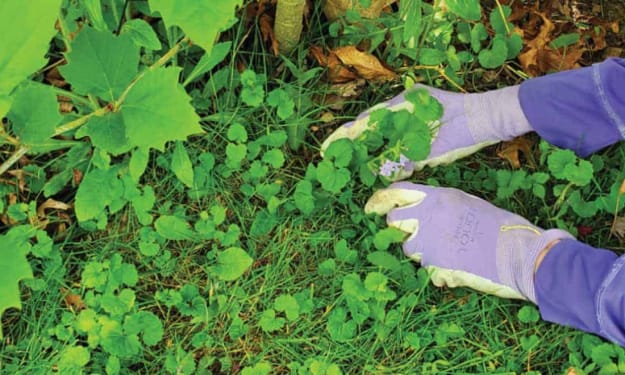
The Problem with Invasive Plants: Identification and Responsible Removal
This scenario plays out in gardens across the continent. Many invasive plants started as intentional garden introductions, valued for their beauty, vigor, and ease of growth. Those same qualities—rapid spread, adaptability, and resilience—make them ecological threats when they escape cultivation.
By Emma Wallace4 days ago in Earth



Comments
There are no comments for this story
Be the first to respond and start the conversation.