
Life may not have originated on Earth
Life should have originated in outer space


It has long been the consensus of the scientific community that modern life on Earth evolved from the first life on Earth over a long period, but the scientific community has no definite answer to the question of "where did the first life on Earth come from?
For the origin of life on Earth, there are two main views in the scientific community. The first view is that life should originate from the Earth and evolve gradually from a series of complex chemical processes in a specific environment of the Earth's "local" inorganic materials.
The second view is that life may not have originated on Earth, but that some small objects in outer space (e.g., comets and asteroids) may have carried with them the complex organic matter that constitutes life, and that when these small objects were captured by Earth's gravity and fell to Earth's surface, the material they carried may have evolved on Earth.
The second idea is more easily verified because "small bodies falling to the Earth's surface" happens all the time on Earth, and we can still find the remains of small bodies - meteorites - on Earth from time to time.
In the past, scientists have been working on the study of meteorites, and as the research continues, there is more and more evidence that life should originate from outer space. The first is that scientists have found that in many meteorite samples, in addition to the presence of more complex organic substances such as alcohols, sugars, and amino acids, there are also bases (Nucleobase), which are important substances that makeup life.
Bases are composed of elements such as carbon (C), nitrogen (N), and hydrogen (H). There are five bases in living organisms on Earth, including adenine, cytosine, guanine, thymine, and uracil, which are capable of forming base pairs and stacking on top of each other, and are These bases form base pairs and stack on top of each other, and are essential for the composition of deoxyribonucleic acid (DNA) and ribonucleic acid (RNA) in living organisms.
In the 20th century, scientists have discovered adenine, guanine, and uracil in meteorite samples, but the other two bases were not discovered due to the limitation of detection technology. The research did not stop in the 21st century, and with the help of increasingly advanced detection technology, scientists made a major discovery in 2020 - a protein.
The research came from a team led by Harvard astrophysicist Malcolm McGeoch, and the samples were taken from a meteorite named "Acer 086", which was found in the Sahara desert in 1990.
In their work, the researchers used advanced mass spectrometry techniques, which revealed the presence of a protein composed primarily of glycine and hydroxylysine amino acids in the meteorite sample, the general structure of which is shown below (note: the white, orange, gray, blue, red and green spheres in the diagram represent hydrogen, lithium, carbon, nitrogen, oxygen, and iron, respectively).
I believe we all know how important proteins are to life. It is no exaggeration to say that all known life on Earth needs proteins, and without this substance, life on Earth would not be possible, and the discovery of this complex organic macromolecular structure in meteorites is as significant as can be imagined.
By April 2022, the field of related research received another piece of good news: scientists discovered two bases in meteorites that had never been found before - cytosine and thymine.
The research comes from a team led by astrochemist Yasuhiro Oba of Hokkaido University, whose samples were taken from three meteorites: the Murray meteorite (discovered in 1950 in Kentucky, USA), the "Murchison meteorite" (discovered in 1969 in Victoria, Australia), the "The Tagish Lake meteorite (found in British Columbia, Canada, in 2000).
Using a technique known as high-performance liquid chromatography coupled with electrospray ionization high-resolution mass spectrometry (HPLC/ESI-HRMS), researchers found a variety of bases and their structural isomers in the meteorite samples, including cytosine and thymine, which means that all five of the bases found in living organisms on Earth have been found in meteorites. This means that all five bases of life on Earth have been found in meteorites.
Among the many small bodies in outer space, very few have fallen to the Earth's surface to form meteorites and have been found by humans, but in these meteorites, there are all kinds of organic materials, including proteins and the five bases needed for DNA and RNA, which indicates that complex organic materials for life are common in small bodies.
Scientists speculate that between 3.8 and 4.1 billion years ago, several rocky planets in the inner solar system (including Mercury, Venus, Earth, Mars, and the Moon) were "intensively bombarded" by small bodies (also known as the "late heavy bombardment period"), during which During this period, a large number of small bodies brought a variety of organic materials to Earth, thus providing an important material basis for the emergence of life on Earth.
In conclusion, although the scientific community is still unable to give a definitive answer to the origin of life on Earth, there is growing evidence that the first life on Earth may not have originated on Earth, but should have originated in outer space. It is conceivable that if this is the case, then life should be widespread in the universe; after all, there are many, many more planets like Earth in the universe.
About the Creator
Robert Jack
One of the secrets of emotional stability for adults is to keep the expectations of others to a minimum.
Keep reading
More stories from Robert Jack and writers in Earth and other communities.
Extraterrestrial life discovered in the solar system
What would it mean for mankind if one-day extraterrestrial life was discovered on a planet in our solar system? We would normally think that this is exciting news, as the discovery of extraterrestrial life would make humans feel less alone in the universe.
By Robert Jack4 years ago in Earth
UK must double down on renewables as wars drive up energy costs, experts say
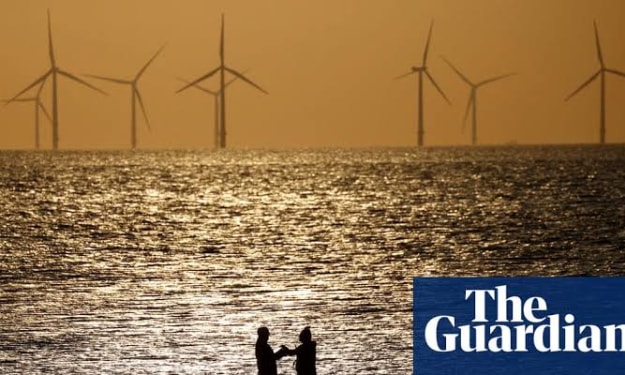
Britain must accelerate its transition toward renewable energy sources as geopolitical conflicts continue to drive global energy prices higher, according to leading energy analysts and climate policy experts. The warning comes as wars and political tensions across key energy-producing regions expose the vulnerability of countries still heavily reliant on imported fossil fuels. In recent years, the United Kingdom has made significant progress expanding renewable energy capacity, particularly in offshore wind and solar power. However, experts argue that the pace of the transition remains insufficient to shield the country from the volatility of international energy markets. Conflicts in the Middle East and Eastern Europe have demonstrated how quickly supply disruptions can translate into rising costs for households and businesses. Energy economists say the lesson from recent global crises is clear: the more dependent a country is on imported oil and gas, the more exposed it becomes to geopolitical shocks. Britain imports a substantial portion of its natural gas and refined fuel products, meaning instability in global supply chains can quickly affect domestic energy bills. During periods of international conflict, oil prices often spike due to fears that shipping routes or production facilities could be disrupted. Even rumors of attacks near key energy chokepoints — such as major pipelines or shipping lanes — can cause markets to react sharply. These fluctuations, analysts say, ultimately filter down to consumers through higher electricity and heating costs. Renewable energy sources offer a potential solution to this problem because they rely on domestic resources such as wind and sunlight rather than imported fuels. Once renewable infrastructure is built, operating costs remain relatively stable because there is no need to purchase fuel on global markets. The United Kingdom already operates some of the world’s largest offshore wind farms, and renewable energy now accounts for a significant share of the country’s electricity generation. Government data indicates that wind power alone has become one of the largest sources of electricity in Britain, particularly during periods of strong weather conditions. Despite this progress, energy specialists argue that further investment is essential. Expanding renewable generation capacity requires not only building more wind and solar farms but also upgrading the national electricity grid. A modernized grid would allow energy produced in remote offshore locations to be transmitted efficiently to cities and industrial centers. Energy storage is another critical piece of the puzzle. Because renewable sources like wind and solar are intermittent, large-scale battery systems or alternative storage technologies are needed to ensure a stable supply of electricity during periods when generation drops. Developing these systems will require both technological innovation and sustained financial investment. Some experts also emphasize the importance of diversifying the country’s renewable portfolio. While offshore wind remains a cornerstone of Britain’s energy strategy, solar power, tidal energy, and green hydrogen could also play important roles in the future energy mix. The government has already announced plans to increase renewable capacity dramatically over the next decade. Officials argue that reducing reliance on fossil fuels will not only strengthen national energy security but also help the country meet its climate targets. However, critics say policy uncertainty and slow planning approvals have sometimes delayed renewable projects. Industry leaders have urged authorities to streamline regulatory processes and provide clearer long-term incentives for investors. For many analysts, the link between energy security and climate policy has never been more obvious. Wars and geopolitical tensions have shown that fossil fuel dependence can create economic vulnerability, while domestically produced renewable energy offers greater stability. “The global energy system is changing,” said one energy policy researcher. “Countries that invest early in renewable infrastructure will be better protected from geopolitical shocks and price spikes.” As international conflicts continue to reshape global energy markets, the debate over Britain’s energy future is likely to intensify. For supporters of renewable power, the current moment represents both a warning and an opportunity — a chance to accelerate the transition toward a more secure and sustainable energy system.
By Fiaz Ahmed 6 days ago in Earth
Early March 2026: 4 Goals Accomplished
It's early March and I've now accomplished my 4th writing goal for the year of 2026. Before diving into the behind-the-scenes of it... why not tell you up front what that accomplishment was? I was published in a 2nd publication for this year. Published in Helix Literary Magazine out of Central Connecticut State University. You can read it for free right now!
By Stephen Kramer Avitabile6 days ago in Writers



Comments
There are no comments for this story
Be the first to respond and start the conversation.