
Life in the Holes: The Secret Ecosystems Hidden Beneath Our Feet
Not all life is found in sunlight. In fact, some of the most complex ecosystems on Earth thrive inside holes — places we often overlook, like tree trunks, animal burrows, underground tunnels, or deep crevices in rocks.

These hidden habitats are home to miniature worlds of creatures, fungi, bacteria, and insects. Though unseen, they are essential to the planet’s health and biodiversity. Let’s take a look into the ecosystems that live in holes — the unseen pockets of Earth where life quietly thrives.

Termite Mounds — Air-Conditioned Skyscrapers of the Soil
On the surface, a termite mound may look like a lump of dirt. But dig deeper, and you’ll find a highly organized city.
These towering structures, sometimes reaching up to 8 meters tall, are filled with a network of tunnels, chambers, nurseries, and even fungus farms. Inside, the colony is divided into castes — queens, soldiers, workers — each with a role.
Termites maintain perfect ventilation systems by carefully shaping holes and shafts to regulate heat and humidity. Their mounds are so efficient that architects have studied them to design better energy-efficient buildings.
In these holes, termites build civilizations.

Tree Holes — Forest Apartments for the Smallest Tenants
Tree holes, also called cavities, are found in the trunks or branches of older trees. They form naturally from rot, storm damage, or woodpecker drilling. What seems like a small space to us is a high-demand real estate for birds, bats, frogs, bees, and squirrels.
Each species uses the hole differently — owls nest, bats roost, frogs shelter, and insects breed. Some tree holes even collect rainwater, creating tiny ponds for mosquito larvae, tadpoles, or aquatic beetles.
One tree hole can support an entire community — an apartment complex in the woods.

Burrowing Owls — Birds That Live Like Groundhogs
Unlike most birds, burrowing owls don’t nest in trees. They live underground, using abandoned burrows dug by prairie dogs or ground squirrels. In some cases, they even dig their own tunnels.
These owls line their homes with dung — yes, actual poop — not for decor, but to attract insects for feeding their chicks. Their holes are cool in the summer, warm in winter, and protected from predators.
In a world of flying, this bird chose to live underground — and it works perfectly.

Crab Holes on Beaches — Tiny Labs of Coastal Life
Walk across a tropical beach at low tide, and you might see small holes in the sand — the homes of ghost crabs. These crustaceans dig deep burrows to hide from predators and heat during the day.
Each hole acts as a temperature-regulated shelter, and crabs emerge only at night to feed. The burrows also play a role in aerating the sand and supporting microbes that help decompose organic material.
Even in shifting sand, these holes serve as survival chambers.

Cave Entrances — Gateways to Subterranean Ecosystems
Caves may seem like empty rock hollows, but the truth is far more fascinating. In the entrance zones of caves — called “twilight zones” — a unique mix of surface and cave life coexists.
Bats roost in the ceilings, bringing in nutrients via guano (droppings), which feed fungi, bacteria, and insects. Spiders, beetles, and salamanders all play roles in this fragile ecosystem.
Further inside, in the total darkness, animals evolve without eyes or pigment. Some caves even support chemosynthetic bacteria that create entire food webs independent of sunlight.
A single hole in a rock can lead to a universe of specialized life.
Final Thoughts: The World Beneath and Within
We often think of ecosystems as forests, oceans, and plains — open, visible, grand. But life in holes tells a different story: that nature thrives in tight spaces, dark crevices, and hidden corners.
From termite mounds that breathe, to bats fertilising caves, and soil microbes holding the world together, these pockets of life show us that no space is too small for nature to adapt.
So the next time you pass by a hole in a tree, a burrow in the ground, or even a crack in a rock — know that it might be home to an entire world, quietly doing its part to keep Earth alive.
About the Creator
How Much Do You Need in an ISA for a Passive Income That Beats the State Pension?
For many people in the UK, the State Pension is expected to form the backbone of retirement income. But with rising living costs and growing uncertainty about the future, more savers are asking a crucial question: Can I build a passive income that beats the State Pension — and how much would I need in an ISA to do it?
By Aarif Lasharia day ago in Earth
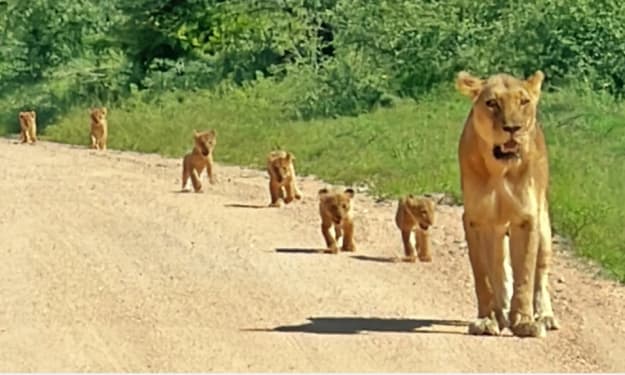
Tiny Lion Cubs Struggle To Keep Up With Mom
In the heart of the African savannah, life is a constant lesson for young animals. Few scenes are as endearing — or as heartwarming — as tiny lion cubs trying to keep pace with their mother. These little bundles of fur face a world full of challenges, from learning to hunt to avoiding dangers, all while depending on the guidance and protection of their experienced mom. Watching cubs wobble and tumble as they attempt to keep up with their mother reminds us that growing up, even in the wild, is a journey full of struggle, determination, and adorable missteps. The Early Days of Lion Cubs Lion cubs are born blind and helpless, usually in litters of two to six. For the first few weeks, they rely entirely on their mother for warmth, food, and safety. Even after opening their eyes and beginning to explore, the cubs are far from independent. The first months are crucial. Cubs learn social cues, hunting basics, and survival skills simply by watching their mother and the pride. But as anyone who has observed them knows, there’s often a huge gap between observation and action. Tiny cubs often struggle to match their mother’s pace, especially when she moves through long stretches of savannah or leads the family on patrols. A Mother’s Role in the Wild For a lioness, raising cubs is a full-time commitment. She hunts, defends her territory, and teaches her young, all while staying alert to predators such as hyenas, leopards, and even rival lions. The cubs, meanwhile, attempt to mimic her every move — often with clumsy yet charming results. A mother lion’s patience is remarkable; she frequently slows down, nudges them along, or stops to ensure no cub is left behind. These moments, while stressful for the tiny cubs, are vital learning opportunities. Struggling to Keep Up: Why It’s So Hard There are several reasons why tiny lion cubs have trouble keeping pace with their mother: Short Legs, Big Steps: Lion cubs’ legs are tiny and their coordination is limited, making it difficult to cover the same distance as an adult lioness. Curiosity: Cubs are naturally curious. A single butterfly or rustling bush can distract them, leaving mom to pause repeatedly. Energy Levels: Young lions tire quickly. Even with frequent naps, the cubs’ stamina is far lower than their mother’s. Learning Through Play: Play is not just fun; it teaches hunting, balance, and social skills. Running off to pounce on a sibling or chase an insect is all part of their education. Despite these challenges, the cubs’ determination to keep up demonstrates their resilience and growing understanding of the wild world. Lessons in Teamwork and Survival Every cub struggling to keep up is also learning crucial survival skills. The journey across the savannah is more than a test of speed — it’s a lesson in: Coordination: Cubs learn how to move efficiently across different terrains. Patience: They begin to understand the rhythms of adult life and the pace required for survival. Social Skills: Staying with the group teaches cubs how to interact with siblings and the pride, which is essential for their future roles. Observation: By following their mother, cubs study hunting techniques, territorial behavior, and predator awareness. Even the moments when cubs stumble or lag behind are essential for their development. These experiences prepare them for independence, which comes sooner than many might expect. The Cutest Moments in the Wild Anyone who has watched tiny lion cubs knows that their struggles are often irresistibly cute. Video clips from wildlife reserves frequently show cubs toddling along, tumbling over each other, or getting distracted mid-step. Observers often comment that these little stumbles reveal personality, determination, and playfulness, making them one of nature’s most heartwarming spectacles. While their mother is serious and focused, the cubs inject a sense of humor and lightness into life on the savannah. Why This Matters The struggles of lion cubs aren’t just adorable — they’re vital for understanding wildlife behavior. Conservationists and animal behaviorists use these moments to study growth patterns, social structures, and survival strategies in lion populations. These observations also highlight the importance of preserving natural habitats. Cubs must learn in a safe environment to survive; habitat loss, poaching, and climate change make these early struggles even more dangerous. Protecting the African savannah ensures that future generations of lions can experience the same lessons and playful tumbles. The Road to Independence Within a year, these tiny cubs will be more agile, faster, and more confident. By the time they reach two to three years old, males may begin to leave the pride, while females often stay and become caretakers themselves. Every misstep, tumble, and lagging moment is part of the journey toward strength, coordination, and independence. Watching them now gives us a glimpse of the challenges they will overcome, and the survival skills they will carry for life. A Celebration of Motherhood Ultimately, these scenes remind us of the incredible bond between mother and cubs. Her patience, vigilance, and teaching are the foundations of their future. The cubs’ struggles highlight the trials of growing up, while their determination showcases the resilience and beauty of wildlife. For those observing, it’s a powerful lesson in care, guidance, and perseverance, not just in lions but in the natural world as a whole. Final Thoughts Watching tiny lion cubs try to keep up with their mother is both entertaining and enlightening. It’s a story of growth, struggle, and resilience — a reminder that even the fiercest creatures start small, learning step by step. These little lions capture hearts while teaching life lessons: patience, determination, teamwork, and the importance of guidance. As they tumble and waddle across the savannah, they show us that growth is a process, one adorable misstep at a time. For wildlife enthusiasts, animal lovers, and anyone enchanted by nature, these tiny cubs are proof that even in the wild, love, care, and persistence are universal truths.
By Aarif Lasharia day ago in Earth



Comments
There are no comments for this story
Be the first to respond and start the conversation.