
Leaky Lids, Soggy Salads: Why Bagasse Bowls Are Winning the 2025 Takeout Race
Why Bagasse Bowls Are Winning the 2025 Takeout Race
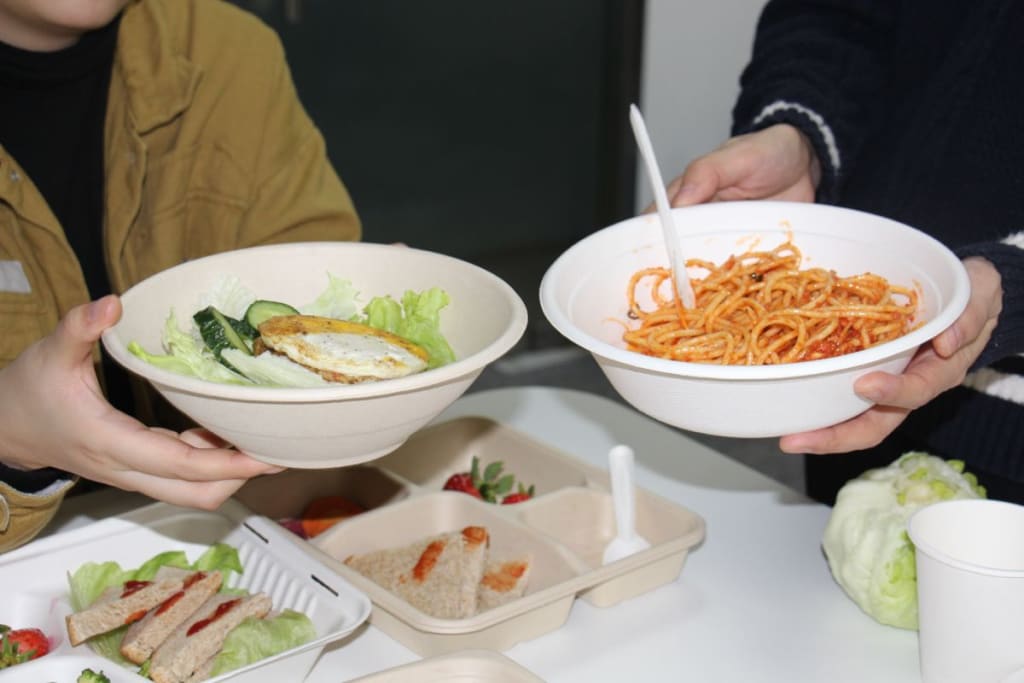
“Delivery window says 22 minutes,” the operator says, peering at a tray of hot noodles.
“And the lids?” asks the store lead.
“Warped again. Customers think we cheaped out.”
“What if the problem isn’t the route,” the regional manager replies, “but the bowl?”
If you’ve had this conversation in your own kitchen or boardroom, you’re not alone. As cities tighten single-use rules and customers scrutinize packaging claims, operators are re-evaluating the container—not the cuisine. That’s where sugarcane fiber (bagasse) comes in: a material that keeps soups hot, salads crisp, and brand promises intact. Early adopters report fewer leaks, faster packing, and better reviews—without blowing up unit economics. For buyers mapping SKUs, size ladders, and lids, start by reviewing the full families of bagasse bowls that mirror your current menu lineup.
What Bagasse Is (and Why It Behaves Better)
Bagasse is the fibrous residue left after pressing sugarcane. When molded into bowls, its cellulose-rich matrix forms dense walls with micro-porosity. In practice, that gives you:
Thermal resilience that holds up to hot fills and brief microwave reheat cycles.
Reduced condensate for chilled salads—fiber breathes just enough to limit “sweating,” which preserves crunch during a 15–35-minute courier run.
Stack strength that resists rim deformation under load.
Audit-friendly documentation for food-contact and compostability claims, easing retail onboarding and enterprise compliance reviews.
From a materials-science perspective, molded fiber’s stiffness-to-weight ratio and compressive strength often outpace thin-wall plastics of comparable grams per piece. Operators also like its “quiet” texture—no creaky lids in the expo line—and its consistent fit across size families when lids are specified correctly. If you’re piloting across multiple concepts, inventory one base and one premium coating spec, then control for sauce/fat content by SKU. For a quick scan of shapes and volumes used by salad, noodle, and grain-bowl brands, browse representative compostable fiber bowls to match your portions and lid types.
The Data Contrast That Actually Matters to Ops
Procurement doesn’t buy buzzwords; they buy outcomes. Across pilots we’ve tracked (internal ops dashboards, 2024–2025), moving from thin-wall PP or foam to molded fiber produced results in these ranges:
1.Leak and re-fire reduction (-28% to -45%)
Fewer split rims and lid pop-offs reduce remake tickets and comped orders—especially on oily, sauced SKUs.
2.Texture retention (+12% to +20% perceived freshness)
Customer comments mentioning “crisp,” “not soggy,” or “still warm” rise as condensation drops on cold builds and heat retention improves for hot bowls.
3. Pack speed (+6% to +10%)
Tighter friction-fit tolerances and a more rigid lip speed up lid application in the rush window.
4. Delivery density (+8% to +15% stack efficiency)
Stable rims and sidewalls allow higher tote stacking without collapse, improving courier throughput.
5.Complaint language shift
Review text shifts away from “messy/leaked” toward “clean/premium/eco,” which correlates with higher NPS in the first month post-switch.
These are not lab-bench hypotheticals; they’re the day-to-day wins that de-stress expo, cut waste, and lift perceived value.
Case Study: A 32-Unit Salad & Noodle Chain, Six Weeks to Stability
Context: A regional fast-casual brand struggled with two chronic issues—soggy toppings in cold bowls and lid warping on hot noodles.
Intervention: They re-spec’d to fiber for both categories: fiber-fiber lid pairs for hot SKUs, and fiber bases with clear compatible lids for cold SKUs to preserve merchandising.
Pilot Design: 6-week A/B across eight top movers, alternating stores weekly; tracked remake tickets, delivery tote density, and sentiment keywords from app reviews.
Results (median across stores):
Re-fires for packaging failures down 41%.
Tote density up 12% (more orders per run).
“Leaked/messy” mentions down 36%; “crisp/warm” mentions up 18%.
Net cost neutral after accounting for lower waste and higher order density.
For teams replicating thiats designed explicitly as a bagasse bowl with lid system so you’re valis, specify sealed-fit tolerances, lid material by temperature band, and coating claims by market. If you want a shortcut to SKU matching, look at formdating the pair, not just the base.
Spec Checklist Before You Roll Out
Hot vs. cold lid strategy: Fiber-fiber for heat; fiber base + clear compatible for merchandising cold builds.
Coating & claims: Confirm PFAS-free options where relevant; align text with local labeling rules.
Size ladder mapping: Sides (8–10oz), mains (12–16oz), shareables (24–32oz). Validate brim-fill weights against your recipes.
Friction-fit tolerance: Ask for test data on lid peel force and leak resistance; pilot with your messiest SKU.
Logistics math: Case pack, pallet count, and container cube—small changes in nesting can save entire pallets over a container.
Kitchen flow: Train expo on proper lid press points; add a 15-second “seal & shake” QC on saucy SKUs during the first week.
Why Bioleader Shows Up on Shortlists
Bioleader® is a plant-fiber tableware manufacturer known for factory-direct OEM/ODM, consistent QC across size families, and documentation that speeds retailer onboarding. Distributors in the U.S., EU, and APAC cite reliable lid fits and predictable lead times as the reasons Bioleader bowls become their default spec for new accounts. In 2025, as brands publish clearer Scope-3 packaging disclosures, teams appreciate Bioleader’s willingness to share bill-of-materials details under NDA and to co-design pilots that reduce waste without disrupting kitchen rhythm.
Quick Wins We See Most Often
Swapping just the top-3 leak-prone SKUs to bagasse can remove most remakes.
Standardizing on two lid materials (hot/cold) simplifies training and inventory.
Publishing a short “packaging use map” (which bowl for which recipe) cuts errors in week one.
FAQ
Are bagasse bowls microwave-safe and suitable for hot fills?
Yes. Properly specified bagasse bowls tolerate typical hot fills and brief microwave reheat. Always test with your highest-fat sauces and longest dwell times.
Do bagasse bowls contain PFAS?
PFAS-free options are available. Confirm the exact coating spec on your purchase order and align any “PFAS-free” claim with your local regulations.
Will bagasse bowls compost at home, or only in industrial facilities?
Decomposition is faster and more reliable in industrial composting. Home composting can work but depends on temperature, moisture, and aeration—avoid over-promising on labels.
How do bagasse bowls compare with paper bowls that use PE or PLA lining?
Paper-with-lining performs well for many menus, but molded fiber often delivers better stack strength, heat handling, and rim rigidity at similar gram weights. Pilot both for your messiest SKUs.
What sizes and lid options should I stock for salads and noodles?
Common ladders: 8–10oz for sides, 12–16oz for mains, 24–32oz for sharing. Choose fiber-fiber lid pairs for hot SKUs and compatible clear lids for chilled bowls to preserve display.
Conclusion: Change the Container, Keep the Menu
Back to that kitchen conversation. The route wasn’t the villain—the bowl was. Switching to molded fiber solved leaks, preserved texture, and simplified packing, all while supporting clearer sustainability reporting. In a year when customers read labels and cities read reports, packaging performance is brand performance. If you’re ready to cut re-fires, calm the rush, and lift reviews, the smartest 2025 upgrade might be a simple one: the right bowl, made from the right fiber, matched to the right lid.
About the Creator
Greenland: New Shipping Routes, Hidden Minerals – and a Frontline Between the US and Russia?
Once seen as a remote and largely isolated Arctic territory, Greenland is rapidly emerging as a focal point of global geopolitics. Climate change, melting ice, and technological advances are transforming the island into a strategic hub defined by new shipping routes, vast mineral resources, and growing rivalry between major powers, particularly the United States and Russia. As the Arctic opens up, Greenland’s geographic position and untapped potential are pushing it to the center of international attention, raising questions about security, sovereignty, and sustainable development. Melting Ice and the Opening of New Shipping Routes One of the most visible impacts of climate change in the Arctic is the reduction of sea ice, which is making previously inaccessible waters navigable for longer periods each year. New Arctic shipping routes, including passages near Greenland, promise shorter travel times between Europe, Asia, and North America. Compared to traditional routes like the Suez Canal, Arctic pathways can reduce shipping distances by thousands of kilometers, cutting fuel costs and emissions. For global trade, this could be transformative. Greenland’s coastal waters are increasingly important as potential transit corridors and support hubs for these routes. However, the expansion of Arctic shipping also raises concerns about environmental risks, maritime safety, and the lack of robust emergency infrastructure in the region. Hidden Mineral Wealth Beneath the Ice Beyond shipping, Greenland holds significant reserves of critical minerals, many of which are essential for modern technologies and the global energy transition. These include rare earth elements, lithium, graphite, uranium, and other strategic resources used in electric vehicles, wind turbines, batteries, and defense systems. As demand for these materials grows, Greenland is being viewed as a potential alternative to existing supply chains dominated by a small number of countries. This has increased interest from Western governments seeking to diversify mineral sourcing and reduce strategic dependencies. However, mining in Greenland is controversial. Local communities and policymakers must balance economic opportunities with environmental protection and cultural preservation. Greenland’s harsh climate and fragile ecosystems make resource extraction both technically challenging and politically sensitive. The United States’ Strategic Interest in Greenland The United States has long considered Greenland strategically vital, largely due to its location between North America and Europe. The US already maintains a military presence at Pituffik Space Base (formerly Thule Air Base), which plays a key role in missile warning systems and space surveillance. In recent years, Washington has renewed its focus on Greenland, emphasizing Arctic security, infrastructure investment, and cooperation with Denmark, which oversees Greenland’s foreign and defense policy. US interest is driven by several factors: protecting transatlantic security routes, countering rival powers in the Arctic, and ensuring access to critical minerals. Greenland is increasingly viewed as a frontline in maintaining Western influence in the High North. Russia’s Arctic Ambitions Russia, meanwhile, sees the Arctic as central to its economic and military strategy. It has invested heavily in Arctic military bases, icebreaker fleets, and energy projects, particularly along its northern coastline. Although Greenland is geographically distant from Russia’s main Arctic territories, Moscow closely monitors developments there. The island’s proximity to key Arctic sea lanes and North Atlantic routes makes it strategically relevant in any broader confrontation between Russia and NATO. As tensions between Russia and the West remain high, Greenland’s location places it near the intersection of competing security interests, increasing its geopolitical significance. Greenland Between Global Powers The growing attention from major powers puts Greenland in a delicate position. While the island seeks greater economic independence and development, it must navigate complex relationships with Denmark, the United States, and other international actors. Greenland’s government has emphasized the importance of maintaining control over its resources and ensuring that development benefits local populations. At the same time, geopolitical competition risks turning Greenland into a strategic chessboard rather than a partner in decision-making. This balancing act is becoming more difficult as Arctic competition intensifies. Environmental and Social Challenges Greenland is on the front lines of climate change. Melting ice sheets contribute to global sea-level rise, while local communities face changes to traditional livelihoods such as fishing and hunting. The expansion of shipping and mining could bring jobs and infrastructure, but it also threatens fragile ecosystems and raises concerns about pollution, habitat disruption, and long-term sustainability. Any future development in Greenland will require careful regulation, international cooperation, and meaningful engagement
By Aarif Lashari5 days ago in Earth
Top Australian Writers’ Festival Cancelled After Palestinian Author Barred
One of Australia’s most respected literary festivals has been cancelled following a fierce backlash over the decision to bar a Palestinian author from participating. What began as a programming dispute quickly escalated into a national debate about free speech, cultural inclusion, and political pressure in the arts. The cancellation has sent shockwaves through Australia’s literary community, raising urgent questions about whose voices are allowed on public platforms and at what cost.
By Aarif Lashari6 days ago in Earth
How, Too
Many people wonder how, too. You are not alone, and I am an expert. I will teach you how, too! First, you need to remit a small application fee and fill out an application describing the nature of your financial situation and how often payments will be made, as this will have great bearing on how well I teach you how, too.
By Harper Lewis3 days ago in Fiction




Comments
There are no comments for this story
Be the first to respond and start the conversation.