Latest Stories
Most recently published stories in Earth.
Moon Summary
The Moon is the Earth's only natural satellite and is the fifth largest moon in the Solar System. It is approximately 384,400 kilometers away from Earth and has a diameter of 3,476 kilometers. It is believed to have formed around 4.5 billion years ago from debris left over after a Mars-sized object collided with the Earth. The Moon has a heavily cratered surface and a very thin atmosphere. It has no liquid water and its surface is covered in a layer of fine dust called regolith. The temperature on the Moon can range from -173 degrees Celsius at night to 127 degrees Celsius during the day.
By Veerappan Vishwa3 years ago in Earth
The Complexities of Bird Migration: Understanding the Mechanisms and Impacts of Seasonal Movement in Birds
Bird migration is the seasonal movement of birds from one region to another, often driven by changes in food availability or weather conditions. Many species of birds migrate long distances, sometimes covering thousands of kilometers, in order to breed, feed, or overwinter in more favorable locations.
By Honor White Angel3 years ago in Earth
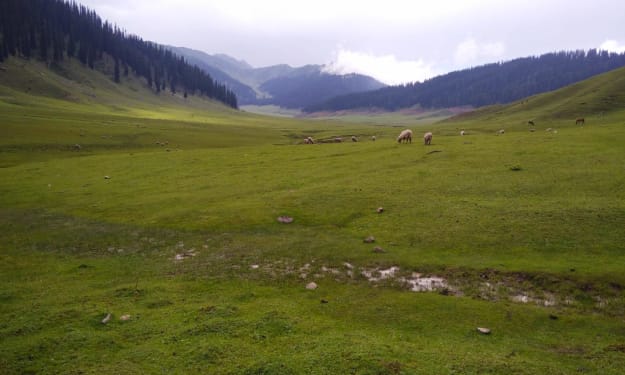
10 Unique Facts about Kashmir
1. Himalayan Ranges The state of Jammu and Kashmir (J&K), lying between latitude 32.28–37.06° and longitude 72.53–80.32°, is located in the northwestern part of the Himalayan mountain arc at an altitudinal range of 220 to 8611 m above mean sea level. The state shares its borders with the neighboring Indian states of Himachal Pradesh and Punjab on the south and with Pakistan and China in the west and east, respectively. It comprises mountain ranges starting from the Siwaliks in the south, followed by the Pir Panjal, the Greater Himalaya, the Zanaskar range, and finally the Karakoram in the north. The Zabarwan Hill range is right in backdrop of Dal Lake. Each of these ranges has its own unique landscapes, flora and fauna, and culture.
By Ayesha Junaid3 years ago in Earth
The impact of climate change on the world's oceans
Climate change is no joke, but the oceans are definitely getting the last laugh - a bitter, sorrowful one. As the Earth's temperature continues to rise, the oceans are bearing the brunt of the effects. From sea level rise to ocean acidification, the impact of global warming on marine ecosystems is clear and alarming. In this post, we will explore the various ways in which the changing climate is causing the oceans to laugh - and cry - and the potential consequences for marine life and coastal communities.
By Mohammad Hammash3 years ago in Earth
Ancient Magic
The aura cast by an open fire is mesmerizing. It captures our attention in an instant, drawing us in. It holds the power to both soothe our soul and ignite our imagination. There is something about fire that beckons to us: Be still a moment. Watch me dance.
By Mollie McGurk3 years ago in Earth
"Understanding Earthquakes: Causes, Effects and How to Prepare"
Earthquakes are one of the most destructive natural disasters that can occur. They are caused by the movement of tectonic plates beneath the Earth's surface, which can lead to severe ground shaking, landslides, and even tsunamis.
By Tanay Lonare3 years ago in Earth
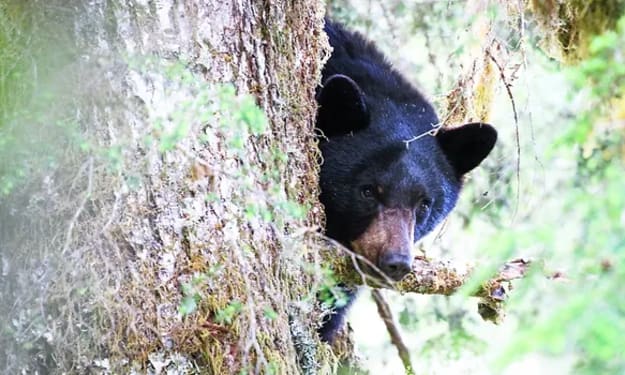
Bear Tale
“What is it, Lupin?” The silver fur of his topline was standing on end as he furiously sniffed the air, head raised, nostrils flaring. I knew whatever scent had captured his intrigue wasn’t the usual deer that he joyously chases on our hikes here. This was something different. I leashed him up out of caution but carried on without too much concern.
By Mollie McGurk3 years ago in Earth