
"Kepler-22b: Cosmic Clash of Habitability"
"Unraveling Mysteries Beyond Our Solar System"
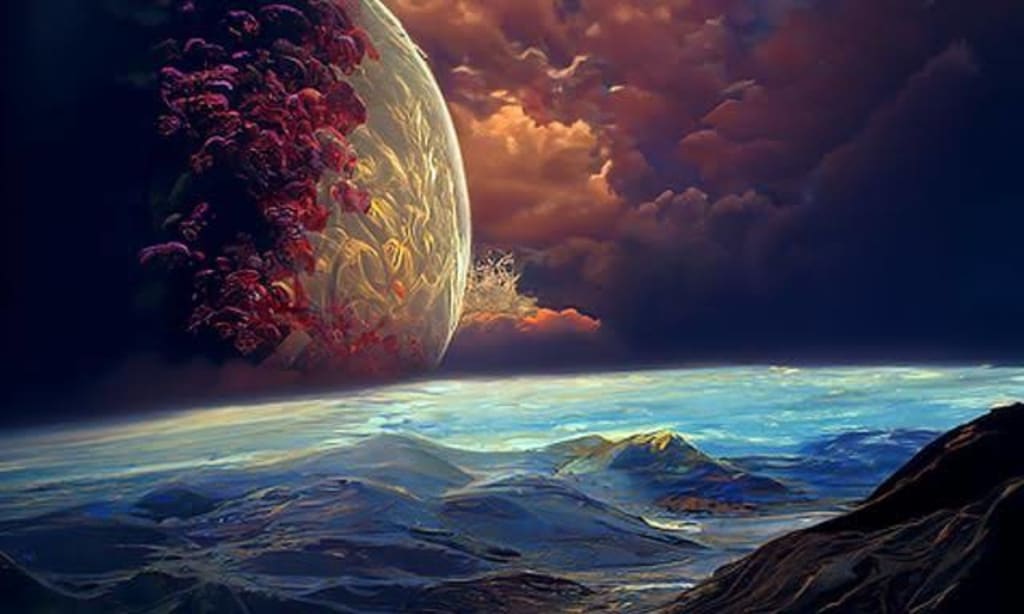
In the vast expanse of the universe, a celestial marvel awaits - Kepler-22b. Nestled 635 light years away from our blue planet, this extraordinary exoplanet is nestled within the habitable zone of a sun-like star. A thrilling prospect looms - the potential for liquid water, and where water flows, life might thrive. The allure of Kepler-22b beckons us to explore the mysteries of this distant world, but venturing there raises countless questions.
Kepler-22b's discovery, an exoplanet beyond our solar system, was no easy feat. Hiding in the glare of its star, it eluded telescopes' gaze. However, scientists devised a clever solution - observing the star itself. By detecting variations in its brightness caused by Kepler-22b blocking its light, they unveiled the secrets of this distant cosmic entity.
The realm of Kepler-22b boasts breathtaking dimensions. Over 300 times more massive than Earth, with a radius two and a half times larger, its grandeur is unparalleled. A year on this alien world lasts 290 days, 15% closer to its star than Earth to the Sun. The proximity to its sun-like star means a comparable amount of sunlight graces Kepler-22b, offering a chance for habitable temperatures.
Kepler-22b's climate paints a picture of potential habitability, akin to a serene spring day on Earth. With temperatures ranging from 15 to 22 degrees Celsius, life might indeed find a hospitable home. The tantalizing proximity to its star allows for a welcoming climate, though the mysteries of this world run deep.
However, beneath the surface lies an intriguing enigma. Kepler-22b's potential rotation on its side, akin to Uranus, poses unforeseen complications. The poles endure either prolonged darkness or perpetual sunlight for half a year, causing dramatic temperature fluctuations. The once-mild climate could become volatile and inhospitable for human life.
Despite the challenges, hope glimmers in the depths of Kepler-22b. Studies suggest an ocean up to 50 meters deep adorns the rocky surface, a natural climate controller. The ocean's capacity to store heat during summers and release it during winters results in a mild, stable climate - a promising refuge.
Yet, one question lingers - how would one embark on a 635-year journey to Kepler-22b? Even traveling at the speed of light, such a voyage remains beyond the realms of possibility. Hibernation, like cryogenic sleep, offers a potential solution. NASA's cryo-sleep chamber can lower body temperatures to 32 degrees Celsius, inducing natural hibernation with catheters providing sustenance and removing waste. Despite the perilous endeavor, the allure of Kepler-22b continues to captivate the human imagination.
However, the cosmic drama intensifies when confronting Kepler-22b's gravity. Potentially twice as strong as Earth's, the gravity would present formidable challenges. A 10-kilogram sack of potatoes would double in weight, a mere glimpse of the burden you would face. Intense strength training to increase physical prowess becomes a necessity to navigate this new rocky realm.
As settlers dream of embarking on this cosmic voyage, they must consider the well-being of their fellow Earthlings. Plants and animals brought along must adapt to the higher gravity, potentially leading to extraordinary evolutionary changes. And with higher gravity, humans themselves would require substantial physical preparation to walk on Kepler-22b.
Yet, the enigma of Kepler-22b extends further. The nature of its composition remains uncertain - is it a rocky planet like Earth or gaseous like Neptune? Even if it is rocky, its dense atmosphere could render it inhospitable, like Venus. If so, robots might construct underground shelters for the settlers' survival.
With each discovery, Kepler-22b reveals more of its cosmic secrets, leaving humanity awestruck. The allure of exploring distant worlds persists, yet Earth remains our perfect habitat, a fragile oasis amid the cosmos. As we peer into the cosmos' grandeur, the fragility and significance of our blue planet become evident.
Thus, the cosmic dance of celestial bodies unfolds, an intricate tapestry of worlds, each with its own mysteries and potential. The wonders of the universe continue to beckon humanity, tantalizing us with visions of distant shores. As we ponder the cosmic clash of Kepler-22b's awakening, we remain humbled by the complexities of the universe, eager to explore its marvels while cherishing our home on Earth.
About the Creator
Keep reading
More stories from Jubair Ahmed Tushar and writers in Earth and other communities.
"Cosmic Clash: The Rocky Giant's Awakening"
Amidst the vast expanse of the cosmos, a mesmerizing cosmic drama was about to unfold. Jupiter, the king of the solar system, was on the verge of an extraordinary transformation. Once a majestic gas giant, it was now about to embark on a daring metamorphosis, evolving into a massive Rocky Giant unlike anything seen before.
By Jubair Ahmed Tushar3 years ago in Fiction
“Painful Times in My Marriage” — Melinda French Gates Reacts to Ex-Husband in Epstein Files
Public attention has intensified after comments attributed to Melinda French Gates referenced “painful times” in her marriage while discussions surrounding documents connected to Jeffrey Epstein continue to surface in public discourse. The situation has reignited conversations about accountability, public image, and the long-lasting impact of associations with controversial figures.
By Aarif Lashariabout 12 hours ago in Earth
Beyond the Basic Green: AI's Picks for the Most Stunning Colorful Houseplants
The secret to keeping these botanical jewels radiant isn't just guesswork. By understanding light—the non-negotiable fuel for all plants—and learning to measure it, you can stop struggling and start showcasing. This guide, informed by plant care technology and horticultural expertise, will help you select and sustain the most stunning colorful houseplants.
By Emma Wallaceabout 19 hours ago in Earth


Comments
There are no comments for this story
Be the first to respond and start the conversation.