
Jellyfish Explosion
The one thing stopping jellyfish from taking over

Over the past two decades, jellyfish have begun to overwhelm our oceans.
In New Zealand, divers swat off millions of stinging jellyfish
each no larger than a grain of pepper.
In Sweden, a massive cluster of moon jellyfish
shut down one of the world’s largest nuclear reactors
by clogging the plant’s essential pipes.
And in the Sea of Japan, thousands of 200 kilogram Nomura’s jellyfish
with bells two meters in diameter swarm fishermen,
snapping nets and devouring local fish.
Around the world, these animals voraciously consume fish eggs and larvae,
routinely undermine marine farming efforts,
and outcompete adult fish by consuming the resources they need to survive.
If things stay on their current trajectory,
we could be headed for a future where the entire ocean is thick with jellyfish.
So, is there anything that can keep these gelatinous creatures under control?
Enter, the humble sea turtle.
There are a wide range of marine animals that feed on jellyfish,
but sea turtles are among their most ancient predators.
And while every known species of sea turtle preys on jellyfish
at some point in their lives,
none consume quite as many as the leatherback.
Leatherbacks are the largest species of sea turtle,
and they eat jellyfish almost exclusively,
devouring well over 1,000 metric tons of them over their roughly 50-year lifespans.
This is particularly remarkable because jellyfish are 95% water
and very low in calories,
so to maintain a healthy weight,
the average 500 kilogram leatherback
needs to eat roughly 400 kilograms of jellyfish every day.
That’s roughly the same weight as a grand piano.
And while some sea turtle species have been documented
selectively eating their preys’ protein-rich gonads,
leatherbacks eat jellyfish whole—
mowing down huge swaths of unsuspecting jellies.
Normally, jellyfish aren't quite this defenseless.
Most species have tentacles covered in cells called cnidocytes,
which contain venomous harpoons coiled and ready to launch.
These barbed structures, known as nematocysts,
are released on contact.
Jellyfish frequently use this sting to paralyze and kill their food,
and it can also irritate the skin of would-be intruders.
But it's completely useless against sea turtles.
Most of these reptiles have thick scales covered in keratin—
the same material that makes up nails and claws.
This leathery armor protects their skin while they hunt,
and any captured prey that tries to escape is impaled
on the keratinized spikes lining the leatherback’s esophagus.
For most sea turtles, these adaptations make individual jellyfish easy prey.
However, a jelly population’s true defense mechanism
is in how quickly they can reproduce.
Almost all jellyfish species have evolved to reproduce both sexually and asexually,
allowing them to increase their numbers with or without a partner.
In tropical environments,
jellyfish reproduce constantly throughout the year.
But in more temperate climates,
species often reproduce all at once in a massive bloom,
where jellies multiply at alarming rates.
And humanity is making these blooms much more frequent.
Fertilizer runoff from farms introduces chemicals
that simultaneously kill other fish and prompt blooms.
High water temperatures caused by climate change
speed up jellyfish reproduction and extend the reproductive season.
Meanwhile, both marine construction and pollution
dramatically increase the surface area for jellyfish polyps
to attach, grow, and mature.
All these issues require a wide range of policy-based solutions.
But one major way to prevent jellyfish populations from getting out of hand
is to protect their natural predators—
many of whom are currently under threat.
Small-scale fisheries that are essential to communities in Mexico and Peru
often use gillnets,
which unintentionally capture and kill hundreds of sea turtles each year.
In the Eastern Pacific, these practices could drive leatherbacks to extinction
in the next 60 years.
Fortunately, some researchers have already developed inexpensive tools
to minimize these risks.
Attaching green LED lights to gillnets has proven useful
for allowing sea turtles, dolphins, and even seabirds to avoid fishing gear.
Solutions like this should allow small-scale fishers
to support their communities
while minimizing their impact on our leathery ocean defenders.
About the Creator
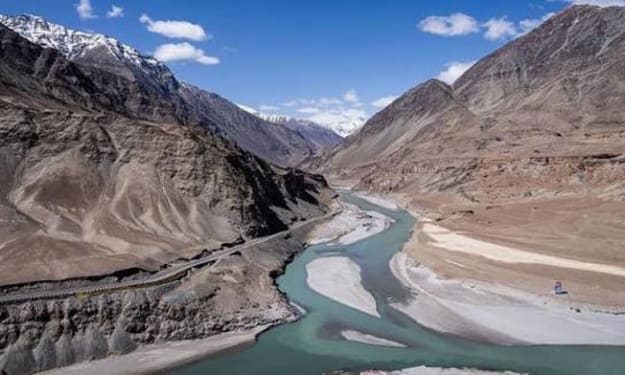
Himalayas Bare and Rocky After Reduced Winter Snowfall, Scientists Warn
The Himalayas, often described as the world’s “Third Pole,” are facing a dramatic and worrying transformation. Scientists are warning that reduced winter snowfall is leaving vast stretches of the mountain range bare, rocky, and increasingly vulnerable to long-term environmental damage. Once known for their thick snow blankets and powerful glaciers, parts of the Himalayas are now showing exposed rock earlier than ever before—an alarming sign of climate stress in one of Earth’s most critical ecosystems. A Visible Change in the World’s Highest Mountains Winter snowfall plays a vital role in the Himalayan climate system. Snow acts as a protective layer, insulating glaciers and regulating the slow release of meltwater into rivers during warmer months. However, researchers monitoring satellite data and ground stations report that recent winters have brought significantly less snowfall across large areas of the range. As a result, snowlines are rising higher up the slopes, leaving lower and mid-altitude regions exposed. This has turned once-white mountain landscapes into expanses of dark rock, which absorb more heat from the sun, accelerating warming in a dangerous feedback loop. Why Reduced Snowfall Matters Snow is more than a scenic feature—it is essential to the health of Himalayan glaciers. When snowfall declines, glaciers lose their main source of replenishment. At the same time, exposed ice and rock melt faster under direct sunlight. Scientists warn that this imbalance is speeding up glacier retreat across the Himalayas. Many glaciers are now shrinking at rates not previously recorded, threatening the long-term stability of water systems that support nearly two billion people across South and Southeast Asia. Impact on Asia’s Major Rivers The Himalayas feed some of the world’s most important rivers, including the Indus, Ganges, Brahmaputra, Yangtze, and Mekong. These rivers depend on seasonal snow and ice melt to maintain consistent flow throughout the year. Reduced snowfall means less stored water for the dry season. In the short term, faster melting can cause floods and landslides. In the long term, however, shrinking glaciers could lead to water shortages, affecting agriculture, hydropower, and drinking supplies across multiple countries. A Growing Risk of Disasters Bare, rocky slopes are far more unstable than snow-covered ones. Snow helps bind loose material together, while exposed rock and soil increase the likelihood of landslides and avalanches. Scientists have already observed a rise in slope failures and glacial lake outburst floods in the region. As glaciers retreat, meltwater often accumulates in fragile lakes dammed by loose rock and ice. These lakes can burst suddenly, releasing destructive floods that threaten mountain communities and downstream infrastructure. Climate Change at the Core Researchers agree that climate change is the primary driver behind the declining snowfall. Rising global temperatures are altering weather patterns, causing more winter precipitation to fall as rain rather than snow. Even small temperature increases at high altitudes can drastically change how moisture behaves. Additionally, warming oceans and shifting atmospheric circulation are affecting the timing and intensity of winter storms that traditionally brought snow to the Himalayas. Effects on Local Communities and Wildlife Mountain communities that rely on predictable snowfall for farming, tourism, and water storage are already feeling the effects. Farmers report changes in planting cycles, while winter tourism has declined in some regions due to unreliable snow conditions. Wildlife is also under pressure. Species adapted to cold environments are losing habitat as snow cover shrinks. Plants that depend on snowmelt are struggling to survive in drier, warmer conditions, disrupting fragile alpine ecosystems. Scientists Call for Urgent Monitoring and Action Experts stress the importance of improved monitoring of snowfall, glacier health, and water flows across the Himalayan region. Better data can help governments plan for future water management challenges and disaster risks. At the same time, scientists emphasize that local adaptation alone is not enough. Reducing global greenhouse gas emissions remains critical to slowing temperature rise and preserving what remains of the Himalayan snow and ice. What the Future Holds If current trends continue, large parts of the Himalayas could see permanent changes within decades. Reduced snowfall and accelerating glacier loss may reshape landscapes, ecosystems, and human livelihoods on an unprecedented scale. The sight of bare, rocky Himalayan slopes is more than a visual change—it is a warning signal. The world’s highest mountains are responding rapidly to a warming planet, and the consequences will extend far beyond the peaks themselves.
By Fiaz Ahmed Brohi5 days ago in Earth
Biochar: Unlocking the Potential for Climate Change Mitigation and Carbon Markets
Biochar is created through the process of pyrolysis, where organic materials such as agricultural waste, wood, or even certain types of plastic are heated in the absence of oxygen. This process breaks down the biomass into three main products: gas, liquid (bio-oil), and solid carbon-rich residue—biochar. Unlike organic matter that decomposes naturally, releasing carbon dioxide (CO₂) into the atmosphere, biochar locks carbon in a stable form that can persist in the soil for hundreds or even thousands of years.
By Bestonpyrolysis8 days ago in Earth



Comments
There are no comments for this story
Be the first to respond and start the conversation.