
“It has ventilation systems, food storage, nurseries, toilets and highways” – 11 animals that build villages, towns and even cities
“From termite towers to coral reefs, these animals create complex communities complete with ventilation, nurseries, and transportation networks.”

Nature’s architects don’t wear hard hats or use blueprints, yet their constructions rival human engineering in complexity and purpose. Across forests, deserts, oceans, and underground worlds, animals build elaborate homes complete with ventilation systems, food storage rooms, nurseries, waste disposal areas, and even transportation routes that function like highways.
These structures are not random shelters—they are carefully designed environments that protect against predators, regulate temperature, and support entire communities. Some of these animal-built habitats are so massive they can be seen from space, while others operate as living cities beneath our feet.
Here are 11 extraordinary animals that build villages, towns, and even cities of their own.
1. Termites – The Masters of Megastructures
Termites are the undisputed kings of animal architecture. Their towering mounds can reach over 30 feet tall and include intricate ventilation systems that regulate temperature and oxygen flow. Inside, there are specialized chambers for the queen, nurseries for young termites, food storage rooms for fungus farming, and tunnels that function as highways connecting different parts of the colony.
A single mound can house millions of termites, making it one of the closest examples of a true insect city.
2. Ants – Underground Civil Engineers
Ant colonies resemble underground towns with clearly defined districts. They construct nurseries, food storage chambers, waste disposal zones, and ventilation shafts that allow air circulation deep below the surface.
Leafcutter ants even cultivate fungus gardens inside their nests, essentially running agricultural centers. Some ant networks span several acres and contain thousands of entrances, forming interconnected underground cities.
3. Prairie Dogs – The Architects of Grassland Towns
Prairie dogs build vast tunnel systems known as “prairie dog towns,” which can stretch for miles. These burrows contain nesting chambers, listening posts, and escape routes. Separate tunnels are often designated for sleeping, food storage, and waste.
Their communities support many other species, making prairie dog towns important ecological hubs.
4. Beavers – Engineers of Aquatic Cities
Beavers don’t just build lodges—they reshape entire landscapes. By constructing dams, they create wetlands that protect their homes and provide food resources.
Inside a beaver lodge are dry sleeping chambers, underwater entrances for predator protection, and ventilation holes to circulate air. Entire beaver colonies can transform rivers into thriving aquatic villages that benefit countless other species.
5. Naked Mole Rats – Subterranean Metropolises
Naked mole rats build complex underground networks with tunnels stretching several miles. Their colonies include sleeping chambers, food storage areas for roots and tubers, nurseries for young, and designated toilet zones.
They live in highly organized social systems similar to ants or bees, with a queen and specialized workers maintaining their underground city.
6. Coral Polyps – Living Cities of Stone
Coral reefs are some of the largest animal-built structures on Earth. Tiny coral polyps secrete calcium carbonate to build massive reef systems that provide homes for thousands of marine species.
These reefs contain channels for water flow, protected nurseries for young fish, and food-rich zones. The Great Barrier Reef is so large it can be seen from space—a true underwater metropolis.
7. Weaver Birds – Aerial Housing Complexes
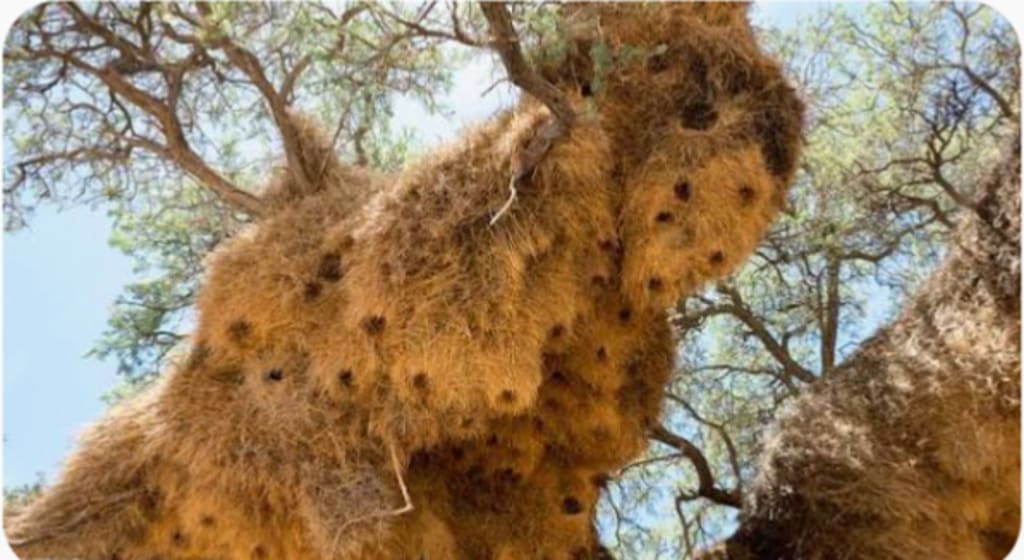
Weaver birds construct intricate hanging nests woven from grass and leaves. Some species build massive communal structures with hundreds of separate nest chambers, each serving as a private apartment for a bird family.
These nests often include rainproof roofs, ventilation holes, and reinforced entrances to keep predators out. Entire trees can become bird apartment buildings.
8. Wasps – Paper Cities in the Sky
Social wasps create elaborate paper nests made from chewed wood fibers. These nests contain hexagonal chambers used for raising larvae, storing food, and resting.
Some wasp colonies can house thousands of individuals and grow into multi-layered structures that resemble hanging skyscrapers, complete with airflow corridors and guarded entrances.
9. Spiders – Web-Based Infrastructure
While spiders don’t build cities in the traditional sense, some species create vast web colonies covering entire trees or bushes. These webs act as highways for movement, hunting platforms, and shared living spaces.
Social spiders cooperate to maintain and expand these networks, forming living communities suspended in silk.
10. Meerkats – Desert Tunnel Villages
Meerkats dig extensive burrow systems in arid regions. These burrows include sleeping chambers, emergency exits, and shaded areas that help regulate temperature.
Their tunnel networks protect them from predators and extreme heat, functioning as underground desert villages where families live and raise young together.
11. Penguins – Stone Town Builders
Certain penguin species, such as Adélie penguins, build nesting colonies using stones. These colonies can contain thousands of nests arranged in organized clusters.
Each nest serves as a home for breeding pairs and chicks, and the colony functions like a bustling coastal town filled with constant movement, communication, and cooperation.
Nature’s Urban Planners
What makes these animal cities remarkable is not just their size, but their efficiency. Many of these structures include features humans consider modern innovations: climate control, sanitation systems, organized transport routes, and specialized living spaces.
These animal-built environments also show how cooperation and instinct can create complex systems without centralized planning. Each individual follows simple rules, yet together they produce intricate cities that support entire populations.
Scientists continue to study these natural designs for inspiration in sustainable architecture, ventilation technology, and urban planning. Termite mounds have influenced energy-efficient building designs, and beaver wetlands inspire flood management strategies.
Final Thoughts
From termite towers and ant cities to coral reefs and bird apartment complexes, animals prove that architecture is not uniquely human. These creatures have been designing and constructing functional communities for millions of years—long before humans laid their first bricks.
Their villages and cities are reminders that intelligence comes in many forms, and that nature remains the greatest engineer of all. The next time you see a mound of dirt, a cluster of nests, or a coral reef beneath the waves, remember: you are looking at a thriving city built without machines, powered only by instinct, teamwork, and evolution.
About the Creator
Sajida Sikandar
Hi, I’m Sajida Sikandar, a passionate blogger with 3 years of experience in crafting engaging and insightful content. Join me as I share my thoughts, stories, and ideas on a variety of topics that matter to you.
Keep reading
More stories from Sajida Sikandar and writers in Earth and other communities.
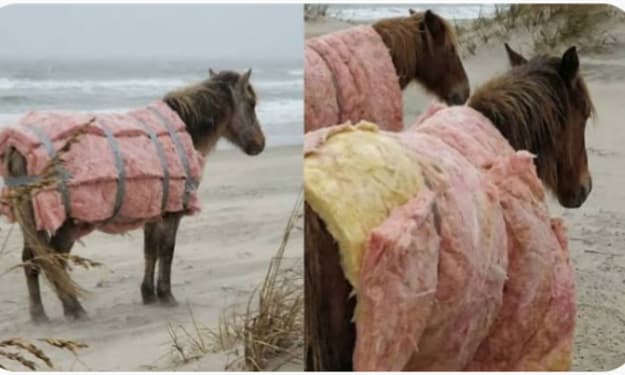
No, North Carolina Wild Horses Were Not Wrapped in Insulation
You might have seen some shocking images circulating online: wild horses on a North Carolina beach supposedly wrapped in pink insulation by volunteers trying to “help” them survive the winter. The photos went viral, sparking outrage, concern, and a flurry of social media shares.
By Sajida Sikandar3 days ago in Earth


Comments
There are no comments for this story
Be the first to respond and start the conversation.