
It Doesn’t Photosynthesize. It Glows. And It Looks Right at You.
It blooms for only days each year, deep in the shadows of the forest floor. But when it does—nature reveals one of its strangest and rarest secrets.

Beneath the Forest Floor, Something Waits
In a silent corner of a tropical forest, buried beneath damp soil and layers of fallen leaves, something stirs. It's not an animal. It's not even green. It doesn’t photosynthesize, and it has no leaves. But when the rains fall just right, it emerges—not with a roar, but with a glow.
This is no ordinary flower. This is Thismia thaithongiana, more enchantingly called Phisawong Owl’s Eye—a plant so rare, so mysterious, it feels like it belongs in a storybook rather than on Earth.
A Glimpse of an Owl’s Gaze
The name “Owl’s Eye” isn’t poetic exaggeration. When this tiny blossom pushes through the forest floor, it reveals a shape that looks hauntingly like the face of an owl—piercing, symmetrical, and glowing emerald green.
Its “petals” form horn-like structures, almost like the feathers of an owl’s head. Arranged in two circles—three outer ones spread apart, and three inner ones fused into a cap-like dome—it gives the illusion of a creature watching silently from the undergrowth.
Photographers who’ve been lucky enough to capture it say the flower appears to stare back—as though the forest itself has eyes.
No Leaves, No Light, No Problem
Unlike most plants, Phisawong Owl’s Eye doesn’t rely on sunlight. In fact, it can’t even perform photosynthesis. It’s part of a rare group of plants called mycoheterotrophs—organisms that steal nutrients from fungi beneath the soil.
The fungi it depends on are themselves connected to the roots of trees, meaning this plant indirectly feeds through an underground exchange system. It’s an elegant form of ecological parasitism, where the plant survives by tapping into life beneath the surface.
This means the flower spends almost the entire year completely underground, invisible, waiting for the right conditions to bloom for just a few short days.
A Bloom That Lasts Only Days
The life of Phisawong Owl’s Eye is brief and secretive. It only emerges during the end of the rainy season, usually around October, and only for a short time—just enough to reproduce and disappear again.
Its bloom is small—only around 2 to 8 millimeters long, easily missed by the human eye. But for those who know where and when to look, its brief appearance is like witnessing a rare celestial event.
It does not appear every year, nor in every place. Sometimes it vanishes entirely for years, making sightings a thrill for researchers and nature lovers alike.
Found Only in One Place on Earth
This plant doesn’t grow in gardens or parks. It isn’t found along hiking trails or near rivers. Phisawong Owl’s Eye has, so far, only been discovered in a single mountainous area within a remote tropical forest sanctuary.
It tends to appear under dwarf palms, on limestone-rich slopes, often surrounded by moss, rocks, and deep shade. The area is not easy to reach—another reason why this flower has remained hidden from the world for so long.
This level of endemism—when a species is found in only one location—is part of what makes it so special, and so vulnerable.
A Flower That Won the World’s Gaze
In 2024, a striking photo of the Phisawong Owl’s Eye won Gold in the Plants & Fungi Category of the World Nature Photography Awards. The image captured not only its beauty, but also the mystery and glow that makes the flower so otherworldly.
It was this photo that introduced the flower to global audiences, sparking interest among scientists, photographers, and nature lovers alike.
In a world overflowing with familiar plants and cultivated flowers, this tiny, wild blossom captured the imagination of thousands—reminding us that mystery still thrives in untouched corners of the Earth.
A Symbol of Nature’s Hidden Secrets
Phisawong Owl’s Eye reminds us of something easy to forget: not all life is obvious.
Some of the planet’s most unique organisms are not loud or large. They don’t dominate forests or tower over landscapes. Instead, they survive in shadows, beneath roots, in the quietest places—thriving where almost no one looks.
This plant doesn’t demand attention. It simply waits. And when the conditions are perfect, it appears, glows, and vanishes again—like a whispered secret between the Earth and those patient enough to notice.
Conservation Through Curiosity
The rarity of Phisawong Owl’s Eye means it is extremely vulnerable to habitat loss. Since it relies on very specific conditions—certain soil, fungi, forest types, and weather patterns—even small disturbances could erase it forever.
But here’s the beautiful part: curiosity leads to conservation.
The more we learn about rare species like this, the more we value the ecosystems that support them. By protecting the forests where they live, we’re also protecting hundreds of other unseen species, each with their own quiet story.
Final Thoughts
The Phisawong Owl’s Eye isn’t a flower you’ll see in bouquets or plant nurseries. You won’t find it growing by the roadside or blooming in spring gardens. It belongs to another world—a slower, quieter one beneath the forest floor.
But in its silence, it speaks volumes. It tells us that beauty doesn’t always seek the spotlight, and that mystery still lives in the soil beneath our feet.
And maybe, just maybe, the forest is watching us back.
About the Creator
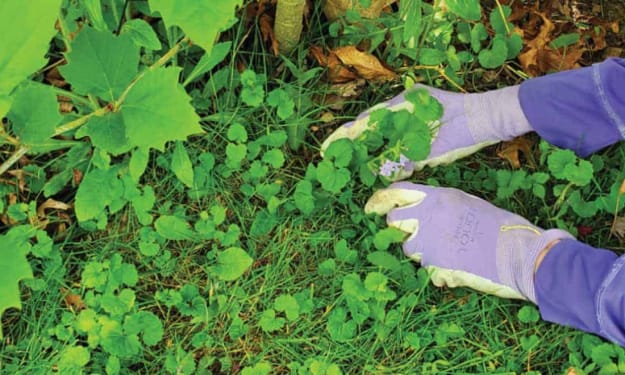
The Problem with Invasive Plants: Identification and Responsible Removal
This scenario plays out in gardens across the continent. Many invasive plants started as intentional garden introductions, valued for their beauty, vigor, and ease of growth. Those same qualities—rapid spread, adaptability, and resilience—make them ecological threats when they escape cultivation.
By Emma Wallace6 days ago in Earth



Comments (1)
My name is Linda, and I’m writing this as a form of healing and hope. I was targeted by someone pretending to be a financial advisor. I trusted them, and over time I lost close to $95,000. It nearly broke me emotionally. I couldn’t understand how I’d been so misled. Through a friend, I learned about Mr Skipp Expert Recovery. I reached out cautiously, unsure of what to expect. But their professionalism and kindness put me at ease. In time, they helped me recover every penny. If you’re suffering in silence, please know that there’s help. I’m living proof.