
Is Rainwater Safe to Drink? Purification Methods You Need To Know For Free Water
No Matter What This World Brings

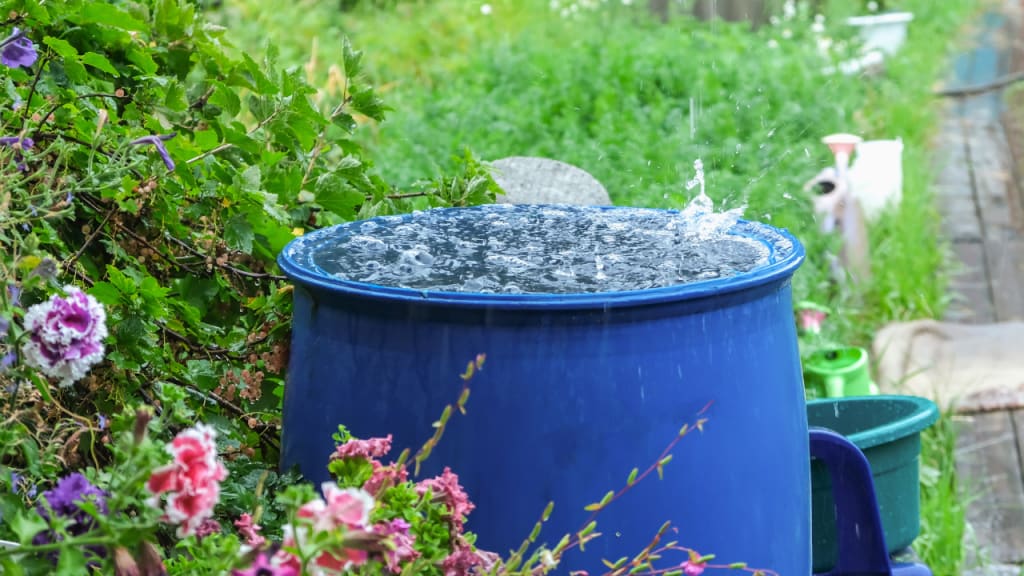
Whether you're considering collecting rainwater for disaster readiness or to help you get free water for life, there are several things you should consider before you sip that first drink. Though free of chemicals and pollution, rainwater seems to be the purest gift from nature; reality says otherwise.
Rain does not land from the heavens in a perfect, unspoiled form. Rather, it absorbs pollutants from the air, rooftops, and even the gathering containers themselves. We won't even talk about weather modification and what they're spraying in the air to control the weather. Rainwater has a combination of contaminants, according to studies, including bacteria, heavy metals, and even dangerous substances like PFAS—those infamous "forever chemicals" that remain in the environment and the human body.
Still, there are sensible ways to make rainwater safe for drinking. Six purification techniques below can help you eliminate dangerous pollutants from your gathered rainwater so it is safe to consume, and ensures you'll always have water no mater what nonsense the world is cooking up next.
Given all these risks, you just have to make sure you purify it before using it. It's that simple, don't let all the info on the internet scare you away from life giving free water. Keep in mind, this is for turning rainwater into consumable water. You don't need to anything to rainwater you're collecting for gardens or animals except make sure it stays free of debris and insects.
Six Techniques to Purify Rainwater For Consumption
1. Activated Carbon
Among the most easily available and efficient methods of cleaning rainwater are activated carbon filters. They trap chemicals, microorganisms, and even certain PFAS compounds by adsorbing—not absorbing—contaminants onto their surface as water passes through. Your water will be clearer, and better tasting after passing through a charcoal filter.
Pros:
Cleans organic pollutants and enhances taste.
Reasonably priced and freely accessible if you burn certain wood.
The system is easy to maintain and install.
Cons:
Filters require routine replacement, especially with heavy use.
It does not work against all PFAS compounds or heavy metals.
Pre-filtering is necessary if the water contains sediment.
2. RO (reverse osmosis)
Using a semi-permeable membrane, reverse osmosis eliminates most PFAS, microorganisms, and heavy metals. Though it has a few drawbacks, this is quite an efficient purifying technique.
Pros:
Cleans a wide spectrum of pollutants.
Generates clean, pure water on demand.
Cons:
Costly to install and upkeep.
Generates byproduct wastewater.
Particularly with heavy use, membranes require regular replacement.
3. Ion exchange resins
Commonly found in water softeners, ion exchange resins operate by substituting safer ions—such as lead or PFAS—for dangerous ones. Removing undesired elements from the water, these small resin beads function as a chemical filter.
Pros:
It targets specific toxins, including some PFAS and heavy metals.
You can blend it with other purifying techniques for optimal results.
Cons:
Biological pollution does not eliminate viruses or bacteria.
The water filter requires frequent replacement, particularly in cases of poor water quality.
It functions optimally when integrated into a multi-stage filtering system.
4. Distilling
Usually leaving most pollutants behind, distillation entails boiling water and gathering the condensed steam. This process is quite successful in eliminating bacteria and heavy metals, among other contaminants. The result is pure, clean water.
Pros:
It eliminates viruses, germs, and removes heavy metals and PFAS.
Generates exceptionally pure water.
Cons:
Sluggish and energy-intensive.
Calls for particular tools and equipment.
Strips good minerals too, which could taste "flat."
5. UV Sanitization
Using light, ultraviolet (UV) sterilization kills viruses, bacteria, and other pathogens. While it doesn't eliminate chemical pollutants, this approach is excellent for sterilizing water.
Pros:
Potent against biological pollutants.
It does not require any additions or chemicals.
Environmental friendliness.
Cons:
The process does not remove any heavy metal or PFAS.
Pre-filters are required if the water appears hazy.
Though there are battery-powered choices, many systems run on electricity.
6. Combined Purification Systems
Combining several purifying techniques is the best approach to guarantee safe-to-drink rainwater. To eliminate a broad spectrum of pollutants, many sophisticated water filtration systems mix sediment filtration, activated carbon, reverse osmosis, and UV sterilization.
Pros:
Offers the most complete cleansing.
We can tailor it to specific water quality issues.
Cons:
More initial expenses.
This necessitates space and maintenance for multiple components.
Selecting the optimal purification technique
Which approach appeals to you? That varies depending on your water quality and intended application for the rainwater.
Basic household use may call for just UV sterilization and activated carbon.
Reverse osmosis or distillation is the greatest option for drinking water in places of PFAS concerns.
Filtration, distillation, and UV sterilization used together provide the best defense for off-grid or emergency survival.
You should also routinely test your rainwater. For a more thorough examination, submit samples to a lab; home test kits cost less than $100. Knowing what's in your water can help you customize your filter system to target those particular pollutants.
Final Thoughts
Whether for survival or self-sufficiency, if you depend on rainwater for drinking, you must give purification much thought. Although rainwater seems to be the cleanest water supply available from nature, it can include harmful pollutants. Correct purification techniques will help you to guarantee that your water is safe, clean, and ready for usage.
Remember, too, that air quality may be far worse than it is now during a major disaster, should you be preparing for a worst-case situation. Planning for strong filtration early on could significantly impact future outcomes. Keep that water clean, and remain safe and ready!
About the Creator
Rootbound Homestead
Rootbound Homestead is a community bound by roots. Leaving our old comfy life in FL to move to NY to start living cleaner, more simply, and with purpose. Garden hacks, tips and tricks, natural medicine, healing, animals, recipes and more!
Keep reading
More stories from Rootbound Homestead and writers in Earth and other communities.
The Day the Forest Spoke
A Walk Into the Unknown It began as an ordinary hike, a chance to escape the chaos of the city and immerse myself in the green stillness of the old Redwood Forest at the edge of my town. The sun filtered through the towering trees in long golden beams, the leaves rustling faintly with a whisper of wind, and for a moment, I felt at peace — detached from deadlines, notifications, and the endless noise of human life. I hadn’t planned for anything extraordinary, just a few hours of solitude surrounded by the ancient giants that had stood for centuries, quietly observing the world.
By The Curious Writer4 days ago in Earth
The Forsyth House Fire
Since 1851, Forsyth House has stood on the corner of Union Street and Gordon Street in the heart of Glasgow. Its iconic, or was... because on Sunday 8th of March, 2026, a fire broke out in a small, seemingly un-named shop in the building and tore all that history down. As I write, the rubble is still unsettled and the street is still blocked off. Central Station is quiet on the upper level, and around 30 small businesses have quite literally gone up in smoke.
By S. A. Crawford3 days ago in The Swamp


Comments
There are no comments for this story
Be the first to respond and start the conversation.