
Is Eco-Friendly Toilet Paper Full of Shit?
When it’s time to clean, what’s really the best way to be green?


It’s not an easy sell. ‘Recycled toilet paper’ hurls into your mind a distasteful image of a stained brown roll of coarse paper with a smell of sewage. Why would you want to use THAT?!
Is this why some brands individually wrap their toilet rolls, so we can’t see or smell them?!
You see an advert on Facebook for sustainable toilet rolls and can’t help but notice the laughing emojis. People think it’s funny — no, they think THEY are funny — to paint a picture of using soiled toilet paper to wipe more dirt from their behinds.
It was always going to happen. Recycled and ‘green’ toilet paper were always going to be the butt of jokes.
The reality — in case you still don’t know — is very different. And there’s a really serious environmental case for steering well clear of the type of deluxe moisturised petal-soft material that caresses your rear cheeks.
If you’re turning your nose up at this because you’re one of the 70 per cent in the world who never wipe with paper, but instead use a bidet or some sort of hose or spray to clean after you’ve been, you’ll want to read on, too.
If you’re one of those people who simply never cleans… I have no words at all…

Why use eco-friendly toilet paper?
The product exists because of the devastating environmental damage we do to our forests, all to keep our bums clean.
About 27,000 trees are cut down every DAY for the sole purpose of making toilet paper.
We are literally felling 1,125 mature trees every HOUR, just so we can wipe on something luxurious.
That’s logging 10 MILLION trees each year to save our asses.
One felled tree will produce between 800 and 1500 toilet rolls, depending on the size of the tree and the roll, of course.
The United States leads the world in using toilet paper. I’m sure that’s due to the population and there is no correlation between amount used and size of rear ends…
The World Wide Fund for Nature (WWF) warns:
“Most toilet roll is made from virgin wood pulp, threatening forest areas worldwide with deforestation.”
A Greenpeace report linked toilet paper manufacturing to rainforest destruction, and claimed that the world’s second-largest tissue maker, Essity, was “directly linked to the ongoing destruction of the critical forest landscapes” in Sweden, claiming it was “having significant negative impacts on more than 1,300 red-listed species”.
So we’ve got a problem in layers here. Sure, layers make sure your fingers don’t push through into the abyss, but they also illustrate the problem.
Virgin trees are being sacrificed the most to make toilet paper. It’s impossible to justify that, because toilet paper is the most disposable of all products. It’s used for a few seconds then flushed into… who knows where…
If it was writing paper, most of us would be quite happy to use recycled as an alternative, to help save the planet’s resources.
But not everyone is keen on using recycled toilet paper. It’s that image…
So think again.
And then, actually, think again.

What’s so good about recycled toilet paper?
Firstly, recycled paper is safe, clean and far more eco-friendly than non-recycled toilet paper.
Because it’s not just the trees that suffer, and the wildlife habitats that go along with the clearing.
Bleach and other chemicals are used in the production of toilet paper. Recycled paper requires less bleach than virgin pulp — some recycled rolls are completely chlorine free.
Also, about 140 litres of water is required for a single roll. Recycled papers use half that amount.
Regular toilet paper is SO wasteful.
But the use of recycled fibres for toilet paper has been declining in recent years, so that particular alley might be closing.
What alternatives are there to toilet paper?
Again, the 70 per cent who wash and don’t wipe are reading open-mouthed, but for most of the Western world, you’ll have to read on…
Bamboo is fast becoming the answer to a lot of eco ‘alternative’ questions. As it is technically a grass, companies using it claim not to cut down any trees…
That aside, bamboo is more sustainable because it is the fastest growing plant in the world.
Products created from bamboo also release 30% fewer greenhouse gases than those made from virgin wood.
The only problem is the carbon footprint of bamboo toilet roll, as depending on your location, it often has to be shipped thousands of miles.
Just to end up… up in our ends.
So why don’t we just have a family cloth to use and share?
No seriously, that’s a question, because that’s what an increasing number of people are doing…
It really is referred to as a family cloth and it’s basically a piece of fabric that is used, washed and reused.
If you’re brave enough.
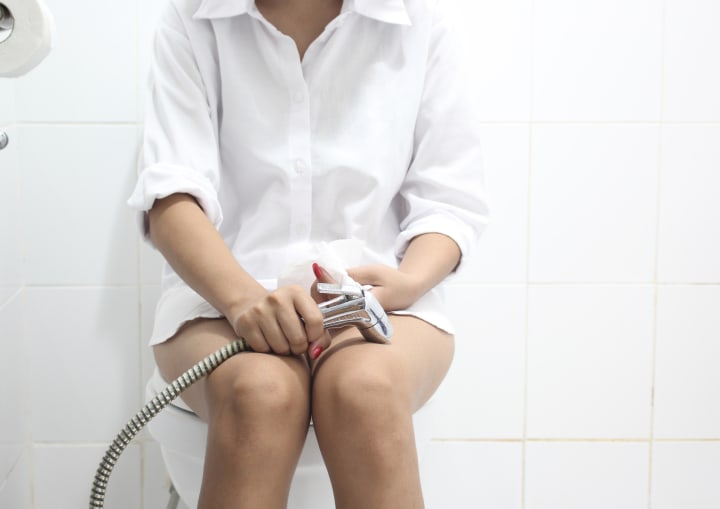
Why do 70 per cent of the world’s population use water to clean their behinds?
Well, the 70 percenters would turn that around and say “why the HELL are you wiping that stuff off with tissue?!”
So yes, it’s estimated that only 30 per cent of the world’s population uses toilet paper to clean their bottoms, with the rest using other methods — usually water, though soft leaves are another option.
Bidets are popular in countries where they can be afforded, being far more sustainable than toilet paper,
Now, it does of course require the valuable resource of water, but the average bidet uses only 0.6 litres of water per visit. So about 250 visits would use the same amount of water as for one toilet roll.
And modern toilets will use 1.6 gallons of water per flush, on top of this (older ones up to six gallons).
There are different amounts and powers of water preferred across the globe, from gentle jets to bidet showers, the latter especially popular across the Middle East and Asia.
Generally, you can sit there and air-dry or drip-dry.
Otherwise you’ll be using paper to finish off — and we’re back to square one.
So is eco-friendly toilet paper full of shit?
Well technically, yes. But in terms of their claims to help the environment, recycled and bamboo rolls are certainly far more beneficial to our planet than those made out of virgin pulp.
So save those trees. Don’t wipe them out.
The bottom line is — a wash with water is always going to kick paper’s butt.
About the Creator
Mark Campbell
Journalist and blogger, editor of greengreengreen.org, on a mission to inform, educate and entertain
Keep reading
More stories from Mark Campbell and writers in Earth and other communities.
Watering Wisely: Techniques for Deep Roots and Drought Tolerance
But beneath the surface, that shallow sprinkle is doing more harm than good. It encourages shallow roots that stay near the surface, dependent on your daily attention. When you forget to water—or when vacation or life intervenes—those shallow roots have no way to reach deeper moisture. Your plants wilt, stress, and sometimes die.
By Emma Wallace5 days ago in Earth


Comments
There are no comments for this story
Be the first to respond and start the conversation.