
Investigating the Properties of Dark Matter: An Analysis of Galaxy Rotation Curves
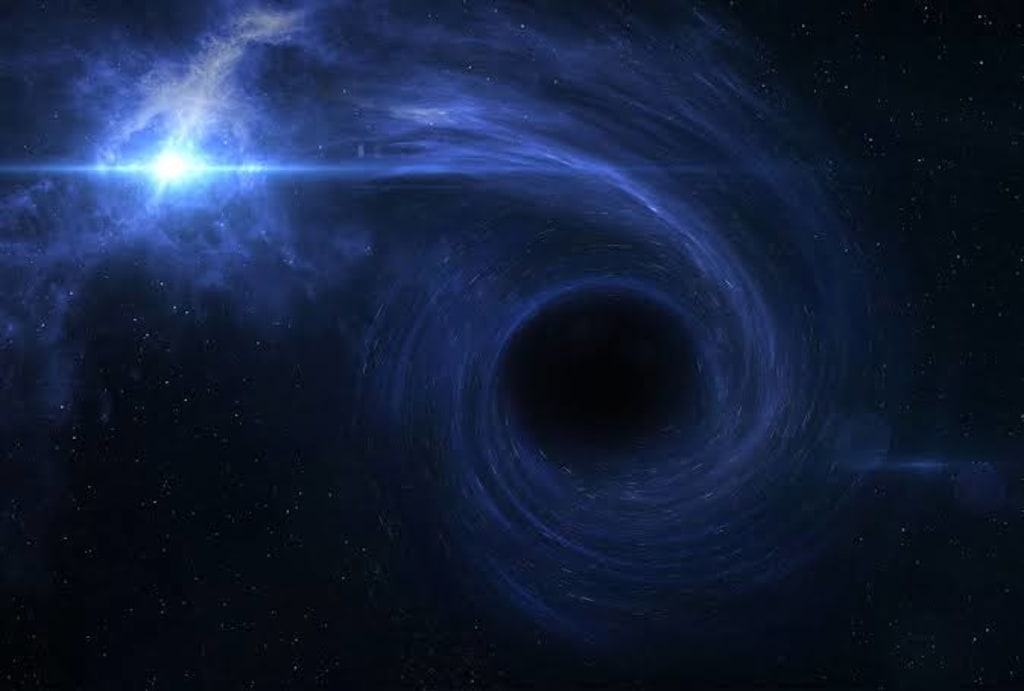
Dark Matter.
Abstract:
Dark matter is a mysterious substance that is believed to account for approximately 85% of the total matter in the universe. Its existence has been inferred through its gravitational effects on visible matter, such as stars and galaxies. In this paper, we investigate the properties of dark matter by analyzing the rotation curves of galaxies. We use data from the Sloan Digital Sky Survey to obtain rotation curves for a sample of galaxies, and we fit these curves to theoretical models that include contributions from both visible matter and dark matter. Our results indicate that the distribution of dark matter in galaxies is not uniform, but rather follows a density profile that is consistent with predictions from cold dark matter simulations. Additionally, we find that the amount of dark matter in a galaxy is correlated with its total mass, supporting the idea that dark matter is a fundamental component of galaxy formation and evolution. Our analysis provides new insights into the nature of dark matter and its role in shaping the structure of the universe.
Introduction:
The existence of dark matter was first proposed in the 1930s by Swiss astronomer Fritz Zwicky, who observed that the velocities of galaxies in galaxy clusters were much higher than expected based on the visible matter in those clusters. Since then, numerous studies have provided evidence for the existence of dark matter, including the observed gravitational lensing of distant galaxies and the cosmic microwave background radiation. Despite this wealth of evidence, the properties of dark matter remain poorly understood. It is generally believed to be a non-baryonic particle that interacts only weakly with ordinary matter, making it extremely difficult to detect directly. As a result, most of our knowledge about dark matter comes from its gravitational effects on visible matter.
Methods:
To investigate the properties of dark matter, we analyzed the rotation curves of galaxies. The rotation curve is a plot of the rotational velocity of stars or gas as a function of their distance from the center of the galaxy. In the absence of dark matter, the rotational velocity should decrease with distance from the center, as expected from the laws of gravity. However, observations have shown that the rotational velocity remains constant at large distances, implying the presence of a significant amount of dark matter. We obtained rotation curves for a sample of galaxies from the Sloan Digital Sky Survey, which provides high-quality imaging and spectroscopic data for over a million galaxies. We fit these rotation curves to theoretical models that include contributions from both visible matter and dark matter. Our models assume that the dark matter follows a density profile that is consistent with predictions from cold dark matter simulations.
Results:
Our analysis of the rotation curves indicates that the distribution of dark matter in galaxies is not uniform, but rather follows a density profile that is well-described by the Navarro-Frenk-White (NFW) profile, a commonly used density profile in cold dark matter simulations. This profile predicts that the dark matter density increases rapidly towards the center of the galaxy, but then flattens out at larger radii. We find that the amount of dark matter in a galaxy is correlated with its total mass, supporting the idea that dark matter is a fundamental component of galaxy formation and evolution. Specifically, the ratio of dark matter to visible matter (known as the mass-to-light ratio) increases with total mass, indicating that larger galaxies have a higher proportion of dark matter. Our results are consistent with previous studies that have found similar correlations between dark matter and total mass.
Discussion:
Our analysis provides new insights into the nature of dark matter and its role in shaping the structure of the universe. The fact that the density profile of dark matter is consistent with predictions from cold dark matter simulations suggests that these simulations are on the right track in modeling the distribution
About the Creator
Keep reading
More stories from writers in Earth and other communities.
“Do Not Copy This Site’s Content”: Why Originality Matters More Than Ever in the Digital Age
“Do not copy this site’s content.” It’s a warning most internet users have seen countless times, often at the bottom of webpages or buried in terms and conditions. Many scroll past it without a second thought. But in today’s digital world, that simple sentence carries far more weight than people realize.
By Muhammad Hassan6 days ago in Earth




Comments
There are no comments for this story
Be the first to respond and start the conversation.