
Intruders Within
Unveiling the 13 Most Disturbing Parasites that Affect Humans

The animal kingdom, though captivating, holds a dark secret—terrifying and deadly parasites that infiltrate the human body, causing distressing symptoms and, in some cases, fatal consequences. While none may replicate the chest-bursting horror from a certain sci-fi movie, the existence of parasitic organisms eager to feed on humans is an unsettling reality. In this exploration, we delve into the thirteen most painful parasites that can infect humans, shedding light on their gruesome nature and the havoc they wreak on their unwitting hosts.
13. Tapeworms: Hitchhikers in Your Body
Tapeworms, among the most common parasites, stealthily infiltrate the human body as unwanted hitchhikers, often accompanying meals. These ribbon-like worms, originating from animals like fish, beef, or pork, take residence in the digestive tract, where they can survive for extended periods. Equipped with hooks or suckers, tapeworms latch onto the intestine, causing symptoms such as nausea, vomiting, weight loss, and malnutrition. The repulsive sight of expelling tapeworms may occur, yet they can persist for up to twenty-five years, posing potential threats like larval reproduction and migration to vital organs.
12. Bedbugs: Tiny Bloodsuckers with Persistent Nuisance
Bedbugs, notorious pests in hotels, unleash skin-related torment upon their human hosts. Infestations lead to skin rashes, blisters, and relentless itchiness. While bedbugs are not known to transmit serious diseases, their bites can trigger allergic reactions, and eliminating them proves challenging. With the ability to survive without feeding for up to seventy days and reproduce rapidly, bedbugs often become unwelcome guests, inflicting fatigue, fever, and long-lasting discomfort.
11. Pinworms: Unwelcome Anal Intruders
Pinworms, a species of roundworms, propagate via eggs and induce uncomfortable symptoms upon infestation. Spread through hand contact and subsequent ingestion, pinworms lay eggs around the anus, causing itching, painful bowel movements, and sleep disturbances. Despite being treatable with medications, their prevalence makes them a common affliction, especially among children.
10. Filarial Worms: Mosquito-Borne Menace
Carried by mosquitoes, filarial worms can lead to various diseases, affecting over 120 million people worldwide. While some infections remain asymptomatic, severe cases may result in lymphatic vessel blockages, leading to blindness or elephantiasis syndrome, marked by extreme swelling. Though treatable with antiparasitic medications, prevention and early intervention are crucial.
9. Hookworm: Bloodsucking Parasite of the Intestine
Common in regions lacking clean water access, hookworms invade the human digestive tract, causing abdominal pain, nausea, diarrhea, and anemia. With a voracious appetite for blood, these parasites pose serious health risks, contributing to an estimated 60,000 annual fatalities. Vulnerable to antiparasitic medications, detecting hookworm infestations before maturity remains a challenge.
8. Whipworm: Soil-Based Parasite with Grave Consequences
Widespread in contaminated soil, whipworms infect over half a billion people globally. Triggering digestive tract havoc and potentially leading to appendicitis, severe infections in children can stunt growth and cause cognitive impairment. Although antiparasitic medications offer a solution, preventing infections and early intervention remain crucial in combating this deadly parasite.
7. Dracunculus Medinensis: Guinea Worm's Painful Emergence
The Guinea Worm, aptly named "little dragon of the Mediterranean," wreaks havoc in rural areas of Africa and tropical regions. With female worms reaching up to thirty-one inches, their emergence through the skin causes excruciating pain, infections, nausea, blisters, and itching. Though treatable through careful removal and antibiotics, the Guinea Worm's impact on infected individuals can lead to arthritis, paralysis, or severe swelling.
6. Blood Fluke: The Silent Intruder in Water
Contrary to the fear of leeches, the Blood Fluke thrives in water, entering the skin to feed on human blood. Leading to schistosomiasis, these parasites cause widespread infections affecting various body parts. Responsible for an estimated two hundred thousand annual deaths, treating blood fluke infections necessitates antiparasitic medications, emphasizing the urgency of preventive measures.
5. Jiggers: Sand Fleas with Devastating Consequences
The smallest known flea, jiggers, burrow into the skin upon contact, causing swelling, lesions, and, in severe cases, permanent deformation of toes. Removing embedded fleas requires professional intervention, as the process involves meticulous extraction and disinfection. Originating from Central and South America, jiggers inflict misery on their hosts, leaving a trail of pain and scarring.
4. Human Bot Fly: Invasive Reproduction and Potential Infection
The human bot fly, depositing its eggs through other insects' bites, infiltrates human skin, creating visible grubs. While the larvae's removal can be hazardous due to potential infection, suffocating them with petroleum jelly offers a safer extraction method. Though not usually fatal, the human bot fly's presence highlights the intricate strategies parasites employ for reproduction and survival.
3. Australian Paralysis Tick: A Deadly Twist on a Common Pest
Common ticks pose threats as vectors for diseases, but the Australian Paralysis Tick adds a lethal dimension. Inducing allergic reactions and secreting toxins causing neuromuscular failure, this tick can lead to respiratory failure if untreated. Responsible for approximately twenty reported fatalities annually, it stands as one of Australia's most feared creatures.
2. Brain-Eating Amoeba: A Rare and Invariably Fatal Threat
Found in warm freshwater bodies, the brain-eating amoeba, though not a true amoeba, causes a rare and almost invariably fatal brain infection. Entering through the nasal cavity, this microscopic organism devours brain cells, leading to symptoms such as headaches, nausea, seizures, and, inevitably, death. While its transmission is not human-to-human, avoiding contaminated water sources becomes imperative.
1. Malaria Plasmodium: A Global Menace
The true culprit behind the deadly disease malaria, Plasmodium, spreads through mosquito bites, affecting up to 600 million people annually. Provoking symptoms like fever, chills, and anemia, severe cases escalate to neurological issues, organ damage, and death. With several hundred thousand fatalities each year, malaria remains a formidable global health challenge, underscoring the urgent need for preventive measures and accessible treatments.
About the Creator
Līva
World is interesting place. Scary, but worth living.
Nature is full of surprises and people are... well, people are something else.
Art is the best doctor.
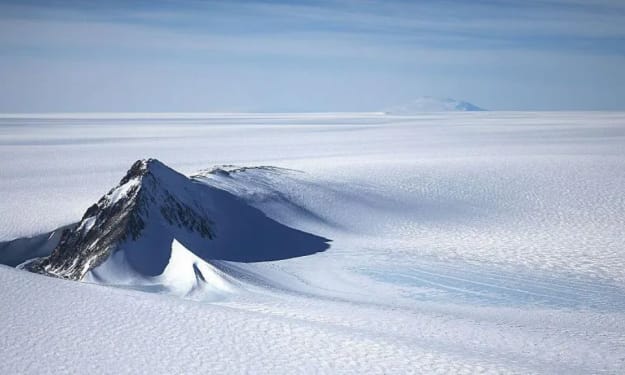
Landscape Beneath Antarctica's Icy Surface Revealed in Unprecedented Detail
For decades, Antarctica has been the Earth’s ultimate mystery — a vast expanse of ice covering almost 14 million square kilometers, hiding secrets beneath its frozen surface. Now, thanks to advanced radar technology and satellite mapping, scientists have produced the most detailed map yet of the continent’s hidden landscape, revealing mountains, valleys, subglacial lakes, and river systems that were previously invisible. This discovery is more than just a scientific curiosity. Understanding Antarctica’s topography beneath the ice is critical for predicting ice sheet stability, global sea-level rise, and climate change impacts. The new data could also shed light on Earth’s geological history and the ways in which life may survive in extreme environments. How Scientists Mapped the Hidden Terrain For years, researchers have relied on a combination of methods to peek beneath the ice: Ice-penetrating radar: Devices mounted on aircraft or satellites send radio waves through ice layers, which bounce back when they hit bedrock, revealing contours beneath kilometers of frozen water. Satellite gravimetry: Small variations in Earth’s gravitational field help infer the presence of mountains, valleys, and subglacial lakes. Seismic surveys: Explosions or controlled vibrations allow scientists to detect underground structures by measuring the way seismic waves travel through different materials. Using these techniques, a consortium of international researchers created a high-resolution map of Antarctica’s sub-ice topography, revealing features that rival the landscapes of continents that have been visible for millions of years. What’s Beneath the Ice? The map reveals a striking variety of features: Mountain ranges: Peaks rise more than 4,000 meters above the surrounding terrain, hidden beneath miles of ice. Some of these ranges may be older than the Rockies or the Alps. Deep valleys: Vast troughs and gorges, carved by ancient rivers or tectonic activity, provide clues about how the continent evolved over millions of years. Subglacial lakes: Scientists have identified hundreds of liquid water lakes trapped beneath the ice, including the famous Lake Vostok. These lakes remain liquid due to pressure and geothermal heat and may host microbial life isolated for millions of years. Subglacial river networks: Surprisingly, water flows beneath the ice in channels and rivers, slowly carving pathways that affect ice sheet movement. This intricate landscape challenges the perception of Antarctica as a flat, featureless ice sheet. Instead, it is a dynamic and complex environment, where hidden topography influences everything from ice flow to global sea levels. Why This Discovery Matters The importance of understanding what lies beneath Antarctica’s ice cannot be overstated: Predicting Ice Sheet Stability: Ice sheets move more quickly over smooth surfaces than over rugged terrain. Knowing where mountains and valleys lie helps scientists predict which areas of ice may collapse first, potentially raising sea levels faster than anticipated. Climate Change Models: Subglacial lakes and water channels lubricate the ice from below, influencing melting rates. Incorporating these features into models improves accuracy in forecasting future sea-level rise. Earth’s Geological History: The newly revealed landscape offers a window into Antarctica’s past — from tectonic shifts to ancient rivers and climates. This data helps reconstruct how continents drifted and climates evolved over millions of years. Search for Extreme Life: Subglacial lakes may harbor microbial life isolated for millions of years, providing insights into life in extreme environments, potentially even on other planets. Global Implications Antarctica may feel distant, but its ice sheets hold the key to global sea-level stability. Even small changes beneath the ice can have profound consequences for coastal cities around the world. With melting accelerated by climate change, understanding the terrain under the ice is crucial for planning and mitigation. Governments, scientists, and environmental organizations are now using this information to: Improve climate models for sea-level rise predictions Identify vulnerable regions of the ice sheet Guide future research missions to subglacial lakes and mountains The discovery also strengthens the case for continued international collaboration in Antarctica, where research and environmental protection are governed by treaties emphasizing peaceful scientific study. Challenges Ahead Mapping Antarctica is far from complete. Extreme weather, thick ice sheets, and logistical difficulties make the continent one of the hardest places to study. While radar and satellite technologies have advanced, field validation and deeper exploration remain difficult and expensive. Researchers also face ethical and environmental concerns. Drilling into subglacial lakes to sample microbial life, for instance, must be done carefully to avoid contamination. Antarctica’s fragile ecosystem demands that scientific progress balances discovery with protection. Looking to the Future The detailed map of Antarctica’s hidden landscape opens new possibilities for exploration and understanding: Ice Flow Predictions: With accurate topography, scientists can model how ice sheets will respond to warming climates more precisely. Resource Insights: While exploitation is restricted by international agreements, understanding subglacial mineral deposits can inform potential future uses. Extreme Environment Biology: Studying subglacial lakes could reveal new species adapted to cold, dark, and high-pressure environments, broadening our understanding of life on Earth. The data also strengthens international scientific cooperation, as multiple countries share findings and resources to better understand a continent that belongs to no single nation. Final Thoughts Antarctica’s ice may appear static and endless, but beneath it lies a vibrant and rugged landscape filled with mountains, valleys, lakes, and rivers. The new detailed mapping of this hidden world is a landmark achievement in Earth science, combining advanced technology, international collaboration, and the human drive to explore. By uncovering what lies beneath the ice, scientists are not just satisfying curiosity — they are equipping humanity with the knowledge to protect our planet, anticipate climate challenges, and understand the deep history of Earth itself. Antarctica’s secrets, once locked beneath kilometers of ice, are finally being revealed, and what we learn could reshape our understanding of the planet and our place within it.
By Muhammad Hassan3 days ago in Earth
Supreme Court Set to Issue Rulings, with Trump Tariffs Case Still Pending
The U.S. Supreme Court is gearing up for a series of critical rulings that could have far-reaching effects on American politics, the economy, and ongoing legal controversies involving former President Donald Trump. Among these high-profile cases is the long-awaited decision on the Trump tariffs case, which remains unresolved and continues to draw national attention. A Pivotal Moment for the Supreme Court The Supreme Court, as the highest judicial body in the United States, has the power to shape not only legal precedent but also economic and political landscapes. Every term, the Court issues decisions that can influence everything from civil liberties to federal policies. This session, observers are particularly focused on cases involving trade, executive power, and regulations implemented during Trump’s administration. The Trump tariffs case, in particular, highlights the tension between presidential authority and congressional oversight. The case challenges certain tariffs imposed by Trump on imports from countries like China, Mexico, and the European Union, arguing that they exceeded the executive branch’s authority and bypassed proper legislative procedures. What the Trump Tariffs Case Is About During his presidency, Donald Trump frequently used tariffs as a tool to bolster U.S. manufacturing, address trade imbalances, and pressure foreign governments into renegotiating trade deals. While some praised these measures for protecting domestic industries, critics argued that they overstepped legal boundaries and caused economic strain on American consumers. The case currently pending before the Supreme Court examines whether Trump acted within his executive authority when imposing these tariffs. Legal analysts note that a ruling against Trump could set a precedent limiting future presidents’ power to unilaterally impose trade restrictions without congressional approval. Conversely, a ruling in his favor could reinforce broad executive powers in trade matters. Broader Implications for Trade and the Economy The Supreme Court’s decision is more than just a legal formality—it has significant economic implications. If the Court rules that the tariffs were unlawful, the U.S. could face demands to refund millions in duties collected, impacting businesses and international trade relations. Companies that relied on protective tariffs to compete in global markets might also face increased competition from foreign imports. On the other hand, upholding the tariffs could embolden future administrations to take aggressive action in trade disputes, potentially triggering new tensions with other countries. Investors, trade associations, and policymakers are closely monitoring these developments, as the ruling could influence stock markets, trade negotiations, and long-term economic strategies. Political Stakes Remain High Beyond economics, the Trump tariffs case has political dimensions. Donald Trump’s legal and political team is watching the case closely, as the outcome could influence his broader legal battles and political ambitions. While the case focuses on trade, it also touches on questions of executive authority, a topic central to debates about checks and balances in the U.S. government. Democrats and Republicans alike are analyzing the case for its potential impact on future administrations. Some lawmakers have expressed concern that a broad interpretation of executive power could set a dangerous precedent, allowing presidents to implement sweeping economic measures without sufficient legislative oversight. Other Supreme Court Decisions to Watch While the Trump tariffs case is the most high-profile, the Supreme Court is expected to issue rulings on several other major issues this session, including voting rights, environmental regulations, and federal agency authority. Each decision could have ripple effects across the nation, shaping laws and policies for years to come. Observers are particularly interested in cases that intersect with current political debates. With midterm elections approaching, the timing of these rulings could influence public opinion, political campaigns, and legislative priorities. What Comes Next For now, all eyes remain on the Supreme Court. Legal experts are divided on the likely outcome of the Trump tariffs case, with some predicting a narrow decision and others expecting broader implications. Regardless of the verdict, the ruling will be closely studied by policymakers, businesses, and citizens alike. In the meantime, companies affected by tariffs, trade advocates, and political analysts continue to prepare for potential scenarios. Whether the Court sides with Trump or challenges his administration’s actions, the ruling will shape the legal landscape for presidential authority and U.S. trade policy for years to come. Final Thoughts The Supreme Court’s upcoming rulings, particularly on the Trump tariffs case, underscore the enduring tension between executive authority, congressional oversight, and judicial interpretation. These decisions will not only influence the immediate legal battle but could also redefine the boundaries of presidential power and trade policy in the United States. For citizens, investors, and policymakers, understanding the implications of these rulings is crucial. As the nation waits for the Court’s verdict, one thing is clear: the outcome will resonate far beyond the courtroom, affecting politics, economics, and the balance of power in Washington, D.C.
By Muhammad Hassan5 days ago in Earth



Comments
There are no comments for this story
Be the first to respond and start the conversation.