
International
Are US-Israeli relations heading towards a fragile future?
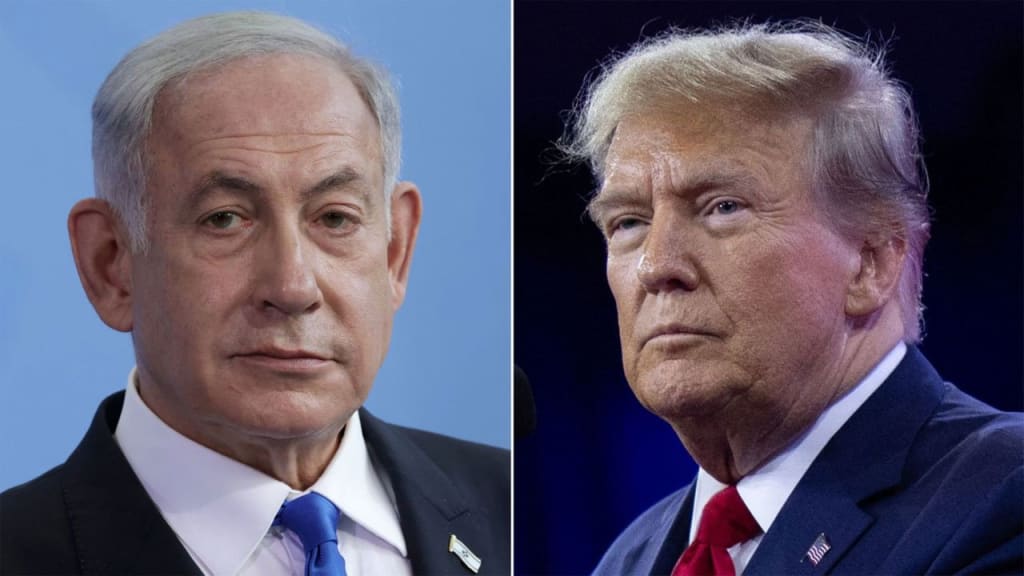
As US politics changes, Israel's once-impregnable position is also weakening. A new generation of values, moral disillusionment among American Jews, and fears of a "transactional abandonment" by the US, as in Ukraine, threaten to end this historic alliance.
Former US Secretary of State Henry Kissinger made a stark observation about his country: It can be dangerous to be America’s enemy, but it is deadly to be its friend. His observation seems more relevant now than ever. As the United States advances in its role as a global power, its alliances, once considered unwavering, are increasingly seen as contingent. This fragility has been most evident in the case of two allies, Israel and Ukraine.
Israel’s influence in Washington has long been unrivaled. It is reinforced by the American Israel Public Affairs Committee (AIPAC) and a deeply entrenched pro-Jewish lobby. This power has ensured billions of dollars in military aid to Israel each year and diplomatic protection at the United Nations. There, US support for Israel has been presented as a moral duty and strategic necessity.
This influence has not been limited to the lobby’s power. Rather, it has been built on a reciprocal relationship with American Jews, many of whom see Israel as a cultural refuge, a symbol of democracy amid the trauma of the Holocaust in Europe and the post-World War II Cold War tensions in the Middle East between the United States and the Soviet Union and their allies.
Ukraine, by contrast, has little institutional power. The foundation that the pro-Israel lobby has built is now wobbly.
Support for Israel is rapidly declining, especially among young progressive Americans. Where previous generations saw Israel as a democratic ally, young people increasingly see it as an “apartheid state.”
Social media has accelerated this shift. Images of the rubble of besieged Gaza, destroyed hospitals, grieving families, and the still bodies of children pulled from the rubble of their homes have had a profound impact on young people.
Israel has enjoyed special loyalty from Washington for decades, secured by a powerful lobby. Ukraine, on the other hand, has relied on geopolitical maneuvering to secure support. But as US politics has changed, Israel’s once-impregnable position is also weakening. A new generation of values, moral disillusionment among American Jews, and fears of a “transactional abandonment” by the US, as in Ukraine, threaten to end this historic alliance.
Israel’s influence in Washington has long been unrivaled. It is reinforced by the American Israel Public Affairs Committee (AIPAC) and a deeply entrenched pro-Jewish lobby. This power has ensured billions of dollars in military aid to Israel each year and diplomatic protection at the United Nations. There, US support for Israel has been presented as a moral duty and strategic necessity.
This influence has not been limited to the lobby’s power. Rather, it has been built on a reciprocal relationship with American Jews, many of whom see Israel as a cultural refuge, a symbol of democracy amid the trauma of the Holocaust in Europe and the post-World War II Cold War tensions in the Middle East between the United States and the Soviet Union and their allies.
Ukraine, by contrast, has little institutional power. The foundation that the pro-Israel lobby has built is now wobbly.
Support for Israel is rapidly declining, especially among young progressive Americans. Where previous generations saw Israel as a democratic ally, young people increasingly see it as a “racist state.”
Social media has accelerated this shift. Images of the rubble of besieged Gaza, destroyed hospitals, grieving families, and the bodies of children pulled from the rubble of their homes have had a profound impact on young people.
Organizations like Jewish Voice for Peace and IftonNow are mobilizing thousands of people to protest the occupation, boycott Israeli products, and demand that the United States withdraw investment from Israel.
A 2023 survey by the Pew Research Center, a US-based public opinion and research organization, found that 52 percent of American Jews under the age of 40 believe that the Israeli government is guilty of “racist crimes.” This is a huge change for a community that has always seen Israel as a place of refuge.
Israel’s leadership seems indifferent to these issues. Israeli Prime Minister Benjamin Netanyahu’s far-right coalition, his judicial reforms that have weakened democratic control, and his disregard for criticism from American Jews—“they don’t understand our security needs”—are further alienating liberal allies. The nation-state law has enshrined Jewish supremacy in the Constitution, and continued settlement expansion is only deepening this rift.
The divide between American and Israeli Jews has now escalated into open conflict. American Jews are largely secular and progressive, favoring pluralism and equality. On the other hand, especially under Netanyahu, Israeli Jews have increasingly embraced nationalism and see the legitimate rights of the Palestinians as incompatible with Israel's security. This conflict intensified during the 2021 Gaza War. While Israeli media portrayed their bombing as self-defense, American Jews used social media to document the suffering of Palestinians.
The backlash has been intense. Israeli officials have accused American Jews of being “disloyal.” Donald Trump’s former strategist Steve Bannon has called progressive Jews “Israel’s greatest enemy.” Such language, steeped in anti-Semitism, reveals a bitter truth: to the Israeli government, dissent is tantamount to betrayal.
Once hailed as “the only democracy in the Middle East,” Israel is now accused by organizations such as Amnesty International, Human Rights Watch, and B’Tselem of being an “apartheid state.” The International Criminal Court (ICC) is investigating war crimes in Gaza. Meanwhile, the Boycott, Divestment, and Sanctions (BDS) movement is gaining popularity on campuses around the world.
For American Jews, the isolation is painful. The myth that Israel was created as a safe haven now clashes with the reality of checkpoints, home demolitions, and segregated roads. Young Jews, learning from their ancestors’ history of oppression, are reconciling their own painful history of genocide with the Palestinian displacement. A 2022 survey found that 25 percent of American Jews under 35 are unwilling to support Israel as a specifically “Jewish state,” a view once unthinkable.
Netanyahu’s reliance on ultraconservative parties has further marginalized non-conservative Jews. They face discrimination in marriage and conversion laws. Israel’s humanitarian image has been further tarnished by its prioritization of military strikes over negotiations to release prisoners in Gaza.
The US’s neglect of Ukraine carries a dire warning. Initially buoyed by US arms aid, Ukraine is now pleading with Europe for air defense systems as Republican support erodes. President Volodymyr Zelensky was once a hero in the US Congress. He is now highlighting the risks of that transactional alliance – that the alliance collapses when interests change.
Israel is not immune. Under Trump’s “America First” policy, Netanyahu received various benefits, including moving the embassy to Jerusalem and helping to expand the occupation. But that loyalty depended only on performance. If Israel were to clash with the priorities of the “Make America Great Again” movement under a second Trump administration, it could easily be ignored.
As a result, the occupying power now stands at a crossroads. Its lobbying power is still strong. But its moral standing is at rock bottom. American Jews were once Israel’s strongest allies. They are increasingly taking a stand for universal justice rather than ethnic unity. The rise of nation-centered nationalism is further weakening this relationship, as young Jews are giving more importance to issues like inequality and climate change than foreign conflicts.
The parallels with the situation in Ukraine are clear. Just as US aid to Ukraine waned due to changing interests, Israel could suffer the same fate if it loses the support of American Jews and ultimately American patronage. Looking at the current Israeli situation, it is not impossible that Kissinger's prediction will come true. Israel could also join the list of abandoned allies, of which the plight of Ukraine is a tragic example.
About the Creator
Md. Abu Yunus
"Writer & translator with experience on Upwork. Passionate about fitness, beauty, and wellness. Sharing insights on exercise, self-care, and fragrances. Let’s explore a healthier, more confident lifestyle together!"
Let me know if any tweaks
Keep reading
More stories from Md. Abu Yunus and writers in Earth and other communities.
Freelancing
Today is March 8, International Women's Day. This year, the theme of Women's Day has been set as 'Rights, Equality, Empowerment, Development of Women and Girls.' And women are moving forward with this slogan. They are increasing their skills and playing a role in society and family. Along with women in various professions, many women are also earning money by freelancing while sitting at home. Shah Naz Parveen, Reshma Haque and Sumaiya Akhter are among the women who are earning money by freelancing while managing their families. Their inspiration is the same dream of doing something big; to encourage women sitting at home - I can do something too. They told the story behind their success on yesterday, Thursday.
By Md. Abu Yunus12 months ago in Motivation




Comments (1)
thaks for read