
Inside The Life of The Honey Bee
How honey bee divide labor to ensure continuity

The Division of Labor in The Beehive
The beehive is an intricate society, with each bee performing a specific role to ensure the survival and success of the colony. One of the most crucial aspects of the beehive is the division of labor. Bees have a well-organized system of tasks, with each individual working together to maintain the hive's productivity and efficiency.
The Worker Bees
The first stage of labor in the beehive is the care of the young. Bees responsible for this task are known as nurse bees. These bees tend to the eggs and larvae, feeding them with a special secretion called royal jelly, which is produced in their mandibular glands. The nurse bees also maintain the temperature and humidity levels within the hive, ensuring that the young bees develop properly.
Once the young bees reach maturity, they move on to their next phase of labor: cleaning. These bees are known as house bees, and their primary responsibility is to keep the hive clean and hygienic. They remove any dead bees or debris and constantly maintain the wax comb structures within the hive.
As the colony continues to grow, bees transition into more specialized roles. Some bees become foragers, leaving the hive to collect nectar and pollen from flowers. These bees are responsible for ensuring the colony has enough food to survive. When they return to the hive, they share their findings with the other bees by performing a "waggle dance." This dance communicates the location and distance of the food source to other bees, allowing them to locate and collect more food.
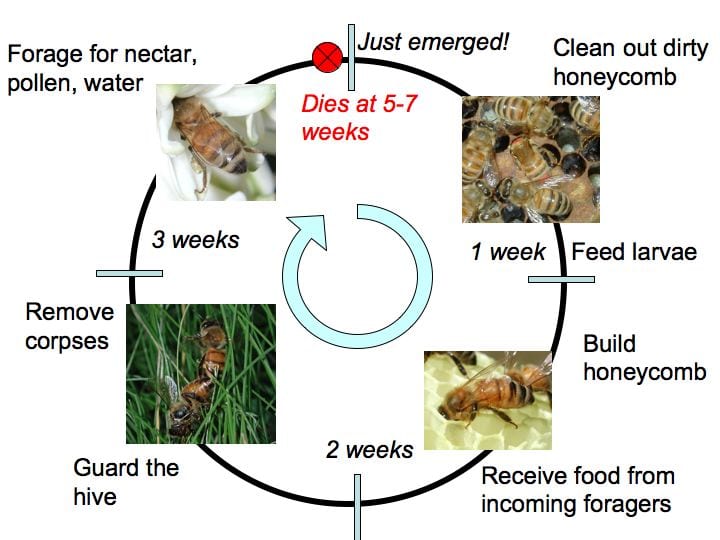
Other bees become guards, stationed at the entrance of the hive to protect it from predators and other bees from rival hives. These bees can detect the scent of foreign bees and will attack any intruders who attempt to enter the hive.
Drones
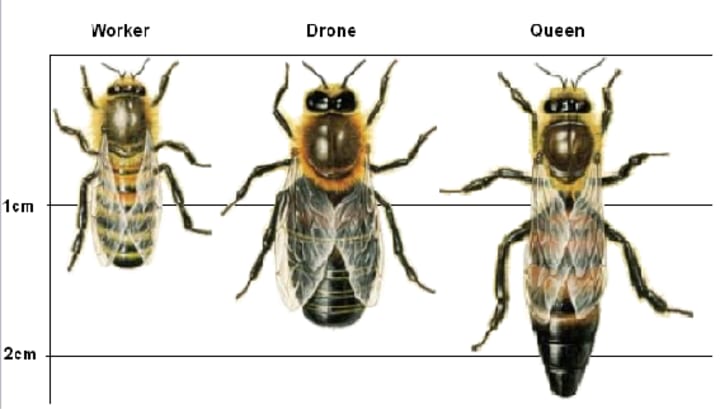
Finally, there are the drones. Drones are male bees whose primary role is to mate with the queen bee. They do not have stingers and do not gather food or perform any other tasks within the hive. Once they have fulfilled their purpose, they are typically expelled from the hive.
It is worth noting that the division of labor in the beehive is not fixed or static. Bees can transition between roles throughout their lifespan, depending on the needs of the hive. For example, during periods of high nectar flow, nurse bees may become foragers to help collect more food for the colony.
Overall, the division of labor in the beehive is a complex and highly coordinated system that ensures the survival and productivity of the colony. Each bee plays a crucial role in the success of the hive, working together to ensure that the colony is healthy, well-fed, and protected.
The Stinger of a Worker Bee
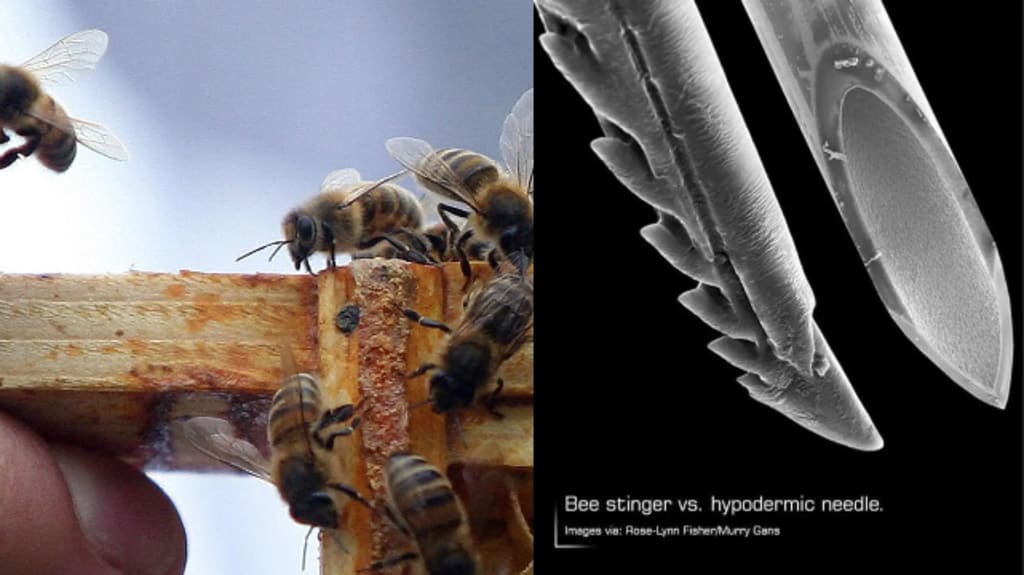
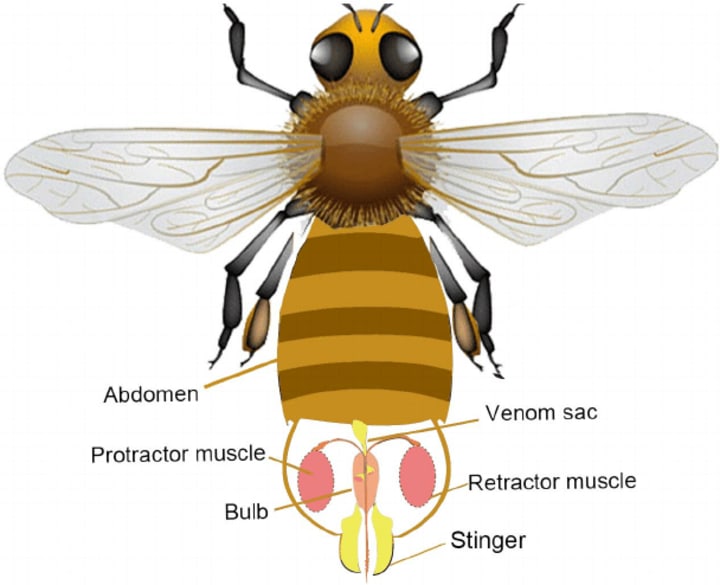
The stinger of a worker bee is a sharp, needle-like organ located at the end of the bee's abdomen. It is used for self-defense and to protect the hive from threats.

The stinger consists of a smooth, barbed shaft and a venom sac. When the bee stings, the barbed shaft penetrates the skin and becomes embedded, while the venom sac pumps venom into the wound.
The barbs on the shaft make it difficult for the bee to remove its stinger once it has been lodged in the skin. When the bee tries to fly away, the stinger and a portion of the bee's abdomen are torn away, causing the bee to die shortly afterwards.
It is important to be cautious around bees, as their stingers can cause pain, swelling, and in rare cases, severe allergic reactions.
About the Creator
Rare Stories
Our goal is to give you stories that will have you hooked.
This is an extension of the Quora space: Rare Stories
X(formerly Twitter): Scarce Stories
Writers:
....xoxo
Keep reading
More stories from Rare Stories and writers in Earth and other communities.
Met Office Issues Yellow Fog Warnings After Parts of UK Battered by Rain
After days of relentless rainfall sweeping across large parts of the United Kingdom, the Met Office has issued yellow fog warnings, cautioning residents and travelers to prepare for reduced visibility and hazardous conditions. The sudden shift from heavy rain to dense fog highlights the volatile nature of the UK’s winter weather and underscores the challenges it poses to transport, public safety, and daily life. From Heavy Rain to Thick Fog The recent spell of intense rain saturated the ground across England, Wales, and parts of Scotland, leaving rivers swollen and fields waterlogged. As calmer weather followed the downpours, a combination of high moisture levels, falling temperatures, and light winds created ideal conditions for fog formation. According to meteorologists, this type of fog—often called radiation fog—develops when moisture near the ground condenses overnight, forming thick, low-lying clouds that can linger well into the morning. The Met Office’s yellow warning signals that fog could significantly reduce visibility, in some areas dropping below 100 meters. While not the most severe level of weather alert, yellow warnings are designed to prompt awareness and caution, particularly for motorists, cyclists, and pedestrians who may be caught off guard during early morning commutes. Travel Disruptions and Safety Concerns Fog is one of the most dangerous weather conditions for road travel, as it can dramatically shorten reaction times and obscure hazards. Authorities have urged drivers to slow down, use fog lights appropriately, and maintain greater distances between vehicles. Motorways and rural roads alike are vulnerable, with sudden patches of thick fog appearing without much warning. Rail services may also experience delays, as drivers are required to reduce speeds when visibility drops. At airports, fog can disrupt flight schedules, causing delays or cancellations, particularly during peak morning hours. Aviation authorities closely monitor visibility thresholds, and even a short-lived fog bank can ripple through tightly scheduled operations. Emergency services have emphasized that pedestrians and cyclists should wear reflective clothing where possible, especially during early mornings and evenings. With darker winter days already limiting visibility, fog compounds the risks for vulnerable road users. Why Fog Follows Heavy Rain Meteorologists explain that fog warnings often follow periods of heavy rainfall. When rain saturates the ground, it leaves behind large amounts of surface moisture. If skies then clear and winds ease, the ground cools rapidly overnight, allowing moisture to condense into fog. This pattern is becoming increasingly familiar in the UK, where weather systems are growing more erratic. Climate scientists note that a warming atmosphere holds more moisture, increasing the likelihood of intense rainfall events followed by fog, frost, or sudden temperature drops. Regional Impact Across the UK The yellow fog warnings are not uniform across the country. Low-lying areas, river valleys, and rural regions are particularly susceptible. Parts of southern England, the Midlands, and eastern regions are among those most at risk, though localized fog could appear almost anywhere conditions align. In Scotland and northern England, lingering wet ground combined with colder overnight temperatures raises the possibility of fog forming alongside icy patches. This mix of hazards further complicates travel and increases the risk of accidents. What a Yellow Warning Really Means A yellow weather warning does not mean severe disruption is guaranteed, but it does indicate a heightened likelihood of impacts. The Met Office uses yellow alerts to encourage the public to stay informed and take sensible precautions. For fog, that means checking travel updates, allowing extra journey time, and staying alert to rapidly changing conditions. Weather experts stress that fog can be highly variable. One area may experience clear skies while another, just a few miles away, is blanketed in thick mist. This unpredictability is what makes fog particularly dangerous. Looking Ahead: More Changeable Weather Forecasts suggest that unsettled weather will continue in the coming days, with further spells of rain interspersed with calmer, colder nights—conditions that could lead to additional fog warnings. While no prolonged severe weather is currently expected, the pattern reflects the broader trend of increasingly changeable winters in the UK. For many residents, this serves as another reminder that winter weather is no longer defined by just cold or snow. Instead, a mix of heavy rain, flooding risks, fog, and sudden temperature shifts is becoming the new normal. Staying Prepared The Met Office advises the public to regularly check forecasts, especially before traveling, and to remain flexible with plans during periods of weather warnings. Simple measures—such as cleaning car windows, ensuring lights are functioning, and staying updated via official channels—can significantly reduce risk. As the UK continues to navigate this wet and fog-prone winter, awareness and preparation remain the best defenses. While the fog may lift by midday in many areas, its early impact serves as a timely reminder that even seemingly mild weather hazards can have serious consequences.
By Fiaz Ahmed about 15 hours ago in Earth
O-Ring Seals Market Size and Forecast 2025–2033
Introduction In an era defined by advanced engineering, sustainability goals, and performance efficiency, the smallest components often play the biggest roles. Among these unsung heroes of modern manufacturing are O-ring seals—simple, circular devices that quietly prevent leaks, ensure safety, and keep critical systems functioning under extreme conditions.
By Aaina Oberoi2 days ago in Earth


Comments
There are no comments for this story
Be the first to respond and start the conversation.