
Inside the Crater in Madagascar
Unraveling the Mystery


Madagascar, an island off the coast of Africa, is renowned for its unique biodiversity, with plants and animals found nowhere else on Earth. When viewed from space, a striking feature emerges a massive dark circle that is almost perfectly round and over thirteen kilometers in diameter, diverting roads around it. Zooming in reveals a village nestled within the crater's center, eight kilometers from the nearest labeled town on Google Maps. This remote settlement appeared only after 2008. The question arose: why did these people move to such an isolated place?
Initial Investigation
The investigation began with basic internet searches and geotagged content. The closest tags were a butcher shop, a playground, and a historical landmark, all referencing the Japanese manga "Attack on Titan" in Russian. Real tags like churches and hospitals lacked an online presence. Twitter, Instagram, and YouTube searches yielded little, except more "Attack on Titan" references. Expert contacts in agriculture and biogeography provided context about Madagascar's rural majority but no specifics on the village.
The closest major city to the crater village is Tsiroanomandidy, with a population of over 44,000, situated 18 kilometers away. This remoteness underscored the challenge of understanding why a village would emerge in such an isolated location. The initial phase of the investigation felt like hitting a dead end, as online resources and social media provided limited and often irrelevant information.
The Journey Begins
A more direct approach was needed. Lalie, a production company owner in Madagascar's capital, Antananarivo, agreed to make the trip. Her crew faced challenges, including navigating the hot rainy season and a massive storm that forced them to turn back just before reaching the village. The expedition would have to wait until May, after the rainy season.
This delay provided time to dig deeper into the geological and historical context of the area. Madagascar's geological history is marked by significant volcanic activity. The Ambohiby Massif, the mountain housing the crater village, is an ancient volcanic formation from the Cretaceous Period, around 90 million years old. This extinct volcano, part of Madagascar's geological history, likely formed during the separation of Madagascar and India. Geologist Tsilavo Raharimahefa confirmed its age and volcanic origin.
Geological Insights
Research revealed the mountain as an ancient volcanic formation from the Cretaceous Period, around 90 million years old. This extinct volcano, part of Madagascar's geological history, likely formed during the separation of Madagascar and India. Geologist Tsilavo Raharimahefa confirmed its age and volcanic origin.
Further research identified the mountain as the Ambohiby Massif. Historical maps and reports described it as a lush forest with fresh water sources, suggesting its suitability for settlement. The village's name was Anosibe Ambohiby, meaning "Big Island" Ambohiby. Geological surveys and historical documents revealed that the massif's higher elevation provided a unique microclimate, making it an attractive location for settlement due to its water and fertile soil.
Discovering Ambohiby
The delay due to the rainy season allowed for a more thorough examination of historical and geological records. An article on seismic tomography mapped Madagascar's interior, revealing the Ambohiby Massif. Historical maps from the late 19th and early 20th centuries consistently labeled the massif as a lush forest, further indicating its long-standing significance as a resource-rich area. Reports from 1933 mentioned freshwater sources, reinforcing the idea that the location was ideal for settlement.
Lalie's team was ready for a second attempt once the rainy season ended. This time, they brought along Rado Andriamanisa, a filmmaker, and Johary, a local guide from Tsiroanomandidy with extensive knowledge of the area. The team set off early one morning, capturing scenes of Madagascar's rural life as they traveled. They interviewed people living on the outskirts of the massif, the closest neighbors to the crater village, to gather more insights.
The Second Expedition
With the rainy season over, Lalie's team embarked on a second expedition. They reached the crater and found the village, encountering initial suspicion but eventually gaining trust. Interviews revealed the villagers, mostly Betsileo migrants from Manandriana, moved for water, fertile soil, and space, which were crucial for their farming lifestyle. The remote location offered these resources, though it posed significant challenges.
The Betsileo people, one of Madagascar's 18 main ethnic groups, had migrated over 380 kilometers from their original home. This migration was driven by the need for space, as their homeland in Manandriana had a population density more than twice that of Tsiroanomandidy. For farmers, space to plant crops and breed livestock is essential. The villagers explained that the crater's higher elevation provided a favorable microclimate for agriculture, with ample water and fertile soil.
Closing
Anosibe Ambohiby's story highlights the complexities of rural life in Madagascar. The villagers' migration was driven by basic needs: water, fertile soil, and space. Despite their remote and challenging location, they have built a sustainable community. The investigation, blending modern technology and on-the-ground exploration, brought to light the unique circumstances and resilience of the village, contributing to the broader understanding of Madagascar's diverse and remote regions.
The remoteness of Anosibe Ambohiby underscores the broader challenges faced by rural communities in Madagascar. With one of the least developed road networks in the world, many rural areas are effectively cut off from essential services and markets. Improving infrastructure could significantly enhance the quality of life for millions of people. The journey to Anosibe Ambohiby not only answered questions about this specific village but also shed light on the broader issues of connectivity and development in Madagascar. The story of Anosibe Ambohiby is a testament to human resilience and the enduring quest for a better life, even in the most remote and challenging locations.
About the Creator
Horace Wasland
Research analyst, writer & mystical healer. Exploring the edge where science meets mystery. From mystery/the mystical, to facts, news & psychology. Follow for weekly insights on all four and please leave a tip if you like what you read :)
Keep reading
More stories from Horace Wasland and writers in Earth and other communities.
Toasted in the wild?
Exploring the great outdoors can be a thrilling adventure, but encounters with wild animals can sometimes pose serious dangers. While these situations are rare, knowing how to respond can mean the difference between life and death. Here are 13 practical tips to help you survive encounters with some of the most dangerous animals on the planet.
By Horace Waslandabout a year ago in Earth
Britain in Talks With NATO to Boost Arctic Security
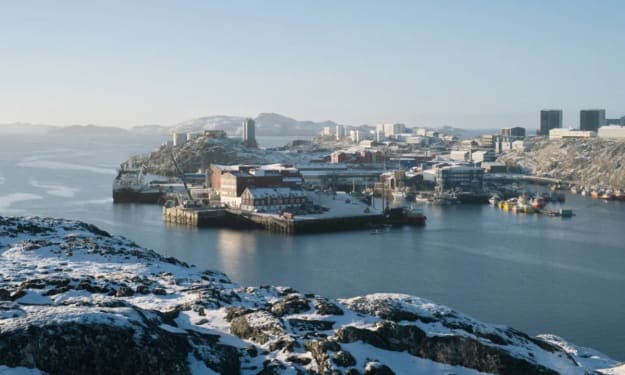
The Arctic Is No Longer a Frozen Backwater For decades, the Arctic sat quietly on the margins of global politics—remote, frozen, and largely ignored. That era is over. Britain is now in talks with NATO to strengthen Arctic security, acknowledging growing risks posed by Russia and China. In a notable shift, London’s assessment aligns closely with warnings long emphasized by Donald Trump, particularly as he continues to express strategic interest in Greenland. What once sounded like an eccentric fixation has evolved into a serious geopolitical conversation. The Arctic is rapidly becoming one of the world’s most contested regions, and Britain is positioning itself to play a larger role. Why Britain Is Paying Attention Now Although the UK is not an Arctic nation, it is an Arctic-adjacent power with significant strategic interests. British officials increasingly view the High North as critical to national and allied security. Melting ice is opening new shipping routes, exposing untapped natural resources, and making military movement easier than ever before. Britain’s talks with NATO focus on intelligence sharing, joint exercises, surveillance capabilities, and protecting undersea infrastructure such as communication cables and energy pipelines. These are not abstract concerns. Any disruption in the Arctic could have immediate consequences for European security and global trade. In short, what happens in the Arctic does not stay in the Arctic. Russia’s Expanding Arctic Footprint Russia is the dominant military power in the Arctic, and it is not slowing down. Moscow has reopened Soviet-era bases, deployed advanced missile systems, expanded its icebreaker fleet, and increased patrols across the region. The Arctic coastline represents a core part of Russia’s nuclear deterrent, making it strategically vital to the Kremlin. From NATO’s perspective, this military buildup creates both risk and uncertainty. Britain, which has long been vocal about Russian aggression—from Ukraine to cyber warfare—sees the Arctic as another front where deterrence must be strengthened before tensions spiral. The concern is not necessarily an immediate conflict, but miscalculation. In a region with harsh conditions and limited communication infrastructure, even minor incidents could escalate rapidly. China’s Quiet but Steady Arctic Ambitions While Russia’s presence is overt, China’s Arctic strategy is more subtle—and equally concerning to Western planners. Beijing calls itself a “near-Arctic state,” a label that has raised eyebrows in Europe and North America. Through investments, research stations, and partnerships, China is laying the groundwork for long-term influence. Britain shares NATO’s concern that China could use civilian projects for dual-use purposes, blending scientific research with intelligence gathering and infrastructure control. As Arctic shipping routes become commercially viable, China’s interest in controlling parts of the supply chain only grows. London’s alignment with these concerns reflects a broader shift in UK foreign policy: China is no longer viewed solely as an economic partner, but as a strategic competitor. Trump, Greenland, and Strategic Reality Donald Trump’s repeated interest in Greenland—most famously his suggestion that the United States should buy it—was widely mocked at the time. Yet behind the headlines was a strategic logic that many Western governments now openly acknowledge. Greenland sits at the heart of the Arctic, hosting vital air and naval routes between North America and Europe. It is also rich in rare earth minerals critical for modern technology and defense systems. As ice recedes, Greenland’s strategic value only increases. Britain’s current position, which aligns with Trump’s warnings about Arctic vulnerabilities, shows how quickly political perceptions can change. What once seemed unconventional now appears prescient. NATO’s Arctic Awakening NATO has traditionally focused on Eastern Europe and the North Atlantic. The Arctic, despite its importance, received less coordinated attention. That is changing. Britain’s talks with NATO reflect a broader alliance effort to integrate Arctic defense into its core strategy. This includes: Increased joint military exercises in cold-weather environments Enhanced monitoring of Russian and Chinese activity Strengthening cooperation with Arctic nations like Norway, Canada, and Denmark Protecting critical undersea and satellite infrastructure For Britain, this is also about credibility. As a leading NATO member and a key military power, the UK wants to demonstrate that it can contribute meaningfully beyond its immediate geography. Climate Change as a Security Multiplier One of the most striking aspects of Arctic security is how closely it is tied to climate change. Melting ice is not just an environmental issue—it is a strategic one. New sea lanes shorten travel between Asia and Europe, while access to oil, gas, and minerals becomes easier. This transformation increases competition and reduces natural barriers that once limited military movement. Britain’s involvement reflects recognition that climate-driven changes are reshaping the security landscape faster than traditional institutions were designed to handle. In this sense, Arctic security is a preview of future global challenges where environmental change and geopolitics collide. Domestic and Diplomatic Balancing Acts Britain’s Arctic engagement is not without challenges. Increased military involvement raises questions about defense spending, priorities, and escalation risks. Diplomatically, London must balance deterrence with dialogue, avoiding actions that could unnecessarily provoke Russia while still protecting allied interests. There is also the question of public awareness. Arctic security lacks the visibility of conflicts like Ukraine, making it harder to sustain political attention. Yet policymakers increasingly argue that prevention is cheaper—and safer—than crisis response. What This Means Going Forward Britain’s talks with NATO mark an important shift in how the Arctic is viewed: not as a distant frontier, but as a central arena in 21st-century security. Agreement with Trump-era assessments on Russia, China, and Greenland underscores how geopolitical realities can outlast political controversies. As competition intensifies, the Arctic will likely become a testing ground for cooperation, deterrence, and strategic foresight. Britain’s involvement signals that mid-sized powers are no longer content to watch from the sidelines. Final Thoughts The Arctic is warming faster than any other region on Earth—and so are the geopolitical tensions surrounding it. Britain’s move to boost Arctic security with NATO reflects a growing consensus that ignoring the High North is no longer an option. Whether driven by Russia’s militarization, China’s quiet expansion, or lessons drawn from Trump’s blunt warnings, one truth stands out: the future of global security may well be shaped at the top of the world, where ice, ambition, and power now intersect.
By Muhammad Hassan3 days ago in Earth
Milo Manheim
Milo Manheim has steadily built a reputation as one of Disney’s most recognizable young stars, thanks to his charm, musical talent, and approachable screen presence. Known widely for his breakout role in Disney Channel’s Zombies franchise, Manheim has now found himself at the center of online discussions surrounding Disney’s ambitious slate of live-action adaptations. Among these, the idea of a Tangled live action film has sparked intense fan curiosity, with Milo Manheim frequently mentioned in speculative casting conversations. While Disney has not officially confirmed every detail, the growing buzz around a Disney Tangled live action project reflects the enduring popularity of the animated classic and the excitement surrounding its potential cast. Milo Manheim’s Rise in Disney Entertainment Milo Manheim entered the spotlight with a natural ease that made him instantly relatable to younger audiences. As the son of actress Camryn Manheim, he inherited a strong foundation in performance, but his success has been distinctly his own. His work blends humor, sincerity, and musical confidence—qualities that align closely with Disney’s storytelling style. Beyond Disney Channel films, Manheim has expanded his range through stage performances and competitive television, proving he is more than a one-note actor. This versatility is one reason his name continues to appear in conversations about major Disney roles, including speculation around Tangled. Why Tangled Remains a Perfect Live-Action Candidate Released in 2010, Tangled reimagined the story of Rapunzel with humor, heart, and stunning animation. Over a decade later, it remains one of Disney’s most beloved modern fairy tales. The blend of adventure, romance, and self-discovery makes it especially suited for a live-action retelling. A live action Tangled film would follow Disney’s recent trend of revisiting animated favorites, offering a more grounded visual style while preserving the emotional core of the original. Fans are particularly interested in how the tangled live action cast would bring iconic characters to life, especially Rapunzel and Flynn Rider. Milo Manheim and the Flynn Rider Conversation One of the most common fan-driven theories places Milo Manheim in the role of Flynn Rider. The character’s mix of roguish confidence and underlying vulnerability aligns well with Manheim’s on-screen persona. Flynn Rider is not a traditional prince—he’s witty, flawed, and ultimately sincere, traits that Manheim has demonstrated across his performances. While Disney has not confirmed casting details, the speculation alone highlights how strongly audiences associate Manheim with roles that require both charisma and emotional depth. If chosen, he would join the broader tangled cast legacy that fans already adore. Rapunzel Live Action Casting Speculation Just as much attention surrounds the potential rapunzel live action cast. Rapunzel is a character defined by curiosity, resilience, and warmth, making her one of Disney’s most relatable heroines. Recently, online discussions have connected actress Teagan Croft to the role, leading to widespread interest in teagan croft tangled fan concepts. Croft, known for her compelling performances, brings a balance of strength and sensitivity that could translate well to a rapunzel live action portrayal. Interest in teagan croft movies and tv shows has grown alongside these casting rumors, as audiences imagine how she might embody the iconic princess. Building the Disney Tangled Live Action Cast A successful disney tangled cast live action would rely on chemistry as much as individual talent. Rapunzel and Flynn Rider’s relationship is central to the story, evolving from mistrust to mutual respect and love. Casting actors who can convincingly portray that journey will be key. Beyond the leads, characters like Mother Gothel and the supporting ensemble would also shape the film’s tone. Disney’s challenge lies in honoring the animated original while allowing actors to bring fresh interpretations. This balance has defined the success—or failure—of past live-action adaptations. The Importance of Staying True to the Story One reason Tangled has endured is its emotional honesty. At its heart, the film is about freedom, identity, and the courage to step into the unknown. A disney tangled live action adaptation must preserve these themes while adapting them for a new visual medium. Fans aren’t simply looking for a scene-by-scene remake; they want a story that feels familiar yet alive. With the right creative team and casting choices, the transition from animation to live action could deepen the emotional impact rather than dilute it. Milo Manheim’s Future Beyond Speculation Whether or not Milo Manheim becomes officially linked to tangled live action, the speculation itself reflects his growing influence in the industry. He represents a generation of actors shaped by Disney but not limited by it. His career choices suggest a desire to explore diverse roles while staying connected to the audience that supported his rise. As Disney continues to develop its live-action portfolio, actors like Manheim remain central to the conversation—not because of confirmed roles, but because audiences can already imagine them stepping into iconic characters. A Story Fans Are Ready to Revisit The excitement surrounding tangled live action cast discussions shows just how deeply the story still resonates. Rapunzel’s journey, Flynn Rider’s transformation, and the vibrant world of Tangled continue to inspire new generations of viewers. If and when Disney officially unveils its plans, the anticipation will only grow. Until then, the combination of Milo Manheim’s rising star power and the enduring magic of Tangled keeps fans engaged, hopeful, and eager to see how this beloved fairy tale might shine in live action.
By Saboor Brohi 6 days ago in Earth



Comments (1)
Thanks for the well detailed analysis