
Ingesting
And, opening eyes, that next sun is still as the previous was.


You, for whatever reason, suddenly looked less than the horizon to me.
On a normal night, the lack of jagged, saw-toothed pine roping across my eye’s limit was jarring. For months, I instead saw a depressing horizon as a flat line––a charcoal blue, an endless territory, a subject matter that did not interest me in the least. It was a horizon that swallowed the sun unilaterally, equidistantly, identically every late evening. And that collection of dying orange would leave me all the same, every time, every day, every repeating instance that I was not quite ready for it to leave me.
That was what I blame the open sea for––its ingestion of my dear sun.
And it was, at that time, when I also placed blame on you as well.
I dropped your wrapped body into the nearby waters. That small, gentle weight drew bubbles in when your corpse sucked the surface in. You did not float. It was not as theatrical as I might have drunkenly thought nights or months before. You merely floated aimlessly away twenty or so feet like a crumpled dinghy or a log, and then you went easily away.
There was some sort of tightness in my lower stomach. It was as though I had eaten something rotten from land, but I, on that day, had not felt the reassurance of land in over five months. And you gave me a headache somehow, and you made me want another cigarette––the first in fifteen years.
I stayed looking to the part of the surface that I thought had swallowed you down, but its waters were not as calm as those evenings once were, and I lost track of where it might have been. What little part of the sea you entered, like the breaking of a great atmosphere, roots breaking through black soil, a splinter in skin.
I wish I could have seen your whole fall through the depths––the shallows, the deeper waters, the deepening blues, the darkening navies, the coming blacks, the total blacks, the lanternfish, the undiscovered beings slithering beneath, the impacted sand at the bottom. I wish I could have been there with you, falling, interlaced fingers that turned cold with the temperature and wrinkled with pressure. Looking to your floating hair, all the way down until light left us. Feeling the small gnawing from creatures curious enough to try us out as we pass.
As we slip away.
No words to share, no completed thoughts, only watching one another.
My romanticism, however, was not the case. Eels did not rope your limbs. Krill did not swarm your mass like black clouds. You were not devoured.
It was nothing special––neither of us were.
For the evening after you left the ship and my pushing hands, I thought again and again over the aforementioned specifics. I sobbed like a child that I once had been. By the late evening, I knew they were only as what I call them: romantics.
You were gone.
There was soon no expression on my weakened, wrinkled, sun-ruined face, my lone and dying complexion.
I had a fever the subsequent day.
It was (according only to me) a low one. I had used half of the remaining tarps to wrap your tender, beautiful body with, and the surviving tarps held only a pit of rainwater that I lapped up like a dog. My line caught no fish––something that would, in the end, of course kill me, but I find myself growing happier each day that I do not have to flay their stabbing scales to taste their inner bitterness. By the subsequent morning, I only carried a slight headache with me. I stepped to the bow to take in the sunrise and its blooming colors like a hydrangea. They were dull. You were not there.
In the evening, I ate blue lobster caught from that barbed hook you once fashioned. It tasted like ink. I pretended to be happy with it, attempting to fool only myself, and failing.
At night, I drank the rest of the water on the tarps, wringing what drips I could from my wiry beard, trying to lick it all. If I had pills, I would dry swallow them all.
The next morning was somehow calm, and I took advantage of it. I did not believe in a Higher Power when you were around and I still do not––your absence and my utter mourning did not change that––but, that morning, I was granted some happiness. It was happiness that I probably did not deserve. Whoever granted those small, gentle, fast-moving moments to me, I am still grateful toward.
By that evening, I had mostly forgotten about it.
On the third day without rain, I drank four handfuls of seawater through trembling hands, sunburned palms, brittle fingers. Its only advantage was its cool temperature as it ran through me. I slept like a drunk baby, drunk from the sea––drunk from what little it gave me, and from everything that it had removed from me.
Another man on my stranded vessel caught a sea turtle––the kind with the ribbed, shimmering backs. The man’s name was simply Gorge. And Gorge had quickly removed the barbed hook from it, mutilating the poor creature’s face, and I, drunkenly, lurched forward and stuck him in the temple, the gut, the neck, the sternum––he fell against the boat’s side, and I attempted to push him overboard like all of the rest of the forsaken crew, but another by the name of Bill ripped me off Gorge by my shoulders, and I found myself on my back taking strikes by three others. My jaw dislocated. I wailed. Gorge was freed for the moment, allowing the sea turtle to fall to our fair vessel’s deck and flounder for some time in its spillings––in all that ran from its wounds––and I was battered further until I was unconscious.
When I later awoke, I vomited up nothing, remembering exactly how little of the sea I had drank, and promised to only drink three handfuls if no night rain would come.
And it did not come.
I woke in my flaking skin, my reddening tone––surely I had cancer of some type––to a blurred view of something that was not correct. It was a blemish on the horizon, a disgrace to everything I had come to know, a myth.
I sat up, rubbing what I could of my eyes.
A boat. With a sail. A decent bow, a dense hull, no color anywhere on it. It shimmered from the distance and I convinced myself that I had drank more of the seawater.
What I assumed was ten minutes later, the foreign vessel was still there. There were no landmarks to gauge how far it had traveled. I began to yell for it. It must have been half a mile. I yelled until I no longer could, and my eyes fell together, and I was soon asleep in the sun once more.
At night, I felt the rain. There was heat lightning high behind cloud cover, but it was not enough light to see the boat’s silhouette. I continued searching for it.
My father had once told me of stranded soldiers from the war drinking too much of their beautiful, surrounding salted seas and diving off to swim down for the freshwater fountain beneath the surface. And I––even with saltwater in my stomach––knew that it would never be the case, but it would allow me a slightly closer distance to you, and I thought about it.
About the Creator
Keep reading
More stories from Calvin Spears and writers in Earth and other communities.
Years Lost and Years Found
An older woman by the name of Evelyn took care of my mother throughout much of the early 90s before my mother went into hospice. My brother and I called her “Evie” when we were younger––she lived four houses down on our shaded, retired neighborhood road in West Virginia, far from the suburbs and the streetlights. My mother met her after the nearest fire hydrant on the street was struck by a drunk driver and erupted––the evening that I ran through its pouring water alongside the other neighborhood children before the fire department arrived.
By Calvin Spears5 years ago in Earth
Winter Olympics Must Tackle Environmental Impact Before the Snow Runs Out
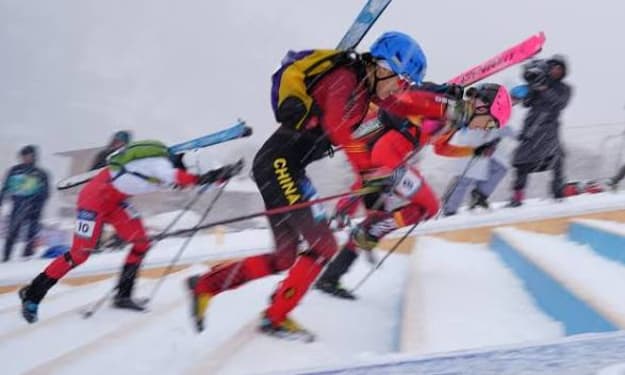
The future of the Winter Olympics is increasingly threatened by the very climate conditions that once defined it. Rising global temperatures, shrinking glaciers, and unreliable snowfall are forcing organizers to confront an uncomfortable truth: without urgent environmental reform, the Games may soon struggle to find suitable natural winter settings. Recent editions of the Winter Olympics have relied heavily on artificial snow and extensive infrastructure projects to compensate for warming conditions. While technology has allowed competitions to proceed, it has come at a significant environmental cost. Artificial snowmaking requires vast quantities of water and energy, placing additional strain on fragile alpine ecosystems already stressed by climate change. Climate Change and Vanishing Snow Scientists warn that many traditional Winter Olympics host regions may no longer be viable within decades. Areas in the Alps, once considered snow-secure, now experience shorter winters and more frequent rain instead of snow. According to climate research groups, average winter temperatures in mountainous regions have risen by nearly two degrees Celsius over the past century, drastically reducing dependable snow cover. This trend is forcing Olympic planners to consider fewer and fewer potential host cities. By mid-century, only a small number of high-altitude or northern locations may be able to provide natural snow conditions for outdoor events such as skiing, snowboarding, and biathlon. The Environmental Cost of Hosting Beyond snowmaking, the construction of Olympic venues has long raised environmental concerns. New roads, hotels, and ski facilities often require deforestation and large-scale land reshaping. After the Games end, many venues are underused or abandoned, leaving behind what critics call “white elephants” in sensitive landscapes. Transport is another major contributor to the carbon footprint. Tens of thousands of athletes, officials, media personnel, and spectators travel internationally to attend the Games, producing millions of tons of carbon emissions. For an event that celebrates human endurance and natural beauty, this contradiction has become increasingly difficult to ignore. Calls for Reform Environmental groups and athletes alike are urging the International Olympic Committee (IOC) to adopt stricter sustainability standards. Some propose limiting host cities to a fixed rotation of climate-resilient venues rather than building new sites every four years. This would reduce construction emissions and allow organizers to invest in long-term green infrastructure. Others suggest shifting more events indoors or redesigning sports formats to reduce reliance on perfect snow conditions. Innovations in energy use, such as fully renewable-powered venues and electric transport systems, are also gaining support. The IOC has already pledged to make future Games climate-positive, promising to cut emissions and offset remaining carbon output. However, critics argue that offsets alone are not enough and that fundamental changes in how the Games are planned and hosted are required. Athletes Speak Out Many athletes who train in mountain environments are among the most vocal advocates for change. They witness disappearing glaciers and unpredictable seasons firsthand. Several Olympic champions have joined climate campaigns, warning that winter sports themselves are at risk of becoming inaccessible to future generations. “You can’t celebrate snow sports if there’s no snow left,” one former skier remarked. “Protecting the climate is protecting our sport.” Their message resonates with younger audiences, who increasingly expect major global events to demonstrate environmental responsibility. A Race Against Time The challenge now facing the Winter Olympics is not only logistical but moral. As one of the world’s most visible sporting spectacles, the Games carry symbolic weight. They can either continue to adapt in ways that worsen environmental damage or become a model for sustainable international events. If current warming trends continue, experts warn that future Winter Olympics could be confined to a handful of locations with artificial conditions resembling theme parks rather than natural winter landscapes. Such a shift would undermine the spirit of the Games, which has always been rooted in ice, snow, and mountains. Conclusion The Winter Olympics stand at a crossroads. Climate change has transformed snow from a guarantee into a luxury, and the environmental cost of maintaining the Games is rising sharply. To survive, the Olympics must evolve—by cutting emissions, rethinking host locations, and embracing genuine sustainability rather than temporary fixes. Without decisive action, the world’s greatest winter sporting event may find itself running out of snow—and time.
By Fiaz Ahmed 6 days ago in Earth



Comments
There are no comments for this story
Be the first to respond and start the conversation.